
Editor’s Note : Views in the article do not necessarily reflect the views of borkena.com
The United Arab Emirates (UAE), a federation of seven emirates with a population of under 10 million (of which only about one million are citizens), has emerged as a formidable sub-imperial power in the Middle East and Africa since the 2010s. Leveraging its oil wealth, strategic location, and aggressive foreign policy under Crown Prince Mohammed bin Zayed (MBZ), the UAE has pursued a vision of regional dominance that prioritizes countering Islamist movements, securing economic footholds, and building proxy networks. This “juggernaut” approach—characterized by military interventions, financial leverage, and diplomatic maneuvering—has often exacerbated conflicts rather than resolved them, contributing to the “wrecking” of states like Libya, Yemen, Egypt, Sudan, and now Ethiopia. While the UAE frames its actions as stabilizing, critics argue they foster dependency, fragmentation, and prolonged instability to serve Emirati interests. This analysis examines the political, economic, and security dimensions of UAE involvement in these countries, drawing on recent developments up to early 2026, before turning to prospective dangers, opportunities, and implications in an era where de facto recognition increasingly trumps formal sovereignty. Finally, it assesses Ethiopia’s high-stakes gamble for sea access and its counter-stability effects.
UAE’s Role in Libya: Fueling Division for Strategic Gain
Politically, the UAE positioned itself as a key backer of General Khalifa Haftar and his Libyan National Army (LNA) during the 2014–2020 civil war, viewing Libya as a battleground against Islamist-leaning factions aligned with the UN-recognized Government of National Accord (GNA). (Atlanticcouncil.org). Abu Dhabi provided political legitimacy through media campaigns and lobbying, while opposing Qatar and Turkey’s support for the GNA, escalating proxy rivalries. (insightturkey.com). This disrupted UN-led peace efforts, prolonging the conflict and fragmenting governance.
Economically, the UAE invested in eastern Libya’s infrastructure and oil sectors under Haftar’s control, securing access to resources and ports to expand its African footprint. (tni.org). By 2022, Emirati firms had stakes in energy projects, turning Libya into a node in the UAE’s broader sub-imperial network.
In security terms, the UAE supplied arms, drones, and mercenaries, violating UN embargoes and enabling Haftar’s 2019 Tripoli offensive. (researchcenter.trtworld.com). This intervention killed thousands, displaced millions, and entrenched warlordism, with the UAE’s shift toward diplomacy by 2022 seen as pragmatic rather than altruistic. (boycottuae.org). Overall, UAE actions helped “wreck” Libya by prioritizing anti-Islamist alliances over national unity, leaving a divided state vulnerable to external meddling.
Yemen: From Coalition Partner to Separatist Patron
The UAE joined Saudi Arabia’s 2015 intervention against Houthi rebels but quickly diverged to pursue its own agenda. (en.wikipedia.org). Politically, Abu Dhabi backed the Southern Transitional Council (STC) separatists, undermining the UN-recognized Hadi government and fostering southern secessionism. (martinplaut.com). By late 2025, this led to open clashes with Saudi forces, including Saudi airstrikes on UAE arms shipments, exposing rifts in the coalition.
(cnn.com). The UAE’s “withdrawal” in 2019 was nominal, as it retained influence through proxies. (reuters.com). As we write this piece, the STC has disintegrated amidst UAE withdrawal from the region.
Economically, the UAE seized control of strategic assets like Socotra Island and Aden ports, integrating them into its maritime empire for trade routes and resource extraction. (agsi.org). Emirati investments in southern Yemen’s oil and gas have prioritized profit over reconstruction, exacerbating poverty amid a humanitarian crisis affecting 24 million people.
Security-wise, UAE forces and proxies conducted brutal operations, including alleged war crimes like torture in secret prisons. (cfr.org). Support for STC militias has fragmented Yemen, prolonging the war and enabling al-Qaeda in the Arabian Peninsula (AQAP) to thrive in ungoverned spaces. (jar-gwu.org). By 2026, UAE actions have “wrecked” Yemen’s unity, turning it into a patchwork of fiefdoms and heightening Saudi-Emirati tensions. (nytimes.com).
Egypt: Economic Lifeline with Political Strings
Unlike direct military interventions, UAE involvement in Egypt focuses on bolstering President Abdel Fattah el-Sisi’s regime post-2013 coup. (blogs.timesofisrael.com). Politically, Abu Dhabi provides diplomatic cover against human rights criticisms, aligning against the Muslim Brotherhood and promoting authoritarian stability. (eyptianstreets.com). This has entrenched Sisi’s rule but stifled dissent, contributing to political stagnation.
Economically, the UAE is Egypt’s largest investor, injecting over $65 billion since 2013, including a $35 billion Ras el-Hekma deal in 2024 to avert currency collapse. (pwc.com). These funds, often in real estate and infrastructure, create dependency, with UAE firms gaining control over key sectors like ports and tourism. (newarab.com). While stabilizing short-term crises, this has inflated debt and prioritized Emirati profits over Egyptian self-sufficiency.
Security cooperation includes joint military exercises and intelligence sharing, with UAE aid funding Egypt’s counterterrorism efforts. (agsi.org). However, this has “wrecked” Egypt’s autonomy, turning it into a UAE client state amid economic woes, as seen in Cairo’s reluctance to side against Abu Dhabi in Yemen disputes. (newarab.com).
Sudan: Arming Chaos for Resource Control
In Sudan’s ongoing civil war since 2023, the UAE backs the Rapid Support Forces (RSF) led by Mohamed Hamdan Dagalo (Hemedti), against the Sudanese Armed Forces (SAF). (bbc.com). Politically, this stems from anti-Islamist motives and ties forged during the Yemen war, where RSF served as UAE mercenaries. (pbs.org). Sudan accused the UAE of genocide complicity at the ICJ in 2025, highlighting Abu Dhabi’s role in ethnic violence in Darfur. (bbc.com).
Economically, the UAE dominates Sudan’s gold trade, smuggling billions worth annually to fund RSF operations and secure agricultural land deals. (spectrejournal.com). This exploits conflict resources, worsening famine for 25 million Sudanese.
Security involvement includes supplying advanced arms, including Chinese drones via Chad, breaching UN embargoes and fueling atrocities. (amnesty.org). UAE actions have “wrecked” Sudan by prolonging the war, displacing 10 million, and creating a failed state ripe for further exploitation. (theguardian.com).
Ethiopia: Defense Pact Amid Regional Ambitions
The UAE’s latest pivot is to Ethiopia, formalized in a January 2026 joint statement reaffirming a “comprehensive and strategic partnership” in security and defense. (Mofa.gov.ae). Politically, Abu Dhabi supports Prime Minister Abiy Ahmed against Islamist threats, building on aid during the 2020–2022 Tigray war. (hornreview.org). The pact includes high-level exchanges and climate cooperation, masking deeper alignments. (ena.et).
Economically, UAE investments in Ethiopia’s real estate, agriculture, telecoms, and energy exceed $3 billion, with Abu Dhabi funding infrastructure for trade corridors. (ifa.gov.et). This ties into Ethiopia’s sea access quest via the 2024 Somaliland MoU.
Security-wise, the November 2025 military MoU enhances joint training and arms transfers, positioning the UAE as a counterweight to Turkish and Iranian influence in the Horn. (africapress.net). UAE drones aided Ethiopia in Tigray, and the pact could extend to Red Sea operations. (iiss.org). This deepens UAE’s African entrenchment but risks “wrecking” Ethiopia by fueling internal divisions and external tensions.
Prospective Analysis: Dangers, Opportunities, and Regional Implications in a Recognition-First World
In a multipolar world where recognition eclipses sovereignty—exemplified by Ethiopia’s Somaliland MoU offering de facto independence for 50-year Red Sea access—the UAE’s model amplifies fragmentation. (atlanticcouncil.org). Dangers include escalated conflicts: Ethiopia’s deal has inflamed Somalia, drawing in Turkey and Egypt, potentially sparking proxy wars over the Gulf of Aden. (crisisgroup.org). UAE backing could entrench secessionism, weakening AU norms and inviting great-power rivalries (e.g., US vs. China). (e-ir.info). Economically, dependency on UAE aid risks debt traps; security-wise, arms flows could proliferate jihadism.
Opportunities exist for economic integration: UAE ports and investments could boost trade hubs in Ethiopia and Somaliland, fostering growth in a resource-rich region. (vifindia.org). Politically, recognition deals might resolve frozen conflicts, as with Israel’s 2025 Somaliland move. (hornreview.org).
Regionally, this erodes sovereignty, prioritizing pragmatic alliances over territorial integrity, as seen in UAE’s Yemen and Sudan plays. (reuters.com). It fragments the Middle East-Africa nexus, with Saudi-UAE rifts accelerating Gulf disunity and empowering sub-imperial actors like the UAE. (thesoufancenter.org).
Ethiopia has indeed stirred an impossible, counter-stability role in pursuing sea access. The Somaliland MoU challenges Somalia’s unity, invites backlash, and aligns with UAE’s disruptive strategy, potentially destabilizing the Horn while offering illusory gains amid internal fragility. (africanarguments.org). This high-risk bet undermines regional stability for strategic depth, echoing UAE-induced wrecks elsewhere or within Ethiopia itself.
Note: As I conclude this short essay, there are credible reports that Sudan has carried out air strikes deep in Ethiopian territory in the Benishangul Gumuz region.
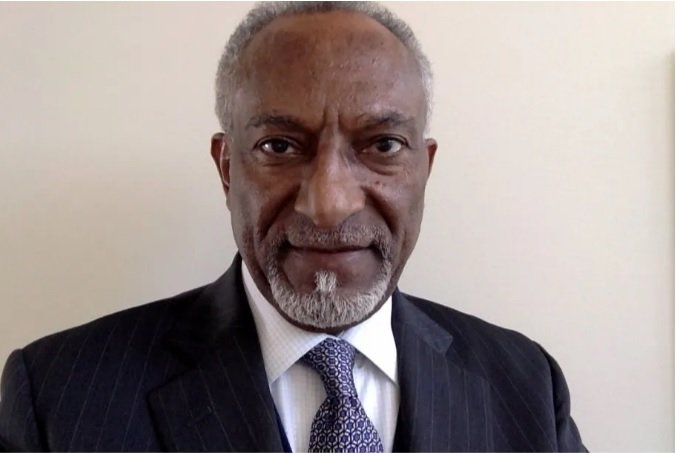
Teshome Abebe, PH.D., a former Provost and Vice President for Academic Affairs at two universities, is Professor of Economics and Faculty Laureate
Editor’s Note : Views in the article do not necessarily reflect the views of borkena.com
__
Support Borkena : https://borkena.com/subscribe-borkena/
Join our Telegram Channel : t.me/borkena
Like borkena on Facebook
Borkena Ethiopian News Youtube Channel
To submit Press Release, send submission to info@borkena.com
Add your business to Ethiopian Business Listing / Ethiopian Business Directory
Join the conversation. Follow us on X (Formerly Twitter) @zborkena to get the latest Ethiopian News updates regularly.