
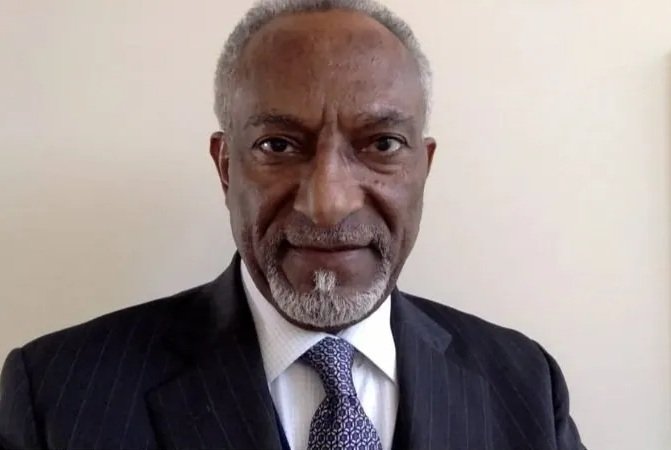
Teshome Abebe
I have benefited significantly from a discussion with Emeriti Professor Daniel Tefera in the preparation of this piece. Errors and omissions, however, are mine and mine alone.
In a move that has sent shockwaves through the international community, Israel formally recognized the Republic of Somaliland as an independent state on December 26, 2025. This unprecedented decision, making Israel the first United Nations member to do so, marks a pivotal moment in global diplomacy. Somaliland, a self-declared independent entity since 1991, has long sought international legitimacy amid Somalia’s protracted civil strife. Yet, Israel’s unilateral action transcends mere diplomatic courtesy; it signals the onset of a new era where the sanctity of national sovereignty and established borders is increasingly subordinated to strategic imperatives. This ‘strategic demolition’ of fragile states—through selective recognition of breakaway regions—threatens to unravel the post-colonial order in Africa, with profound repercussions for neighboring countries, particularly Ethiopia, and the broader norms of international law.
Historical Context: Somaliland’s Quest for Independence Amid Somalia’s Fragmentation
Somaliland’s story is one of resilience born from chaos. Following the collapse of Siad Barre’s regime in 1991, the northern region declared independence, establishing a stable government in Hargeisa with democratic elections, its own currency, and a functional administration. In contrast, southern Somalia has endured decades of instability, marked by clan warfare, al-Shabaab insurgency, and ineffective central governance in Mogadishu. Despite Somaliland’s de facto autonomy, the international community has upheld Somalia’s territorial integrity, adhering to the African Union’s principle of respecting colonial-era borders to prevent continental balkanization.
Israel’s recognition disrupts this delicate balance. Announced by Israeli Prime Minister’s office, the move includes plans for diplomatic relations, economic cooperation, and potential security ties. Somalia swiftly condemned it as an “act of aggression,” demanding immediate reversal and warning of escalated tensions. This is no isolated event; it aligns with Israel’s broader strategy in the Red Sea region, where it seeks allies to counter Iranian influence, Houthi threats to shipping lanes, and Islamist extremism. By recognizing Somaliland, Israel gains a strategic foothold on the Gulf of Aden, potentially for intelligence bases or naval access, echoing its alliances with “Abraham Accords partners”.
The Devastating Impact on Somalia: Accelerating Internal Disintegration
For Somalia, Israel’s decision is a harbinger of existential peril. Mogadishu views Somaliland’s recognition as a direct assault on its sovereignty, potentially encouraging other restive regions like Puntland or Jubaland to pursue similar paths. Analysts warn that this could “destroy” Somalia by formalizing its fragmentation, leading to a cascade of secessions that dismantle the federal structure. The Somali government, already strained by al-Shabaab’s resurgence and reliance on African Union troops, faces diplomatic isolation. International condemnation of Israel’s move—echoed by the Arab League and Turkey—offers rhetorical support, but without enforcement, it may embolden further recognition.
Economically, Somalia stands to lose control over Somaliland’s resources, including the vital Berbera port, which handles regional trade. Politically, it exacerbates clan divisions, as northern clans celebrate the recognition while those in the south rally against it. This internal schism could intensify violence, drawing in external actors and prolonging Somalia’s status as a failed state.
Ripple Effects on Neighboring Countries: Ethiopia at the Epicenter
No country feels the tremors more acutely than Ethiopia, Somaliland’s closest ally in the region and a landlocked giant desperate for sea access. In January 2024, Ethiopia signed a Memorandum of Understanding (MoU) with Somaliland, granting Addis Ababa a 50-year lease on 20 kilometers of coastline near Berbera in exchange for shares in Ethiopian Airlines and implied future recognition. This deal, which infuriated Somalia and led to severed ties, positioned Ethiopia as a de facto supporter of Somaliland’s independence.
Israel’s recognition now places Ethiopia in a precarious yet opportunistic position. Experts predict that Addis Ababa may soon follow suit, formalizing its recognition to secure the MoU and bolster its Red Sea presence. Such a move would provide Ethiopia with a naval base, alleviating its dependence on Djibouti and Eritrea for imports—critical amid ongoing war recovery and economic woes. However, it risks escalating conflict with Somalia, which has threatened military action and sought alliances with Egypt and Turkey to counter Ethiopian influence.
Compounding these external pressures are Ethiopia’s profound internal vulnerabilities, which heighten the risks of its own fragmentation in this volatile context. Ethiopia’s ethnic federalism, designed to accommodate its diverse groups, has instead amplified cleavages among major ethnicities like the Tigrayans, Amharas, Oromos, and others, leading to a slow-motion disintegration that could accelerate under regional instability. In Tigray, tensions with the federal government persist despite the 2022 Cessation of Hostilities Agreement (CoHA), with accusations of airstrikes, militarization, and border clashes with Afar and Amhara regions signaling a potential reignition of full-scale war. The Tigray People’s Liberation Front (TPLF) and federal forces appear poised for showdowns, exacerbated by disputes over “western Tigray” territories and incomplete disarmament, leaving populations at risk of war crimes and crimes against humanity.
In the Amhara region, the ongoing armed conflict with Patriotic Fano militias against the Ethiopian military has resulted in thousands of deaths—estimated at least 7,700 between April 2023 and April 2025—and widespread atrocities, including reported war crimes by the Ethiopian National Defense Force or its collaborators. This unrest stems from deep-seated grievances over perceived marginalization and opposition to the federal government’s policies, further inflamed by ethnic clashes with Tigrayan forces. Meanwhile, in Oromia, violence continues unabated, with insurgencies like the Oromo Liberation Army (OLA) clashing with government forces, driven by demands for greater autonomy and resource control. These ethnic fault lines—extending to Somali, Afar, Gambella, and other groups—represent real and existential dangers, as they erode national cohesion and create fertile ground for secessionist movements.
The peril is amplified by the precedent set by Somaliland’s recognition: all it takes is a superpower, such as the United States or China, to recognize one of these restive regions as independent for the dominoes to fall. Ethiopia’s federal structure, already strained by economic hardships because of poor management and climate-induced displacements, could collapse under such external validation, leading to a cascade of breakaways like Somalia’s fate. This internal fragility not only undermines Ethiopia’s ability to capitalize on the Somaliland deal but also positions it as the next potential victim of strategic demolition, where ethnic contradictions are exploited for geopolitical gain. This reasoning explained the strong objections raised by myself and others against the 2024 MoU with Somaliland, especially regarding violations of territorial integrity.
Beyond Ethiopia, the recognition reverberates across the Horn. Djibouti, host to multiple foreign bases, fears losing its monopoly on regional ports, potentially straining its economy. Kenya, with its Somali refugee population and border disputes, worries about spillover instability. Eritrea, historically antagonistic toward Ethiopia, might exploit the chaos to advance its interests (there are confirmed reports that it has already agreed to hand over Assab port to Egypt). Collectively, these dynamics heighten the risk of proxy wars, with superpowers like the US (which has bases in the region) and China (invested in Djibouti) drawn into the fray.
The Erosion of Sovereignty: Strategic Demolition in a Multipolar World
At its core, Israel’s action exemplifies the “strategic demolition” of small, vulnerable nations—a calculated erosion of the “Westphalian” norms that have stabilized international relations since 1648. By prioritizing geopolitical gains over territorial integrity, powerful states like Israel are setting aside the old stabilizing principles of sovereignty and inviolable borders. This trend is not new; precedents include Russia’s annexation of Crimea in 2014 and the US’s de facto support for Kosovo’s independence in 2008. However, in Africa, where colonial borders often ignore ethnic realities, such interventions could ignite widespread redrawing of maps.
In the Horn of Africa, this demolition serves multiple agendas. For Israel, it’s a bulwark against Iran-backed groups like the Houthis, securing Red Sea lanes vital for global trade. For Ethiopia, it could serve as a lifeline to the sea, enhancing its regional hegemony. Yet, the cost is high: weakened states like Somalia become pawns, their fragmentation fostering terrorism, piracy, and humanitarian crises. In pure diplomatic sense, Ethiopia may end up dealing with four distinct countries rather than just one. The UN Security Council’s emergency meeting on Somaliland’s future underscores global alarm, but with veto powers divided, enforcement remains elusive.
This shift heralds a multipolar world where might trumps right. Small countries, already battered by climate change and conflict, face existential threats as superpowers carve spheres of influence. If unchecked, it could inspire similar moves elsewhere—think South Sudan splintering further, Sudan splintering into three, or Yemen’s divisions, supported by UAE, formalized—undermining the African Union’s unity and the UN Charter’s emphasis on self-determination without aggression.
Summing Up: Toward a New Regional Order or Chaos?
Israel’s recognition of Somaliland is more than a diplomatic footnote; it’s a catalyst for profound change in the Horn of Africa. While Somaliland rejoices at ending its 34-year isolation, the move risks Somalia’s implosion and regional warfare. Ethiopia, poised to capitalize, must navigate carefully to avoid isolation as well as providing impetus to forces within who may be seeking to break it up as there are, no doubt, malevolent forces who wish the nation harm. Ultimately, this event underscores a troubling evolution: the strategic demolition of small states, where sovereignty yields to realpolitik. As the world watches the UN deliberations, one thing is clear—the old norms are fracturing, and the map of Africa may never look the same.
Teshome Abebe, PH.D., a former Provost and Vice President for Academic Affairs at two universities, is Professor of Economics and Faculty Laureate.
Editor’s Note : Views in the article do not necessarily reflect the views of borkena.com
__
Support Borkena : https://borkena.com/subscribe-borkena/
Join our Telegram Channel : t.me/borkena
Like borkena on Facebook
Borkena Ethiopian News Youtube Channel
To submit Press Release, send submission to info@borkena.com
Add your business to Ethiopian Business Listing / Ethiopian Business Directory
Join the conversation. Follow us on X (Formerly Twitter) @zborkena to get the latest Ethiopian News updates regularly.
A region called for centuries “Wollqauitt ” can not be named as “Western Tigray” unless to please diehards TPLF’s fanatics.