
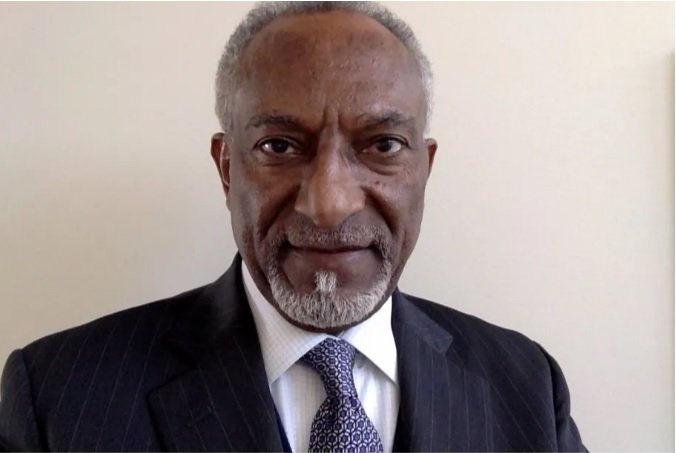
Teshome Abebe
On November 10, 2025 Borkena published my essay titled, “The Case for “Abiyfatalism”: a Linguistic Lens on Political Betrayal”. Following that on November 11, 2025, Borkena published a rebuttal article from Mr. Mohamud A. Ahmed in which he attempted a sophisticated takedown of my piece. This brief essay is an attempt to respond and defend my thoughts on the piece in the great traditions of both the academy as well as intellectual exchanges in furtherance of knowledge. I do so with great respect, even affection, for those who expressed fascination and have commented on the article, including Mr. Ahmed, who I have never met but have read his previous writings on Ethiopian related issues. Regrettably in this case, his was a case of devoted effort resulting in a total misapprehension of the text.
Mohamud A. Ahmed’s November 11, 2025, rebuttal in Borkena frames my coinage of “Abiyfatalism” as an act of linguistic determinism, historical amnesia, and emotional indulgence. This critique, while elegantly phrased, inverts the very rigor it claims to champion. Far from a reductive neologism, “Abiyfatalism” is a morally grounded, intellectually disciplined, and philosophically indispensable diagnostic tool—one that exposes the structural repetition of betrayal, the erosion of public trust, and the ontological crisis of Ethiopian political modernity. Below, I systematically negate Ahmed’s objections, demonstrating that the concept withstands scrutiny and, in fact, necessitates the kind of totalizing critique Ahmed mislabels as fallacy.
I. Criticism: Linguistic Determinism? Not at all. Rather it is Linguistic Revelation
Ahmed invokes Sapir-Whorf to accuse me of trapping Ethiopian thought in a fatalist cage. This is a category error. “Abiyfatalism” does not shape reality; it names an empirically recurrent pattern. Consider the sequence:
1. 2018: Abiy Ahmed enters office on a wave of “Qeerroo”-driven hope, promising “medemer”, press freedom, and national reconciliation, among others.
2. 2019–2020: Lemma Megersa—architect of Abiy’s rise—is sidelined; Jawar Mohammed—icon of the youth revolt—is jailed; Eskinder Nega, Lidetu Ayalew, and other dissenters are detained under anti-terror laws.
3. 2020–2022: The Tigray War erupts, framed by Abiy as a “law enforcement operation,” yet accompanied by Amhara militias, Eritrean troops, and drone strikes—resulting in 600,000+ deaths and mass starvation.
4. 2023–2025: The Pretoria Agreement collapses; Fano insurgencies rage in Amhara; Oromia remains under emergency rule; Somali Region’s autonomy is curtailed via centralized Prosperity Party control.
This is not linguistic predestination—it is historical recurrence. The portmanteau coined fuses “Abiy” (the agent) with “fatalism” (the outcome) not to limit thought, but to crystallize a syndrome: the cyclical betrayal of revolutionary promise by its own vanguard. As Walter Benjamin warned in “Theses on the Philosophy of History”, naming the “state of emergency” is the first act of resistance. “Abiyfatalism” is that act—morally urgent because silence enables repetition.
Ahmed’s alternative—treating “medemer” as “agonistic synergy”—is the true linguistic sleight. It rebrands exclusionary centralization as dialectical progress, echoing Hegel’s “cunning of reason” while ignoring the graves it digs.
II. Criticism: Totalization? No, it is rather Structural Diagnosis
Ahmed charges the essay with the “fallacy of totalization”: inflating elite ruptures into systemic truth. This misreads the concept’s scope. “Abiyfatalism” is not a claim that all politics is betrayal, but that Ethiopia’s post-2018 transition exhibits a specific pathology: the weaponization of hope as a technology of control.
-Motive Inflation? No, rather Motive Clarity. The essay does not retroactively impute villainy. The record is public: Abiy’s 2018 speech promising to “heal the wounds of the past” was followed within months by the assassination of Oromo officials and others (e.g., Engineer Simegnew Bekele, July 2018) and the June 2019 coup attempt—both blamed on “dark forces” while consolidating power.
-Instrumental Alliances? Yes—but “Abiyfatalism” highlights their asymmetric dissolution. Lemma, Jawar, and the TPLF were not “recalibrated” out of necessity; they were purged after serving their purpose. This mirrors Frantz Fanon’s warning in “The Wretched of the Earth”: the national bourgeoisie liquidates the revolutionary coalition the moment it threatens elite capture, and in this case, also state capture.
Ahmed cites GDP growth (7.2% in 2024) as evidence of “pragmatic rationality.” This is a category error of the highest order: economic indicators do not negate political betrayal. Weimar Germany had industrial booms under authoritarian drift. My critique operates at the level of trust, not GDP—where Ethiopia ranks 149th out of 180 on Transparency International’s Corruption Perceptions Index (2024).
III. Criticism: Historical Amnesia? Not in the slightest. Rather, Historical Pattern Recognition
Ahmed counters with Ethiopia’s “archive of improbable survivals” (Adwa, Meles’ developmental state). This is romantic obfuscation. Survival is not synonym for legitimacy. The Ethiopian state has endured through
– Menelik’s ‘slave raids’ and land grants to loyalists,
– Haile Selassie’s feudal autocracy,
– the Derg’s Red Terror,
– EPRDF’s 27-year ethnic patronage and terror on Amhara.
“Abiyfatalism” does not deny resilience—it diagnoses its cost: a polity that survives by devouring its own children. My essay’s insight is Arendtian: every revolution carries the seed of its Thermidor, a delicacy! Abiy’s Prosperity Party is Ethiopia’s “18th Brumaire”—complete with plebiscitary rhetoric and paramilitary enforcement.
Ahmed’s Somali lens is telling. The Somali Region’s marginalization under Abiy (despite Ogaden’s strategic oil and Liyu police) mirrors Tigray’s fate. To call this “policy coherence” is to sanitize ethnic recentralization as federal evolution.
IV. Criticism: Moral Binary? Not at all. Rather Moral Accountability.
Ahmed constructs and then dismisses the essay’s loyalty-vs-betrayal frame as “kin-based ethics.” This is a strawman. “Abiyfatalism” is not about personal fealty but public covenant. Abiy swore an oath in 2018: to the youth who died in Oromia, to the journalists freed from Maekelawi, to the diaspora who funded his rise. The metric is not clan but contract–and the contract has been broken.
Philosophically, this invokes Jean-Jacques Rousseau’s Social Contract: legitimacy derives from the general will, not the ruler’s survival. When Abiy jails the very activists who installed him, he does not “recalibrate”—he abdicates. My coinage is thus a Socratic intervention: forcing Ethiopians to confront the ‘euthyphro dilemma’ of their politics—are leaders serving the people, or are the people serving the leader’s myth?
V. Criticism: Doctrine of Despair? Absolutely not. Rather a Call to Consciousness.
Ahmed’s final charge—that Abiyfatalism breeds resignation—is the most pernicious inversion. Fatalism resigns; “Abiyfatalism” mobilizes. By naming the pattern, the essay arms the next ‘Qeerroo’ with foresight. As Paulo Freire wrote in “Pedagogy of the Oppressed”, “naming the world” is the first step to transforming it.
The alternative—Ahmed’s “illumination without lamentation”—is technocratic quietism. It asks Ethiopians to grade Abiy on a curve of “lesser evils” while atrocities mount. This is the true fatalism: the belief that mass graves are the price of “stability.”
In summary: “Abiyfatalism” as Ethiopian ‘Kairos’.
Far from a fallacy, “Abiyfatalism” is a ‘kairotic’ concept—a propitious moment–born at the precise moment when hope curdles into hegemony. It is:
– Morally robust: because it honors the dead by refusing their erasure.
– Intellectually precise: because it maps a verifiable sequence of betrayal.
– Philosophically coherent: because it aligns with Arendt, Fanon, and Benjamin in diagnosing the revolutionary betrayal cycle.
Ahmed’s rebuttal, for all its polish, is an apologia for power disguised as nuance. It asks Ethiopians to treat their wounds as growing pains and their martyrs as collateral damage. I refuse. In coining “Abiyfatalism”, I do not close the door on agency—instead I help open the eyes of a nation sleepwalking into authoritarian renewal.
In the end, the term “Abiyfatalism” is not a cage. It is a mirror. And Ethiopia ignores it at its peril.
Teshome Abebe, a former Provost and Vice President for Academic Affairs at two Universities is Professor of Economics and Faculty Laureate.
Editor’s Note : Views in the article do not necessarily reflect the views of borkena.com
__
Support Borkena : https://borkena.com/subscribe-borkena/
Join our Telegram Channel : t.me/borkena
Like borkena on Facebook
Borkena Ethiopian News Youtube Channel
To submit Press Release, send submission to info@borkena.com
Add your business to Ethiopian Business Listing / Ethiopian Business Directory
Join the conversation. Follow us on X (Formerly Twitter) @zborkena to get the latest Ethiopian News updates regularly.
A literally contest between ” Abey fatalism” and ” Abey Enlightenment ” in the middle of a tittering nation as if the literally manipulation, sophism miraculously can soften the boiling anger underneath of the nation belly. One a state propagandist the other ” Fano’s ” spiritual leader
A literally contest between ” Abey fatalism” and ” Abey Enlightenment ” in the middle of a tittering nation as if the literally manipulation, sophism miraculously can soften the boiling anger underneath of the nation belly. One a state propagandist the other ” Fano’s ” spiritual leader
I also like highlight that one of the biggest mistake ( political calculation that went badly wrong) is during the ‘Pretoria Negotiations’ the exclusion of Amhara FANO, & Eritrea who were active participant in the two year war, on the FANO case its participation had two objectives, #1) to push back TPLF out from Wolkait, & Rayya both historical Amhara ancestral land, & #2) to assist the Ethiopia armed forces in the war, in which Abiy himself announced that FANO can KEEP THE ARMS they DISARM from TPLF forces (dead or surrendered) for themselves.
I argue, if :
a) Eritrea was part of the Pretoria negotiations & agreement, the relationship between the two nations would have been very positive today leading to a better relational perhaps even leading to an “Economic Integration’ between them as well as the rebuilding and modernization of the Assab Port not only as a major Import Export Hob, but also a major ‘Refueling” station on the Red Sea, creating thousands of jobs and specialization in the sector for the youth of both nations.
b) FANO’s disillusionment would have been avoided. #1) the historical border Tekezé Rive between Tigray and Amhara region as well as Rayya would have been resolved once and for all. & #2) if Abiy DID NOT reverse his ORIGINAL promise (FANO to KEEP arms they disarmed from TPLF fighters) ask FANO to DISARM, the conflict in Amhara region wouldn’t have started.
Though a ripe (& multifaceted) opportunity ( killing 2 (3) birds with one stone) was lost, there still is a chance to RIGHT THE WRONGS and repair the DAMAGES; and transform the Horn of Africa a vibrant economic activity ZONE, that would make both nations prosperous.
Hope, wisdom not arrogance guide ‘the powers that be’, this is not an ‘individual sport’ the place they occupy is not only representing the hundreds of millions that are here today, but the billions that will come after… That is how HUGE, existential, and generational the responsibility they hold is.
Cool heads prevail !
Be well.
1). On – Prof. Teshome [PT]: If he is here as an Ethiopian Academician, his ideas should promote Ethiopia’s Interests & Inter-Ethnic Harmony. [NB: Ethiopia has ≥86 Ethnics!]
i). PT vs. Abiy & Co.: How do PT’s Defamation [Character Assassination/Denigration/ Smear Campaign/etc.] and Disinformation/Misinformation solve Ethiopia’s problems?
ii). If PT is Amara Activist, he should bear in mind that more Amaras live in the Oromo Zone than in the Amara Zone and should also refrain from praising Amaras’ Enemies!
2). On – Abiy: In my field of study, performance evaluation takes “Operational Constraints [OC]” as major factors. Let’s see Abiy’s OC:
i). Abiy inherited Ethiopia-wide anti-TPLF/EPRDF riots! However, Law Enforcement Agencies, Intelligence Services, and Defense Forces were still under TPLF control.
ii). TPLF unleashed its Dogs in Ethnic Hats to wreak havoc! Abiy survived OLF-IFLO’s assassination, but became TPLF’s Hostage PM [ youtu.be/Pg3WuF1eXww?t=5 ].
iii). Abiy inherited an Ethiopia in 59% GDP debt: [ youtu.be/upKEL9wQvrY?t=1198 ]. However, here are encouraging figures from month’s ago:
(a). WB/IMF [GDP↑8.1%]: youtu.be/SJBVcbtzS3A?t=25 ;
(b). UN-WFP [GDP↑10%]: youtu.be/MFHaKycK4P0?t=35
iv). COVID, TPLF’s War on Ethiopia, the West’s Pro-TPLF/Anti-Ethiopia embargo, currency devaluation…
v). Abiy & Lemma: Lemma couldn’t see beyond his Oromos in a country of ≥86 Ethnics!
vi). Abiy & Gedu: Gedu was given various posts to see where he suits/fits! He failed!
3). Ethiopia | Election: Ethiopians elected Abiy’s party to a 5-year term with on-site scrutiny by AU/UN/EU/US/etc. Abiy’s party elected him PM! Shouldn’t people’s choice/voice be honored by all! Isn’t that what democracy is all about globally?
4). Armed Insurrection [AI] | Domestic Terrorism [DT]| Law Enforcement [LE]: AI against elected governments is DT. Aiding & abetting DT is DT, too. Hence, Domestic Terrorists & Abettors are legitimate LE targets & deserve Mortal Blows!
5). Ethiopia for Ethiopians: ONLY the Ethiopians in Ethiopia should vote to keep or replace Abiy. [Most Ethiopian Diaspora are beneficiaries of former regimes & their descendants who made Ethiopia “The World’s Poster Child of Poverty & Famine!”]