
In the turbulent arena of Ethiopian politics, where alliances form and fracture with the speed of a monsoon storm, language often lags the raw emotions of disillusionment. For those who once stood shoulder-to-shoulder with Prime Minister Abiy Ahmed—colleagues, comrades, and co-conspirators in the 2018 revolution that swept him to power—their subsequent abandonment has birthed a cocktail of emotions: “distaste” for the opportunism that tainted shared ideals, “embarrassment” at having misread a partner’s fidelity, “shame” over complicity in a flawed ascent, and a profound sense of “distaste” renewed in the bitter aftertaste of broken trust. To capture this uniquely visceral abandonment, driven not by ideology but by Abiy’s apparent prioritization of personal and political survival, I propose the term “Abiyfatalism”. This pithy essay is, therefore, about a purely local story and not of geopolitical economic dynamics.
Coined as a portmanteau of “Abiy” (the man at the epicenter) and “fatalism” (the resigned acceptance of inevitable doom), “Abiyfatalism” evokes a fatalistic shrug toward betrayal—not mere disappointment, but the soul-weary realization that loyalty in Abiy’s orbit is a gamble rigged against you. It’s the quiet exhale of former allies who whisper, “We knew the game, but we played anyway.” This term isn’t just descriptive; it’s a clarion call for precision in political lexicon, much like “Orwellian” distills authoritarian doublespeak or “Machiavellian” nods to ruthless pragmatism. Why invent it now? Because Ethiopia’s recent history demands a word that honors the human cost of such abandonments, without diluting them into generic “disillusionment.”
Consider the anatomy of Abiyfatalism through the stories of those he left behind. Take Lemma Megersa, the Oromo Democratic Party (ODP) chairman and Abiy’s erstwhile mentor. Lemma didn’t just back Abiy; he ‘anointed’ him, elevating a mid-level intelligence operative to the premiership amid the 2018 protests that rocked the Ethiopian People’s Revolutionary Democratic Front (EPRDF). Lemma’s bold reforms in Oromia—releasing political prisoners, easing media censorship—paved Abiy’s path, earning him the nickname “the godfather”. Yet, by August 2020, Abiy orchestrated Lemma’s ouster from the party, stripping him of influence in a purge that reeked of self-preservation. As one observer noted, “Abiy has perfected the politics of betrayal from his own people and now to his allies who helped him ascend to power”. For Lemma, this wasn’t ideological drift; it was Abiy jettisoning a ballast to lighten his load amid rising ethnic tensions. The resulting Abiyfatalism? A former ally’s public silence, laced with the shame of having bet on a vision that evaporated when it no longer served the visionary.
Echoes of this pattern ripple through Abiy’s tenure. Jawar Mohammed, the Oromo media mogul whose activism amplified the 2016 protests that forced EPRDF reforms, initially hailed Abiy as a fellow reformer. Jawar’s Oromia Media Network galvanized youth against land grabs and repression—fuel that ignited Abiy’s rise. But by 2019, as Abiy consolidated power, Jawar faced arrest on dubious terrorism charges, his media empire dismantled. Critics decried it as Abiy silencing a voice too independent for his “Prosperity Party” vision. Jawar’s supporters, once Abiy’s cheerleaders, now embody Abiyfatalism: distaste for a leader who preached “medemer” (synergy) but practiced exclusion, embarrassment at their early adulation, and a shameful abandonment that feels like familial estrangement.
Even broader coalitions fell victim. The EPRDF’s dissolution in 2019—Abiy’s audacious pivot to a pan-Ethiopian Prosperity Party—was sold as unity, but insiders saw abandonment writ large. Tigray People’s Liberation Front (TPLF) leaders, long-time EPRDF pillars who mentored Abiy’s early career in the Information Network Security Agency (INSA), were sidelined as “toxic”. Abiy’s public excoriation of their doctrines fractured the coalition he once inhabited, leaving colleagues like those in the Amhara and Oromo wings to fend for themselves amid ethnic violence. The 2020 Tigray war amplified this: allies from the north, who conveniently shared Abiy’s anti-corruption zeal, were branded enemies overnight. As one diplomat reflected, Abiy’s early “pro-west” reformer image beguiled the world, only for the mask to slip into warmongering isolation. For these abandoned figures, Abiyfatalism crystallizes the shame of proximity to power—knowing you built the throne, only to be cast from it when the winds shifted.
Why does Abiyfatalism resonate so piercingly? It sidesteps the clinical detachment of “political opportunism” or the melodrama of “backstabbing,” zeroing in on the emotional residue: that fatalistic nod to survival instincts overriding solidarity. Abiy’s defenders might counter that politics is a Darwinian dance—ruthless by necessity, as in his chess-master maneuvers against rivals. Fair enough; but for the abandoned, it’s not abstract strategy—it’s personal. It’s the Oromo elder who campaigned for Abiy in 2018, now displaced in the Wollega conflicts his policies exacerbated. It’s the Amhara intellectual, once euphoric at EPRDF’s fall, now critiquing Abiy’s “abusive constitutionalism” that funnels resources to megaprojects while millions starve. And the Amhara youth, who stood with Abiy to repel the TPLF forces from reaching Addis Ababa, but then were cast aside and are now waging war against his forces in Amhara. Examples of Amhara officials who have been cast aside abound.
In a nation scarred by seven years of Abiy’s rule—from Nobel laureate to pariah—Abiyfatalism offers catharsis. It validates the distaste of betrayal without demanding vengeance, the embarrassment of misjudgment without self-flagellation, the shame of complicity without erasure, and the raw abandonment without despair. By naming it, we reclaim agency: a term born of Ethiopia’s pain, but wielded to demand better—from leaders, from allies, from ourselves. In the end, Abiyfatalism isn’t defeat; it’s the first step toward rewriting the script.
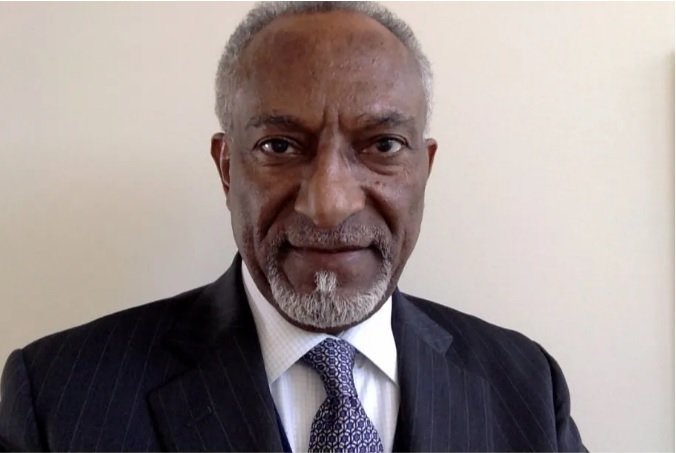
Teshome Abebe, a former Provost and Vice President for Academic Affairs at two institutions is currently Professor of Economics.
Editor’s Note : Views in the article do not necessarily reflect the views of borkena.com
__
Support Borkena : https://borkena.com/subscribe-borkena/
Join our Telegram Channel : t.me/borkena
Like borkena on Facebook
Borkena Ethiopian News Youtube Channel
To submit Press Release, send submission to info@borkena.com
Add your business to Ethiopian Business Listing / Ethiopian Business Directory
Join the conversation. Follow us on X (Formerly Twitter) @zborkena to get the latest Ethiopian News updates regularly.
A political crisis in which many contending actors played significant roles to shape a new political reality. The dynamic of events created unpredictable winer. Political storm is unpredictable. One can not blame unless he is a fortunes teller
Your coining of “Abiyfatalism” is a clever and rhetorically powerful contribution to the political lexicon, effectively capturing a specific sentiment of disillusionment. The article’s strength lies in its compelling, literary framing, giving a name to the emotional residue of betrayal felt by former allies like Lemma Megersa and Jawar Mohammed. By using these verifiable political falls as anchors, you build a persuasive narrative that feels both insightful and cathartic for a particular viewpoint.
However, the piece ultimately functions as a deliberately one-sided argument, a style that has become fashionable but lacks analytical balance. It presents a psychological portrait of Abiy as an inherently treacherous figure, while entirely omitting any potential justification for his actions, such as political necessity, strategic realignment, or responses to national threats. The analysis reduces complex governance and ethnic conflicts to a simple story of personal betrayal, attributing emotions like “shame” and “embarrassment” to actors without evidence.
This approach, while emotionally resonant, forsakes objectivity for polemic. It is a common tactic in contemporary commentary to present a singular, damning narrative as complete truth. A more robust analysis would acknowledge this complexity, exploring the “why” behind the schisms rather than settling for the emotionally satisfying “that” they occurred.
1). Abiy | ‘Amara Fanno’ [‘AF’] | OLF-IFLO | EPLF-TPLF: Abiy’s party was elected to a 5-year term by Ethiopians [with an on-site poll scrutiny by AU/EU/UN/US/etc.].
So, blame Egypt’s Proxies [EPLF-TPLF/OLF-IFLO/‘AF’/etc.] for destabilizing Ethiopia with guns from within & with Anti-Abiy Smear Campaign from abroad [→like you].
If the ‘AF’ is not Egypt’s Mercenary, why does it form alliance with the same EPLF-TPLF & OLF-IFLO that perpetrated Amara Genocide in the 1990s and at MayKadra?
NB: Insurrection against elected governments anywhere is Domestic Terrorism [DT]. DT should be dealt a Mortal Blow →No Excuse! No Mercy! No Safe Haven!
2). Haile-Selassie’s Ethiopia [The Feudal Monarchy (TFM)]: TFM made Ethiopia “The World’s Poster Child of Poverty & Famine.” They watched ≥200K Amaras starve to death than airdrop 100g [10¢] bread: [ youtu.be/uF_Bv5VGSZ4 ]
3). Derg’s Ethiopia: Egypt’s Proxy Thugs [EPRP/Meison/TPLF/EPLF] and Derg made Ethiopia “The World’s Poster Child of Open-Air Hell & Famine” and this song became ‘The World’s National Anthem for Ethiopia’: [ youtu.be/I04FcfIVtcU?t=21 ]
4). Abiy’s Ethiopia: Abiy catapulted Ethiopia from “The World’s Poster Child of Famine & Poverty” – to – “The World’s Poster Child of Prosperity & Greenery.” At least, Abiy provides ≥2 free meals to ≥10 million students! Here are some more:
(i). [ youtu.be/IFkIFUFWHgw ] ; (ii). [ youtu.be/CyW20X9qOa0 ] ;
(iii). [ youtu.be/6qxjlSJHHpk ] ; (iv). [ youtu.be/KqQiiCY1L9g ].
5). Adanech’s Addis: She transformed “The World’s Poster Child of Open-Air Public Toilet Capital” – to – “The World’s Poster Child of World’s 3rd Diplomatic Capital!” She feeds thousands in 26 Centers & ≥million children, too. Some More:
(i). [ youtu.be/ZGhNbMPvK3w?t=5 ] ; (ii). youtu.be/Hr4nG1YJkbE?t=1 ;
(iii). [ youtu.be/WEGe7BYdAxQ ]; (iv). [ youtu.be/NR1jai1CFME?t=8 ]