
Ethiopian Citizens for Social Justice Party Demands Full Public Disclosure, Independent Oversight, and Strict Consensus Adherence Following 38-Day Assembly
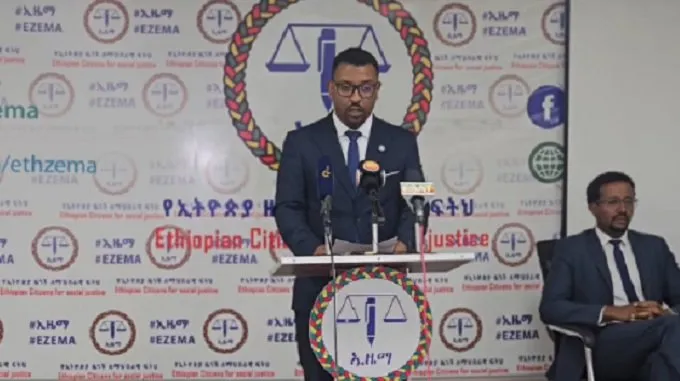
By Staff Writer
(NAIROBI, Kenya) — The Ethiopian Citizens for Social Justice Party (EZEMA) issued a follow-up statement outlining five core conditions that must govern the transition from deliberation to implementation following the conclusion of the National Dialogue Assembly.
EZEMA asserted that it will exclusively accept recommendations developed through group deliberations, formally endorsed, and signed with full support by all assigned participants across the eight dialogue working groups.
While acknowledging that the month-long assembly involving roughly 4,000 delegates opens a new path for resolving national disputes through dialogue, EZEMA stressed that the credibility of the entire multi-year initiative depends on how the Commission and the federal government handle the final presentation and execution phases.
The party detailed five specific reminders for the next steps:
- Strict Presentation Adherence: The National Dialogue Commission must present to the government and the public only the finalized recommendations that were explicitly read aloud and endorsed during the plenary assembly, strictly respecting the spirit of the discussions.
- Full Disclosure of Recommendations: The Commission must publicly release all 400 recommendations generated across the small group sessions to ensure complete operational transparency.
- Establishment of an Independent Oversight Body: In accordance with the enabling proclamation, an independent and legal monitoring body must be established to oversee the step-by-step implementation of all submitted proposals.
- Swift Implementation Schedule: The federal government must move rapidly to execute agreed-upon recommendations to prevent unnecessary delays that could erode public confidence.
- Strict Consensus Thresholds: Recommendations that did not receive the full, signed backing of designated group participants must be excluded from the final policy package submitted to state authorities.
EZEMA disclosed that throughout the “long and exhausting” assembly process initiated on July 16, 2026, its delegates encountered numerous strategic obstacles and procedural irregularities. The party revealed that rather than publicizing these disputes during active sessions, leadership repeatedly filed formal complaints directly with the Commission’s council to safeguard the overall dialogue framework.
Primary grievances centered on assigned experts and facilitators who displayed clear bias and distorted conduct during group sessions. Similar procedural objections were previously raised by the Amhara National Movement (NaMA) regarding commissioner-level interference.
The assembly concluded on August 23, 2026, with consensus reached on the majority of the 400 recommendations. However, four core thematic issues remained unresolved as divergent recommendations: the national flag, the overall system of governance, representation in the Council of Federation, and the administrative status of Addis Ababa.
Responding to participant concerns during the closing ceremony, Chief Commissioner Professor Mesfin stated that all compiled recommendations will be forwarded to the appropriate constitutional bodies for formal action.
__
Join our Telegram Channel: t.me/borkena
Like borkena on Facebook
Join the conversation. Follow us on X (formerly Twitter) @zborkena to get the latest Ethiopian news updates regularly. Subscribe to the YouTube channel. To share information or for submission, email info@borkena.com
This group should be commended for staying in the dialogue from its start all the way to its end. That gave us the opportunity to hear from an opposition party about what transpired during more than a month of the nation’s fate deciding pow-wow. Now let’s see how their critical suggestions will be handled/heeded. Good job!!!
Dr. Berhanu Nega and co. used to accuse ato Lidetu Ayalew of being a loyal opposition to the EPRDF. Now his party purging out all the Amhara figures in it, has become Abiy Ahmed`s comfort party and has lost support. Abiy Ahmed gave it some seats in his parliament as a payback to its services. Berhanu Nega will be the first to run away and leave Ethiopia in the event of Tigray military operation in Ethiopia.