
Escalating multi-front violence across Amhara, Tigray, Oromia, and bordering regions leaves over 1,500 dead in two months and triggers major displacement
By Staff Writer
(Nairobi, Kenya) — A sharp resurgence of multi-front armed violence, inter-communal clashes, and military confrontations across multiple regions has pushed Ethiopia into an increasingly volatile security landscape over the past two months, triggering widespread displacement and severe civilian casualties.
Data compiled by the Armed Conflict Location & Event Data Project (ACLED) indicates that political violence and targeted attacks resulted in 1,556 fatalities across Ethiopia during September and October. This total includes 863 deaths recorded during October alone, with approximately 300 of those victims directly identified as civilians. The vast majority of these incidents were concentrated within the Amhara, Tigray, and Oromia regions, alongside localized escalations in Benishangul-Gumuz, Gambella, South Ethiopia, and the Somali region.
Legal and political analysts, speaking to regional media outlets, attribute the persistence and recent spike in coordinated conflicts to a deeply entrenched “conflict-based political economy” and systemic governance gaps. Getachew Gebrekiros Tamre, an expert in law, peacebuilding, and conflict resolution, argued that armed conflict has increasingly been adopted as a functional tool for political enforcement by both state authorities and insurgent factions.
“Either the federal government or the regional government uses war as a way of political enforcement, and other opposing forces, to the same extent, have entered into the idea that there is no problem we can solve by sitting down and discussing, so our rights and interests must be enforced through war,” Getachew noted, emphasizing that structural drivers continue to perpetuate cyclical instability.
A primary catalyst for the recent regional escalation has been the renewal of military hostilities between federal forces and Tigray units. Dr. Awol Kassim Allo, a law lecturer at the University of Sheffield and an East African political analyst, suggested that the resumption of conflict in the north, combined with the activities of insurgent coalitions, has strategically overstretched state security forces. He pointed to the emergence of alliances among various armed opposition groups—including a seven-member coalition aiming to establish a transitional government and remove the administration of Prime Minister Abiy Ahmed—as a major factor contributing to simultaneous security pressures across multiple fronts.
The human cost has been severe across several administrative zones. In the Oromia Region, localized attacks and armed raids in areas such as Arsi (including Shirka and Arsi Robe woredas) and the former Horo Gudru Wollega Zone resulted in over 118 deaths during mid-October clashes. Regional authorities have blamed allied insurgent networks for the violence, reporting the detention of numerous combatants. Meanwhile, the Benishangul-Gumuz region also witnessed lethal violence, with the regional Police Commission confirming that 52 people were killed in an armed assault in the Buldigu woreda of the Assosa Zone.
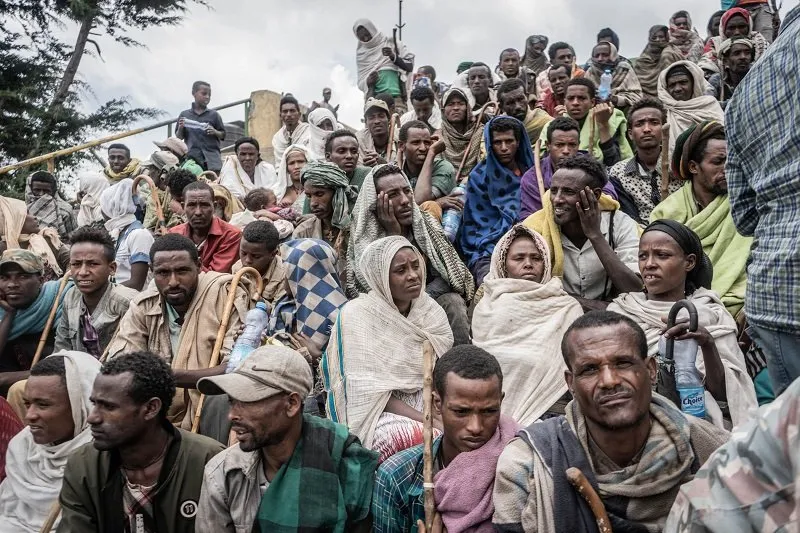
In Moyale town along the southern border, overlapping territorial disputes between Borana-Oromo and Garre-Somali communities erupted into heavy-weapon clashes, driving more than 50,000 refugees across the international border into Kenya and precipitating an urgent humanitarian emergency.
Critics and human rights advocates have sharply questioned the state’s capacity to ensure public safety. Dr. Awol told BBC Amharic that the widespread proliferation of violence demonstrates that the government has failed in its primary duty to protect citizens, arguing that officials must acknowledge systemic security shortcomings.
While the Ethiopian Human Rights Commission (EHRC) stated that it is actively investigating violations across affected regions—including recent fact-finding missions in Central Ethiopia, Horo Gudru, East Wollega, and Arsi—Commission officials noted that while certain types of localized assaults remain frequent, overall recording trends reflect ongoing, systemic security challenges rather than an entirely unprecedented scale of operation.
As regional administrations and federal security forces grapple with concurrent insurgencies, humanitarian actors warn that without renewed political dialogue and comprehensive security reforms, civilian populations across the country will continue to bear the heaviest toll of the deepening instability.
__
Join our Telegram Channel : t.me/borkena
Like borkena on Facebook
Join the conversation. Follow us on X (Formerly Twitter) @zborkena to get the latest Ethiopian News updates regularly. Subscribe to YouTube channel To share information or for submission, send e-mail to info@borkena.com
To Support Borkena : https://borkena.com/subscribe-borkena/ – one time support or small monthly options available. Inquire information about it : info@borkena.com