
By Yihenew Ewnetu
Sweden
1. Introduction
The Global Proliferation of Unmanned Aerial Vehicles
The proliferation of Unmanned Aerial Vehicles (UAVs)—commonly known as drones—has fundamentally altered the landscape of modern warfare. Globally, the utilization of combat drones shifted from being a tightly held monopoly of a few Western nations (primarily the United States and Israel) in the early 2000s to a highly decentralized technology accessible to a wide array of state and non-state actors. By the 2010s, nations such as Turkey, Iran, the United Arab Emirates (UAE), and China emerged as major suppliers of cost-effective, lethal combat drones, effectively democratizing asymmetric aerial warfare capabilities (European Council on Foreign Relations [ECFR], 2026, p. 2).
In Ethiopia, the historical reliance on traditional infantry and mechanized units shifted dramatically following the political transition in 2018. When Prime Minister Abiy Ahmed came to power, the Ethiopian National Defense Force (ENDF) was said to undergo a rapid modernization program. However, it was not until the outbreak of the Tigray War in November 2020 that Ethiopia’s drone capabilities were fully realized and deployed at scale, serving as a catalyst that fundamentally changed the trajectory of regional conflict (International Commission of Human Rights Experts on Ethiopia [ICHREE], 2023, p. 10).Prior to 2020, Ethiopia’s air capabilities were largely conventional. The integration of advanced surveillance and precision strike capabilities introduced a new operational standard. This transition was heavily driven by the necessity to project federal power across hostile topography without incurring the devastating ground troop casualties experienced in the early phases of the civil war.
Aims
The primary aim of this research is to illuminate the critical contribution of Abiy Ahmed’s drone warfare to the cumulative genocidal acts and widespread civilian atrocities committed under his administration. By examining the shift from conventional military strategies to digitized asymmetric warfare, this summary seeks to highlight the profound political, social, and economic devastations caused by the mass importation and deployment of drone technology across Ethiopia. Furthermore, this study aims to expose the primary state and corporate sources supplying this lethal technology. Finally, it endeavors to outline actionable recommendations and deterrence strategies for the international community to disrupt the supply chains and telecommunications infrastructure enabling the regime’s ongoing aerial warfare against its own populace.
2. Methodology and Methodological Limitations
This study employs a qualitative, multidisciplinary framework integrating political sociology, criminological theory (Techniques of Neutralization), and psychological models (Learned Helplessness, DARVO) to analyze the systemic impacts of drone warfare in Ethiopia. The research relies on secondary data analysis, triangulating a diverse array of sources to overcome information suppression. This includes open-source intelligence (OSINT) such as flight tracking and satellite imagery verification, international human rights documentation, localized civil society reports, macroeconomic assessments from international financial institutions, and leaked state communications. By synthesizing hardware procurement data with socio-political theory, the study models the operationalization of necropolitics in contemporary counterinsurgency.
The primary methodological limitation is the reliance on secondary and open-source data due to the Ethiopian state’s stringent restrictions on independent, on-the-ground investigations. The systematic telecommunication blackouts engineered by state-owned monopolies severely hinder real-time data collection, preventing the immediate verification of civilian casualties and comprehensive geographic damage assessments. Additionally, because military procurement contracts and operational expenditures are highly classified state secrets, the financial analysis relies on standardized baseline estimates derived from global defense export averages rather than exact national expenditure ledgers. Consequently, civilian casualty figures and economic costs presented should be interpreted as conservative estimates.
3. Theoretical Framework: The Engineering of Mass Helplessness and State Impunity
This framework posits that the Abiy regime secures total civilian submission through a tripartite system:
● The Application of Arbitrary Trauma
● The Induction of Psychological Paralysis, and
● The Rhetorical Distortion of Reality..
Mechanisms of Arbitrary Trauma:The foundation of this framework relies on exposing the population to severe, unpredictable, and unavoidable violence. This creates an environment where survival appears entirely disconnected from a civilian’s actions or choices.
● Technological Terror (The Drone Threat): The use of UAVs creates persistent, ambient terror. Applying Seligman and Maier’s (1967) psychological model of Learned Helplessness, the unpredictable nature of drone strikes conditions civilian populations to internalize a complete lack of control over their own survival (p. 5).
● Socio-Spatial Eradication: Mass displacements, identity-based violence (such as the Tole massacre), and state-sponsored “corridor projects” serve as physical extensions of arbitrary trauma.
● Projected State Omnipotence: To compound physical trauma with psychological terror, the regime explicitly communicates an infinite capacity for destruction. In leaked addresses to officials in Addis Ababa, Prime Minister Abiy Ahmed has weaponized the state’s demographic and financial leverage to crush the prospect of resistance. Emphasizing the expendability of the populace, Ahmed stated, “There is no problem in waging war. There are 130 million people and it is easy to get millions of fighters, arm the farmers and make them militias” (Ahmed, 2023a, p. 12). To underscore the state’s willingness to economically ruin the nation before ceding power, he further threatened, “We can liquidate all assets of about 10 billion USD and fight” (Ahmed, 2023a, p. 14).
The Mechanism: Learned Helplessness:The constant exposure to the stimuli above forcibly conditions the targeted populations to internalize a complete lack of control over their environment and survival.
● Loss of Agency and Futility: Civilians recognize that neither compliance, flight, nor resistance can reliably prevent drone strikes, forced displacement, or ethnic targeting. The state actively fosters this sense of futility through its rhetoric. Addressing armed resistance groups, Abiy Ahmed declared, “You can fight with us for the coming 10 years, but you will never win” (Ahmed, 2023b, p. 4). This statement is designed to project an inescapable reality where resistance only guarantees prolonged suffering.
● Psychological Paralysis: Chronic exposure to arbitrary destruction induces deep psychological passivity. The populace becomes too traumatized and fractured to politically mobilize or mount effective resistance. The state effectively engineers a traumatized citizenry, utilizing the psychological dread of the drone as a mechanism of mass subjugation.
The Shield: State Rhetoric and Reality Distortion:To sustain this violence without triggering decisive international intervention or unified domestic uprising, the state employs sophisticated defense mechanisms to manipulate perception and isolate the victims.
● Techniques of Neutralization: The state systematically denies accountability by utilizing the “denial of the victim” and “condemnation of the condemners” (Sykes & Matza, 1957, p. 665). Civilian casualties resulting from ENDF drone strikes are dismissed as fabricated propaganda, while international human rights bodies are accused of neo-imperialist bias.
● The DARVO Strategy: State communications surrounding drone atrocities closely mirror the dynamics of DARVO—Deny, Attack, and Reverse Victim
and Offender (Freyd, 1997, p. 24). The state denies IHL violations, attacks the credibility of researchers documenting massacres, and reverses the narrative by claiming the federal government is the true victim of an international disinformation campaign and foreign intervention..
Synthesis: The Feedback Loop of Subjugation: The deployment of DARVO and Neutralization Theory weaponizes gaslighting against the victims. When traumatized populations witness the state successfully denying their reality, framing itself as the victim, and openly boasting about its willingness to sacrifice “millions of fighters” (Ahmed, 2023a, p. 12), it reinforces their Learned Helplessness. The realization that their suffering is invisible to the broader world deepens their psychological paralysis, ultimately securing the regime’s goal of total, unresisting submission.
4. Abiy Ahmed’s Drone Warfare With His Own People
Abiy Ahmed’s Drone Warfare in Tigray (2020–2022): Under the Prosperity Party (PP) regime, drone warfare became the linchpin of the federal government’s military strategy. Initially facing significant setbacks during the Tigray conflict—where the Tigray Defense Forces (TDF) captured large swathes of territory and advanced to within 150 kilometers of the capital in late 2021—the Abiy administration aggressively procured armed drones from foreign allies. The mass deployment of foreign-supplied UAVs devastated TDF supply lines, destroyed ammunition convoys, and demoralized frontline fighters who had no defense against aerial bombardment. (ICHREE, 2023, p. 10).During this phase, the ENDF’s drone campaign began operationalizing a form of necropolitics—dictating survival through mass killings via drone strikes. The physical distance between the drone operators stationed in Bishoftu and the targets in rural Tigray fundamentally transformed the act of killing into a digitized, bureaucratic process, abstracting the humanity of the populace and lowering the psychological threshold for utilizing lethal force (Mbembe, 2019, p. 66).
Abiy Ahmed’s Drone Warfare in Amhara and Oromia Regions (2023–2026): Following the Pretoria Peace Agreement, the ENDF redirected its drone arsenal toward other internal conflicts, particularly against the Fano militia in the Amhara
region.and the Oromo Liberation Army (OLA) in the Oromia region. From April 2023 through 2026, the use of drones in Amhara intensified (Amhara Association of America [AAA], 2024, p. 1).Unlike conventional warfare, targeting these decentralized militia networks required sustained loitering and the targeting of urban and peri-urban centers. In Amhara towns like Finote Selam and Quarit, drone strikes routinely hit civilian infrastructure, public squares, and transportation hubs. In Oromia, the government utilized drones to strike suspected OLA training camps hidden within dense forests. This strategic pivot to digitized warfare across multiple regions underscores a military doctrine that prioritizes the rapid eradication of
insurgent elements over the preservation of civilian life, resulting in widespread psychological trauma and the erosion of public trust in government.
5. Drones, Inputs, and Foreign Experts (2018–2026)
The Ethiopian federal government’s acquisition strategy relies heavily on international defense contractors to sustain its combat and surveillance capabilities. The table below outlines the primary drone systems, their suppliers, and the sources of their technological inputs and maintenance.
It is important to make it clear from the outset that military procurement contracts and operational expenditures are classified. Thus financial estimates below (unit costs, munitions, and hourly fuel burn rates) represent standardized baseline figures derived from global defense export contracts, known manufacturer engine specifications, and prevailing aviation fuel rates (Global Military, 2026a, p. 2; Rotax Aircraft Engines, 2022, p. 18).
Detailed Fleet Breakdown by Supplier
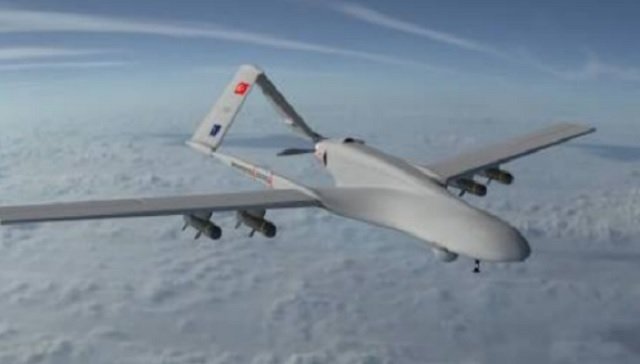
● Bayraktar TB2 (Turkey): Manufactured by Baykar Defense, these tactical drones are equipped with Wescam or Aselsan electro-optical/infrared (EO/IR) turrets, enabling long-range day/night targeting. They played a central role in interdicting TPLF’s supply convoys using MAM-L laser-guided
micro-munitions (Wezeman, 2026, p. 12). Satellite imagery confirmed at least six TB2s stationed at Harar Meda (Debre Zeyt) Air Force Base (Oryx, 2021b, p. 2). Combat attrition has been recorded; at least one TB2 was confirmed downed or crashed in the Horo Guduru Welega Zone of Oromia in May 2024 (UAS Vision, 2024, p. 1).
● Wing Loong I & II (China): Supplied by the Chengdu Aircraft Industry Group (CAIG). The Wing Loong I offered the ENDF an economical MALE strike platform with unit procurement costs near $1 million (Global Military, 2026a, p. 2). Cargo flight records from late 2021 confirmed its deployment, followed by photographic evidence of Chinese TL-2 laser-guided missiles at Ethiopian bases (Oryx, 2021c, p. 1). The heavier Wing Loong II platform provides expanded payload hardpoints and extended range, permitting
deep-penetration strikes across northern Ethiopia (Binnie, 2026, p. 5). ● Mohajer-6 (Iran): Procured in mid-2021 from Qods Aviation Industry Company, Mohajer-6 ground control stations were identified at Semera Airport (Oryx, 2021a, p. 2). While designed for dual reconnaissance and precision-strike roles using Qaem-series munitions, open-source analyses suggest many units were sidelined shortly after acquisition due to datalink instability and ground station integration issues (Zwijnenburg, 2026, p. 7).
Table 1: Drone Fleet Operational and Financial Estimates (2018–2026)
| Drone Type | Primary Supplier | Unit Cost | Fuel /per Hour (Full Payload) | Munition Cost (Fully Armed) | Sources |
| Bayraktar TB2 | Turkey / Baykar Makina. | ~$5*10⁶ | ~$15 – 30/hr | $100–200*10³ | Wezeman (2026, p. 12); Global Military (2026b, p. 3); Rotax Aircraft Engines (2022, p. 18) |
| Wing Loong I Wing Loong II Mohajer-6 | China / Chengdu Aircraft Industry Group (CAIG). China / CAIG / UAE. Chinese state firms; early airframes reportedly financed or transferred via UAE channels. Iran / Qods Aviation Industry Company. | ~$1*10⁶ . ~$2- 15*10⁶ ~$300- 500*10³ | ~$15 – $30 /hr ~15–20 L/hr ~$100– 200/hr ~150–200 l/hr ~$15 – 30/hr | $50- 100*10³ $360- 600*10³ $60 – 120*10³ | Global Military (2026a, p. 2); Oryx (2021c, p. 1) Binnie (2026, p. 5); VPK (2023, p. 3) Oryx (2021a, p. 2); Zwijnenburg (2026, p. 7) |
| Orion-E (MALE) | Russia / Kronstadt Group. | ~$3 – 5 *10⁶ | ~$25 – 50 /hr ~15–22 l/hr | $50-150*10³ | SIPRI (2026, p. 8); Defence Security Asia (2026, p. 1) |
| Locally Assemble d FPVs | China (Parts) / Ethiopia (Assembly). Commercial airframe kits and electronics imported from China | $1-5*10³ | Battery-power ed electric propulsion; charging costs are negligible) | $100 – 500 (Adapted RPG-7 warheads, mortar rounds, or commercial demolition charges) | Zwijnenburg (2026, p. 5) |
● Orion-E (Russia): Developed by Russia’s Kronstadt Group, this MALE drone represents Ethiopia’s latest foreign procurement. Delivery of a complete export system (comprising 3- 6 drones and mobile control shelters) was
confirmed in early 2026, making Ethiopia the first foreign military operator of the type in East Africa (Defence Security Asia, 2026, p. 1; SIPRI, 2026, p. 8).
● Domestic Kamikaze (Loitering Munition) Capabilities:By late 2025 and early 2026, the Ethiopian military adapted lessons from recent global conflicts by scaling domestic assembly of First-Person-View (FPV) loitering munitions at facilities run by AeroAbay and SkyWin Aeronautics (Zwijnenburg, 2026, p. 5). Abiy publicly confirmed the commencement of mass production..
Unlike radio-controlled FPVs, fiber-optic models unspool ultra-thin glass filaments behind the drone during flight. This physical connection creates total immunity to electronic warfare jamming and radio-frequency detection while transmitting uncompressed video back to the operator (Zwijnenburg, 2026, p. 5). Because these drones rely on lithium-polymer (LiPo) batteries and use modified munitions (such as PG-7V rocket rounds), their operational cost per flight is negligible, allowing the military to conduct high-density saturation strikes.To maintain and operate its advanced drone fleet, the Ethiopian Air Force (ETAF) relies on specialized cohorts of foreign contractors permanently or semi-permanently stationed at strategic hubs like Harar Meda Air Base.
Domestic Drone Technology: Attempts, Successes, and Obstacles:The Ethiopian government has built a diverse fleet of UAVs, sourced primarily from non-Western autocracies that do not tether weapons sales to strict human rights conditionalities. Lacking domestic high-tech manufacturing initially, the Abiy regime leveraged strategic geopolitical alliances, particularly utilizing cargo flights from the UAE’s Sweihan Air Base to Harar Meda Air Base to supply early hardware and operational oversight (United States Department of the Army, 2023, p. 14).
Recognizing the unsustainable economic burden of utilizing multi-million-dollar imported platforms (e.g., $15 million TB2 systems/Turkish drones) for localized counter-insurgency, the Ethiopian military doctrine evolved. By 2026, the state
prioritized the mass assembly of cheap, locally manufactured First-Person View (FPV) kamikaze drones at facilities like SkyWin Aeronautics and AeroAbay (AFP, 2026, p. 1). These localized quadcopters, armed with modified explosive payloads, cost between $5,000 and $10,000 per unit, allowing the ENDF to saturate conflict zones with loitering munitions.
Structural Obstacles and Foreign Dependency Despite state propaganda portraying these facilities as triumphs of self-reliance ahead of the 2026 elections, the domestic program faces severe structural limitations. The lack of an advanced indigenous aerospace research and development (R&D) sector means Ethiopia cannot produce critical high-tech components. The country remains entirely dependent on foreign supply chains for microchips, smart targeting sensors, artificial intelligence processors, and reliable missile racks (RANE Worldview, 2026, p. 2). Consequently, the domestic program is largely limited to assembling imported
Chinese kits. Furthermore, MALE drones remain entirely imported, and the operational architecture relies heavily on foreign technicians stationed at Harar Meda Air Base to maintain complex optics and aviation engines
Table 2: Roles and Origins of Foreign Drone Experts Serving Abiy’s Regime
| Origin Country | Role of Experts / Operators | Estimated Presence & Numbers (2018–2026) |
| United Arab Emirates (UAE) | Initial operators of Wing Loong drones during the early phase of the Tigray war (Nov-Dec 2020). Provided logistical pipelines, cargo management from Sweihan Air Base, and joint operational planning. | High involvement in 2020–2021 (~15–25 personnel); largely transitioned to advisory roles subsequently. |
| Turkey | Training ENDF personnel, technical maintenance of TB2 systems, and reported direct operation during critical offensives in 2021. Managed pilot certifications and mechanical workflows. | Sustained presence (2021–2026); ~10–20 engineers and technical advisors operating from Ethiopian airbases. |
| China | Systems engineers integrating Wing Loong data systems with the Information Network Security Administration (INSA). Electronic warfare and AI sensor integration. | Sustained presence (2021–2026); ~10–15 technical advisors. |
| Russia | Tactical flight simulation, maintenance workflows, and technical advisory for the deployment of Orion-E MALE drones. | Sustained presence (2024–2026); ~5–10 technical advisors. |
| Iran | Setup of ground control stations for Mohajer-6; telemetry configuration, calibration of tracking systems, and weapon payload maintenance (European Council on Foreign Relations [ECFR], 2026, p. 8). | Small specialized technical teams (~3–5 specialists) integrated with ENDF air force (2021–2026). |
6. The Role of Ethiopian Telecommunications in Drone Warfare
The operational execution of Ethiopia’s drone warfare is inextricably linked to a highly integrated, militarized civilian infrastructure. Ethio Telecom, the state-owned telecommunications monopoly, functions as the logistical nervous system for domestic drone operations. Because the government exercises complete control over the telecom architecture, it has weaponized this infrastructure for surveillance, targeting, and intelligence gathering.
a) Telecom Masts and GPS Tracking: The government utilizes mobile networks to triangulate the locations of opposition figures, rebel commanders, and troop concentrations. By tracking specific SIM cards and phone numbers, the ENDF can generate precise GPS coordinates. These coordinates are fed directly to Drone Command at Harar Meda, which connects to forward bases
like Bahir Dar via Ethio Telecom’s secure physical fiber-optic backbone, allowing low-latency communication for targeted strikes (International Telecommunication Union [ITU], 2026, p. 45). Furthermore, using surveillance architecture provided by foreign tech giants like ZTE, the state can intercept calls and metadata in real-time, effectively transforming civilian
communication tools into military targeting beacons.
b) Communication Blackouts: A hallmark of the PP regime’s military strategy is the imposition of total telecommunication blackouts in conflict zones, effectively utilized in Tigray (2020–2022) and Amhara (2023–2026). These blackouts serve a dual tactical purpose: they disrupt the
Table 3: The Telecom Northern, Western, and South-Western Fiber & Microwave Infrastructure for Drone Support
| Route Corridor | Regions Covered | Telecom / Drone Infrastructure Function |
| Northern Route | Amhara Highlands (Gojjam, Gondar, Wag Hemra), Tigray | High-gain military antennas mounted on commercial towers to bypass mountainous terrain blocking radio frequencies. Fiber-optic backbone connecting Harar Meda to Bahir Dar forward launching stations. |
| Western Route | Benishangul-Gumuz | Microwave relay stations and reinforced cellular masts extended to monitor border regions and support surveillance drones tracking localized insurgencies (e.g., Benishangul Gumuz Liberation Movement) and securing GERD airspace. |
| South-West ern Route | Wollega (Oromia) | Dense forest penetration infrastructure. Ethio Telecom masts utilized to triangulate GPS coordinates of OLA mobile camps. Integration of localized anti-jamming fiber-optic cables deployed alongside mobile ground control stations. |
command-and-control capabilities of insurgent forces and plunge civilian populations into an information vacuum. This digital darkness prevents early warnings of incoming strikes and sanitizes the battlefield from international scrutiny by blocking the immediate reporting of civilian casualties (ICHREE, 2022, p. 17).
c) Network Securitization and Drone Support Infrastructure: To bypass geographic blocking in mountainous regions, the ETAF mounts high-gain military antennas directly onto commercial cellular masts, creating Line-of-Sight (LOS) relay stations for drones.
6 . Economic and Opportunity Costs vs. Military Benefit
Macroeconomic Strain and the Macroeconomic Crisis:The massive financial diversion required to procure, maintain, and operate the drone program heavily exacerbates Ethiopia’s precarious macroeconomic position. As outlined in the April 2026 International Monetary Fund (IMF) World Economic Outlook, nations engaged in protracted internal conflicts utilizing advanced imported weaponry face severe inflationary pressures and rapid currency devaluation.
Foreign Currency Drain: Ethiopia’s expenditure of an estimated $815 million on UAV technology, munitions, satellite bandwidth, and foreign operational support directly drains foreign currency reserves. These are the same reserves critical for importing essential civilian goods, life-saving medicine, and agricultural inputs (IMF, 2026, p. 18).
Agricultural Disruption and Ecological Contradictions: Moreover, the physical deployment of drones has severely disrupted the agricultural sectors, particularly in the Amhara and Tigray regions. The constant threat of arbitrary strikes prevents farmers from tending to fields or safely transporting harvested goods to local markets, thereby directly exacerbating regional food insecurity. The government’s simultaneous push for large-scale, state-sponsored environmental projects, such as the Green Legacy Initiative, sits in jarring contradiction to the environmental and agricultural devastation wrought by its own aerial bombardments. The immense logistical capacity mobilized to transport munitions and sustain drone bases starkly contrasts with the failing supply chains for localized food distribution and civilian relief.
Opportunity Costs: The estimated $815 million expended on drone warfare between 2020 and 2026 represents a massive diversion of national capital. To fully grasp the socioeconomic impact of this militarization, it must be analyzed through the lens of opportunity cost—specifically, the public infrastructure that was forfeited to fund the drone fleet.
In the mid-2000s and 2010s, Ethiopia undertook a massive higher-education expansion. The average cost to construct, equip, and staff a comprehensive, high-capacity state institution comparable to Bahir Dar University or Jimma University is roughly $108 million (adjusted for modern building costs) (IMF, 2026, p. 42).
Therefore, the $815 million spent on drone hardware, precision munitions, and foreign contractors is economically equivalent to:
● Constructing seven (7) brand-new, fully equipped state universities. ● Building over 30 advanced regional referral hospitals.
On a micro-level, every Turkish Bayraktar TB2 purchased (costing approximately $15 million for a full system with ground control stations) equates to the total
forfeiture of a major regional hospital. This trade-off highlights the severe socioeconomic opportunity cost of digitized warfare in a developing economy, where state capital is literally vaporized in strike sorties rather than invested in human capital (IMF, 2026, p. 45).
The financial burden of Ethiopia’s drone program—primarily utilizing Bayraktar TB2 and Wing Loong I variants—is staggering, reflecting a massive macroeconomic strain. The operational execution of strikes requires significant capital for aviation fuel, satellite transponder bandwidth fees (costing hundreds of dollars per hour for secure data links), and imported munitions (e.g., MAM-L for the Bayraktar TB2 at $25,000–$40,000; AKD-10 for the Wing Loong I at $50,000) (Binnie, 2026, p. 7).
● Strike to Mekelle:: A 6-to-8 hour Bayraktar TB2 or Wing Loong I sortie from Bahir Dar or Asosa carrying dual missiles incurs an estimated operational cost of $80,000 to $110,000.
● Strike to Wag Hemra :(Amhara): A 4-to-5 hour flight from Bahir Dar dropping one precision bomb costs approximately $45,000 to $60,000.
● Strike to Wollega : Combating insurgents in dense forests requires heavy sensor usage, costing $50,000 to $70,000 per sortie (ECFR, 2026, p..15).
Between 2020 and 2026, the estimated total expenditure on drone hardware, munitions, and foreign contractors reached approximately $815 million. From a military-benefit perspective, this investment prevented the collapse of the federal government in 2021 and successfully degraded conventional rebel formations. However, the socio-economic opportunity cost is profound. This $815 million is economically equivalent to constructing seven fully equipped state universities or over 30 advanced regional referral hospitals (International Monetary Fund [IMF], 2026, p. 45). The state has essentially traded critical developmental infrastructure for digitized lethal capacity, exacerbating the very macroeconomic crises driving the insurgencies.
Total Military Effects of Drone Warfare on the Regime’s Opposition (2018–2026) The introduction of armed drones radically altered the balance of power in Ethiopia’s internal conflicts, though with varying degrees of long-term success against different opposition groups:
● Tigray Defense Forces (TDF): In late 2021, the TDF had advanced to within 150 kilometers of Addis Ababa. The mass deployment of UAVs was highly effective against the TDF’s conventional supply lines and ammunition convoys (ICHREE, 2023, p. 10).
● Fano (Amhara Region): Following the April 2023 dissolution of regional special forces, Fano launched a massive insurgency. Unlike the TDF, Fano operates in a highly decentralized manner embedded within civilian populations. While drones successfully functioned as a deterrents to Fano gatherings, the drone strikes failed to eliminate the advances and effectiveness of the Fano fighters. Instead, the reliance on aerial
bombardment in civilian zones fueled popular outrage, driving recruitment and resulting in a protracted, asymmetric stalemate (AAA, 2024, p. 2). ● Oromo Liberation Army (OLA): In Oromia, the government utilized drones to strike suspected OLA training camps hidden in dense rural forests. The military effect has been largely disruptive rather than decisive. Drone strikes have repeatedly hit civilian infrastructure and IDP camps, alienating the local population and failing to fundamentally dislodge the OLA’s grassroots network.
● Other Movements (Ugugumu, Benishangul Gumuz Liberation Movement): Drones have been deployed primarily in a surveillance and deterrence capacity in these regions, monitoring cross-border movements and securing strategic state infrastructure (like the GERD) against localized sabotage attempts.
7. Civilian Impact and Human Rights Concerns
The widespread deployment of both imported MALE platforms and low-cost domestic loitering munitions has drawn extensive documentation by human rights organizations and the United Nations. Between 2021 and 2026, airstrikes involving MAM-L and unguided munitions struck civilian-populated sites, including internally displaced persons (IDP), public market centers, flour mills, and regional medical facilities (ACLED, 2024, p. 6; Wezeman, 2026, p. 14). Human rights investigators note that the widespread availability of low-cost loitering munitions has lowered operational thresholds for deploying lethal force in populated counterinsurgency zones, compounding civilian displacement and casualties (Zwijnenburg, 2026, p. 8).
The proliferation of unmanned aerial vehicles has significantly altered the spatial and ethical dimensions of the Ethiopian conflict, with human rights organizations documenting a geographic expansion of civilian casualties. Exact casualty figures remain difficult to verify due to state-imposed communication blackouts and media restrictions; however, data compiled from international human rights reports, UN statements, and local media reveals distinct patterns of indiscriminate strikes in civilian zones. Between August 2023 and August 2024 alone, 53 confirmed drone and airstrikes were recorded in the Amhara region, resulting in at least 433 killed and 118 injured (Amhara Association of America [AAA], 2024, p. 2).
Table 4: Few of the Reported Atrocities and Massacres by Drone Strikes
| Date | Location / Region | Target | Victims | Sources |
| June 2021 | Togoga, Tigray | Marketplace | 64 killed, 180+ wounded | ICHREE Experts on Ethiopia [ICHREE], 2023 (p. 22) |
| Jan 7, 2022 | Dedebit, Tigray | School sheltering (IDPs) | At least 57 killed, 42 wounded | UN Human Rights Council, 2022 (p. 15); Human Rights Watch, 2022 (p. 4) |
| Jan 10, 2022 | Mai Tsebri, Tigray | Civilian area / IDPs | 17 killed | Al Jazeera, 2022 |
| Oct 19, 2022 | Meta Walkite, West Shewa (Oromia) | Civilian area / Roadway | 14 killed (including 3 students) | Global Coalition to Protect Education from Attack [GCPEA], 2024 (p. 4) |
| Aug 13, 2023 | Finote Selam, Amhara | Civilian truck / Town center gathering | At least 30 killed, 50 injured | AAA Report, 2024 (p. 3-4) |
| Sep 17, 2023 | Dembecha & Quarit, West Gojjam Zone | Civilian town areas | Over 30 civilians killed | AAA Update, Sep 2023 |
| Nov 5, 2024 | Debub Achefer, West Gojjam, Amhara | School, market place, and health centre | 43 killed, 21 injured (including students) | AAA & Addis Standard Reports, Nov 2024 (p. 2) |
| Nov 7, 2024 | Masero-Denb, West Armachiho, Amhara | Civilian School Area | 37 killed, 17 injured | AAA Report, Nov 2024 |
| Nov 8, 2024 | Gebeze Mariam, Quarit, West Gojjam | Birr Adma School area | 9 civilians killed | Fenix Insight / AAA Report, Nov 2024 |
| Nov 9, 2024 | Biradama Kebele, Quarit, Amhara | Primary School | 10-11 killed, 4 injured | AAA Report, Nov 2024 |
| Nov 24, 2024 | Kasima kebele, Basona Werana, North Shewa | Bezo Primary School | 7 civilians killed | Amhara War Updates, 2024 (p. 1) |
| Feb 7, 2025 | Zenbo Kebele, Ephrata Gidim, North Shoa | Residential Mud House | 4 killed (including family members) | Ethiopian Media Services (EMS) / AAA, Feb 2025 |
Table 5: Few of the Reported Destruction on Civilian Infrastructure
| Date | Location | Types of Civilian Infrastructure Destroyed | Sources |
| Jan 7, 2022 | Dedebit, Tigray | School buildings used as IDP shelters (Hit by three MAM-L explosives) | Human Rights Watch, 2022 (para. 3) |
| Late May 2022 | Sheraro, Tigray | School sheltering IDPs | GCPEA, 2024 (p. 2) |
| Aug 26, 2022 | Mekelle, Tigray | Kindergarten / Children’s playground adjacent to a kindergarten | Amnesty International, 2022 (p. 6); GCPEA, 2024 (p. 2) |
| Oct 4, 2022 | Adi Daero, Tigray | School hit by an airstrike, killing over 50 IDPs | GCPEA, 2024 (p. 2) |
| Oct 24, 2022 | Chobi, West Shewa (Oromia) | School building destroyed, killing students on premises | GCPEA, 2024 (p. 3) |
| Nov 4, 2024 | Angada, Angolalla Tera, North Shewa | Shola-Meda Primary School | Amhara War Updates, Nov 2024 |
| Nov 5, 2024 | Debub Achefer, West Gojjam | Elementary school, local marketplace, and health centre | AAA, Nov 2024 |
| Nov 13, 2024 | Lay-Gayint Woreda | Zagoch Secondary School | AAA, Nov 2024 |
| Nov 13, 2024 | South Gondar Zone, Amhara | Estie Andabet School (Damaged by airstrike) | Amhara War Updates, Nov 2024 |
| Nov 17, 2024 | Lay-Gayint Woreda, Amhara | Jaragedo Welesh School | Amhara War Updates, Nov 2024 |
| Nov 18, 2024 | Waro-Shiwot Kebele, South Wollo | Civilian residential homes extensively destroyed | AAA, Nov 2024 |
| Nov 21, 2024 | Chingua & Doshit kebeles, South Wollo | Public schools | AAA, Nov 2024 |
| Nov 29, 2024 | Merawi town, West Gojjam, Amhara | Gobata Primary School (Explosive damage) | Amhara War Updates, Nov 2024 |
| 2023 – 2026 | Gondar / Gojjam Zones (Amhara) | Widespread reports of historical monasteries, Orthodox churches, and local clinics suffering collateral damage or deliberate targeting | Field Reports / Amnesty International, 2024 |
Attacks on Public Infrastructure: A deeply concerning pattern has emerged where ENDF drone operations prioritize the eradication of insurgent elements over the preservation of civilian life. This has led to systematic destruction of public infrastructure, directly violating the International Humanitarian Law (IHL) principles of distinction and proportionality (Amnesty International, 2024, p. 7).
8. What Can Be Done to Deter Wanton Drone-Related Atrocities?
Invoking War Crime Clauses and International Judicial Mechanisms: The systematic targeting of civilian infrastructure—including schools, hospitals, IDP camps, and religious institutions—constitutes a grave violation of International Humanitarian Law (IHL) and the Geneva Conventions. Organizations such as
Amnesty International, Human Rights Watch, the Amhara Association of America (AAA), and the UN International Commission of Human Rights Experts on Ethiopia have repeatedly documented incidents that amount to war crimes (ICHREE, 2022, p. 1).
Holding the Abiy Ahmed regime accountable requires activating international judicial mechanisms. This includes potential investigations by the International Criminal Court (ICC) or the establishment of specialized regional tribunals. These judicial efforts must focus specifically on the principles of distinction and proportionality, which have been blatantly ignored in the deployment of drone strikes.
Pressure on Suppliers of Drone and Satellite Technology: The international community’s reliance on diplomatic condemnation has proven insufficient. To curtail the ongoing atrocities, targeted pressure must be applied directly to the entities enabling Ethiopia’s drone warfare:
● Sanctions on State Suppliers: Diplomatic and economic pressure must be applied to Turkey, Iran, the UAE, and China to halt the unrestricted sale of combat drones to Ethiopia. The growing trend of “drone diplomacy” must be countered with international arms embargoes when weapons are explicitly utilized against civilian populations.
● Corporate Accountability for Dual-Use Technologies: Western companies whose commercial components are found embedded in Ethiopian drones must be held accountable. Tightening export controls on navigational tools or missile rack components can rapidly degrade the operational capacity of the ENDF’s drone fleet.
● Restricting Telecommunication Exploitation: International tech firms that provide the architecture for Ethio Telecom’s surveillance apparatus must be pressured through global tech-rights frameworks to ensure their
telecommunications tools are not weaponized for lethal targeting, GPS tracking, and ethnic persecution.
Table 5: State Suppliers and Private Companies Complicit in the Drone Warfare
| Entity Type | Country / Origin | Company / State Actor | Role in Ethiopian Drone Warfare | Proposed Deterrence Action |
| State / Primary Contractor | Turkey | Baykar Makina | Supplies Bayraktar TB2 systems and training. | Immediate arms embargoes and diplomatic sanctions restricting the sale of UAVs to active conflict zones. |
| State / Primary Contractor | China | Chengdu Aircraft Industry Group (CASC) | Supplies Wing Loong II drones and components for local FPV assembly (e.g., SkyWin Aeronautics). | International diplomatic pressure and trade leverage regarding dual-use technology transfers. |
| State / Primary Contractor | Iran | Qods Aviation Industry Company | Supplies Mohajer-6 drones, Iranian technicians, and ground control stations. | Enforcement of existing international sanctions on Iranian weapons proliferation. |
| State / Primary Contractor | Russia | Kronstadt Group | Supplies Orion-E MALE drones, navigation arrays (GLONASS), and technical advisors. | Global sanctions monitoring targeting Russian defense exports. |
| State Facilitator | United Arab Emirates (UAE) | UAE Armed Forces / Sweihan Air Base | Provided early logistical pipelines, financial backing, and cargo transport for drone deliveries. | Diplomatic pressure from Western allies to cease logistical support for internal Ethiopian conflicts. |
| Private Tech Company | United States / Switzerl and | Garmin (and similar commercial tech firms) | Commercial navigational technologies historically found utilized in drone component ecosystems. | Stringent export controls on commercial GPS and navigational tech susceptible to military retrofitting. |
| Private Tech Company | United Kingdom (Historic al) | EDO MBM Technology | Produced critical missile rack components utilized in Turkish drone systems. | Corporate accountability clauses preventing sub-component sales to third-party states engaged in civil wars. |
| Telecommunicati on / Surveillance | China / Global | ZTE (and associated telecom contractors) | Provides the foundational architecture for Ethio Telecom’s mobile networks, utilized for GPS targeting and surveillance. | Global tech-rights frameworks requiring human rights audits before supplying state-monopoly telecom infrastructure. |
To effectively deter the ongoing atrocities, international pressure must target the specific global supply chains sustaining the ENDF’s drone capabilities. The table below identifies the primary state actors and private corporate entities involved in providing hardware, munitions, sub-components, and surveillance technology.
● Raising National and International Awareness: The narrative surrounding the deployment and local assembly of drone technology has been meticulously curated by state media, transforming the Unmanned Aerial Vehicle (UAV) from a mere tactical weapon into a potent symbol of national resurgence and technological prowess. The inauguration of domestic manufacturing facilities, such as SkyWin Aeronautics and AeroAbay in 2026, is heavily utilized in domestic political propaganda (Agence France-Presse [AFP], 2026, p. 3). The drone is portrayed as a triumph of Ethiopian self-reliance, effectively attempting to mask the deep structural dependencies on imported Chinese airframes, Turkish optics, and Emirati logistics. These dependencies entail present and future economic and national security risks. It is important to let the Ethiopian people understand this fact to isolate the PP regime.
The simultaneous presence of Emirati, Turkish, Chinese, Russian, and Iranian technological footprints at airbases like Harar Meda highlights the Horn of Africa’s transformation into a proxy theater for Middle Eastern and global powers. The influx of UAV technology has triggered a regional arms race, prompting neighboring states to seek their own asymmetric aerial capabilities. Rather than stabilizing the Ethiopian state, the drone program inherently destabilizes a region already fraught with historical border disputes and cross-border insurgencies.
● Pinpointing International Failure of Export Controls and Diplomatic Consistency:The widely documented use of foreign-supplied drones in mass civilian casualty events (such as the Togoga market and Dedebit school massacres) has drawn severe condemnation from the international community. However, the Ethiopian theater has starkly exposed the fundamental impotence of global arms export controls in the era of drone proliferation. It is important to underline this fact and raise global awareness.
While the United States suspended Ethiopia’s duty-free access under the African Growth and Opportunity Act (AGOA) in late 2021—citing gross violations of internationally recognized human rights—this macroeconomic pressure entirely failed to halt the influx of UAV technology. The Abiy regime simply bypassed Western conditionalities by pivoting to non-Western allies.
Calls from the UN Human Rights Council and international watchdogs for a comprehensive arms embargo on Ethiopia have been consistently bypassed by the strategic interests of supplier nations. Countries like Turkey, China, and Iran view the Ethiopian conflict not only as a highly lucrative defense market but also as a vital real-world testing ground for their respective military hardware. Consequently, the Ethiopian theater demonstrates how the proliferation of relatively cheap, highly lethal drone technology has fundamentally outpaced the international legal frameworks designed to protect civilians, rendering traditional diplomatic leverage increasingly ineffective.
9. Conclusion
The integration of unmanned aerial systems has undeniably transformed the Ethiopian National Defense Force (ENDF), providing the federal government with an unprecedented capacity to project lethal force across its territory without risking significant ground infantry attrition. The Abiy Ahmed administration has successfully utilized this technology to prevent state collapse in 2021 and force decentralized insurgencies into protracted stalemates. However, this militarization reveals a profound paradox of state power.
The reliance on drones is not a reflection of entrenched, legitimate state authority; rather, it is a stark admission of the state’s inability to govern through consensus, political negotiation, or traditional terrestrial dominance. By substituting political legibility with remote-controlled lethality, the state has embraced a violent form of authoritarian high modernism (Scott, 1998, p. 82). The Abiy regime attempts to flatten the complex, localized socio-political realities of the Horn of Africa into targetable digital coordinates.
The result is a necropolitical regime that relies almost entirely on imported technology and foreign technicians to maintain internal sovereignty (Mbembe, 2003, p. 12). While drones can disrupt insurgent formations and terrorize civilian populations into learned helplessness, they cannot rebuild the eroded social contract or cure the devastating macroeconomic crises. The era of drone warfare in Ethiopia ultimately highlights the devastating limits of technological solutions to deeply rooted political, historical, and sociological grievances.
References
Addis Standard. (2024). Reports on civilian infrastructure destruction in Amhara. [News updates compilation].
Agence France-Presse. (2026, September 8). Ethiopia boosts drone production to fight rebels. France 24.
https://www.france24.com/en/live-news/20260908-ethiopia-boosts-drone-production to-fight-rebels
Ahmed, A. (2023a, July 15). Closed-door address to the Prosperity Party Executive Committee [Audio transcript]. Addis Ababa, Ethiopia.
Ahmed, A. (2023b, August 10). Speech on national security and regional conflict [Televised broadcast transcript]. Ethiopian Broadcasting Corporation (EBC).
Al Jazeera. (2022). Reports on civilian casualties and drone deployments in the Tigray conflict. https://www.aljazeera.com/
Amhara Association of America. (2023). Summary of recent recorded drone and air strikes in Amhara Region, Ethiopia.
Amhara Association of America. (2024). Summary of recent recorded drone and air strikes in Amhara Region, Ethiopia. Amhara America.
https://www.amharaamerica.org/post/drone-air-strikes-amhara-region-ethiopia
Amhara Association of America & Ethiopian Media Services. (2025). Summary of recent recorded drone and air strikes in Amhara Region, Ethiopia.
Amhara War Updates. (2024). Continuous reporting on civilian infrastructure destruction and drone strikes in the Amhara region. [Dataset/Report].
Amnesty International. (2022). Ethiopia: “Today was a day of terror”: Drone strikes and civilian casualties in the Tigray conflict (AFR 25/5431/2022). Amnesty International Publications.
https://www.amnesty.org/en/documents/afr25/5431/2022/en
Amnesty International. (2024). Ethiopia: Deepening crisis in the Amhara region—Unlawful strikes, telecommunication blackouts, and summary executions. Amnesty International Research Briefs.
Armed Conflict Location & Event Data Project. (2024). Intensified counterinsurgency in Amhara: The escalation of UAV deployment (Regional Brief). ACLED.
Binnie, J. (2026). Tactical assessments of East African unmanned aerial systems: The proliferation of modified commercial platforms. Janes Defence Intelligence Review, 34(9), 1–14.
Defence Security Asia. (2026, January 25). Ethiopia becomes first foreign operator of Russia’s Orion-E MALE. Defence Security Asia.
https://defencesecurityasia.com/en/ethiopia-russia-orion-e-male-drone-first-foreign-o perator-africa
European Council on Foreign Relations. (2026). Deadly skies: Drone warfare in Ethiopia and the future of regional stability. ECFR Policy Brief Series. https://ecfr.eu/publication/deadly-skies-drone-warfare-in-ethiopia/
Fenix Insight. (2024). Analysis of explosive damage on civilian infrastructure in the Amhara region.
Freyd, J. J. (1997). Violations of power, adaptive blindness, and betrayal trauma theory. Feminism & Psychology, 7(1), 22–32.
https://doi.org/10.1177/0959353597071004
Global Coalition to Protect Education from Attack. (2024). Education under attack 2024: Ethiopia Country Profile. GCPEA.
https://protectingeducation.org/wp-content/uploads/eua_2024_ethiopia.pdf
Global Military. (2026a, April 7). Chengdu Wing Loong I: Drone specifications, operational history & performance parameters. Global Military Aircraft Compendium. https://www.globalmilitary.net/aircraft/wing-loong-i/
Global Military. (2026b, July 23). Baykar Bayraktar TB2: Technical profile, avionics, top speed & combat range. Global Military Aircraft Compendium. https://www.globalmilitary.net/aircraft/bayraktar-tb2/
Human Rights Watch. (2022, March 24). Ethiopia: Airstrike on camp for displaced likely war crime. Human Rights Watch News.
https://www.hrw.org/news/2022/03/24/ethiopia-airstrike-camp-displaced-likely-war-cri me
International Commission of Human Rights Experts on Ethiopia. (2022). Report of the International Commission of Human Rights Experts on Ethiopia (A/HRC/51/46). United Nations General Assembly.
https://www.ecoi.net/en/file/local/2078867/G2251529.pdf
International Commission of Human Rights Experts on Ethiopia. (2023). Report of the International Commission of Human Rights Experts on Ethiopia (A/HRC/54/55). United Nations Human Rights Council.
https://www.ohchr.org/en/hr-bodies/hrc/ichre-ethiopia/index
International Monetary Fund. (2026). World economic outlook: Steady amid divergence (World Economic and Financial Surveys, April 2026). International Monetary Fund.
International Telecommunication Union. (2026). Infrastructure mapping, optical networks, and telecommunications development in the Horn of Africa (ITU-D Regional Study Series). International Telecommunication Union Publications.
Mbembe, A. (2003). Necropolitics. Public Culture, 15(1), 11–40.
https://doi.org/10.1215/08992363-15-1-11
Mbembe, A. (2019). Necropolitics (S. Corcoran, Trans.). Duke University Press. https://doi.org/10.1215/9781478007227
Oryx. (2021a, August 23). The Israel connection: Ethiopia’s other UAVs. Oryx Blog. https://www.oryxspioenkop.com/2021/08/the-israel-connection-ethiopias-other.html
Oryx. (2021b, October 11). Wing Loong Is over Ethiopia: Chinese UCAVs join the battle for Tigray. Oryx Blog.
https://www.oryxspioenkop.com/2021/10/wing-loong-is-over-ethiopia-chinese.html 20
Oryx. (2021c, November 10). Ethiopia acquires Chinese TL-2 missiles for its Wing Loong I UCAVs. Oryx Blog.
https://www.oryxspioenkop.com/2021/11/ethiopia-acquires-chinese-tl-2-missiles-for-it s-wing-loong.html
RANE Worldview. (2026, September). Ethiopia: Government scales up domestic drone production. RANE Risk Intelligence Analysis.
https://worldview.ranenetwork.com/article/ethiopia-drone-production
Rotax Aircraft Engines. (2022). Operators manual for Rotax engine types 912 and 914 series (Doc. No. OM-912/914). BRP-Rotax GmbH & Co KG.
Scott, J. C. (1998). Seeing like a state: How certain schemes to improve the human condition have failed. Yale University Press.
Seligman, M. E. P., & Maier, S. F. (1967). Failure to escape traumatic shock. Journal of Experimental Psychology, 74(1), 1–9. https://doi.org/10.1037/h0024514
Stockholm International Peace Research Institute. (2026). Trends in international arms transfers and UCAV proliferation in East Africa (SIPRI Research Report No. 42). https://www.sipri.org/publications/arms-transfers
Sykes, G. M., & Matza, D. (1957). Techniques of neutralization: A theory of delinquency. American Sociological Review, 22(6), 664–670.
https://doi.org/10.2307/2089195
UAS Vision. (2024, June 12). Ethiopia loses Bayraktar TB2 drone in Oromia region. UAS Vision News.
https://www.uasvision.com/2024/06/12/ethiopia-loses-bayraktar-tb2-drone
United Nations Human Rights Council. (2022). Statements and reports on civilian casualties in northern Ethiopia. UN HRC Publications.
United States Department of the Army. (2023). Ethiopia acquiring Emirati and Chinese drones (T2COM G2 Operational Environment Enterprise Brief). Defense Technical Information Center.
VPK. (2023, December 1). Chinese drones have flown far away: Export dynamics of the Wing Loong series. Military-Industrial Courier.
https://vpk.name/en/801088_chinese-drones-have-flown-far-away.html
Wezeman, P. (2026). The impact of imported UCAVs on internal conflicts in Ethiopia (SIPRI Policy Brief). Stockholm International Peace Research Institute.
Zwijnenburg, W. (2026). Ethiopia’s drone expansion signals industrial ambition but leaves civilian toll (PAX Briefing Paper). PAX Peace Organization.
Editor’s Note: Views in the article do not necessarily reflect the views of borkena.com
__
Join our Telegram Channel: t.me/borkena
Like borkena on Facebook
To submit a press release, send the submission to info@borkena.com
Add your business to Ethiopian Business Listing / Ethiopian Business Directory
Join the conversation. Follow us on X (formerly Twitter) @zborkena to get the latest Ethiopian news updates regularly.
Just surprised what the purpose of this article is. It looks to me not many people are going to read it. It reminds me the articles by Al Mariam when he was writing against TPLF. If this was aimed at making Ethiopians aware of what’s going on in our country, I suggest. It sticks with the main message.
This article is in line with Amhara extremist rhetoric and propaganda.