 has significantly shifted its foreign policy posture in the Horn of Africa, says the author. Read more.)
By: Yihenew Ewnetu
Sweden
1. Introduction
The Horn of Africa has historically served as a critical geostrategic chokepoint bridging the Middle East, Africa, and the Indian Ocean. Over the last decade, the United Arab Emirates (UAE) has significantly shifted its foreign policy posture in the region, transitioning from soft-power diplomacy characterized by humanitarian aid to a highly interventionist, hard-power approach (Maru, 2017, p. 4). In Somalia, the UAE established bilateral agreements with regional administrations, most notably securing the Berbera port concession in Somaliland, which allowed Abu Dhabi to project naval power and secure commercial logistics independent of the federal government in Mogadishu. In Sudan, the UAE entrenched its influence by heavily investing in agricultural projects for domestic food security and cultivating deep political-military relationships with Sudanese security apparatuses, notably the Rapid Support Forces (RSF).This shifting strategy has profound implications not only for regional sovereignty but also for illicit transnational economies, establishing a structural basis for the exploitation of peripheral populations and their biological resources during periods of acute instability.
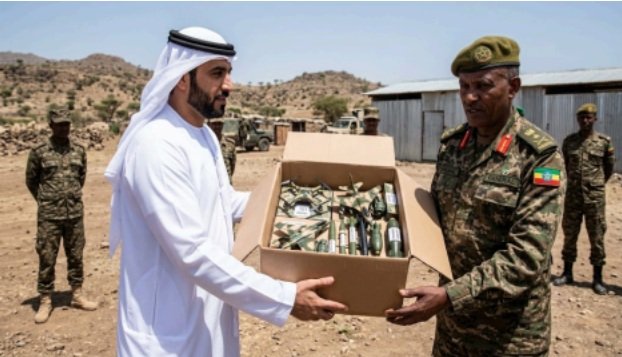
1.1. When, How, and Why the UAE Became Interested in Ethiopia? The UAE’s direct strategic interest in Ethiopia escalated significantly around 2018, coinciding with the political transition that brought Prime Minister Abiy Ahmed to power. Recognizing Ethiopia as the demographic and geopolitical anchor of the Horn, the UAE (alongside Saudi Arabia) played a pivotal role in brokering the 2018 peace agreement between Ethiopia and Eritrea. Abu Dhabi’s interest was driven by the necessity to secure its Red Sea flank against regional rivals (such as Iran, Turkey, and Qatar) and to integrate Ethiopia’s vast emerging market into UAE-controlled logistical corridors originating in Somaliland and Eritrea. To consolidate this influence, the UAE injected billions of dollars in central bank deposits and infrastructural investments into Addis Ababa, subsequently backing the federal government militarily to prevent state collapse during subsequent internal conflicts (Plaut, 2022, p. 2).
2. Aim of the Study
The primary aim of this study is to highlight and critically analyze the aggressive involvement of the UAE in the internal conflicts of various African nations. Specifically, this analysis seeks to unpack the geopolitical, economic, and strategic reasons for the UAE’s investments in regional instability, and to identify what kinds of benefits the UAE might have gained from fueling these conflicts. In this regard, the study aims to explore whether the discrepancies in organ donation and transplantation statistics in the UAE have to do with alleged organ trafficking and harvesting in Africa, and whether the boost
in transplantation statistics in the UAE between 2020 and 2026 correlates with the surging conflicts in the Horn of Africa during the same period. A central focus is directed toward the UAE’s role in the Ethiopian conflicts.
3. Methods and Methodological Limitations
This academic summary employs a qualitative document analysis methodology. Data was synthesized from secondary academic literature, reports from the United Nations Security Council (UNSC) Panels of Experts, open-source intelligence (OSINT) regarding arms proliferation, and international legal filings at the International Court of Justice (ICJ). To address the specific aims regarding medical discrepancies, the methodology additionally integrates a comparative statistical analysis of UAE health data, cross-referencing domestic organ donation rates with the total volume of transplants performed between 2020 and 2026 against the timelines of major conflicts in the Horn of Africa.
Limitations: The primary methodological limitation is the opacity of state-sponsored military and intelligence operations, often obscured by the “fog of war.” Analyzing covert proxy warfare and illicit transnational resource flows (such as gold smuggling and alleged human organ trafficking) relies heavily on secondary tracking and circumstantial evidence. Furthermore, accessing verifiable, independent data from active conflict zones in Sudan and Ethiopia’s Amhara region remains severely restricted.
4. Theoretical Framework: Explaining UAE Involvement
To make the UAE’s interventionist policy vivid and understandable, it is essential to unpack the central arguments of the interconnected theories of political science, international relations, and political sociology that govern its actions:
Neorealism and Proxy Warfare: The essence of neorealism rests on the premise that the international system is fundamentally anarchic—lacking a central governing authority—forcing states to prioritize their own survival through continuous power maximization (Mearsheimer, 2001, p. 29). In this framework, the UAE acts as an ambitious “middle power” operating within a severe security dilemma. Because direct, conventional military confrontation with regional hegemons (like Iran or Saudi Arabia) carries existential risks and high economic costs, the UAE employs proxy warfare. By arming, funding, and directing local actors (such as the RSF in Sudan or providing drone support to the Prosperity Party in Ethiopia), the UAE effectively projects its military and political power beyond its borders. This strategy allows Abu Dhabi to secure strategic chokepoints, extract resources, and balance against rivals with plausible deniability and minimal shedding of Emirati blood.
Securitization Theory: Originating from the Copenhagen School of security studies, this theory argues that “security” is not an objective reality, but a calculated speech act. Securitization occurs when a state actor successfully frames a specific issue or group as an acute, existential threat to the survival of the state, thereby convincing the domestic and international audience that emergency measures are justified. The UAE government frequently securitizes regional instability in the Horn of Africa. By framing the rise of political Islam, democratic movements, or the collapse of allied regimes in the Red Sea corridor as existential threats to the UAE’s own domestic stability and economic lifelines, Abu Dhabi bypasses normal diplomatic protocols. This theoretical framing legitimizes extraordinary, extra-legal external interventions—such as funneling weapons into civil wars or backing authoritarian regimes—under the guise of national defense and counter-terrorism.
Necropolitics (Achille Mbembe): Building upon and departing from traditional theories of state power that focus on the management of life, Achille Mbembe’s necropolitics focuses on the ultimate expression of sovereignty: the power to dictate who may live and who must die (Mbembe, 2003, p. 11). The central argument is that modern capitalism and statecraft often function by creating “death worlds”—peripheral zones where populations are subjected to conditions of life conferring upon them the status of the living dead. Applied to the UAE’s involvement in the Horn of Africa, this theory illuminates how human bodies and entire communal structures in resource-rich conflict areas (like Sudan and Ethiopia) are rendered completely disposable. The UAE’s strategy subjects these peripheral populations to the “power of death”—through the continuous supply of advanced weaponry and funding to genocidal actors—to clear the way for the unchecked extraction of capital, whether that capital is Sudanese gold, agricultural land, access to strategic maritime ports, or, as emerging allegations suggest, human biological resources.
5. Results
5:1 The Political Economy of UAE Intervention in Conflict (2020–2026) The foreign policy of the United Arab Emirates (UAE) across the Red Sea littoral, the Horn of Africa, and Central Africa between 2020 and 2026 reflects an assertive transactional statecraft. Abu Dhabi has merged security sector assistance, commercial logistics concessions, and paramilitary proxy funding to project influence across maritime chokepoints and access critical mineral corridors.
Estimated Direct Costs of Military Commitments (2020–2026) Emirati security expenditures across Ethiopia, Sudan, Somalia, and the Democratic Republic of the Congo (DRC) comprise hardware transfers, chartered air-bridge logistics, private military contractor (PMC) deployments, and the operation of expeditionary forward operating locations. Because official defense allocations are classified state secrets under UAE Federal Law, these figures represent consensus estimates derived from United Nations Panel of Experts investigations, flight-tracking intelligence, and arms-monitoring bodies (SIPRI, 2024, pp. 12–16; UN Security Council, 2024b, pp. 38–44).
Table 1: Instances of conflict investment
| Country / Theater | Hardware & Munitions Transferred | Facility & Operational Footprint | Estimated Total Cost (2020–2026) |
| Ethiopia | Wing Loong I/II, Bayraktar TB2 (procured/financed), Qasoar UAVs, VT4 armor, EF-P precision-guided munitions. | Harar Meda Air Base logistics cell, Bole International Airport cargo hubs, Benishangul-Gumuz secret military training camp, and Asosa drone base/airfield (near GERD). | $1.8B – $2.4B |
| Sudan (RSF areas) | MANPADS, 120mm mortars, Cornet ATGMs, Nimr armored vehicles, armed drones. | Amdjarass field airstrip/hospital corridor (Chad border), logistical staging hubs in eastern Chad and Kufra. | $2.2B – $3.1B |
| Somalia (incl. Somaliland & Puntland) | Armored personnel carriers, light arms, fast patrol craft, counter-insurgency surveillance suites. | Bosaso operational base, Berbera maritime facility, General Gordon military training camp (Mogadishu, terminated/refitted). | $650M – $900M |
| DRC | Border surveillance drones, perimeter security hardware, direct counter-rebel tactical advising. | Tactical liaison command in Kinshasa and eastern logistics advisory cells. | $250M – $400M |
The Basis of UAE Interests in Ethiopian Politics
The UAE’s interest in Ethiopian politics is rooted in preserving the structural integrity of the Ethiopian state under a compliant leadership. During the Tigray War and the subsequent conflicts involving the Amhara region, the UAE provided crucial logistical and military support, notably armed unmanned aerial vehicles (UAVs) such as the Wing Loong II, to the Prosperity Party (PP) regime (Plaut, 2022, p. 4). The UAE subsidizes the federal government’s military campaigns because an Abiy-led government guarantees the protection of massive Emirati infrastructural investments and prevents a power shift that could threaten UAE maritime dominance.
Between late 2020 and 2022, Emirati cargo operations sustained the federal Ethiopian National Defense Force (ENDF) during the northern conflict, financing combat drones and precision munitions that shifted the balance of power around Addis Ababa (de Waal, 2021, pp. 148–151). Following the cessation of hostilities in Tigray, UAE financial underwriting shifted toward supporting federal stabilization, border security infrastructure, and intelligence technical cooperation, accumulating direct operational expenditures exceeding $2 billion over six years (ICG, 2024, pp. 18–22).
Sudan: The Rapid Support Forces (RSF) Air Bridge
Following the outbreak of armed conflict in April 2023 between the Sudanese Armed Forces (SAF) and the Rapid Support Forces (RSF), the UAE established an extensive logistical air bridge. Transport aircraft routed through Abu Dhabi, Nairobi, and Entebbe into Amdjarass in eastern Chad (UN Security Council, 2024b, pp. 28–34). Officially classified as humanitarian aid deliveries, these operations supplied military hardware, battlefield trauma management, and electronic warfare support directly to Gen. Mohamed Hamdan Dagalo’s forces, requiring sustained logistics and personnel expenditures of approximately $400 million to $550 million annually (The Sentry, 2024, pp. 14–19). The delivery of support has recently intensified after the establishment of Benishangul-Gumuz secret military training camp in Ethiopia, Asosa.
Somalia, Somaliland, and Puntland: Fragmented Security Assistance Emirati defense investments in Somalia have operated along decentralized regional tracks:
● Federal Somalia: Training and stipends for the Somali National Army (SNA) via the General Gordon military base until diplomatic ruptures and localized assassinations complicated operations (Bryden, 2021, pp. 58–63).
● Puntland: Sustained funding, arming, and logistical oversight of the Puntland Maritime Police Force (PMPF), an elite regional counter-piracy and counter-terror formation operating as an Emirati-aligned paramilitary force (UN Security Council,
2023, pp. 41–46).
● Somaliland: Refurbishment of the Berbera airport and deep-water naval/commercial installations alongside training programs for Somaliland security units.
Democratic Republic of the Congo: Mining Security and Advising In the DRC, Emirati commitments have centered on specialized defense technical advising and security procurement for mining zones. These outlays, initiated alongside the Primera Group venture in early 2023, aimed to establish secure logistics corridors in North and South Kivu to protect industrial mineral export routes from local militias and cross-border rebel formations (Global Witness, 2024, pp. 11–15).
5:2 Economic Counter-Returns and Commercial Extractions The strategic rationale underpinning Emirati military commitments rests on the integration of military deployment with economic extraction. Abu Dhabi leverages its position as a global physical commodities trading hub to recoup outlays via resource extraction, agricultural land banking, and infrastructure monopolies. The Emirati operational nexus functions through a centralized foundation of security and military interventions. This singular strategic investment branches into two primary avenues of return. On one side, it secures direct primary resource inflows, encompassing the extraction of Sudanese gold through RSF networks, Congolese 3T (tin, tungsten, tantalum) and gold via joint ventures, and the yield from Ethiopian agribusiness. On the other side, it drives infrastructure logistics, locking in long-term strategic assets like the DP World port concessions in Berbera and Bosaso, alongside securing extensive land acreage vital for domestic food security.
Gold and Critical Mineral Inflows
● Sudan: The UAE remains the principal destination for artisanal and semi-industrial gold sourced from RSF-controlled operations in Darfur and South Kordofan. Trade analysis indicates that between 2020 and 2026, an estimated $8.5 billion to $12 billion in illicit and semi-licit gold moved from Sudan through Chadian and Emirati front companies into Dubai’s refineries (Global Witness, 2023, pp. 7–12; The Sentry, 2024, pp. 22–27).
● DRC (Primera Metals Joint Venture): In January 2023, the DRC awarded Primera Mining Ltd. a 25-year monopoly over artisanal gold, coltan, and tin (3T) export licenses. Within its initial 18 months, the venture captured official artisanal gold exports that previously bypassed Kinshasa via Rwanda, funneling hundreds of millions of dollars in untaxed artisanal gold directly to the UAE (UN Security Council, 2024a, pp. 52–57).
Logistics Corridors and Commercial Concessions
● Berbera and Bosaso: DP World’s concessions in Berbera ($442 million initial commitment) and Bosaso have established logistical hubs along the Gulf of Aden. Berbera connects the Ethiopian interior via the Berbera Corridor, capturing regional freight volume from the Port of Djibouti and creating transit tariff streams for Emirati logistics networks (Bereketeab, 2022, pp. 112–117).
● Agricultural Land Banks: Through sovereign vehicles such as the Abu Dhabi Developmental Holding Company (ADQ) and the Al Dahra Group, the UAE secured hundreds of thousands of hectares of fertile farmland in Ethiopia’s lowlands and central regions, securing strategic agricultural supplies for food import-dependent Gulf domestic markets (Verhoeven, 2023, pp. 204–209).
Non-Monetary and Strategic Returns
Emirati statecraft yields significant strategic utility beyond balance sheets: ● Maritime Hegemony across the Bab el-Mandeb: By securing positions in Berbera, Bosaso, and Socotra (Yemen), the UAE maintains observation and naval interdiction dominance over the Bab el-Mandeb chokepoint and the western Indian Ocean, insulating commercial shipping lanes connected to Dubai (Ulrichsen, 2020, pp. 182–186).
● Asymmetric Hedging against Regional Competitors: Emirati deployments counterbalance Turkish influence in Mogadishu, deter Qatari regional leverage, and challenge Saudi Arabia’s ambitions to dominate Red Sea economic architecture (Cafiero, 2023, pp. 93–98).
● Patronage Leverage over Sovereign Elites: By providing sovereign liquidity, central bank foreign exchange deposits, and personal protection capabilities to regimes in Addis Ababa and armed factions in Darfur, Abu Dhabi exerts outsized political veto power within African capitals (de Waal, 2021, pp. 160–164).
Critical Assessment: Net Asset or Geopolitical Overreach?
An analytical assessment of the UAE’s multi-theater engagement reveals a divergence between short-term financial returns and long-term structural liabilities. Financially, the UAE operates at an extractive surplus. The consolidation of Dubai as the clearinghouse for unregulated East and Central African gold exceeds the operational capital deployed to maintain paramilitary groups and forward airfields. By using PMC contractors, chartered air corridors, and arms purchases from third parties, Abu Dhabi avoids large-scale deployments of sovereign troops, keeping balance-sheet outlays relatively modest compared to the scale of raw material inflows (The Sentry, 2024, pp.
31–34). Geopolitically and diplomatically, however, this strategy carries severe systemic vulnerabilities:
Table 2: Conflict Investment vs. Economic Returns (2020–2026)
| Asset Class / Theater | Direct Military Outlay | Tangible Economic Return | Net Balance & Strategic Outcome |
| Sudan (RSF Corridor) | $2.2B – $3.1B | $8.5B – $12.0B (Gold inflows via Dubai bullion markets) | Positive Financial Margin: Direct extraction surplus; high illicit liquidity. |
| Ethiopia (Federal Support) | $1.8B – $2.4B | $1.2B – $1.8B (Agricultural exports, aviation and energy infrastructure rights) | Deficit / Strategic Asset: Negative direct financial return; substantial diplomatic and energy footprint. |
| Somalia (Federal / Regional) | $650M – $900M | $900M – $1.4B (Port revenues, maritime shipping tolls, trade transit) | Marginal Surplus: Berbera port asset value; regional maritime oversight. |
| DRC (Kivu Mineral Axis) | $250M – $400M | $1.1B – $1.6B (Certified artisanal gold and 3T coltan supply chains) | Substantial Surplus: Low initial military investment yields structured mineral procurement. |
| Aggregated Balance | $4.9B – $6.8B | $11.7B – $16.8B | Estimated Net Cash Surplus: +$6.8B to +$10.0B |
● Diplomatic Isolation and Sanctions Exposure: The UAE’s arming of the RSF—a faction implicated in ethnic cleansing in West Darfur—has drawn scrutiny from the UN Panel of Experts, the European Parliament, and the United States Congress (UN Security Council, 2024b, pp. 11–16). Institutional pressure creates exposure for Emirati banking firms and bullion dealers to secondary sanctions and anti-money laundering (AML/CFT) regulatory downgrades (FATF, 2024, pp. 8–11).
● Regional Fragmentation and Anti-Emirati Sentiment: Emirati support for non-state actors and sub-national authorities (Puntland, Somaliland, RSF) has strained relations with sovereign host governments. The federal government in Mogadishu views Abu Dhabi’s sub-state arrangements as an infringement on territorial integrity, pushing Somalia closer to Ankara and Cairo (Bereketeab, 2022, pp. 125–129).
● Fragility of Extractive Assets: The UAE’s resource streams depend on transactional relationships with armed actors. If the RSF suffers structural
reversals in Sudan, or if domestic pushback in Kinshasa rescinds exclusive mineral contracts, the UAE’s access can evaporate rapidly, leaving unrecoverable geopolitical liabilities (Global Witness, 2024, pp. 28–31).
While the UAE has extracted short-term financial and logistical rents from these conflict zones, its reliance on fragmented non-state patronage introduces growing diplomatic, legal, and operational risks across the broader Red Sea basin.
5:3. Allegations of Organ Harvesting and Trafficking
A significant potential benefit of fueled instability relates to the commodification of human bodies. The relationship between armed conflict and illicit organ trafficking is comprehensively documented in international criminology and human rights frameworks. Conflict zones produce a confluence of systemic vulnerabilities highly conducive to transnational organized crime: the collapse of state law enforcement, the destruction of medical oversight institutions, and the mass displacement of highly vulnerable populations, including refugees and prisoners of war. In these peripheral zones, human bodies are frequently commodified by armed actors to finance war efforts or generate illicit capital.
Specific international investigations have empirically established how conflicts are exploited for organ harvesting. Following the 1998–1999 Kosovo War, a landmark 2011 Council of Europe report, corroborated by subsequent European Union Rule of Law Mission (EULEX) task force investigations, revealed that factions of the Kosovo Liberation Army (KLA) operated secret detention facilities in northern Albania. Serbian and Roma prisoners of war were systematically executed, and their organs (predominantly kidneys) were harvested in makeshift clinics and smuggled abroad for illicit cadaveric transplantations (Council of Europe, 2011, p. 2). Similarly, during the regional destabilization of the Horn of Africa and the Middle East throughout the 2010s, UN monitors documented extensive human trafficking networks operating in the Sinai Peninsula. Ethiopian, Eritrean, Sudanese, and other refugees fleeing regional conflict were held for ransom by armed smugglers; individuals unable to pay extortion fees were frequently subjected to forced organ removal to satisfy illicit market demands (Maru, 2017, p. 18). The orders and the facilitations for organ harvesting have obviously come from countries where the needs, the capacities, and the business for organ transplantation have been available.
These historical precedents illustrate how state collapse and armed conflict create the logistical conditions necessary for transnational organ trafficking networks to thrive, establishing the structural basis for modern allegations directed at external state actors
operating in peripheral war zones. This includes the UAE.
Statistical Discrepancies and the Transplant Boom
The UAE actively promotes “health tourism,” attracting global patients for specialized procedures due to the availability of internationally accredited facilities, advanced medical technology, and shorter waiting times compared to Western healthcare systems (Visit UAE, 2020). While Dubai welcomed 691,478 international medical tourists in 2023 for general procedures (Ken Research, 2025a, p. 8), specific public statistics disaggregating foreign transplants are restricted.
However, analyzing the donation rate provides critical insight into the sector’s supply chain. As of 2026, the UAE reports a deceased organ donation rate of 13.95 per million population (PMP) annually, which translates to a per capita donation rate of approximately 0.00001395 (Ministry of Health and Prevention, 2026). When comparing this relatively low per capita donation rate against the total volume of organ transplantations performed in the country (which drives an annual transplantation market valued at $120 million USD), a significant domestic supply gap is evident (Ken Research, 2025b, p. 12). Since the total number of transplant procedures is substantially higher, one can wonder how the gap between local supply and number of transplantations can be explained. In the light of this hard fact, the allegations of organ trafficking or the importation of harvested organs from the Amhara region and the Sudan merits further investigations.
The period 2020–2026 witnessed a surge in conflicts in the Horn of Africa. This period witnessed a renaissance for organ transplantation in the UAE. This can obviously be waved away as a mere coincidence. But while the UAE’s per capita donation ratios still lag behind the historic giants of the industry like Spain and the United States, its transplantation velocity is unparalleled globally. But is this ‘velocity’ local or otherwise? Transplantable organs in the UAE have been said to have come from the deceased. In the UAE, the death rate remains relatively flat year-over-year, but the transplantation rate has experienced exponential growth. For example, one hospital alone (Cleveland Clinic in Abu Dhabi) completed 192 transplants in 2023 alone (Cleveland Clinic Abu Dhabi, 2024, p. 1). Between 2020 and 2026, the UAE’s deceased donation rate grew from 0.91 pmp to approximately 14.0 pmp (Obaidli et al., 2023, p.67). However, the transplantation rate grew at a disproportionately higher volume. For instance, Abu Dhabi alone witnessed 290 organ transplants in 2024, surging by 118% to 631 transplants in 2025 (Gulf News, 2026, p.1). By mid-2026, the Hayat program had facilitated over 1,195 transplants nationwide (Cairo Scene, 2026,p. 1).
As indicated in table 2 above, the UAE expenditure has by and large been bigger than the economic benefit it gets from Ethiopia. Of course, it is using Ethiopia and the Abiy’s regime to sustain the RSF in Sudan. It is using the Abiy regime in hindering anti- UAE
resolutions at IGAD, AU, and other international fora. But these alone cannot explain the wholesale involvement of the UAE in Ethiopian internal affairs. There are voices that include organ harvesting and trafficking as a vital reason for the involvement of the UAE in Ethiopia. These voices cite the boom in the number of organ transplants in the UAE when the conflict in Ethiopia was at its heights following the seizure of power by Abiy Ahmed. In a country where identity-based mass violence and mass killings have been orchestrated by the regime on a daily basis, it will not be surprising if this mass violence and death attracts organ harvesters.
International Allegations against UAE Proxies
International allegations linking the United Arab Emirates (UAE) to organ trafficking in Africa manifest through two primary vectors: direct accusations of complicity via UAE-backed proxy militias in conflict zones, and the historical role of affluent Gulf nationals as demand drivers in transnational transplant tourism exploiting displaced African refugees.
The most explicit institutional allegations linking UAE proxies to organ harvesting emerged during the Sudanese civil conflict. In June 2026, the Sudanese government submitted a formal letter to the United Nations Security Council accusing the UAE-backed Rapid Support Forces (RSF) of operating an organized transnational organ trafficking ring.
● Detention Centers: Sudanese UN Ambassador Al-Harith Idriss Al-Harith alleged that the RSF transformed mass detention facilities, notably Daghris Prison in Nyala and Shala Prison in El Fasher, into “human slaughterhouses” (Sunna Files, 2026, p. 2).
● Medical Complicity: The intelligence dossier presented to the UN claims the RSF contracted foreign medical personnel from Colombia and Serbia to harvest organs from captured soldiers and abducted civilians, whose bodies were subsequently buried in secret mass graves to conceal forensic evidence (Sudan Tribune, 2026, p. 1).
While organizations like the United Nations Office on Drugs and Crime (UNODC) do not explicitly accuse the UAE state apparatus of conducting direct organ harvesting in Libya or the broader Horn of Africa, international press and human rights bodies document how foreign-backed geopolitical instability creates vacuums where human trafficking thrives.
● The Libyan Corridor: Refugees fleeing conflict in Eritrea, Somalia, Sudan, and 11
Ethiopia are highly vulnerable to abduction by militias operating in Libya—a theater where the UAE has actively backed armed factions. Migrants are systematically held in guarded compounds and extorted for ransoms up to $5,000; those unable to pay are explicitly threatened with forced kidney removal by their captors (Freedom United, 2026, p. 1).
● Coerced Extraction: International investigations document that desperate asylum seekers attempting to escape the Sahara or the Mediterranean are frequently forced into the illegal organ market by criminal syndicates utilizing sophisticated medical networks to perform illicit extractions (The Guardian, 2024, p. 4).
Human rights institutions and medical oversight bodies, such as the framers of the Declaration of Istanbul, heavily criticize the exploitation of impoverished African populations by wealthy “transplant tourists” from Gulf states. The UAE is frequently cited as a destination market for these illicit supply chains.
● Economic Coercion: Criminal networks spanning from Yemen to Egypt target vulnerable migrants, utilizing financial coercion to secure organs for foreign buyers (OCIndex, 2021, p. 3).
● Regulatory Failure: The World Health Organization (WHO) continuously warns that the global demand for organs outstrips supply, leading citizens of affluent nations to bypass legal waitlists by purchasing kidneys from undocumented African refugees trapped in transit countries like Egypt and Sudan (Lippincott, 2008, p. 2).
5.4. International Law and Accontability for Genocide Complicity Under international law, specifically Article 16 of the International Law Commission’s Articles on State Responsibility, a state is complicit if it aids or assists another state (or non-state actor) in committing an internationally wrongful act, with knowledge of the circumstances.
Sudan: In 2025, Sudan initiated a case at the International Court of Justice (ICJ) accusing the UAE of complicity in the RSF’s genocide against the Masalit people in Darfur, citing the continuous supply of weaponry. While dismissed on jurisdictional grounds, the legal argument for complicity remains robust among human rights scholars.
Ethiopia (The Amhara Context): Accusing the UAE of complicity in a genocidal war against the Amhara requires establishing that the Ethiopian state possesses the specific intent (dolus specialis) to destroy the Amhara as a group, and that the UAE provided military aid (such as drones) with full knowledge of this genocidal intent. Given the indiscriminate use of drone warfare in the region, legal scholars argue that at a
minimum, the UAE is in violation of international humanitarian law regarding arms transfers, if not explicitly complicit in genocide.
6. Conclusion and Recommendations
The UAE’s foreign policy in the Horn of Africa illustrates a calculated, aggressive neorealist strategy aimed at securing geopolitical hegemony and economic resources. By providing critical military and financial lifelines to actors such as the RSF in Sudan and the Prosperity Party in Ethiopia, the UAE has inextricably linked its economic ambitions to severe humanitarian catastrophes. While resource extraction (gold), agricultural acquisitions, and geopolitical positioning (ports) drive these investments, the resulting human cost reflects a necropolitical reality where civilian populations— including the Amhara and Sudanese demographics—bear the ultimate toll of external proxy strategies. Furthermore, the alarming correlation between the exponential growth of the UAE’s domestic organ transplantation sector and the intensification of conflicts in the Horn of Africa demands urgent scrutiny. The systemic vulnerabilities produced by these wars create fertile ground for the commodification of human bodies, linking the geopolitical violence in Sudan and Ethiopia to illicit transnational biological supply chains.
Recommendation: The United Nations and the broader international community must urgently reform enforcement mechanisms regarding state complicity in mass atrocities and transnational organ trafficking. It is imperative that the world community establish binding, universally enforceable legal instruments that do not allow states to hide behind jurisdictional reservations while actively encouraging, funding, or arming regimes and paramilitaries committing ethnic cleansing, genocide, or biological exploitation for political, economic, or geopolitical interests.
References
Bereketeab, R. (2022). Global and regional powers in the Horn of Africa: Transnational dynamics and domestic fractures. Journal of Eastern African Studies, 16(1), 110–131. https://doi.org/10.1080/17531055.2022.2056421
Bryden, M. (2021). State-building and strategic competition in the Gulf of Aden. Center for Strategic and International Studies (CSIS).
Cafiero, G. (2023). Emirates at war: The UAE’s foreign policy of power projection. Oxford University Press.
Cairo Scene. (2026, August 13). Over 1,195 organ transplants carried out under UAE’s Hayat programme. Cairo Scene Media.
Cleveland Clinic Abu Dhabi. (2024, January 26). Cleveland Clinic Abu Dhabi drives UAE’s vision for organ donation. Cleveland Clinic Media Center.
Council of Europe. (2011). Inhuman treatment of people and illicit trafficking in human organs in Kosovo. Parliamentary Assembly.
de Waal, A. (2021). The political marketplace in the Horn of Africa: Transnational money and armed politics. African Affairs, 120(478), 143–168.
https://doi.org/10.1093/afraf/adab004
Financial Action Task Force. (2024). Anti-money laundering and counter-terrorist financing measures: United Arab Emirates follow-up evaluation. FATF/OECD.
Freedom United. (2026, June 9). Hundreds of UK-bound migrants kidnapped and threatened with organ trafficking. Freedom United News.
Global Witness. (2023). War gold: Tracking the illicit supply chains fueling the Sudan conflict. Global Witness Publishing.
Global Witness. (2024). Monopolizing the mines: The Primera venture and the scramble for Congolese coltan and gold. Global Witness Publishing.
International Crisis Group. (2024). Bridging the gulf: Red Sea security and the competition over the Horn of Africa (Africa Report No. 317). International Crisis Group.
Ken Research. (2025a). UAE medical tourism market size, share & forecast, by treatment. Ken Research.
Ken Research. (2025b). UAE transplantation market | 2019 – 2030. Ken Research.
Lippincott. (2008). The Declaration of Istanbul on Organ Trafficking and Transplant Tourism. Clinical Journal of the American Society of Nephrology, 3(5), 1227-1231.
Maru, M. T. (2017). The United Arab Emirates (UAE) and its relations with the Horn of Africa. Academia.
Mbembe, A. (2003). Necropolitics. Public Culture, 15(1), 11-40.
Mearsheimer, J. J. (2001). The Tragedy of Great Power Politics. W.W. Norton & Company.
Ministry of Health and Prevention. (2026). Hayat: National organ donation and transplant statistics. Government of the United Arab Emirates.
Obaidli, A., Manyalich, M., Boni, R., Sousa, E., Gavranovic, Z., Alvarez, B., Younan, F.,
Ibrahim, A., Ibrahim, F., Haddadin, L., Pereira, M. G., & Pietroski, R. (2023). 310.2: UAE first 100 organ donors – extending lives in MENA Region. Transplantation, 107, 67–68.
Organized Crime Index [OCIndex]. (2021). Comparison of Criminalities between Africa and Yemen. Organized Crime Index.
Plaut, M. (2022). The key role of drones in the Tigray war. Institute of Commonwealth Studies.
Stockholm International Peace Research Institute. (2024). Trends in international arms transfers, 2023. SIPRI.
Sudan Tribune. (2026, June 13). Sudan accuses RSF of organ trafficking, mass abuses in Darfur prisons. Sudan Tribune.
Sunna Files. (2026, July 6). Intelligence Documents: Human Slaughterhouses and Organ Trafficking Under UAE-Backed Networks. Sunna Files.
The Guardian. (2024, September 10). ‘For me, there was no other choice’: Inside the global illegal organ trade. The Guardian.
The Sentry. (2024). A lethal partnership: How the UAE-RSF illicit pipeline sustains the catastrophe in Sudan. The Sentry Investigations.
Ulrichsen, K. C. (2020). The United Arab Emirates: Power, politics and policy-making. Routledge.
United Nations Security Council. (2023). Letter dated 10 October 2023 from the Panel of Experts on Somalia addressed to the President of the Security Council (S/2023/724). United Nations.
United Nations Security Council. (2024a). Midterm report of the Group of Experts on the Democratic Republic of the Congo (S/2024/432). United Nations.
United Nations Security Council. (2024b). Final report of the Panel of Experts on the Sudan submitted pursuant to resolution 2672 (2023) (S/2024/65). United Nations.
United Nations Security Council. (2025). Final report of the Panel of Experts on the Sudan. United Nations.
Verhoeven, H. (2023). External power patronage, infrastructure and state-building in the Nile basin. Third World Quarterly, 44(2), 198–217.
https://doi.org/10.1080/01436597.2022.2140411
Visit UAE. (2020). Health tourism in Dubai. Jannah Hotels & Resorts. 15
Editor’s Note: Views in the article do not necessarily reflect the views of borkena.com
__
Join our Telegram Channel: t.me/borkena
Like borkena on Facebook
To submit a press release, send the submission to info@borkena.com
Add your business to Ethiopian Business Listing / Ethiopian Business Directory
Join the conversation. Follow us on X (formerly Twitter) @zborkena to get the latest Ethiopian news updates regularly.