
Chaplain Eddie Mekasha
Community Conflict Resolution Specialist
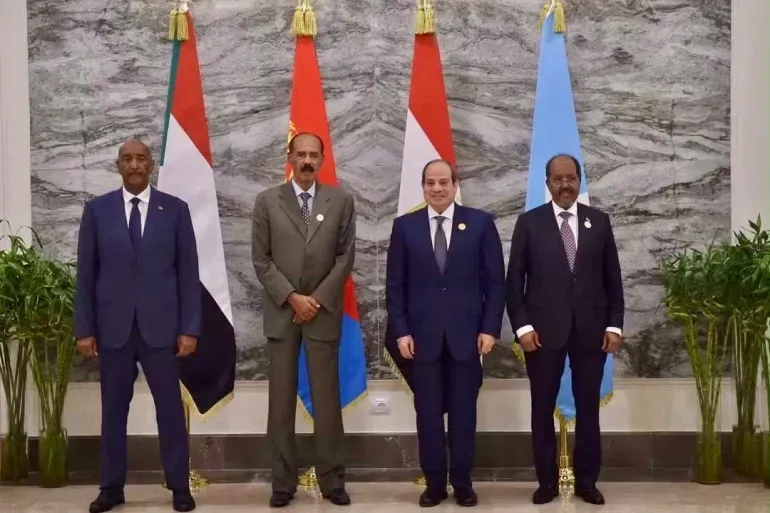
Introduction: Renewing a Historic Partnership
The Afro-Arab alliance has a long and rich history of cooperation, collaboration, and mutual support. For centuries, African and Arab peoples have maintained relationships through trade, migration, cultural exchange, religious connections, and shared political and economic interests. However, periods of hostility and mistrust have emerged, often fueled by misguided leadership, political rivalries, and decisions that have undermined the common interests of both regions.
During the Cold War, the Soviet Union sought to expand its influence across Africa and the Arab world, drawing numerous countries into its geopolitical orbit in competition with Western powers. The United States and other Western nations also pursued strategic
policies that influenced, and at times interfered in, the domestic affairs of countries across both regions. These historical experiences demonstrate how external powers have sometimes exploited political divisions to advance their strategic interests, occasionally at the expense of African-Arab unity, national sovereignty, and regional stability.
Today, Africa and the Arab world face an important choice: to allow historical grievances and geopolitical rivalries to deepen existing divisions or to renew their commitment to cooperation, mutual respect, and collective prosperity.
Ethiopia: A Historic Bridge Between Africa and the Arab World
Ethiopia has historically served as an important bridge between African and Arab peoples because of its geographical location, cultural connections, and longstanding relationships with the Arab world. One of the most significant examples of this relationship is Ethiopia’s connection to the early history of Islam.
According to Islamic tradition, when the early followers of Prophet Muhammad faced persecution in Mecca, they sought refuge in the Kingdom of Aksum, in present-day Ethiopia. They were welcomed by the Ethiopian ruler traditionally known as the Negus, or Al-Najashi.
This historic event, commonly remembered as the First Hijra, remains a powerful example of compassion, religious tolerance, and peaceful coexistence.
Bilal ibn Rabah, the renowned early Muslim and companion of Prophet Muhammad, is also traditionally associated with Ethiopian or Abyssinian heritage.
These historical connections demonstrate that African-Arab relations are rooted in a shared legacy of solidarity, mutual respect, cultural exchange, and humanitarian responsibility. They offer a powerful foundation for rebuilding trust and strengthening cooperation between Africa and the Arab world today.
Ethiopia’s historical significance should therefore be recognized not as a source of division, but as an opportunity to promote dialogue, understanding, and peaceful coexistence across the Red Sea and throughout the wider region.
Political Divisions and the Challenges of Regional Unity
Despite this shared history, political divisions and competing national interests continue to challenge Afro-Arab relations. One major concern is the possibility that regional alliances may be developed in ways that divide neighboring countries rather than promote inclusive cooperation.
In the Horn of Africa and the Nile Basin, regional stability requires meaningful engagement with all countries whose interests are directly affected by political, economic, and environmental decisions. Diplomatic initiatives concerning the Nile Basin, for example,should recognize the legitimate interests of Ethiopia, South Sudan, Egypt, Sudan, and other basin countries. Excluding key stakeholders from meaningful negotiations risks deepening mistrust and weakening opportunities for lasting cooperation.
Rather than allowing a divide-and-rule approach to shape regional relations, African and Arab leaders should pursue inclusive diplomacy that respects the sovereignty, security concerns, and development aspirations of every country. Lasting alliances must be built on mutual respect and shared responsibility, not on arrangements that reinforce suspicion or create unnecessary divisions among neighboring states.
Egypt, in particular, has played a complex and influential role in regional politics. Historically, it has presented itself as a leading advocate of Pan-Arabism and Arab unity. At the same time, its foreign policy has been shaped by national security concerns,
strategic calculations, and relationships with external powers. Critics have questioned whether some Egyptian regional policies have consistently advanced broader regional cooperation, particularly regarding the Nile River and the development rights of upstream African countries.
Egypt’s bilateral peace treaty with Israel, signed in 1979, and its subsequent diplomatic relationship with Israel have also differed at times from the positions and priorities of other Arab states, particularly during periods of regional conflict. These developments illustrate the complexities of balancing national interests with collective regional objectives.
They also raise an important question: How can African and Arab nations build a stronger alliance when individual governments sometimes pursue separate strategic interests at the expense of collective solidarity?
The answer lies not in perpetuating historical grievances or assigning blame without constructive solutions, but in encouraging honest dialogue, reciprocal understanding, accountability, and a renewed commitment to regional cooperation.
Nile Basin: A Shared Resource and a Shared Responsibility
The Nile River is one of Africa’s most important shared natural resources, sustaining millions of people through agriculture, drinking water, electricity generation, fisheries, and economic activity. Its waters connect the interests and futures of multiple countries, making cooperation essential for long-term regional stability.
Ethiopia and South Sudan, alongside other Nile Basin countries, have legitimate interests in developing their water resources to support agriculture, electricity generation, economic growth, and poverty reduction. Ethiopia’s investments in hydropower, including the Grand Ethiopian Renaissance Dam (GERD), have highlighted the need for a fair, cooperative, and sustainable framework for managing the Nile’s waters.
At the same time, Egypt has legitimate concerns about water security because of its substantial dependence on the Nile. Recognizing these concerns, however, should not require denying the development rights of upstream countries. Equally, development initiatives
should take appropriate account of potential downstream impacts and the need for effective coordination, transparency, and responsible resource management.
The challenge is not to determine which nation should prevail over the others. It is to establish a cooperative framework that balances development, water security, environmental sustainability, and the well-being of all affected populations.
Through good-faith negotiations, transparent information-sharing, scientific research, technical cooperation, and mutually acceptable agreements, Nile Basin countries can transform a source of political tension into an opportunity for regional partnership.
The Nile should serve as a symbol of shared prosperity rather than a source of permanent confrontation. No country should have to choose between its development aspirations and the legitimate concerns of its neighbors when practical cooperation can help address both.
Renewing Afro-Arab Solidarity in a Changing World
Political rivalry, mistrust, and competing geopolitical ambitions continue to threaten the solidarity that should unite African and Arab peoples. When governments prioritize narrow national interests over regional cooperation, they risk creating divisions that external powers may exploit.
History demonstrates that neither Africa nor the Arab world can achieve lasting peace and prosperity through isolation or confrontation alone. Both regions have much to gain from working together to address common challenges, including economic inequality,armed conflict, food insecurity, climate change, forced displacement, unemployment, and the need for sustainable development.
Today, strengthening the Afro-Arab alliance is more important than ever. Africa and the Arab world share interconnected histories, economic interests, cultural traditions, and strategic challenges. Their geographical proximity across the Red Sea, the longstanding
connections between their peoples, and their participation in international and regional institutions provide opportunities to advance peace, independence, mutual respect, and a more balanced international order.
The principles of the Non-Aligned Movement—including respect for sovereignty, non-interference in internal affairs, peaceful coexistence, and the independence of nations—remain relevant to efforts to build a more equitable global system.
African and Arab countries should draw on these principles to strengthen their collective diplomatic influence, resolve disputes through dialogue, and resist approaches that turn neighboring states against one another.
A stronger Afro-Arab partnership should not require countries to abandon their individual national interests. Instead, it should encourage governments to pursue those interests in ways that recognize the rights, security, and legitimate aspirations of their neighbors.
From Political Declarations to Practical Cooperation
A meaningful Afro-Arab alliance must extend beyond political declarations and diplomatic ceremonies. It must produce tangible benefits for ordinary people across both regions.
To transform historical solidarity into lasting regional stability, African and Arab leaders should prioritize the following areas:
1. Peace and Conflict Prevention
Establish effective mechanisms for mediation, dialogue, reconciliation, and the peaceful settlement of disputes. Regional institutions should encourage early intervention in emerging conflicts and support diplomatic solutions before disagreements escalate into violence.
2. Inclusive Regional Diplomacy
Ensure that countries affected by regional decisions have a meaningful voice in shaping policies, agreements, and cooperative frameworks. No sustainable regional arrangement can succeed if it systematically disregards the legitimate interests of important stakeholders.
3. Economic Cooperation
Expand trade, investment, infrastructure development, transportation networks, energy partnerships, and initiatives that create employment and reduce poverty. Stronger economic ties can help transform shared interests into practical incentives for peace.
4. Education and Cultural Exchange
Strengthen academic partnerships, youth programs, research collaboration, cultural exchanges, and opportunities for mutual learning. Greater understanding among younger generations can help overcome prejudice, misinformation, and inherited political mistrust.
5. Responsible and Accountable Leadership
Promote transparency, accountability, respect for national sovereignty, and policies that serve the common good. Leaders should recognize that regional stability depends not only on national strength but also on the willingness to cooperate fairly with neighboring countries.
6. Sustainable Management of Shared Resources
Develop equitable and environmentally responsible approaches to shared rivers, energy systems, food security, and other transboundary resources. Scientific cooperation and transparent information-sharing should guide negotiations over resources that affect multiple countries.
7. Independent Regional Decision-Making
Encourage African and Arab governments to resolve their differences through constructive engagement rather than allowing external geopolitical rivalries to dictate their relationships. International partnerships can be valuable, but they should strengthen regional cooperation rather than deepen divisions or undermine the independence of national decision-making.
Together, these priorities can help transform the historic bonds between African and Arab peoples into a practical framework for peace, regional stability, and shared prosperity.
A Shared Future Built on Peace and Mutual Respect
The peoples of Africa and the Arab world have traded, migrated, intermarried, exchanged knowledge, and influenced one another’s cultures throughout history. These relationships have shaped societies on both sides of the Red Sea and across the Horn of Africa, the Nile Basin, and the wider Middle East.
This shared heritage should inspire a new generation of African and Arab leaders to rebuild trust and strengthen regional solidarity. Historical disagreements and contemporary political differences must be addressed through dialogue rather than hostility, cooperation rather than exclusion, and diplomacy rather than confrontation.
The future of the Afro-Arab alliance depends on the willingness of African and Arab leaders to place peace, justice, mutual respect, and shared prosperity above narrow political rivalries. No sustainable regional partnership can be built by disregarding the legitimate interests of neighboring countries or by allowing external powers to deepen existing divisions.
In particular, any perceived strategy of dividing East African nations against one another is dangerous to the long-term cooperation and solidarity of the peoples of this historically interconnected region. Whether such divisions arise from competing national policies, external geopolitical interests, or mistrust among regional leaders, their consequences can undermine peace, economic development, and the collective strength of African-Arab relations.
Egypt and other influential regional actors should recognize that their long-term security and prosperity are closely connected to the stability of their neighbors. Similarly, Ethiopia, South Sudan, and other East African countries should continue to pursue
their development aspirations through constructive diplomacy, responsible leadership, and cooperation with the wider region.
The way forward is not to isolate any country or question the legitimacy of its national interests, but to ensure that those interests are pursued in a manner consistent with regional peace, fairness, and mutual respect.
A stronger Afro-Arab alliance must be founded on the principle that the security and prosperity of one nation should not depend on the political exclusion, economic disadvantage, or instability of another.
Conclusion: A Renewed Alliance for Peace and Stability
The historical relationship between Africa and the Arab world offers an enduring foundation for cooperation. From the early refuge granted to Muslim migrants in the Kingdom of Aksum to centuries of trade and cultural exchange across the Red Sea, this relationship demonstrates the possibilities created by compassion, mutual respect, and peaceful coexistence.
Today, these historic bonds must be translated into practical policies that promote regional stability, economic opportunity, responsible resource management, and the peaceful resolution of disputes.
African and Arab leaders must resist the temptation to exploit political differences for short-term strategic advantage. Instead, they should work together to strengthen institutions, build trust, protect national sovereignty, and develop inclusive solutions to shared challenges.
The time has come to transform the historic Afro-Arab relationship into a renewed alliance for peace, regional stability, and shared prosperity—one that respects the sovereignty of every nation, protects the dignity of every people, and builds a better future for generations to come.
Peace is not achieved by dividing neighbors, but by building trust among them. Regional stability is not secured by weakening others, but by recognizing that our shared future depends on cooperation, justice, and mutual respect.
Editor’s Note: Views in the article do not necessarily reflect the views of borkena.com
__
Join our Telegram Channel: t.me/borkena
Like borkena on Facebook
To submit a press release, send the submission to info@borkena.com
Add your business to Ethiopian Business Listing / Ethiopian Business Directory
Join the conversation. Follow us on X (formerly Twitter) @zborkena to get the latest Ethiopian news updates regularly.