
Chaplain Eddie Mekasha
Conflict Mediation Specialist
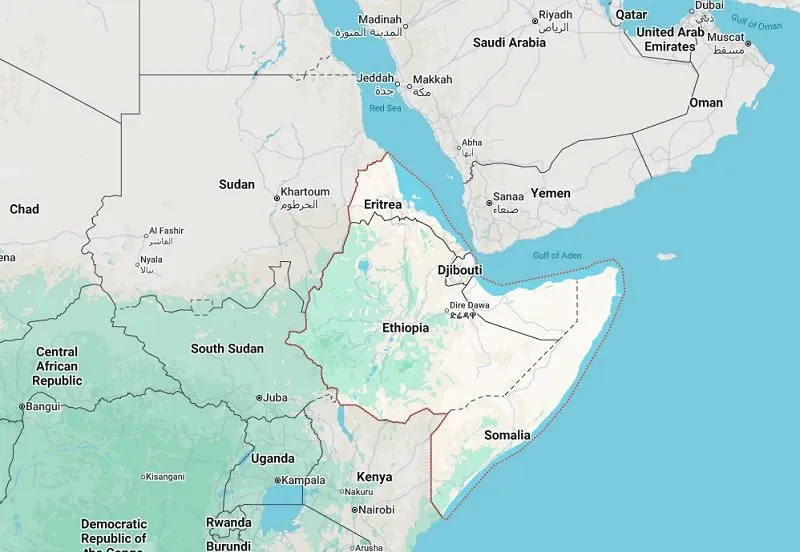
The Horn of Africa is a historically and strategically important region that has attracted the attention of major powers throughout history. From the medieval time Portuguese and Ottoman Turkish Empires to the rivalries of the Cold War between East and West, and now the growing competition between China and the United States, outside powers have repeatedly sought economic, political, and strategic influence in the region.
Ethiopia has been a major historical power in the Horn of Africa and has long been connected to the history of the wider region, including Yemen and present-day Eritrea. The ancient traditions associated with the Queen of Sheba, as well as references to Ethiopia in the sacred texts of the three major Abrahamic religions, have contributed to Ethiopia’s distinctive place in world history.
Ethiopia was denied justice when Fascist Italy invaded the country in 1935, during the crisis that preceded World War II. Emperor Haile Selassie appealed to the League of Nations, but his appeal was largely ignored by the international community. Fascist Italy subsequently joined the Axis powers and became a major threat to the international order. Eventually, the Axis powers were defeated by the Allied forces.
Ethiopia was a founding member of the League of Nations and later became a founding member of the United Nations and the African Union giving the seat place in the capital city Addis Ababa. It also contributed peacekeeping forces to some of the most troubled areas of the world, including the Congo, Korea, Rwanda, and Somalia. These contributions demonstrated Ethiopia’s longstanding role in international peace and security.
Ethiopia later became the second-most-populous nation in Africa. Internal political movements and opposition groups eventually brought an end to Emperor Haile Selassie’s rule. This was followed by the brutal Marxist Derg regime, which subjected the Ethiopian people to widespread repression, violence, and political persecution.
The Derg military government was eventually overthrown by an alliance of rebel movements, including Eritrean and Tigrayan forces. Eritrea subsequently separated from Ethiopia following a referendum in which the people voted for independence with fake referendum options of Freedom or Slavery . The political developments that followed have continued to shape the Horn of Africa and have contributed to deep divisions among peoples who share long-standing historical, cultural, economic, and social connections.
The political order that emerged after the fall of the Derg has also faced serious accusations of human rights abuses, including ethnic displacement and violence against different communities, particularly the Amhara people. These grievances remain an important part of the political crisis facing Ethiopia today and deserve to be addressed through impartial investigation, accountability, and peaceful political dialogue.
Prime Minister Abiy Ahmed emerged from the political movement that followed the previous ruling coalition and initially offered a message of national unity, reconciliation, and reform. However, Ethiopia’s national unity remains under serious pressure. Internal divisions within the ruling Prosperity Party, together with competing ethnic and regional political movements, have intensified calls for greater autonomy and, in some cases, fundamental changes to Ethiopia’s historical political structure. If these divisions continue unchecked, Ethiopia could face a dangerous level of fragmentation, with consequences that could extend throughout the Horn of Africa.
Another major challenge concerns Egypt’s relationship with the Nile River. Egypt regards the Nile as a lifeline and has historically sought to protect its access to the river. The dispute over the Nile, including the Grand Ethiopian Renaissance Dam (GERD), has therefore become a major regional and international issue. Egypt’s relationships with Western and Arab powers have also influenced the broader geopolitical dynamics surrounding the dispute.
Ethiopia is the source of a substantial portion of the Nile’s water, particularly through the Abay/Nile River, known internationally as the Blue Nile. Yet Ethiopia has historically argued that it has received insufficient benefit from a river system that originates largely within its territory. From the Ethiopian factual perspective, it is difficult to justify a system in which a country that contributes a significant share of the Nile’s waters has limited ability to develop those waters for electricity generation, agriculture, and economic development, while downstream states have historically exercised greater control over their use.
At the same time, the concerns of Egypt and Sudan regarding water security cannot simply be dismissed. A sustainable solution requires recognition of the legitimate interests of all Nile Basin countries. The Nile should not become a source of permanent confrontation between neighboring peoples. Instead, it should become an opportunity for cooperation, equitable development, environmental protection, and shared prosperity.
There must be greater transparency, honesty, and fairness from the international community in addressing the crises of the Horn of Africa. External powers should not use the suffering of the region’s people as an opportunity to advance their own political, military, or economic interests.
The people of the Horn of Africa have suffered for far too long from civil wars, political instability, displacement, poverty, and humanitarian crises. Armed groups and rebel movements should not be used as instruments for dismantling states or advancing the agendas of outside powers. Instead, the international community should encourage open, honest, and inclusive dialogue among the peoples and governments of the region.
The people of the Horn of Africa deserve the opportunity to determine their own future. Their sovereignty, territorial integrity, human rights, and legitimate political aspirations should be respected. Regional disputes should be addressed through diplomacy and peaceful negotiations rather than through proxy conflicts, military pressure, or political manipulation.
The goal must be lasting peace, sovereignty, security, justice, and economic opportunity for all the people of the Horn of Africa. The region’s future should ultimately be determined by its people not by competing foreign powers seeking strategic advantage.
Editor’s Note: Views in the article do not necessarily reflect the views of borkena.com
__
Join our Telegram Channel: t.me/borkena
Like borkena on Facebook
To submit a press release, send the submission to info@borkena.com
Add your business to Ethiopian Business Listing / Ethiopian Business Directory
Join the conversation. Follow us on X (formerly Twitter) @zborkena to get the latest Ethiopian news updates regularly.