 rejected former Nigerian President Obassanjo as a meditator. Read statement.)
Borkena Desk
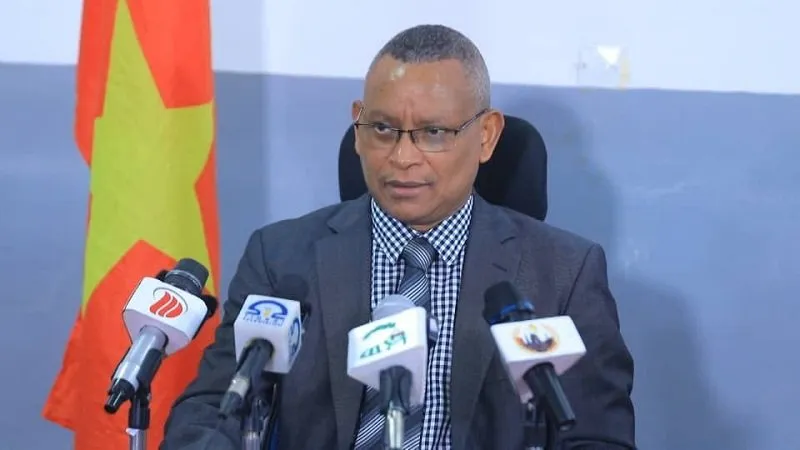
TORONTO,Canada — The TPLF on Sunday released a statement regarding a mediation effort with the Federal government. It expressed its commitment for peace while rejecting Obassanjo as a mediator.
The full statement reads as follows :
“Credible Peace Dialogue Requires an Impartial and Independent Mediator!
Official Statement from the Tigray Regional Government
September 6, 2026
Next November will mark four years since the signing of the Cessation of Hostilities Agreement (CoHA) between the Tigray People’s Liberation Front (TPLF) and the Federal Government of Ethiopia. The Agreement was intended to restore peace and stability to Tigray, Ethiopia, and the wider region. Regrettably, it has failed to produce the promised results.
The implementation process has effectively been abandoned by the African Union High-Level Panel and key international partners, leaving the fate of the Agreement largely at the mercy of the Federal Government. Far from fulfilling its core obligations under the Agreement, the Federal Government has intensified the economic blockade and siege, military encirclement, psychological warfare, and relentless drone surveillance against Tigray. It has also repeatedly violated the ceasefire through drone attacks in various parts of Tigray and further escalated its provocations by amassing a large military force and attacking Tigray Security Forces at Shererina in Western Tigray—actions consistent with its continuing genocidal intent.
In an address to the House of Peoples’ Representatives, the Prime Minister effectively dismissed the Agreement, claiming that he had “forgotten everything” about it, that it had been signed merely by three individuals rather than by institutional parties, and that those signatories were now aligned with him. Such statements amount to a blatant declaration that the Agreement is moribund and no longer binding.
Against this background, we have recently witnessed what appears to be an attempt to create the impression that mediation is being reactivated through former Nigerian President Olusegun Obasanjo. His conduct, however, has increasingly raised serious questions about whether he is acting independently or at the behest of the Federal Government.
Of particular concern is the repeated presentation of the Nigerian Civil War—and specifically the Biafran experience—as a model relevant to the present crisis. On July 14, 2026, Prime Minister Abiy Ahmed stated on social media that former President Obasanjo had shared his experience of the Biafran peace process. Obasanjo subsequently addressed the so-called National Dialogue Conference, where he again referred to that experience.
The world knows what the Biafran experience entailed: military encirclement, economic blockade, siege, starvation, catastrophic civilian deprivation, and, ultimately, military defeat. It was not a negotiated settlement among equals but an outcome imposed upon the vanquished. It recalls the stark observation attributed to the ancient Greek historian Thucydides: “The strong do what they can, and the weak suffer what they must.”
In June 2026, former President Obasanjo visited Tigray and held extensive discussions with the authorities of the Government of Tigray on reviving dialogue. At the conclusion of those discussions, he promised to return within one or, at most, two weeks. Instead, nearly two months passed before his return.
When asked to explain the delay, he stated that Federal Government authorities had instructed him to wait until they completed their carefully staged so-called National Dialogue Conference. Despite the rapidly deteriorating situation, he accepted this instruction and undertook no visible initiative to advance the mediation process. When the Federal Government later sought to create the appearance of pursuing peace before the international community, he arrived in Tigray without prior notice, without concrete proposals, and without a clearly defined agenda. His most recent engagement was no different: it produced neither tangible movement toward peace nor specific issues around which meaningful negotiations could proceed.
It is a fundamental principle of international mediation that a mediator must remain independent, impartial, and continuously engaged. A mediator must ensure that efforts ostensibly undertaken in the name of peace do not become a means of enabling, legitimizing, or providing political respectability to an abusive party. Mediation must alleviate the suffering of victims—not obscure it, prolong it, or facilitate the objectives of those responsible for it.
Regrettably, these essential qualities have not been evident in former President Obasanjo’s conduct. Although we remain firmly committed to peace and credible dialogue, we have not found in him the impartial and proactive mediator required by the gravity of the present crisis. Nor have we witnessed the level of serious, sustained, and coordinated engagement that should be expected from the international community. Nevertheless, as we have repeatedly affirmed, we remain committed to a credible, substantive, and time-bound dialogue aimed at achieving a just and lasting peace.”
__
Join our Telegram Channel: t.me/borkena
Like borkena on Facebook
Join the conversation. Follow us on X (formerly Twitter) @zborkena to get the latest Ethiopian news updates regularly. Subscribe to the YouTube channel. To share information or for submission, email info@borkena.com