
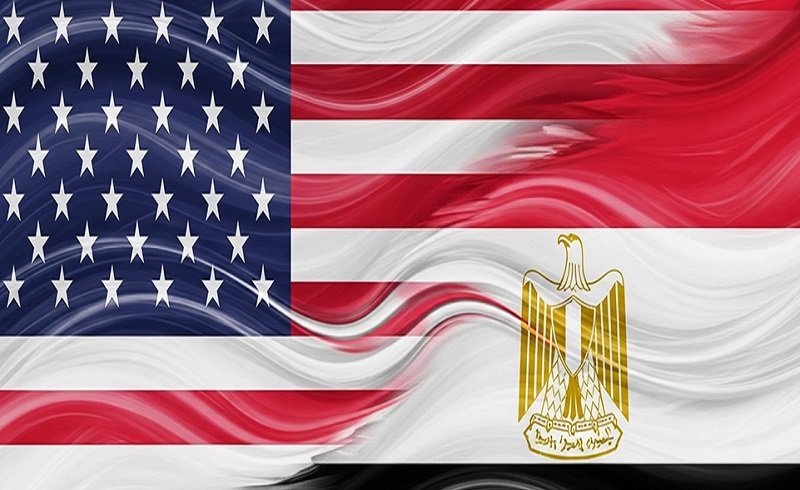
The relationship between the United States and Egypt is one of the most important, enduring and strategically calculated partnerships in the Middle East.
To understand why Washington provides Egypt with approximately $1.3 billion annually in military assistance, alongside economic assistance and other forms of support, one must look beyond American friendship with Egypt.
The central explanation is this:
The United States considers Egypt a strategic pillar of its Middle East policy, a guarantor of the Egyptian-Israeli peace treaty, a major influence in the Arab world, and a critical partner in protecting American interests in the Eastern Mediterranean, Red Sea and Suez Canal.
American assistance is therefore not simply development aid or military charity. It is an investment in a regional security and political arrangement that Washington considers essential to its interests.
There are several interconnected reasons.
- Preserving the peace treaty between Egypt and Israel
This is probably the single most important historical reason for American assistance.
Before 1979, Egypt was the most powerful Arab military opponent of Israel. It fought Israel in several major wars, particularly in 1948, 1956, 1967 and 1973.
The 1979 Egyptian-Israeli peace treaty fundamentally transformed the regional balance of power.
It achieved several things for the United States:
- Removed the largest Arab military power from the Arab-Israeli military confrontation.
- Greatly reduced the possibility of another major Arab-Israeli war.
- Secured Israel’s southern strategic frontier.
- Created a framework for American influence over both Egyptian and Israeli security policies.
- Established an enduring American diplomatic role in the Middle East.
The United States effectively became a guarantor and principal sponsor of this strategic arrangement.
Military assistance to Egypt is therefore partly the price Washington pays to maintain the peace.
An important strategic observation: The United States is not merely helping Egypt defend itself. It is also helping preserve a regional security arrangement that substantially benefits Israel.
- Control and security of the Suez Canal and Red Sea
Egypt occupies one of the world’s most strategically important geographical positions.
It controls the Suez Canal, connecting the Mediterranean Sea with the Red Sea and providing a major commercial route between Europe and Asia.
For Washington, this matters for several reasons:
- International commercial shipping.
- Transportation of energy and strategic commodities.
- Movement of American naval forces between the Mediterranean and Indian Ocean.
- NATO and American military logistics.
- Security of international maritime trade.
The Suez Canal is especially important when the United States needs to move naval forces between the Mediterranean and the Indian Ocean.
Egypt’s cooperation is therefore valuable to American military planning.
The Red Sea dimension has become increasingly important because of instability around Yemen, the Bab el-Mandeb Strait and the wider Horn of Africa.
The United States wants Egypt to remain a reliable partner in protecting these maritime routes.
The Congressional Research Service identifies the Suez Canal’s strategic importance as one of the fundamental reasons for the American relationship with Egypt.
- Maintaining American influence in the Arab world
Egypt is not an ordinary Middle Eastern country.
It has:
- More than 100 million people.
- Considerable military capabilities.
- A historically influential diplomatic establishment.
- Cairo, the headquarters of the Arab League.
- Al-Azhar, an influential Islamic educational and religious institution.
- Significant cultural and media influence throughout the Arab world.
Although Egypt’s influence has declined relative to Saudi Arabia, the UAE and other regional powers, it remains an important Arab political actor.
Washington wants to maintain a close relationship with Cairo because Egypt can influence discussions and decisions involving:
- Palestine and Israel.
- Gaza.
- Libya.
- Sudan.
- The Arab League.
- Relations between Arab countries and Israel.
- Regional security arrangements.
In other words, Egypt provides Washington with diplomatic access and political influence that would be difficult to reproduce through other regional partners.
- Counterterrorism and regional military cooperation
The United States considers Egypt an important security partner.
Its military cooperation covers:
- Counterterrorism, particularly in the Sinai Peninsula.
- Border security.
- Intelligence cooperation.
- Maritime security.
- Military training and exercises.
- Regional crisis management.
Egypt’s military is also an important interlocutor when Washington needs to communicate with other regional military establishments.
American military assistance helps sustain this institutional relationship.
- Preventing Egypt from moving into the strategic orbit of rival powers
This is another important consideration, particularly today.
Egypt has increasingly diversified its international relationships.
It maintains substantial relations with:
- Russia.
- China.
- France.
- Saudi Arabia.
- United Arab Emirates.
Egypt has purchased French Rafale aircraft, Russian military equipment and explored Chinese military technology.
Washington does not want Cairo to become strategically dependent on Moscow or Beijing.
American assistance creates long-term military relationships through equipment, maintenance, training, ammunition, spare parts and operational systems.
This gives Washington considerable institutional influence.
The military aid is consequently also a geopolitical instrument for limiting the strategic penetration of competing powers.
- Why the United States provides so much money
The assistance is not an entirely unconditional transfer of money to the Egyptian government.
It has several components.
- Military assistance
The military component is by far the largest.
It is provided primarily through Foreign Military Financing (FMF).
Egypt uses these funds to purchase and maintain American military equipment and services.
Examples include:
- F-16 fighter aircraft and associated systems.
- Apache attack helicopters.
- Abrams tanks.
- Naval and maritime equipment.
- Communications and command systems.
- Spare parts, maintenance and training.
There is an important economic dimension here.
Much of the military assistance returns to American defence manufacturers because the money finances purchases from American companies.
Thus, American military aid serves two purposes:
- Strengthening Egypt’s military capabilities.
- Supporting American defence industry exports and maintaining long-term military dependence.
- Economic assistance
Economic assistance has historically supported:
- Education.
- Health services.
- Water and sanitation.
- Economic development.
- Private-sector development.
- Governance and institutional capacity.
- Other development programmes.
The economic component is much smaller than the military component today.
The underlying American calculation is that a politically and economically unstable Egypt could create serious regional consequences, including migration pressures, insecurity and political instability.
Washington therefore has an interest in preventing a major Egyptian economic collapse.
The US State Department’s historical accounting records more than $50 billion in military assistance and more than $30 billion in economic assistance since 1978.
- Egypt’s role in Gaza, Palestine and regional diplomacy
Egypt is indispensable to American diplomacy concerning Palestine.
It shares a border with Gaza and Israel, and has historically played an important role in negotiations between Israel and Palestinian organizations.
Its cooperation matters for:
- Gaza ceasefire negotiations.
- Humanitarian access to Gaza.
- The Rafah border crossing.
- Negotiations over hostages and prisoners.
- Post-war arrangements for Gaza.
- Preventing the displacement of Palestinians into Egyptian territory.
Washington cannot formulate a realistic Gaza policy without taking Egyptian interests into account.
This gives Cairo considerable diplomatic leverage over Washington.
- Why did this relationship become so important after 1979?
The historical sequence is essential to understanding the relationship.
- 1973 – The October War
Egypt demonstrated that it remained a formidable military power and that the Arab-Israeli conflict could not be resolved through military superiority alone.
- 1978 – Camp David Accords
President Jimmy Carter facilitated the historic agreement between Anwar Sadat and Menachem Begin.
- 1979 – Egyptian-Israeli Peace Treaty
Egypt recognised Israel and ended the state of war. American military and economic assistance to Egypt increased substantially.
- 1980s–2000s – Institutionalised partnership
Military cooperation, American weapons procurement, training and diplomatic coordination became deeply established.
- 2011–2013 – Political upheaval
The Arab Spring and subsequent military takeover exposed tensions between American democracy and human rights objectives and Washington’s security interests.
- 2014 onwards – Sisi government
The United States maintained the strategic partnership despite concerns about political repression and human rights.
- 2020s – Expanding regional competition
Gaza, Sudan, Libya, the Red Sea, Russian influence and Chinese engagement have further increased Egypt’s strategic importance.
- Does the United States have reservations about Egypt?
Absolutely.
There is an important contradiction in American policy.
Washington speaks about democracy, human rights, political freedoms and civilian governance. Yet it maintains a substantial military relationship with a government that has faced serious international criticism over political repression.
Congress has periodically withheld or conditioned portions of Egyptian military assistance on human rights requirements.
However, American administrations have also had the option of waiving certain restrictions on national security grounds.
The 2026 appropriations legislation illustrates this tension: it provides for withholding $320 million in military financing unless specified human rights-related determinations are made, while allowing a national-security waiver.
- What does all this mean for Ethiopia and the Horn of Africa?
This is where the US-Egypt relationship becomes particularly important from Ethiopia’s strategic perspective.
I would highlight five implications.
A. Egypt has an established strategic relationship with Washington that Ethiopia cannot ignore
Egypt has decades of institutionalized military cooperation with the United States.
It has established access to American policymakers, defence institutions and diplomatic networks.
Ethiopia does not enjoy an equivalent relationship in the American security establishment.
This creates an asymmetry in diplomatic access and influence.
B. Washington’s support for Egypt does not automatically mean support for Egypt’s position on the Nile
This distinction is extremely important.
The United States has an interest in preserving its relationship with Egypt. But it also has interests in Ethiopia:
- Ethiopia’s importance to regional security.
- Its population and economic potential.
- Its role in the African Union.
- Its geographical position in the Horn.
- Its contribution to regional peacekeeping.
- Its importance to Red Sea and Gulf security.
Consequently, Washington has reasons to avoid an Ethiopian-Egyptian military confrontation.
American support for the Egyptian government should not be interpreted as an American commitment to endorse every Egyptian demand concerning the Nile or the Grand Ethiopian Renaissance Dam.
C. Egypt’s relationship with Washington provides diplomatic leverage
Cairo can use its longstanding relationship with American institutions to explain its security concerns and advance its diplomatic positions.
Ethiopia needs a more systematic diplomatic engagement with:
- The White House.
- The State Department.
- Congress.
- The Pentagon.
- American strategic research institutions.
- Influential foreign policy organisations.
Ethiopia should not allow Egypt’s established institutional relationships to become an exclusive channel for American understanding of Nile and Horn of Africa issues.
D. Washington wants regional stability, not necessarily Egyptian regional dominance
The United States has an interest in preventing the Horn of Africa from becoming another theatre of major-power confrontation.
A military confrontation involving Egypt, Ethiopia, Eritrea, Somalia and other regional actors would threaten American interests.
Washington would have to consider the consequences for the Red Sea, Suez Canal, Gulf security and international commerce.
E. The relationship is not an unconditional American guarantee to Egypt
Egypt has its own independent foreign policy. Its relations with Russia, China, France and Gulf countries demonstrate that Cairo is not simply an American client.
Washington also has leverage over Egypt through military financing, weapons procurement, diplomatic support and economic cooperation.
The relationship is mutually beneficial, but the two countries do not always agree.
- My overall strategic assessment
I would summarise the American calculation as follows:
| American interest | Strategic benefit of Egypt |
| Israel’s security | Preserves the Egyptian-Israeli peace |
| Suez Canal | Protects a critical maritime route |
| Red Sea | Supports maritime security |
| Arab world | Provides diplomatic and political influence |
| Gaza | Essential negotiating and mediation partner |
| Counterterrorism | Intelligence and military cooperation |
| Great-power competition | Limits Russian and Chinese strategic penetration |
| Regional stability | Helps prevent major regional conflicts |
My central conclusion:
The United States does not give Egypt substantial assistance simply because Egypt is poor, because it is a democracy, or because it is an American ally in the conventional sense.
It does so because Egypt occupies a strategically indispensable position in the American conception of Middle Eastern and regional security.
The assistance is essentially the financial and military underpinning of a long-term geopolitical bargain.
- Three questions Ethiopia should seriously consider
I believe the implications deserve a deeper examination, particularly in light of the Nile dispute and Ethiopia’s quest for Red Sea access.
- Does American military assistance make Egypt more confident in pursuing a confrontational policy toward Ethiopia?
- Could Egypt use its longstanding American strategic relationship to influence Washington’s position on the GERD, Nile water-sharing and Ethiopia’s access to the Red Sea?
- What diplomatic, economic and security strategy should Ethiopia adopt to develop a relationship with Washington that is comparable in strategic importance to its relationship with Cairo?
These are not merely diplomatic questions. They concern Ethiopia’s long-term national security and strategic position in the Horn of Africa.
Editor’s Note: Views in the article do not necessarily reflect the views of borkena.com
__
Join our Telegram Channel: t.me/borkena
Like borkena on Facebook
To submit a press release, send the submission to info@borkena.com
Add your business to Ethiopian Business Listing / Ethiopian Business Directory
Join the conversation. Follow us on X (formerly Twitter) @zborkena to get the latest Ethiopian news updates regularly