
By ETHDefenders
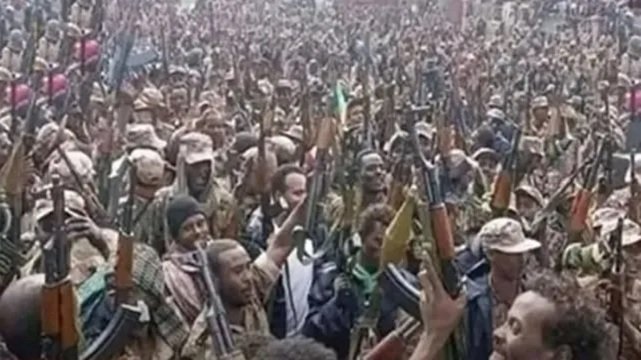
Fano took up arms not out of desire for violence, but out of a desperate need to protect a people pushed to the edge of destruction. It rose so that the Amhara could live freely in their own country, without fear of being hunted, displaced, imprisoned, or killed simply because of who they are. It rose to stop the mass killing of Amhara civilians, to defend those driven from their homes because of their identity, to free the prisons filled with Amhara voices silenced by repression, and ultimately to replace a dictatorial system with democracy and justice.
This struggle did not begin in abstraction. It began with blood, tears, and firsthand witnessing of cruelty that should never exist in any society.
Fano entered the struggle in Oromia—the home region of Prime Minister Abiy—after witnessing horrors that no conscience can forget. Among them was the killing of a young Amhara mother, pregnant and defenseless, murdered because of the child she carried. The crime was committed with the chilling declaration that an Amhara child would not be allowed to be born on that land. This was not an isolated act of brutality; it was a message. A declaration that Amhara lives, even unborn ones, were considered unwanted and disposable.
There was no authority to intervene. No force to protect the innocent. Amhara bodies were mutilated, dragged through roads as warnings, stripped of dignity even in death. And the regime that claims to govern stood by—silent, indifferent, or complicit. When a state fails to protect its citizens, and instead enables their destruction, resistance ceases to be a choice. It becomes a necessity.
Fano did not rise because peace was rejected. It rose because peace was denied. When cries for justice were met with bullets, when appeals for protection were answered with prison cells, and when entire communities were targeted with impunity, survival itself became an act of defiance.
This is not a struggle against a people or a region. It is a struggle against a system that normalizes ethnic violence, rewards perpetrators, and criminalizes victims. It is a stand against a dictatorship that uses fear to rule and blood to silence dissent. Democracy cannot grow in soil watered by injustice, and unity cannot be built on the graves of the unprotected.
At its core, the cause of Fano is a demand for life and dignity. A demand that the Amhara be allowed to exist without hiding their names, their language, or their identity. A demand that no mother be killed for the child she carries, and no people be erased because they belong.
History will remember this moment. It will ask who spoke when humanity was stripped away, and who chose silence. It will ask why resistance was condemned while atrocity was ignored.
Fano is not the source of Ethiopia’s pain—it is the response to it. And until justice replaces impunity, until democracy replaces dictatorship, and until every Ethiopian is protected equally under the law, the cry that gave birth to this struggle will continue to echo.
This is not a call for endless war.
It is a call for survival.
For freedom.
For dignity.
For a future where no one must take up arms simply to exist.
Editor’s Note : Views in the article do not necessarily reflect the views of borkena.com
__
Support Borkena : https://borkena.com/subscribe-borkena/
Join our Telegram Channel : t.me/borkena
Like borkena on Facebook
Borkena Ethiopian News Youtube Channel
To submit Press Release, send submission to info@borkena.com
Add your business to Ethiopian Business Listing / Ethiopian Business Directory
Join the conversation. Follow us on X (Formerly Twitter) @zborkena to get the latest Ethiopian News updates regularly.