
Editor’s Note : Views in the article do not necessarily reflect the views of borkena.com
Abu Selam
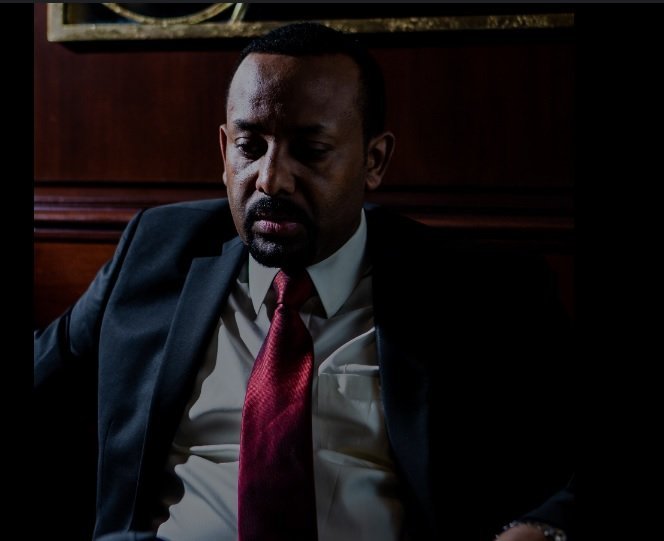
A few years ago, I had a heated debate with some of my peers about Ethiopia’s future. I argued then, and still believe now, that the country needs a benevolent dictator to guide it through this perilous phase. At the time, I genuinely hoped Dr. Abiy Ahmed would become such a leader. While I have mixed feelings about the outcome of his rule so far, in principle, I still believe he should be that kind of leader; firm, visionary, and selfless, with the courage to centralize authority and use it decisively for the public good.
The term “benevolent dictator” may sound contradictory or even dangerous. But history tells us that in moments of deep national crisis, when countries face existential threats, only a strong and enlightened hand can steady the ship. A benevolent dictator is not a tyrant. He is a ruler who wields centralized or even unchecked power, but not for personal enrichment or oppression, rather to modernize the nation, create order, and protect its future.
Why would I wish my leader to be a dictator, even a benevolent one?
Because Ethiopia today faces the kind of deep fragmentation,institutional fragility, and existential uncertainty that no weak coalition government or chaotic democracy can address quickly enough. We are dealing with deep-rooted ethnic divisions, armed insurrections, economic pressure, foreign meddling, and a dangerously eroded sense of national identity. In such a context, centralized, visionary, and disciplined leadership is not a luxury, it is a necessity.
History oƯers many parallels where benevolent strongmen rescued nations from collapse or decay.
Take Lee Kuan Yew of Singapore. In 1965, Singapore was expelled from Malaysia, poor, unstable, and ethnically divided. Lee imposed discipline, restricted political opposition, and took hardline measures. Yet under his iron grip, Singapore built one of the world’s most eƯicient economies, world-class housing, education, and healthcare systems. Today it stands as a model of development. Would that have been possible through fragile coalition governments arguing endlessly? Unlikely.
Or consider Mustafa Kemal Atatürk in Turkey. After the Ottoman Empire collapsed and the Allies occupied Anatolia, Turkey faced dismemberment. Atatürk abolished the Sultanate, modernized language, law, and society; imposing secularism and unity through sweeping, top-down reform.
He tolerated little dissent, but he built a modern republic where there had been imperial wreckage.
Closer to home, Paul Kagame of Rwanda is another example. After the 1994 genocide, Rwanda was shattered— ethnically divided, economically devastated, and abandoned by the world. Kagame took control with an iron fist. He suppressed ethnic politics, rebuilt the economy, invested in health and technology, and redefined national identity. Rwanda today is one of the most stable and growing economies in Africa, though it remains tightly controlled politically.
Even in Indonesia, Suharto, despite his many flaws, transformed a post-colonial, conflict-ridden country into a relatively stable, literate, and economically developing nation. Through centralized power, he delivered infrastructure, food security, and stability for decades.
Or Deng Xiaoping in China. After the disasters of Mao’s Cultural Revolution, Deng opened China’s economy, controlled political dissent, and lifted hundreds of millions out of poverty. He didn’t bring democracy—but he brought material transformation.
In all these cases, benevolent authoritarianism succeeded where democratic idealism would likely have failed, because the time called not for deliberation, but for decisive action, unity, and long-term national vision.
That is the crossroads Ethiopia stands at today. Dr. Abiy Ahmed, despite his flaws and missteps, represents the last hope for such a national project, a unifying vision that transcends ethnic fragmentation, that rebuilds the economy with clarity and focus, and that restores Ethiopia’s place as a stable and respected African power. But to do so, he cannot govern like a Western parliamentarian pandering to factions. He must lead like a builder of nations, even if that means wielding extraordinary authority; so long as it is exercised for the common good.
Yes, it is a dangerous road. Power corrupts. Many who start with noble intent lose their way. But if Abiy Ahmed chooses to be a truly benevolent strongman, with the discipline of Kagame, the vision of Lee Kuan Yew, and the reformist urgency of Atatürk; he could save Ethiopia from disintegration.
And frankly, the alternative; a fragmented, weak, ethnically balkanized state limping along with rotating elites, is far worse.
So yes, I still hope Abiy Ahmed becomes that kind of leader. Not a tyrant. Not a corrupt warlord. But a benevolent dictator with the heart of a reformer and the mind of a nation-builder.
Ethiopia may not just tolerate such a leader now—it may require one to survive.
Editor’s Note : Views in the article do not necessarily reflect the views of borkena.com
__
Support Borkena : https://borkena.com/subscribe-borkena/
Join our Telegram Channel : t.me/borkena
Like borkena on Facebook
Add your business to Ethiopian Business Listing / Ethiopian Business Directory Business Listing Toronto
Join the conversation. Follow us on X (Formerly Twitter) @zborkena to get the latest Ethiopian News updates regularly. Subscribe to YouTube channel To share information or for submission, send e-mail to info@borkena.com
I do agree under one condition, if he distance himself from superficial activities and strongly crackdown government corruption within his party as Chinese leader demonstrated within Chinese communist party a decade ago