
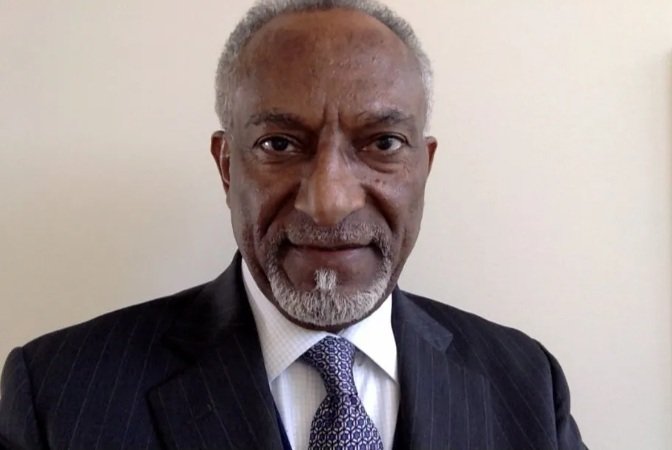
Teshome Abebe
Africa stands at a critical juncture in its economic development. With a population projected to reach 2.75 billion by 2060 and a combined annual output of $16 trillion, the continent holds immense potential to become a major player in global trade. Yet, its current trade frameworks and economic policies have not fully harnessed this potential, leaving Africa marginalized in the global economic arena. The enduring advantages of the industrialized world—such as technological superiority, robust infrastructure, and economies of scale—combined with the escalating tariff warfare among major global powers, particularly the United States and China, necessitate a fundamental rethinking of Africa’s trade strategy. This article, intended for executives and decision-makers, is a quick exploration of why Africa must adopt a new approach to trade, emphasizing regional integration, diversification, and strategic partnerships to navigate these global dynamics effectively.
The Enduring Advantages of the Industrialized World
Industrialized economies, primarily in North America, Europe, and parts of Asia, maintain significant advantages that shape global trade dynamics. These advantages include:
1. Technological Leadership: Industrialized nations lead in innovation, particularly in high-value sectors like artificial intelligence, biotechnology, and advanced manufacturing. For instance, China’s dominance in electric vehicle production and the United States’ strength in semiconductors highlight how technological advancements create competitive edges that African economies struggle to match.
2. Economies of Scale: Large internal markets and integrated supply chains allow industrialized nations to produce goods at lower costs. As noted in a 2025 *Foreign Affairs* article, China’s productive capacity in manufacturing is three times that of the United States, enabling it to dominate global markets in sectors like steel and electronics. Africa, with its fragmented markets, lacks comparable scale, making it less competitive globally.
3. Infrastructure and Logistics: Industrialized nations boast advanced transportation networks, ports, and digital infrastructure, facilitating efficient trade. In contrast, Africa faces significant logistical challenges, with intra-African trade hampered by border delays and inadequate infrastructure. The World Bank estimates that poor infrastructure increases trade costs in Africa by up to 30%.
4. Financial Power: Access to capital markets and foreign direct investment (FDI) allows industrialized nations to fund industrial policies and innovation. Africa, despite receiving $143 billion in Chinese loans from 2000 to 2017, remains heavily reliant on external financing, often with conditions that limit economic sovereignty.
These advantages create a structural imbalance, locking African economies into low-value commodity exports while industrialized nations dominate high-value manufactured goods and services. To compete, Africa must rethink its trade strategy to leverage its own strengths, such as its young workforce and abundant resources.
Tariff Warfare Among Major Global Powers
The resurgence of tariff warfare, particularly between the United States and China, has reshaped global trade, with significant implications for Africa. In 2025, U.S. President Donald Trump imposed tariffs of more than 125% on Chinese imports, prompting retaliatory measures from China, including tariffs on U.S. agricultural goods. The European Union has also introduced countermeasures, signaling a broader trend of protectionism. These developments affect Africa in several ways:
1. Disruption of Global Supply Chains: Tariff wars disrupt established supply chains, creating opportunities and risks for Africa. For example, as manufacturers seek alternatives to Chinese production, African nations could position themselves as viable hubs assuming the tariff regime is different and non-punitive. However, without proactive policies, Africa risks being bypassed as companies relocate to other regions like Southeast Asia.
2. Impact on Export Markets: Tariffs imposed by the U.S. on African exports, such as 10% on Ghanaian cocoa and 50% on Lesotho’s textiles, threaten key industries. The African Growth and Opportunity Act (AGOA), which provides duty-free access to the U.S. market, faces uncertainty as its renewal in September 2025 is in doubt, potentially exacerbating economic vulnerabilities. Some countries like Ethiopia have already been kicked off that trade regime.
3. Reduced Global Attention: As major powers focus on their trade conflicts, Africa risks being sidelined. Lee Kinyanjui, Kenya’s Cabinet Secretary for Investments, Trade, and Industry, noted in 2025 that global powers’ preoccupation with tariff wars leaves little attention for Africa’s development needs, underscoring the need for self-reliance.
4. Opportunities for Diversification: Tariff wars create openings for African nations to diversify trade partners. For instance, South Africa is exploring deeper ties with Asian markets and leveraging the African Continental Free Trade Area (AfCFTA)—a Flagship Project of Agenda 2063 Africa’s development framework–to reduce dependence on traditional Western markets.
These dynamics highlight the urgency for Africa to adopt a trade strategy that mitigates risks and capitalizes on emerging opportunities.
Why Africa Needs a New Trade Strategy
Africa’s current trade frameworks, including preferential agreements like AGOA and the EU’s Economic Partnership Agreements, have delivered limited benefits. The continent accounts for only 2.3% of global trade, and intra-African trade represents just 13.7% of its total trade, compared to 70% for intra-European trade. To address the challenges posed by industrialized nations’ advantages and tariff warfare, Africa needs a new strategy focused on the following pillars:
1. Strengthening Regional Integration Through AfCFTA
The AfCFTA, launched in 2019, aims to create a single market for 55 African nations, with a combined GDP of $6.7 trillion. Full implementation could boost intra-African trade by up to 33.8% by 2045, particularly in manufacturing. However, progress has been slow, with only a pilot phase operational in eight countries by 2024. Key actions include:
-Reducing Tariff and Non-Tariff Barriers: AfCFTA commitments to eliminate tariffs on 90% of goods must be integrated into national schedules. Harmonizing non-tariff measures, such as product standards, is equally critical.
– Improving Infrastructure: Investments in transport, ports, and digital connectivity are essential to lower trade costs. The AfCFTA Secretariat estimates that infrastructure upgrades could double intra-African trade volumes.
– Harmonizing Regional Economic Communities: Aligning the eight regional economic communities (e.g., ECOWAS, EAC) will create a cohesive trade bloc, enhancing Africa’s global bargaining power.
A unified African market would enable economies of scale, making the continent more competitive against industrialized nations.
2. Diversifying Economies and Exports
Africa’s reliance on commodity exports—oil, minerals, and agricultural products—leaves it vulnerable to price volatility and tariff shocks. Diversification into value-added industries is critical:
– Industrialization: Investing in manufacturing sectors like apparel, agro-processing, and pharmaceuticals can create jobs and reduce import dependence. For example, Kenya’s textile industry could capitalize on U.S. tariffs on Asian competitors to expand its $510 million apparel export market.
– Value-Added Agriculture: Processing raw materials like cocoa and cotton locally, as Ghana and Tanzania are attempting, increases export value and economic resilience.
– Services and Digital Trade: Expanding trade in services, such as fintech and tourism, leverages Africa’s growing digital economy. Nigeria’s tech sector, valued at $3 billion in 2024, exemplifies this potential.
Diversification aligns with AfCFTA’s goal of promoting industrialization, enabling Africa to move up global value chains.
3. Building Strategic Partnerships
While tariff wars strain relations with traditional partners, Africa can forge new alliances:
– Deepening Ties with Asia: China’s zero-tariff treatment for 33 African nations and India’s growing investments offer alternatives to Western markets. However, Africa must negotiate terms that prioritize technology transfer and local development.
– Strengthening South-South Cooperation: Partnerships with emerging economies like Brazil and Turkey can diversify trade and reduce reliance on major powers.
– Reforming Existing Agreements: Renegotiating AGOA (very doubtful the current US administration would even consider that) and EU agreements to include capacity-building support and fewer restrictions will enhance their effectiveness.
Strategic partnerships should emphasize mutual benefit, avoiding exploitative arrangements that perpetuate dependency.
4. Enhancing Trade Capacity and Resilience
To have a chance to compete with industrialized nations, Africa must address internal constraints:
– Investment in Skills: Education and re-skilling programs are vital to equip workers for skill-intensive industries. The World Bank estimates that closing Africa’s skills gap could boost GDP growth by 2% annually.
– Policy Clarity and Stability: Harmonized regulations and transparent policies could attract FDI. Ghana’s recent efforts to streamline export processes demonstrate the value of such reforms.
– Social Safety Nets: Supporting workers displaced by trade liberalization ensures inclusive growth, as emphasized in AfCFTA implementation plans.
These measures will build resilience against external shocks, including tariff wars.
Opportunities Amid Challenges
Despite the challenges, tariff warfare and industrialized nations’ advantages create opportunities for Africa:
– Supply Chain Relocation: As global manufacturers seek alternatives to tariff-hit regions, Africa’s abundant resources and young workforce make it an attractive destination. Ethiopia’s garment industry, which once employed up to100,000 workers, but has faltered because of poor domestic policies and security issues, shows how targeted investments can seize such opportunities.
– Rising Global Demand for Minerals: Africa’s critical minerals, like cobalt and lithium, are in high demand for green technologies. Strategic positioning can secure favorable trade terms.
– Intra-African Trade Growth: AfCFTA’s focus on regional value chains can shield Africa from global trade disruptions, fostering self-reliance.
By acting decisively, Africa can turn these opportunities into engines of growth.
Summing Up
Africa’s current trade strategy is ill-equipped to address the enduring advantages of industrialized nations and the fallout from global tariff warfare. The continent’s marginal role in global trade, coupled with its reliance on commodities and external markets, underscores the need for a bold new approach. By prioritizing regional integration through AfCFTA, diversifying economies, building strategic partnerships, and enhancing trade capacity, Africa can position itself as a resilient and competitive player in the global economy. The time for action is now—Africa must seize this moment to redefine its trade destiny and secure sustainable prosperity for its people.
Teshome Abebe, PH.D., a Former Provost and Vice President at two institutions, is Professor of Economics.
References
1. Luke, D. (2023). “Why Africa Needs a New Trade Deal”. Stiftung Wissenschaft und Politik. Swp-berlin.org[](https:// 2. Foreign Affairs. (2025). “Underestimating China: Why America Needs a New Strategy”. (https://nam11.safelinks.protection.outlook.com/?url=https%3A%2F%2Fwww.foreignaffairs.com%2Fchina%2Funderestimating-china
3. International Monetary Fund. (2023). “Trade Integration in Africa: Unleashing the Continent’s Potential”. (https://nam11.safelinks.protection.outlook.com
4. Atlantic Council. (2025). “Experts React: How the World is Responding to Trump’s Tariffs”. (https://nam11.safelinks.protection.outlook.com/?url=https%3A%2F%2Fwww.atlanticcouncil.org
5. The Standard. (2025). “Amid Trade War, There’s Need for Africa to Take Charge”. (https://nam11.safelinks.protection.outlook.com/?url=https%3A%2F%2Fwww.standardmedia.co.ke%2Fopinion%2Farticle%2F2001516081%2Famid-trade-war-theres-need-for-africa-to-take-charge-of-her-destiny
6. World Bank. (2024). “Africa’s Infrastructure Challenges and Trade Costs”.
7. United Nations Economic Commission for Africa. (2018). “An Empirical Assessment of the African Continental Free Trade Area”.
Editor’s Note : Views in the article do not necessarily reflect the views of borkena.com
__
Subscribe : https://borkena.com/subscribe-borkena/
Join our Telegram Channel : t.me/borkena
Like borkena on Facebook
Add your business to Ethiopian Business Listing / Ethiopian Business Directory Business Listing Toronto
Join the conversation. Follow us on X (Formerly Twitter) @zborkena to get the latest Ethiopian News updates regularly. Subscribe to YouTube channel To share information or for submission, send e-mail to info@borkena.com
Several issues come forth reading this article… and the assumption taken that Africa is on the same wavelength as the ‘advanced economies’ of the day. Yes, Africa is competitive when it comes to head-counts (it is unable to feed, having more than enough land & water, but the idea of putting seeds in the soil to let it naturally grow in the rainy season, if not use irrigation to do it more often is challenging).
The first priority must be able to feed itself. and the amount of investment needed today is less than a few hundred dollars ( not millions) worth of Chinese made hand held (kerosene /gas/electric) farm tools that can cultivate 4 times more than the amount done using the traditional 2 oxen and the rest.
The ‘Tariff’ issue is not global, it is one country imposing it on the rest of the world (advanced economies) because it couldn’t control its own appetite to consume what others are producing, and wanted to get a free ride and confiscate the ‘trade surplus’ it owes the other nations… In fact the US posted on the White House website “Countries to DONATE’ (write a cheque) to help ease its financial problems)…”The Godfather’s” style, extortion!
For example, the EU has a $350 billion ‘trade surplus’ and Trump wants to force the EU to pay the $350 bl for US LNG (for 4 times the price EU used to get it from Russia). This is simply Extortion!!!
Africa does not sell anything substantial to the US, and can simply ignore the US tariff completely. In fact it is giving Africa how to assert itself and use its relationship with the manufacturing giant China and buy Raw material processing tools, joint venture factories locally to ship them to anyone who needs them around the world less the US.
One other very important thing Trump’s “Tariff’ did was, kill the ‘Neoliberal Economic model’ (Abiy’s (regime change) shield) (‘GLOBALIZATION’) where Advanced Economies’ were to put their hands in every PIE on the Globe (recourses without borders) while they sit at the TOP of the food chain, the ‘Global Majority’ catering for their every needs using its resources to their service.
It was the UK & EU Globalist that were noticeably disappointed ( their handlers behind the curtains for sure; in private ).
‘… New Trade Strategy’
The ‘EU economic partnership’ has done more harm than benefit to any of the African nations that have ‘TRADE agreements’ with. Millions of local farmers were taken out of business with farm products like Onions, potatoes, tomatoes, bell papers, and similar other farm products African farmers (mostly women) were producing to satisfy local demands, but no more. Again, Africa’s needs and capabilities are not in equal terms as the ‘advanced economies’ therefore, it is a mistake to assume it is.
‘Strengthening Regional Integration…’
Two reasons why this ‘integration strategy’ will fail, before it even starts.
(1) We have the EU as an example, that ended up with the UK EXIT…
The EU were put together some 50 years ago to divert their overpowering attention to ‘WARs’ to economic-issue hoping attitudes would change… Well, they ended up instrumental to the ongoing Civil War in Ukraine that started in 2014 with the EU as a front runner, and the government of the day that was leaning towards relations with Russia was overthrown and replaced with one hand-picked by Victoria Nuland of US… and in 2022 Russia was forced to join it to liberate the Russian speaking native Russian in Ukraine. Today the US (Trump) wants to end the War, but the collective EU & UK do not ( go figure, WAR seems to be in their blood).
(2) Africa added at least 3 NEW countries, (Eretria, South Sudan, Somaliland) in the last 35 years alone, and soon might have 60+ AU members… Ethiopia itself was an integrated place, but bright idea of TPLF fractured it along tribal borders, (I hear, going to Sodere-resort from Addis has become (a pipe dream) a suicidal plan due to the rampant abduction by TPLF inspired tribal lords. TPLF became a prisoner of its own ‘bright-idea’ of dimwits. Now in this ever fracturing environment and the EU example before us, developing ‘trade-relations’ and trade-route development without the Economic and political integration is vital to push Africa to the self-sufficiency and food-security it needs desperately.
The result of unsustainable development we observe in the ‘advanced economies’ where more and more citizens including veterans the fought for the nations (US, UK & EU) often become homeless is not a development route Africa needs to follow along, and becoming.
It is universal law, ‘what goes up must come down’, ‘what begins must end’, ‘what is born must die’, ‘that which advanced…’
The Chinese took notes, when USSR’s ‘perestroika’ led its people to a brick of rampant economic collapse until Putin came to the center of power and turned things around 180.
As a result the Chinese wisely adopted the CONTROLLED ‘Socialist Market Economy’ model ( Chinese Characteristics ) that transformed China from the bottom of GDP rankings , to the #1 position in 45 years FLAT.
45 years ago USSR was a manufacturing jagarnot and China was not even close, yet today China is #1 of the worlds manufacturing hub , #1 in number of STEM graduates, #1 in advanced technology research leading the US by 57 out of 64.
Link = voanews.com/a/china-takes-lead-in-critical-technology-research-after-switching-places-with-us/7779603.html
Still China or its people do not compare themselves with the ‘advanced economies’ (US, EU) because that is not the focus, they want to waste their time on when there are much more societal issues they need to solve to improve the wellbeing of their citizens.
US’s reindustrialization dream with $37 trillion in debt and with less and less STEM graduates in its schools is a pipe dream, most of its tech CEOs are Indian born and educated, the local tech CEOs are college dropouts of the 20th century…
Africa needs agriculture & engineering graduates from our local schools, nothing fancy just with the basics, we have students working in high tech for Google, Microsoft, NASA…etc. because their talent and expertise exceeds what is available at home for them to be a part of locally, that simply shows that level of expedites is not what is needed in Africa, even in India the CEOs in US have no place back home.
Advanced economies are called advanced economies for these kinds of reasons; and Africa needs to take notes and gauge itself & seek trade-partnerships accordingly.
There are 4 times more people drinking coffee in China than in the US for Ethiopia to ignore the US tariff and turn East, after all it is a BRICS member, and needs to organize its trade targets and product specialization to a friendlier market, not to the ‘Zero sum game’ groups, that come with their own arrogant-demands; those days are OVER.
Globalization is DEAD.
EU’s disintegration is coming soon the crack is visible already ( do not blink) Experts say it wont pass 2027.
AU is fine, with its Globalist masters gone, it wont last long but it might lean a thing or two from the ASIAN (hope) and do some good; but it’s becoming Economic integration hub like the EU is not going to happen, its harm out way its benefits, if any!
The death of Globalization ( neoliberal (‘rules based’) system) makes the opposite of most of the points made in the articles.
Multi polarity is the name of the game going forward!
There may be a few skirmishes, here and there between now and 2026 the latest, and that will be it for the old unipolarity we endured and many lost a lost since the fall of USSR ( the gate keeper) ( In my opinion, the US wouldn’t have gone this deep in debt if USSR was still around, ).
Be well.
A few points I left out that would make my point clearer…
“JD Vance’s (‘Mascara man’) “CHINESE PEASANTS” remark”
Link = youtube.com/watch?v=idi8_RVZmKQ
“Trump Trade War Backfires! Majority of US Citizens Now Believe American Dream is Dead!”
Link = youtube.com/watch?v=XYuw_lpsg5w
“Pepe Escobar : Russia/China/Iran Warn US.”
Link = youtube.com/watch?v=JMIevaNwXMI
Africa is not in a position to compare & measure itself & its development routes to fit as to who made or is about to make the 1 Nanometer chip, it has no use for if a ship load of it were is sent to it, except sending it to a landfill (to prevent kids from swallowing them) vs China who would build a research station on Mars within a couple of months, and perhaps invite African future astronauts to go visit say in 2050s…
That is not to say there are no naturally talented people in Africa, there are… but in the world we live in and the existing power structure does not let such people with such game changing technologies to succeed…
Link = youtube.com/watch?v=1W1JG8XyRyw
Be well.
US’s unrestrained ‘Sanctions’ exuberance lead to the the formation of BRICS 2009-2010, BRICS + 2024, BRICS + & Partners 2025.
The unintended consequences of US, UK, EU actions in the last few decades started to pile up as the result, fast forward 2025, ‘Global Trade’ no longer depends on the whims of the ‘West’…
” GAME OVER: BRICS+ Dethrones the West as its Grain Exchange Undermines US Trade Dominance Globally”
Link = youtube.com/watch?v=sWJXrItDH9g
Trump’s April 2nd , 2025 “Liberation Day” Tariff on the world…
” US farmers beg Trump to stop the trade war and save American farming. But it’s already too late.”
Link = youtube.com/watch?v=nADbVedF7xw
Bob Dylan,
”The times that are a-changin”
Link = youtube.com/watch?v=Q9_nWlSX6Us
Be well.
The points made in the response are well-taken if the analysis is with respect to international trade in toto! The main article focuses on conditions pertaining to trade within the continent and the opportunities that might arise. Nonetheless, exchanges of this sort are needed and we need to welcome and promote them. Thank you!
Academic practice vs reality on the ground, where all the people in the continent have is ‘raw-materials’ under their feet, with no expertise or capital to extract them and take them to market.
EU was formed as a ‘trade within the continent’ enabler, but through the years since it morphed itself to a ‘political and economic unit run by ‘unelected bureaucrats’ that started to undermine the ‘elected leaders’ of the ‘sovereign’ member states.
Just the other day the EU FM (‘unelected bureaucrat) issued a warning to all elected leaders of the sates that plan to attend the 80th anniversary Red Army victory over NAZI germane on May 9th in Moscow. that their actions will have serious consequences if the chose to proceed as planed. And future EU prospects like Serbia its elected leader was warned that its application to join will be revoked, if they proceed.
My mention of AU as a future continental trading enabler (mirroring EU’s path) would be disastrous for the ‘sovereign’ states of Africa, if Africans fail to take notes.
Be well.
Imagine this for a moment, Ethiopia the only sovereign state in Africa, if not the world, (considering all the European colonizers were colonies of The Roman Empire, which Ethiopia used traded with via the ‘silk road’ ), being run by an AU’s commissioner (‘unelected bureaucrats’) say, from Egypt… ( that would be a blasphemy.)
(1) Being instructed /ordered to privatize GERD and an investor from Egypt holding 51 percent share?
(2) To be denied developing its 14 TWH power generation potential by such appointed & unelected central power?
NO (f) WAY!!!
For the main idea itself, our nation being run by a non-Ethiopian, let alone to being dictated to about #1 & #2 above.
Not in a million years!
Actually there are already developed East , West, South, Central, and North Africa Trading groups that are active in one way or another, which are small & manageable and have their distinct, & natural ebb and flow in the understanding who is who in the respective regions.
That is the kind of closely-knit taring-structures that need to be nurtured and strengthened, without interfering with each state’s political and economic policies, and with a potential to develop a military-alliances to protect the region’s interest in the long run…
Not one run by AU.
AU as ASIAN needs to organized to focus on its sole-purpose of keeping the continent conflict free zone, by consulting with ASIAN and their lessons learned & hands-on experiences that kept the region conflict free and economically dynamic for the longest time in south Asia.
Be well.
I hope the dear editors of this esteemed website will keep this article visible for quite some time. The article is loaded with intuitive material and the conversation between commentator T and the other is keeping it so lively. I hope they will continue keeping their exchange of ideas civil. Meanwhile, I thank and applaud the dear author for not being caught up in the ugly divisive ethnic rant such as demonizing others as ‘Oromummaas’, ‘Neftegnas’ and ‘Woyane’. Such rant by the well educated among is cancer that has been eating at the heart of the old country since the 1970’s. I hope they will give it up.
“Namibia’s New President Joins TRAORE and Orders The Mass Deportation Of 500 Americans.”
Link = youtube.com/watch?v=efx_3VuRw6M
“Whatever you do, just check – is it all about you, or is it for the wellbeing of All. This settles any confusion or the need to ‘convince’…”
Be well.
Chinese “Commies” teach American capitalist poor (99%) run by the 1% American OLIGARCHY, and America is a PLUTOCRACY not a ‘Democracy’, china is run by the 99% ( for the people by the people) the government controlling the 1%.
“Chinese TikTokers SCHOOL Trump Supporters About Their OWN Country: “You Guys are Really Dumb””
Link = youtube.com/watch?v=uf_GCOSZ2bA
We were told the Chinese were oppressed by the communist party… the Chinese exposed THE PROPAGANDA it is the Americans (Westerners ) that are taken advantage of “ROBBED BILND”…
When lies collapse as truth sticks its head above the surface…
The truth is, Chinese know how to BUILD 1979-2025, America only knows how to DISTROY… from Korea 1950s, Vietnam 1960/70s Middle East & Central America, Iraq (desert-storm) in 1980s, Yugoslavia, Sudan, Somalia 1990s, Afghanistan, Iraq, Libya, (Arab Spring) Syria, Yemen, Georgia, Ukraine 2000-2025… and $37 trillions in DEBT in the process, counting the day for the inevitable collapse .
Be well.
US (CIA) wanted/expected Young Chines to overthrow the CCP; Young Chinese want US population to ‘take their country back’ from their Oligarchy 1% that is ‘robbing them blind’.
Prominent Americans agree with the Chinese !
Link = youtube.com/watch?v=mOnZ628-7_E
An American in China…
“The United States is waging a trade war with high tariffs. China is playing Go.”
Link = youtube.com/watch?v=rv8yostPnwU
Lies after lies pushed ‘Truth’ off site for so long, it is almost forgotten… but #Nomore !
Be well.
American in China
“Chinese factories build fire trucks for $400,000 in six weeks. In the US it’s $2 million in 4 years”
Link = youtube.com/watch?v=78nZ-JJNmzQ
British in China
“This is Why The USA CANNOT win a Trade War With China | Canton Fair 2025”
Link = youtube.com/watch?v=g0A2DA_3cDQ
China started by offering CHEAP LABOR in 1979 to the US multinationals that moved their factories to China.
Starting long before 2025 China started offering INDUSTRIAL MANUFACCTURING TOOLS at scale that no one has ever seen for a relatively LOW cost of $1,500, $3,000, $10,000 to start a small manufacturing business, and higherend machineries FROM $20,000, $30,000, $50,000… million for big manufacturing machineries…
As shown in fair video… visitors from all over the Global south came in droves, which SUPORTS MY EALRIER ARGUMENT that the Global South nations need to TRADE with their PEERS to GET GREATER RETURN on THEIR HARD EARNED money not with the very expansive and DEMENDING ‘advanced economies’, that would ROB THEM BLIND.
There is no question MAGA cannot compete with China; China stands at a very different level regardless of the measurement applied, and is advancing WARP speed, in all areas.
Be well.
To round out this conversation, let us look at building aesthetics, housing and cost of living… what a middle callas Chinese enjoy, but westerners will only dream of, even those who live at the highest pay bracket and expenditures…
Chinese architecture building aesthetics is long stablished for thousands of years unmatched by any other…
“Inside a Chinese Apartment : Unique Features & Rent Reveal!”
Link = youtube.com/watch?v=actM5P9sUnA
Happy Easter !
Be well.