
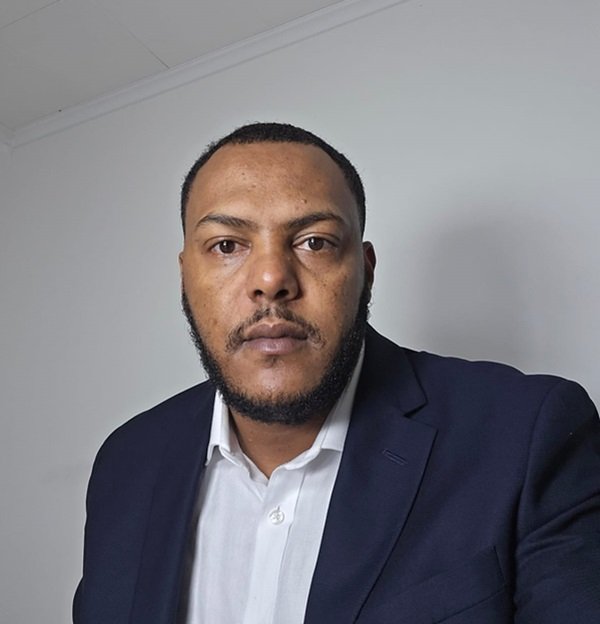
By: Tingirtu Gebretsadik Tekle1
August 08, 2024
The Amhara people have anguished under successive vengeful regimes for the past 50 years, at least, faltering to identify ‘honest’ political parties that truly represent Amhara culture, history, political outlook, and survival. Throughout all these years, the struggle has been dispersed among various armed and political groups, including leeches and subordinate parties such as the Amhara National Democratic Movement (ANDM), now Amhara Prosperity Party (APP). The fact that there has been scattered public support has contributed to the continuation of oppression by those regimes. The continuing Abiy’s genocidal war on the region has resulted in a greater unification among Amhara Fano fighters, diasporas, intellectuals, and the people at large. Conversely, this has lately raised a critical question; is this struggle sufficient?
A few months after the Pretoria Cessation of Hostilities Agreement (CoHA) signed in November 2022, Abiy’s regime transferred its anti-peace objectives into the Amhara region and began its genocidal war on April 2023. “For astute observers of Ethiopian politics, it was hardly a surprise that, yet another conflict arose in Amhara less than a year after a peace accord was signed to silence the guns in neighboring Tigrai, effectively putting an end to one of the deadliest wars the world has seen in recent years.”2 As a result, that peace accord was followed by another devastating war in the HOA region. The Amhara Fano armed group as well is fiercely fighting for the dignity and freedom of its people.
What is at stake?
Amharas are fighting against the atrocious and incumbent government of Abiy Ahmed since the past 15 months under the Fano armed group structure. There are bountiful Fano arrangements throughout the Amhara region, all combating for the same cause. The current challenge is establishing a centralized, vibrant, and strategic leadership of the Amhara struggle.
In line with that problem, there are growing tendencies of division and factionalism. “A prominent challenge facing the Amhara Fano groups is a lack of unified leadership. Despite the anti-government sentiment prevailing in the Amhara region, various factions operate independently, with no central figure or committee making strategic decisions”3 Such scattered military operations could protract the achievement of victory. The challenge of organizing a united Fano front and cautiously selecting strategic leaders who can then centralize the army structure and unify all Amharas is the recent conundrum, at least for a short time.
The concern at stake is then in realizing a unified army with all the requirements it entails to shorten the sufferings of the civilian population and accelerate the struggle to achieve the Amhara aspirations. This need is also accentuated by a gripping and crucial matter of appointing new and effective leaders who possess the knowledge of strategic leadership.
The Urgent Needs
A fresh configuration of energetic leadership is the urgent need which should be managed in a brief time span. A cohesive struggle is not only required in the army structure, but also among the people of the region and the diasporas. To equip the army with strong chain of command and centralized authority are also the other vital needs being articulated by the wider population of the Amhara region and the diaspora community supporting the struggle residing in various countries. Nevertheless, strategic leadership should not be compromised with arbitrary merger of armed factions but need to be addressed separately. Strategic leadership is a key element in its nature which should be carried out carefully to select capable leaders – from among the army to the forefront – who can unify all factions and the supporting population. Initially, it’s significant to comprehend who a strategic leader is.
The United States Army War College defines a strategic leader as “an expert, not only in his own domain of war fighting, but also in the bureaucratic and political environment of the nation’s decision-making process. This includes a detailed knowledge of, as well as the interrelationship among economics, geopolitics, military, and information.”4 The selection of such leaders with combined knowledge of these intertwined aspects is highly needed without delay. Knowledgeable, experienced, and determined leaders who do possess understanding on the four stated knowledge areas should come to the front position of Fano leadership and Amhara struggle. That would open a wider room to devise and implement strategic leadership, and more importantly strengthen a centralized and unified Amhara struggle.
Moreover, such strategic leaders should be selected based on further four common competencies they ought to have. According to the United States Army War College, these abilities are self-awareness, adaptability, expertise across the full spectrum of operations, and interpersonal skills.5 The listed qualities are very important in which these would be leaders should be selected upon.
Apart from those critical needs, it’s also important to point out here that the increasing humanitarian and security crises in the region are contributing factors for the growing demands of creating a centralized and unified front with strategic leadership. “Centralized organizations with strong hierarchical control are capable of rapidly adjusting their strategies in response to changes in the environment or the strategies of rivals. The ability to switch could be either to the advantage or to the detriment of the organization because both resilience and flexibility have their distinct virtues. … A multiplicity of organizations encourages the consistent adoption of a confrontational strategy by the challengers because a dissatisfied population is likely to shift its support to the organization that shuns the conciliatory route.”6 A strong hierarchical command chain with strategic leadership will help reinforce the struggle and thwart the regime’s efforts to use such a miscellany of combatants to suppress the people’s desire for freedom. Similarly, a centralized and cohesive army would enable the Fano leadership to control and address the disruptive actions of some defectors and troublemakers as such individuals can only thrive in fragmented factions of a resistance movement. Thus, it is essential for the top opinion leaders in the Amhara region, community organizers of diasporas, intellectuals, and other supporters to stress the immediate need for a centralized and unified army and the potential risks of any delay.
The Fatigue of the Diaspora versus the Need for Strategic Leadership
The diaspora community aspires to a centralized, strong, and cohesive strategic leadership of Fano in the ground. It does not only need to see such leadership but also with an immediate reform trend. Of course, these community members have shown freezing reaction because of the recent disagreements in the selection process of leadership on the ground.
“In recent years, Fano has become a household name, and a crucial movement tasked with saving the very existence of the Amhara population as well as the integrity of Ethiopia” 7 That is the reality on the ground. However, the divisive tendencies among different structures of the group have shaped great concerns on the region’s population and growing exhaustion among the active diaspora supporters.
These challenges are also delivering a fuel to the need for local governance. The people in the region are desperately in demand of local governance to fill the vacuum left by the ANDM/APP. “[Recently in May], government officials privately admit not-so-small portions of the region are out of their control. An [one] official said [that] travel by road for government officials even between cities like Bahir Dar and Gondar, with just 180 kilometers separating them, has become impossible.”8 This implies that the immediate need of the people for Fano forces to take control of the local governance in several areas of the region is persuasive.
In line with the above truth, having “safe haven” areas which ought to be administered by the popular resistance structure requires a centralized structure of Fano. Centralized organizations become “less vulnerable to strategies that aim to isolate them from potential supporters if they acquire a safe haven because they have exclusive control over a portion of the territory, where they can methodically mobilize the population through overlapping structures”.9 Hence, the need for local governance is among the well-timed and concrete needs being demanded. But this task can efficiently be administered when the priority concerns of organizing a strategic leadership and centralized structure are dealt with.
Among the diasporas, symptoms of weariness on the critical issues of forming a centralized and unified Amhara army are noticed. The suspension of executing this task might generate weaker and dispersed support from these communities in time.
Principled Partnership with other Groups
As the need for urgent strategic leadership is imperative, initiating a planned partnership with armed groups in other ethnic groups is also mandatory. However, the realization of a unified and strategic leadership and cohesive diaspora community are prerequisites for such a decisive move.
“Other challenges such as diplomatic ties, increasing allies from other ethnic groups, logistical barriers and others could be well administered” once this immense challenge of the need for an organized leadership with strategic directives is successfully solved.10 Though making practical alliance formation with other groups is essential, focusing on the unity and strategic leadership issues of Fano are prerequisites.
Additionally, examining the overall capacity, political views and strategies is also necessary to formulate a tactical alliance with other groups for common goal. The partnership of Tigrai People’s Liberation Front (TPLF) and the Eritrean People’s Liberation Front (EPLF) armed struggles could be exemplary here. “The TPLF’s defeat of the EDU and the EPRP in Tigrai in I978 allowed it to devote resources to directly challenging the Derg, notably by attacking Ethiopia’s supply lines to Eritrea. By 1980 an even more powerful TPLF had forced the Derg to rely increasingly on air and sea transport to supply its Eritrean garrisoned troops, and for this valued assistance was supplied by the EPLF with technical skills, advanced weaponry, and military training.” 11
The partnership of EPLF and TPLF in the struggle against the then Derg military regime was based on bold principles for common goal and both fronts were able to achieve their respective targets. “The growing importance of the TPLF to the anti-Derg struggle increased its confidence and meant that the benefits of its relationship with the EPLF were clearly mutually advantageous.”12 Such an experience has a lesson to take in the efforts to find and assess contemporary strong-armed groups of other ethnic groups and then after initiate a practical alliance with Fano forces based on authentic agreements.
Patriot Zemene Kassie, a Gojjam Fano leader, emphasized in a recent video interview from a battlefield that partnerships with other ethnic armed groups are necessary, and efforts towards this goal have already begun. He stated that potential partners should first acknowledge the existential threat the Amhara people are facing and believe in the country’s territorial integrity to initiate such partnerships.
Regarding the establishment of a unified, organized, and centralized Amhara army, Zemene mentioned that he and his comrades have been working on creating a united Amhara Fano and these efforts are ongoing. He expressed hope that promising results will be revealed soon. These endeavors are consequential for achieving a centralized command, strategic leadership, and building tactical and/or strategic partnerships and/or alliances with armed groups in other regions.
Way Outs
While creating and maintaining strategic partnership with armed groups in other ethnic groups is necessary, a new unified Fano leadership should also put priorities in descending order of importance. This is because some opinion makers have been advising otherwise. For instance, Girma Berhanu recommends that “Amhara identity must go hand in hand with Ethiopianism. We should never forsake our Ethiopianness to demonstrate our Amhara identity.”13 Though the idea entails the positive perspectives of Amharas, considering the status of political, military, and social networks in the country should be underlined first. In other words, a partnership with viable armed groups of other ethnic groups should be handled based on mutual benefits and risks to realize a country of all with justice and equality.
Regarding smooth political transition in the country, an inclusive and new peace pact is pretty much matchless. “A negotiated settlement involving key stakeholders is essential to ensure a peaceful transition and pave the way for a more inclusive and representative government.”14 Given the reality that there is an absence of readiness for a genuine and peaceful transition from the Abiy’s government side by pretending to conduct and procrastinating inclusive dialogues, it leaves all stakeholders no option, but to press on the combined efforts in realizing a unified and strengthened Fano forces with cohesive and centralized hierarchy, strategic leadership, and potent chain of command.
Similarly, “It is now abundantly clear that the Abiy government is once again dusting off tried-and-tested tactics for avoiding accountability. Preparations to launch the transitional justice policy have come close to completion in the absence of a transition from political violence, with one insurgency erupting in Amhara and another expanding in Oromia, and little prospect of truth-telling.” 15 One can easily deem that the Abiy’s government is trying to accomplish arrogant political measures to conceal and reduce serious public concerns in every corner of the country and that there is not any other better alternative but strengthening the Amhara struggle by spotlighting the establishment of a unified Fano army with centralized hierarchy and strategic leadership, instantly.
Conclusions
The Amhara population has become highly unified more than ever after Abiy’s regime started the continuing genocidal war on Amhara region last year. The commencement of that lucid war enabled the youth of the region to organize themselves under the Fano army in different areas of the region. The Fano are fighting bravely against the brutal regime to defend their people while Abiy’s military are committing war crimes and bombing the civilian population.
Nonetheless, the popular armed struggle with multiple Fano entities seems to get serious comments and suggestions recently from among the public support. As the war gets prolonged, the region’s population and diasporas are expressing their urgent needs to organize a unified Fano army with centralized chain of command and collective strategic leadership. There are also signs of fatigue among the diaspora emanating from the stated urgent needs.
Therefore, the senior military leaders of Fano and all stakeholders should immediately prioritize the establishment of collective leadership based on clear criteria and consolidate all the army arrangements under a single centralized command. This new unified strategic leadership of Fano would then be responsible for carrying out imperative priority tasks in order of their importance, which includes initiating principled alliances with armed groups of other ethnicities.
Endnotes
- Mr. Tingirtu is a former Assistant Professor of Sociology at Jigjiga University (JJU) until May 2023. He was forced to immigrate to the United States due to the worsening political situation in Ethiopia. The author continues to advocate for human rights and social justice. He can be reached at tingirtsocy@gmail.com
- Mistir Sew, “Persecuted Amharas have nowhere left to flee to,” 29 May 2024.
- Sajid Nadeem, “Five Main Challenges Faced by Amhara Fano Groups in Ethiopia,” March 2024.
- United States Army War College, Department of Command, “Leadership and Management, Strategic Leadership Primer,” 2nd Edition, Carlisle Barracks, Pennsylvania, 2004, pg iii.
- United States Army War College, Department of Command, “Leadership and Management, Strategic Leadership Primer,” 2nd Edition, Carlisle Barracks, Pennsylvania, 2004, pg 2.
- Abdulkader H. Sinno, “Armed groups’ organizational structure and their strategic options”, June 2011.
https://international-review.icrc.org
- Girma Berhanu, “Fano: A Mass Outrage for Amhara Existence, Justice and Ethiopian Unity”, 2024.
https://www.concernedethiopians.org
- Mistir Sew, “Persecuted Amharas have nowhere left to flee to”, 29 May 2024.
https://www.ethiopia-insight.com/
- Abdulkader H. Sinno, “Armed groups’ organizational structure and their strategic options”, June 2011.
https://international-review.icrc.org
- Sajid Nadeem, “Five Main Challenges Faced by Amhara Fano Groups in Ethiopia”, March 2024.
https://myviewsonnews.net
- John Young, “The Tigrai and Eritrean Peoples Liberation Fronts: A History of Tensions and Pragmatism”, March 1996.
https://www.jstor.org/stable/161740
- John Young, “The Tigrai and Eritrean Peoples Liberation Fronts: A History of Tensions and Pragmatism”, March 1996
https://www.jstor.org/stable/161740
- Girma Berhanu, “Fano: A Mass Outrage for Amhara Existence, Justice and Ethiopian Unity”, 2024
https://www.concernedethiopians.org
- Tingirt G. Tekle “Abiy Ahmed’s War on Amhara: Exposing the Genocidal Campaign and the Urgent Need for Global Intervention”, July 22, 2024
https://eastafricanreview.com/2024/07/22
- Aaron Maasho and Martin Witteveen, “Ethiopia’s Reconciliation Policy Is a Farce”, February 27, 2024
HTTPS://FOREIGNPOLICY.COM/2024/02/27
Editor’s note : Views in the article do not necessarily reflect the views of borkena.com
__
To Publish an Article On borkena , please send submission to info@borkena.com for consideration.
Join our Telegram Channel : t.me/borkena
Like borkena on Facebook
Add your business to Borkena Business Listing/Business Directory Jobs
Join the conversation. Follow us on X (formerly Twitter ) @zborkena to get the latest Ethiopian news updates regularly. Ethiopia To share information or for submission, send e-mail to info@borkena.com
Far from reality and facts, this piece is clearly written by a self-exiled assistant professor of sociology who has no understanding of politics. It’s absurd that the writer is trying to portray Zemene Kassa as a patriot when, in truth, Zemene Kassa is a bigot, a hater, and power-hungry—responsible for the deaths of countless youth. The Amhara and the Ethiopian Orthodox Church have spun false narratives for centuries, painting themselves as superior and laying claim to one-third of Ethiopia’s land for churches while subjugating other majority ethnic groups. They’ve done this by preaching a fabricated history of Ethiopia in their churches.
Now, when Dr. Abiy attempts to remove this false mask and give credit to other ethnicities for their heroism and contributions, ensuring inclusivity for everyone, these hate-driven bigots lose their minds. Sociology isn’t politics, and the Amhara have completely lost touch with political reality. They’ve lost credibility, can never unite with other ethnic groups, and will remain rebels without a cause until the younger generation finally says enough is enough. They need to evolve, integrate, rehabilitate, and admit the lies their ancestors and church have been feeding them for generations.
Sujaja,
100% Far from reality!
For me, such prejudiced writers are the one the government must fight accordingly (SHEBE) not Zemene’s bandits in the forest with a few guns. I understand people have different positions on this issue for lots of reasons but how on earth someone writes such false allegation. The public clearly know that Fano started all these, and government has every right to defend the country from SHIFTA. Blaming the government while the cause comes from somewhere is a sign of ignorance and luck of good religion? :)
Why did your article deliberately ignore the fact that Fano military leaders from all the traditional zonal provinces of Amhara, including Zemen’s group from Gojjam, had recently gathered and chosen their leader, already announcing the establishment of a unified “Amhara Peoples Organization”? Following the election, the conference facilitators broadcasted to the public that they held an open and transparent democratic election. Their report made it clear that Beaden had attempted to hijack the Fano leadership by manipulating the election using Zemene Kassie. When Beaden miserably failed to achieve its mischievous goal, it has launched a propaganda campaign against Eskinder Nega using a PP-style keyboard army and buying social media pages, platforms, and channels. By disrespecting the Gonder, Wollo, and Shewa major Fano military leaders’ choice, you have disgracefully exposed your Beadeness. It becomes obvious now that your agenda was not primarily focused on true unity but on taking over the leadership and gradually disarming Fano fighters to neutralize the genuine Amhara Fano struggle. Beaden must leave the Amhara struggle alone, as it cannot be part of the solution. Beaden must go for good. It seems your game has already been exposed, no matter how hard you tried.
“The current challenge is establishing a centralized, vibrant, and strategic leadership of the Amhara struggle.”
(1) Such a notion may look attractive for the ‘wouldbee’ (selfappinting) ‘leadeship’ hopfules, but for the people at large, especially those who may find themselves further away from the ‘center-of-power’, it is not workable.
(2) As stated, after 50 years ‘centralized leadership’ was not achieved due to many factors (known or unknown), therefore, it is not wise to go-on in the same direction expecting a different result.
There are fundamental reasons why it remained a challenge, the four former provinces ‘Shewa’, ‘Gojjam’, ‘Begemmder’, & ‘Wello’ were always run locally & independent of each other, and it has worked well for the longest time, until the delusional (self-serving (self-isolating)) ethnic based reorganization of the nation was put forward by the TPLF gang (as instructed by its masters) gang; which is currently suffering from its own bitter-medicine.
Each of the former Provinces are vast & culturally distinct enough to be run by their own ‘central’ administration. To ensure enough & close attention is given to all the people of the local Region, “Awrajja”, “Woreda’, and smaller villages.
All having grassroot representation & self-governance, to bring about vibrant regional economic development & growth strategies to benefit the local residents.
As each regional “FANO” forces have already led the way by organizing themselves within their own region, the Political & administrative wing must also come from each region itself and run things locally, independently. A central ‘advisory committee” must be formed based on equal representation, assigned by each region to discuss issues such as jurisdictional borders, and issues concerning ‘ethnic politics’ ( if it still exists going forward) and form a unified response that needs to be approved by the four regions leadership.
Such a format would eradicate favoritism & bias & guarantee fair representation and strong grassroot participations, so no region or village is left behind, or ignored.
At the end of the day, “it is the economy, stupid” BC, each region needs economic development and that requires local grassroot attention & leadership.
I remember watching a video sometime around 2018 where an Amhara delegation went to Tigray, after the nationwide demonstration chaos, to reassure & ask Tigray investors to return to the region… we all know what happened a year or two later…
Self reliance & local / self governance is a must;
“Leaders’ must be community “Nominated” by ‘merit’, not ‘self appointed’ ones, and the voter must have the right to recall and replace any ‘representative’.
Be well.
We a group of concerned Amharas residing in the US have launched an effort to organize the Amhara diaspora. Please visit our website and join our efforts:
amharaunity.com/