
When I read the words of a young Ethiopian woman in a recent BBC report titled “A Forgotten War Destroying Women’s Lives” — “I would have been better off if they had killed me,” she said after being sexually assaulted by government soldiers — I found myself asking how such barbarity could be normalized in the twenty-first century. Why were the decent people of the world, human rights organizations, and the broader international community not outraged? Why were the perpetrators not hunted down and brought to justice? And where is the outcry from women’s organizations around the globe?
The tragedy unfolding in the Horn of Africa is not only geopolitical; it is profoundly human. The BBC investigation, based on data collected from forty-three health facilities across Ethiopia’s Amhara region—representing 4 percent of all clinics in the area—recorded 2,697 reports of rape between July 2023 and May 2025. Nearly half of the victims, 45 percent, were children under eighteen. These figures reveal only a fraction of the true scale of suffering endured by millions of Ethiopians in the Amhara region, where displacement, violence, and sexual assault persist without justice or consequence. Her voice—and the voices of thousands like hers—must anchor any serious vision for peace and stability in the region.
That is why, when I heard President Trump declare that he would engage directly in resolving the crisis in Sudan—following a request from Saudi Crown Prince Mohammed bin Salman during his recent visit to the White House—the impact of his words resonated far beyond Khartoum. They offered a glimmer of hope for neighboring Ethiopia, where religious persecution, the imprisonment of politicians, civilians, and journalists, and entrenched corruption have become rampant in this 2,000-year-old nation. Breaking the cycle of violence and impunity by government forces has become both a moral imperative and a strategic necessity. His focus on Sudan could set in motion a broader reckoning across the Horn, bringing long-overdue accountability to a region where state-sponsored brutality has turned the lives of millions into daily torment.
Not long ago, Ethiopia was hailed as one of Africa’s fastest-growing economies, with real GDP expanding by nearly 10 percent annually between 2004 and 2019. Global manufacturers invested heavily in industrial parks around Addis Ababa and across the country as Ethiopia emerged as a continental logistics hub and a model of economic transformation.
Today, that narrative lies in ruins. Civil wars and regional conflicts—in Gojam, Gondar, Wollo, Showa, Wollega, Arsi, Afar, Gambela, Tigray, and the Somali regions—have engulfed nearly the entire nation, fracturing its social fabric and displacing millions. According to the United Nations Office for the Coordination of Humanitarian Affairs (UN OCHA), more than twenty-one million Ethiopians now require humanitarian assistance. The situation has deteriorated so severely that, in 2025, the World Bank and IMF took the unprecedented step of listing Ethiopia as “unclassified” in their income-group database—a grim reflection of both economic collapse and institutional instability.
In the midst of this maelstrom, I recall again the young woman’s words: ““I would have been better off if they had killed me,” They reflect not only individual trauma but systemic failure—of governance, of social cohesion, of the very trust that underpins investment. Religious violence is a particularly ominous signal. On November 13, 2025, the World Council of Churches issued a letter expressing “deep sorrow and profound grief” over the massacre of at least twenty people of Orthodox Christian faith, in the Arsi Zone of Ethiopia. The letter emphasized “the fragility of peace and the urgent need for reconciliation and the protection of all communities.” (WCC Letter of Condolence). The message is stark: religious freedom is not simply a moral value—it is an economic stabilizer. Markets avoid fractured societies. Investors require trust, civic order, and rule of law—all of which crumble in the face of sectarian violence. Reconciling through faith-based channels is not charity; it is economic infrastructure.
Just across the border in Sudan, a brutal civil war has displaced more than ten million people and devastated the country’s agricultural, industrial, and trade foundations—collapsing one of East Africa’s most vital supply corridors. The conflict erupted in April 2023 when tensions between Gen. Abdel Fattah al-Burhan, head of the Sudanese Armed Forces (SAF), and his former deputy, Gen. Mohamed Hamdan Dagalo—widely known as “Hemedti”—leader of the paramilitary Rapid Support Forces (RSF), exploded into open warfare. Once close allies who jointly staged Sudan’s 2021 coup, the two men turned on each other in a battle for control of Khartoum and the state itself.
The violence has since evolved into a complex proxy war involving key U.S. partners in the Gulf. Saudi Arabia and Egypt have backed the SAF in an effort to secure the Red Sea and Nile corridor, while the United Arab Emirates (UAE) has been accused by the United Nations and Western intelligence sources of funneling arms and funding to the RSF through supply routes in Chad and Libya. Eritrea and Ethiopia have also become entangled—on opposite sides—raising the stakes for regional stability.
In response, Washington has sought to reassert its influence. The Biden administration warned Abu Dhabi over its reported role in arming the RSF, and U.S. Senator Chris Van Hollen introduced legislation conditioning U.S. arms sales to the UAE on verifiable evidence of non-support for the militia. Under President Trump, renewed American engagement could transform this crisis from a humanitarian catastrophe into an opportunity to stabilize trade flows and open a commercial corridor linking Ethiopia’s industrial potential to Sudan’s Red Sea ports and Gulf markets.
President Trump’s strategy should reject the outdated “aid-first” template. Peace in Ethiopia and Sudan must be viewed as a precondition for investment—not an afterthought. A coherent strategy could tie diplomacy to development finance by deploying the U.S. International Development Finance Corporation (DFC) to de-risk private-sector projects once stability benchmarks are met. It should use faith-based reconciliation as economic policy by partnering with faith-based institutions like the Ethiopian Orthodox Church, Ethiopian protestant church, Ethiopian catholic churches, along with the Ethiopian Muslim leaders along with and the WCC to rebuild the social trust essential for markets to function. It must also link peace building to energy and infrastructure, encouraging U.S. private capital to lead in power generation, digital trade, and transport once ceasefires hold. Finally, it should rebalance Gulf influence by replacing opaque external funding with transparent, U.S.-backed ventures that empower accountable local enterprise.
This model dovetails with Trump’s instinct that profit and peace go hand in hand: stability creates markets; markets reinforce stability. The Horn of Africa sits at the gateway of the Red Sea—which manages one-tenth of global trade. The region is rich in minerals, renewable energy potential, and human talent—but hampered by governance failure and religious fragmentation. By positioning the U.S. as investor not donor, President Trump can counter Chinese and Gulf influence and prove that “America First” abroad means creating prosperity through enterprise rather than endless aid.
That young woman’s voice echoes every day: ““I would have been better off if they had killed me,.” Her suffering is a warning—and an opportunity. What is happening in Ethiopia and Sudan is not merely an African problem—it is a global test of America’s capacity to turn crisis into commerce. President Trump now has an opening to fuse faith, freedom, and free enterprise into a singular foreign-policy vision. If he acts boldly, the Horn of Africa could become the site where American investment meets moral leadership—and where peace itself becomes the most profitable deal of all.
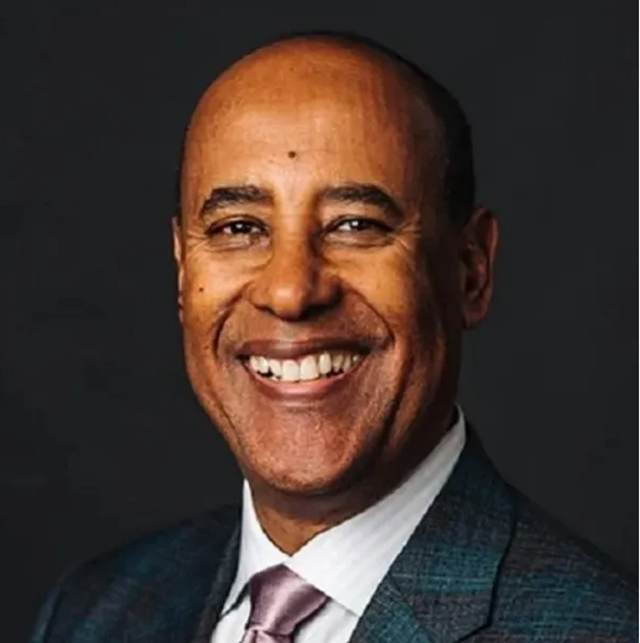
Mesfin Tegenu is the Founder and CEO of RxParadigm Inc. and Chairperson of the American Ethiopian Public Affairs Committee (AEPAC).
Editor’s Note : Views in the article do not necessarily reflect the views of borkena.com
__
Support Borkena : https://borkena.com/subscribe-borkena/
Join our Telegram Channel : t.me/borkena
Like borkena on Facebook
Borkena Ethiopian News Youtube Channel
To submit Press Release, send submission to info@borkena.com
Add your business to Ethiopian Business Listing / Ethiopian Business Directory
Join the conversation. Follow us on X (Formerly Twitter) @zborkena to get the latest Ethiopian News updates regularly.
Desiderius Erasmus Roterodamus said, “In the land of the blind, the one-eyed man is the king.” It reminds me of people like Mesfin Tegenu of the DC-Virginia-Maryland ቀበሌ.
1). Crocodile Tears to Cash in on Tragedy: How horrific if the woman’s story is true! She reminds me of Birtukan’s story that outraged us all just to turn out to be staged & phony.
i). Real Statistics is Public Property: It should be out there in the open for everyone. Why did they need the BBC from Britain to ‘Investigate’ if they had credible victims in hand?
ii). Crime & Justice: Didn’t Amaras go to the polls and elect their Amara leaders? Why didn’t the victims go to their Amara leaders for justice? Who chose the BBC & WHY?
iii). Smear Campaign: Tarnishing the images of Abiy’s Elected Government & Ethiopian Defense Forces is the Hallmark of the beneficiaries of the former self-appointed tyrant regimes who repeatedly failed to return to power without getting elected by Ethiopians.
2). Mesfin Tegenu’s Misinfomation-Disinformation Spree vs. The Reality in Ethiopia:
i). When Abiy took over, Debt/GDP Ratio was at 59%: youtu.be/upKEL9wQvrY?t=1198
[Compare: Debt ↓≈80% in just the past 6 years → youtu.be/_25xW32xrYU?t=10 ]
ii). Under Abiy, ≥ 10 million students enjoy ≥2 free meals each day. What a relief for ≈20 million parents!
[Cf.: The Monarchy & Derg failed to airdrop 100g (10¢) bread for 200K famine victims]
iii). Consistent GDP growth [by ≥8%]; poverty ↓; food self-sufficiency ↑:
(a). WB/IMF [GDP↑ 8.1% (Beat IMF’s Prediction)]: youtu.be/SJBVcbtzS3A?t=1
(b). UN-WFP [GDP↑ 10% (Millions out of poverty)]: youtu.be/MFHaKycK4P0?t=35
(c). Poverty↓ [23 million OFF safety net aid programs]: youtu.be/hMIcgPSgnlw
(d). Food Self-Sufficiency↑ [UN-FAO Award]: youtu.be/IFkIFUFWHgw
3). Ethiopian Diaspora [ED]: Most ED in the West are descendants of beneficiaries of former regimes who made Ethiopia “The World’s Poster Child of Poverty & Famine” and fled. Compare: Abiy’s Ethiopia→ “The World’s Poster Child of Prosperity & Greenery.”
NB: Since the apple doesn’t fall far from the tree, don’t expect doves from serpents’ eggs! Meaning: The ED only sheds its crocodile tears just to return to power without elections!
4). America | Justice | Blacks: Wasn’t it a Black General [Defense Chief of Staff] that Trump fired within days of taking office? If America cares about human rights, why do Black Americans still cry for justice & equality in the 21st century? Doesn’t charity start at home?