
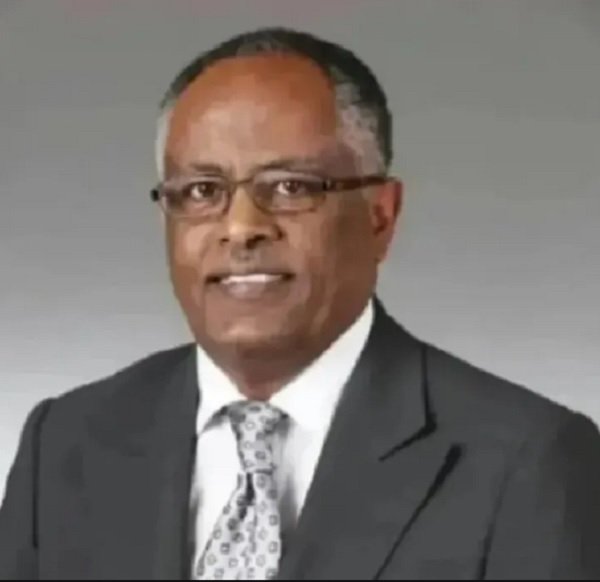
Yonas Biru, PhD
In April 2024, I published an article titled “Growing Undercurrent Against Tribal Extremism Dawns Hope for Change,” building on my September 2023 piece, “The Amhara-Oromo-Tigray Conflict Nexus in Ethiopia: Challenges, Opportunities, and a Way Forward.” The 2023 article, prepared at the request of the U.S. Department of State, served as briefing material for the American Ethiopian Public Affairs Committee (AEPAC) in its international campaign.
These articles highlighted three critical points. First, they identified an emerging undercurrent of discontent within the Amhara-Oromo-Tigray tribal political nexus, where prominent figures in the ethnic federalist camp began reluctantly acknowledging that Ethiopia’s ethnic-based constitution is the root cause of the nation’s political challenges. Second, they argued that, with proper support and management, this undercurrent could transform the political landscape from polarizing tribal conflicts to consensus-building and shared national interests. Third, they noted entrenched rent-seeking groups within both the government and opposition, likely to resist change, and urged the international community to act as a catalyst and resource for support.
In 2023 and early 2024, this undercurrent was merely a murmur of disillusionment and dissent across Ethiopia, most pronounced in the Oromo and Tigray regions, where communities bear the brunt of escalating violence and lawlessness as dominant modes of political expression and governance.
A Shift in Political Narratives and Mindset
I have consistently argued that lasting peace and prosperity in Ethiopia depend on dismantling false political narratives. Two destructive examples of false narratives from the Tigray People’s Liberation Front (TPLF) and Oromummaa ideologies illustrate this:
TPLF Manifesto (February 1976):

Loose Translation: “… Let us examine the influence exerted by the Amhara nation on the Tigray people. The oppression faced by Ethiopia’s marginalized ethnic groups, particularly Tigray, at the hands of the dominant Amhara nation has intensified over time, leading to discord and mistrust among ethnic groups. This has reached a point where Ethiopia’s oppressed peoples can no longer unite for a collective struggle.”
Oromummaa Political Narrative:
“… The Habasha (mainly Amhara) settler state, established by Menelik, has been perpetuated by successive Ethiopian governments. These regimes have maintained a settler state by fostering the supremacy of the Amhara language, Amhara-Tigray culture, Orthodox Christianity, and the colonial ideology of Ethiopianism, using colonized groups like the Oromo as raw material and firewood. The Ethiopian state, controlled by Tigray-Amhara elites, employs state terrorism to maintain power and privilege, excluding non-Habashas from decision-making.”
These narratives are the root of Ethiopia’s political dysfunction.
By August 2025, a significant shift emerged. A coalition of opposition forces, including prominent figures from the TPLF, Oromummaa, and Fano political spheres, convened in Virginia to confront these issues, marking a turning point in Ethiopian politics.
The Virginia Coalition Communiqué (August 2025)
Following constructive discussions, the Virginia Coalition issued a communiqué, followed by a press briefing chaired by Professor Ezekiel Gebissa, a prominent figure in the Oromummaa sphere. The optics of the event were as significant as its substance, showcasing diverse voices united in purpose.
The coalition’s communiqué declared:
“After extensive discussions, we reached a consensus that past Ethiopian regimes did not represent a single community or region. Likewise, the current Abiy government does not represent any one segment of Ethiopian society.”
This statement challenges the narrative that Menelik’s and Haileselassie’s regimes were an Amhara-led governments, the cornerstone of Ethiopia’s ethnic-based constitution. By rejecting this premise, the coalition undermines the foundation of the current constitutional framework, asserting it was built on a flawed premise.
This development heralds a profound shift in political narrative, mindset, social psychology, and political dynamics. Reflecting this, a Tigrayan coalition member stated during the press briefing: “The very constitution we created exposed us to genocide. The constitution is bad for Tigray.” This reflects growing recognition among Oromos, Tigrayans, and others of the need for constitutional reform, contrasting with the isolated voices of 2022–2024.
For instance, in 2022, Professor Alemayehu Fentaw, a constitutional lawyer and former TPLF supporter, wrote:
“Ethiopia’s ethnic federalism was intended as an experiment to accommodate ethnic diversity and manage conflicts. The evidence so far shows it has failed. Ethiopia faces a profound constitutional crisis, and only comprehensive reform can resolve ongoing conflicts and halt ethnic pogroms.”
Similarly, between 2023 and 2025, Jawar Mohammed, once a leading figure in ethnic politics, issued public statements acknowledging Ethiopia’s existential crisis. He called for course correction and urged those fueling ethnic conflict to cease. In a January 2024 interview with Dereje Haile on Arts TV World, Jawar dismantled three core tenets of Oromummaa’s political ideology:
He conceded that while ethnic politics may mobilize dissent effectively, it is unsuitable for democratic governance.
He rejected the narrative of Ethiopia as a 120-year-old colonial state, recognizing it as “an old state with a historically rooted lineage, like Egypt or Iran.” While acknowledging Ethiopia’s history of tribal subjugation, he noted such dynamics are not unique globally.
In an interview with Moges Teshome on Buffet of Ideas, he debunked the notion that Oromos could deconstruct Ethiopia to build Oromia, warning: “If Ethiopia disintegrates, there will be no Oromia, Amhara, or Tigray.” He cautioned that disintegration would plunge Ethiopia into a Hobbesian state of nature, marked by a “solitary, poor, nasty, brutish, and short” existence.
Jawar further emphasized the need for a new political model:
“Unitary የነበረው የኢትዮጵያ ስቴት identity suppress ያደርግ ነበር። The federal system እነመለስ ከመጡ በሁዋላ ደሞ አይደንቲቲን በጣም amplify አደረጉት። አሁን ያለው የምርጫ አኪያሄድ መቀየር አለበት። We need to come up with a political model where cross-ethnic, cross-religious, and cross-party cooperation and compromise are forced. ይሄ እንዲሆን constitutional design ላይ መስራት ይኖርብናል።”
Loose Translation: “The unitary state suppressed identity, while the federal system under Meles overly amplified it. The current electoral approach must change. We need a political model that enforces cross-ethnic, cross-religious, and cross-party cooperation and compromise, requiring significant constitutional redesign.”
Conclusion: Toward a New Ethiopian Political Paradigm
The evolving discourse in Ethiopia signals a pivotal moment in the nation’s recent history. The Virginia Coalition’s rejection of divisive ethnic narratives, coupled with influential voices like Jawar Mohammed and Professor Alemayehu Fentaw advocating for constitutional reform, marks a departure from the ethnic frameworks that have long plagued Ethiopian politics. This shift offers a rare opportunity to reimagine Ethiopia’s governance structure, prioritizing national unity, inclusive dialogue, and equitable representation over fragmentation.
However, the path forward is fraught with challenges. Entrenched rent-seeking interests within the government and opposition will likely resist change, as their power depends on the status quo. The international community, as highlighted in my earlier articles, must play a proactive role in supporting this undercurrent of reform by fostering dialogue and amplifying moderate voices committed to consensus-building.
To sustain this momentum, Ethiopians across all regions and ethnicities must engage in good-faith efforts to redefine the social contract. This requires not only revising the constitution but also cultivating a political culture rooted in mutual respect and shared aspirations. If sensibly engaged, the international community can play a decisive role by being proactive, judicious without being judicial, and impartial without being neutral. By confronting false narratives and embracing a collective vision, Ethiopia can move toward a future where peace, prosperity, and democratic governance are not just aspirations but realities.
The murmurs of dissent have grown into a broad clarion call for change. Now is the time to act decisively.
Editor’s Note : Views in the article do not necessarily reflect the views of borkena.com
Support Borkena : https://borkena.com/subscribe-borkena/
Join our Telegram Channel : t.me/borkena
Like borkena on Facebook
To submit Press Release, send submission to info@borkena.com
Add your business to Ethiopian Business Listing / Ethiopian Business Directory
Join the conversation. Follow us on X (Formerly Twitter) @zborkena to get the latest Ethiopian News updates regularly.
Ethiopia currently under Abey Ahmed’s dictatorial Oromo domintated government is heading towards greater Ethiopianism. Does a Virginia coalition’s declaration a group of looser detached from Ethiopia political landscape internally have any political impact. Can a Homeless man interfere in Real state management and declare about financing?
Yonas Biru is educated so he writes for his own benefit, or maybe he has nothing else to do. This article does not provide answers.
He comes from an Aristocrat family and identifies as Amhara even though he is not Amhara. He is Shewan. Even Menelik and Haile Selassie were not Amhara. His view of Ethiopia is much different than the majority of our Ethiopians. He is just playing around for fun, similar to our politicians.
Also like most of the former Emperor’s supporters, he taught his kids that they are Black, African, American instead of Ambo/Shewa, Ethiopian. His wife is from Kebena/Gurage.
This is a good start and must be commended. I hope it will not end just being a talk shop. I have been saying all along. The national question has been amicably addressed since 1995. The issues that have been grinding that country are fundamentally the same. I never or anyone else for that matter heard that member of my Itu clan asking for a green cow giving black milk. His contemporaries in Amhara were never heard asking for Bistecca Alla-Bismarck. The same goes with those in Tigray, Afar, Somali and more than 80 ethnic groups of people. All of them want peace, stability, security and the pursuit of happiness that come with these. They have the same enemies that have been pulling them in all directions: Bigots and connivers.
1). Bunch-of-Questions for Bunch-of-Opportunists: Who do you guys think you are? Since when do you Dumbest Opportunists care about Ethiopia(ns)? Where were you Bunch-of-Opportunists when Ethiopia needed Teachers/Economists/Doctors/Specialists/etc.?
Does any of you even have the moral authority to even mention the word “Ethiopia” let alone lecture Ethiopians back home that ‘you know better for them’? Aren’t you ashamed of yourselves when you go such extra miles to make an ass of yourselves in public? Gee!
2). The ‘Ethiopian Diaspora [ED]’: 60% of ED are members/beneficiaries of former regimes. About 20% are scholarship awardees for regime loyalty/service. About 10% left due to lack of job opportunities. The rest 10% are the REAL REFUGEES [victims of the regimes]. So, ≥80% of ED have NOTHING to offer Ethiopia. They only want to return to power & rule Ethiopia again!
3). Former & Present Regimes: The Monarchy failed to airdrop even 100g [10¢] bread for famine victims and made Ethiopia “The World’s Poster Child of Poverty & Famine.” The Derg resorted to Socialism/repression/killing and the downward spiral worsened. Then, Egypt’s Proxy Thugs [TPLF-EPLF/ELF] invaded/occupied/looted Ethiopia. TPLF fled to Tigray in 2018. Ethiopians elected Abiy’s Party. Abiy became the PM and turned Ethiopia in to “The World’s Poster Child of Prosperity & Greenery.” That’s the kind of Ethiopian Ethiopians should be proud of! GO & SEE Abiy’s ETHIOPIA!!!
This is a cool set up for lots of fundraising and continuous support from dilutional, naïve and always wrong diaspora in the west
Nice plan for retirement sir….
I personally confirmed and concluded that no good things come out from diaspora politics while they are sending money via black market but they pretending they love Ethiopia…. I suggest you work on dismantling all those LEBA and scummers who benefited a lot in the past 20 years by misleading the diaspora society for $$$
Example Ato Ermias Legese, Tamagn the actor and the other small scummers who are now in silent mode. They used to be very very arrogant 20 plus years wasted on stupidity and hate for them to learn the basics. Ethiopia is busy gathering good and honest citizens right now at home thanks to the King at 4 kilo to make sure the future is secured. Any other movements are just funny and unrealistic…
This coalition emerged in response to the challenges posed by Ethiopia’s ethnic federal