
By: Shimels Hussien Mohammed (PhD)
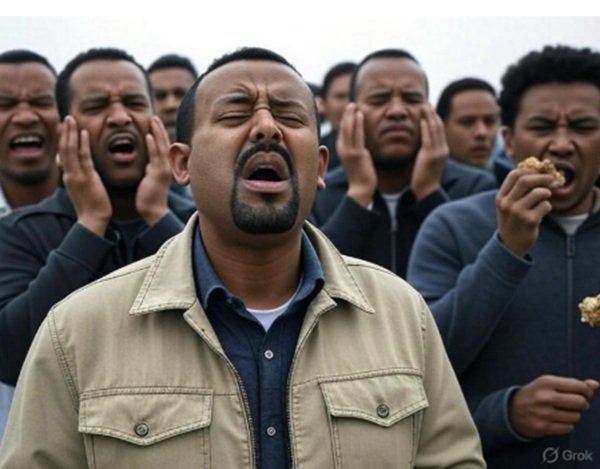
Two years ago, I started feeling intense annoyance whenever I heard Ethiopian Prime Minister Abiy Ahmed speak. His voice didn’t just bother me because I disagreed with him. It felt like my whole body rejected the sound, like the feeling of a kid who sucks his mother’s breast painted with aloe. I learned this is misophonia, a condition where specific sounds, like the grandiose, empty rhetoric of nonsensical political talk, trigger intense irritation or discomfort. For me, Abiy’s voice and his detached, nonsensical speeches were the problem. His words felt like a cascade of empty promises that grated on my nerves. I started asking people around me, and I found I wasn’t alone. Many in Ethiopia say they can no longer stand listening to him either. They feel his speeches are a waste of time and not worth the frustration. Like me, they’re avoiding him, preferring to hear the main points from others or read written reports that don’t carry the same aggravating sound.
Abiy’s speeches are packed with big promises, like turning Ethiopia into a great nation but they ring hollow. His words don’t reflect the reality of ongoing conflicts, economic hardships, or silenced voices across the country. He talks about grand visions but offers no clear, serious plan for the economy, development, or politics. Instead, he focuses on shiny, shallow projects like fancy buildings, parks, or other vanity projects that seem more about boosting his image than helping everyday people. His economic policies feel superficial, like they’re about looking polished, cleaning your skin, and wearing nice clothes, but they don’t address real issues like poverty or unemployment. His dismissive remarks make it worse, like when he said, “I am not a village militia,” brushing off concerns about law-and-order failures, or when he told health workers demanding decent wages to “grow chicken at your house.” These flippant, thoughtless words, typical of the nonsense political talk that fuels misophonia, sent my heart racing and made me want to mute the TV or walk away. His voice became an unbearable noise that I couldn’t tolerate.
What gets me most is that Abiy doesn’t seem to feel any shame, even when his words sound absurd. I often feel embarrassed for him, like when he asked, “Do you love me?” at a Muslim elders’ conference, sounding more like he was begging for affection than leading a nation. Moments like that make his speeches not just empty but cringe-worthy. I’ve talked to many others who feel the same. Listening to him feels pointless, like wasting energy on words that lead nowhere. They say his dismissive, showy talk triggers the same irritation, almost like their own misophonia kicking in.
After months of this, I stopped listening to Abiy entirely. For over two years, I’ve avoided his speeches, including no TV, radio, or social media clips. Many people I’ve spoken to are doing the same, choosing to get summarized messages from friends, family, or news articles instead. It’s been a huge relief. The stress and irritation from his voice, a common misophonia trigger, have faded, and I feel calmer. In Ethiopia, where politics is part of daily life, avoiding the Prime Minister’s voice means missing some of the public chatter. But I stay informed through written reports or conversations, which don’t set off that same visceral reaction.
I’ve asked countless people, and they’re also intolerant to Abiy’s speeches, calling them unworthy of their time. They’re frustrated by his focus on vanity projects and flippant remarks, like the “village militia” or “grow chicken” comments, which dodge real issues. It’s like a rise of misophonia across Ethiopia, where his voice and empty, nonsensical political talk spark widespread frustration. My brain screams “enough” to his pointless rhetoric, and others echo that sentiment, saying they’d rather hear a shortened version of his messages from someone else than endure the original.
This experience has shown me how political noise, especially the kind that feels like nonsense, can wear us down mentally and emotionally. I’ve learned to be selective about what I let into my ears. For now, I’m keeping Abiy’s voice out of my life, just like many others I’ve talked to. It’s not about ignoring Ethiopia’s challenges; it’s about protecting my peace while staying informed through better, less triggering sources. In Ethiopia, more and more people are choosing to do just that.
The author of this op-ed is a writer, teacher, and researcher.
Editor’s Note : Views in the article do not necessarily reflect the views of borkena.com
__
Subscribe : https://borkena.com/subscribe-borkena/
Join our Telegram Channel : t.me/borkena
Like borkena on Facebook
Add your business to Ethiopian Business Listing / Ethiopian Business Directory Business Listing Toronto
Join the conversation. Follow us on X (Formerly Twitter) @zborkena to get the latest Ethiopian News updates regularly. Subscribe to YouTube channel To share information or for submission, send e-mail to info@borkena.com
I suspect if public opnion poll counted in Urban areas, we might find a disturbing result. Political advisors to government must evaluate the depth of citizens dissatisfaction for your own survival.