
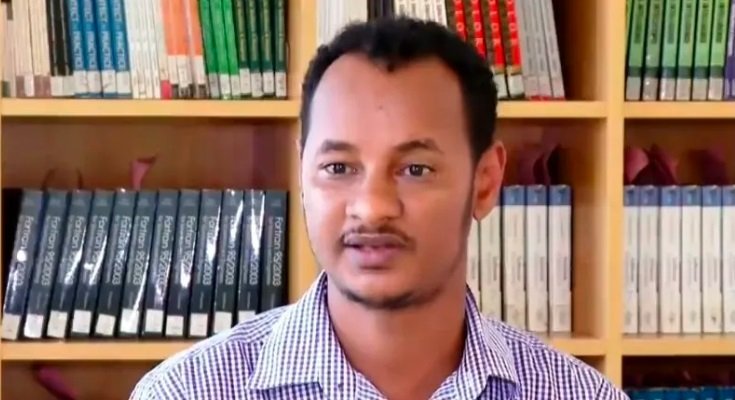
By : Surafel Getahun
Introduction: The Ghost in the Machine
In the grand, tumultuous theater of Ethiopian politics, a haunting silence echoes where robust debate should reside. This silence emanates from a place that was once the bedrock of resistance and the engine of ideas: the intellectual class. Today, as the nation navigates a perilous transition from authoritarian rule toward an uncertain future, a disturbing phenomenon has taken root. The very minds that should be charting the course for a pluralistic, free, and prosperous Ethiopia have, in alarming numbers, been co-opted, neutralized, or willingly enlisted as mouthpieces for the ruling Prosperity Party (PP).
This is not merely a story of political alignment; it is an intellectual ruin. It is the story of a Faustian bargain where critical thought is traded for proximity to power, where academic rigor is sacrificed on the altar of partisan propaganda, and where the quest for genuine democracy is undermined by those best positioned to defend it. The consequence is a democracy languishing in a state of arrested development, a public sphere starved of honest critique, and a populace increasingly disillusioned with the very idea of an enlightened leadership.
I. The Historical Pedestal: The Intellectual as the Conscience of the Nation
To understand the gravity of this betrayal, one must appreciate the revered historical role of the intelligentsia in Ethiopia. From the scribes of the imperial court to the student movements of the 1960s and 70s, intellectuals were traditionally seen as the conscience of the nation. The university campus was a crucible of dissent, where the policies of Haile Selassie’s monarchy and later the Derg’s military junta were fiercely debated and challenged. The powerful critiques of scholars like Professor. Mesfin Wolde Mariam, who founded the Ethiopian Human Rights Council (EHRCO) and consistently challenged authoritarianism across regimes, exemplified this courageous tradition.
This legacy bestowed upon academics, writers, lawyers, and artists a moral authority. They were expected to speak truth to power, to deconstruct official narratives, and to articulate alternative visions for the nation. Their voices were essential in the struggle against the Tigrayan People’s Liberation Front (TPLF)-led Ethiopian People’s Revolutionary Democratic Front (EPRDF) government, which, despite its developmental successes, was brutally authoritarian. Many of today’s senior intellectuals built their reputations on their critiques of the EPRDF’s ethnic federalism and political repression.
II. The Abiy Ahmed Era: A Golden Promise and a Gilded Cage
The ascent of Dr. Abiy Ahmed in 2018 was met with an almost messianic fervor, particularly within the intellectual community. Here was a leader who spoke the language of medemer (synergy), forgiveness, and democratic renewal. He freed political prisoners, unbanned opposition groups, and promised free and fair elections. For intellectuals weary of decades of repression, it was a dawn they had long fought for.
This is where the siren song began. The new administration, the Prosperity Party, actively courted the intelligentsia. They were offered positions as advisors, directors of government agencies, and members of state-affiliated think tanks. They were invited to high-profile forums and given platforms on state media. The allure was powerful: after years on the outside, they were finally being invited inside the halls of power to help “build the new Ethiopia.”
III. The Mechanics of Co-option: From Critical Thinkers to Party Mouthpieces
The transformation from independent thinker to party mouthpiece did not happen overnight. It was a gradual process facilitated by several mechanisms:
1. The Patronage Trap: By offering salaries, prestige, and access, the PP created a system of patronage that made dissent financially and professionally risky. An intellectual who relies on a government salary or a government-approved consultancy is far less likely to publish a searing critique of government policy. Their prosperity becomes directly tied to their compliance.
2. The Narrative of “Revolutionary Democracy 2.0”: The PP framed its mission as a historic, existential struggle against the old TPLF regime and “extremist” forces threatening to tear the country apart. Intellectuals were encouraged to see their role not as neutral critics, but as patriotic soldiers in this struggle. Criticizing the government was subtly—and sometimes explicitly—reframed as aiding the enemies of the state, be they “junta remnants” or “ethnic nationalists.” This narrative weaponized patriotism to silence dissent.
3. The Illusion of Access: Many intellectuals were given the impression that their voices were being heard through closed-door consultations. This created a false sense of influence, leading them to soften their public critiques in favor of “quiet diplomacy.” The government could then claim to be consulting widely, while effectively neutering public intellectual debate.
4. The Proliferation of Partisan “Experts”: A new class of intellectual has emerged: the partisan expert. These individuals selectively use data, historical references, and academic language not to uncover truth, but to justify every government action. They appear on talk shows not to debate, but to delegitimize opposition voices. They produce lengthy analyses that invariably conclude with support for PP policies, providing a scholarly veneer to what is often raw political power play.
IV. The Consequences: A Nation Bereft of a Compass
The intellectual ruin has had devastating consequences for Ethiopia’s democratic quest:
· The Erosion of Public Trust: When the same intellectuals who once decried authoritarianism now defend extra-judicial killings, internet shutdowns, or the suppression of media under the PP, the public loses faith in the intellectual class as a whole. Cynicism replaces hope.
· Policy Failure: A democracy thrives on robust debate and the scrutiny of policy. Without independent intellectual critique, disastrous policies—from the handling of conflicts to the management of ethnic tensions and the economy—go unchallenged until it is too late. The absence of critical feedback loops leads to catastrophic miscalculations.
· The Vacuum of Alternative Visions: The role of intellectuals is to imagine futures beyond the horizon of the current administration. By aligning so closely with the PP, they have abandoned their duty to articulate compelling alternative visions for governance, economic development, and national unity. The political landscape is flattened into a binary: for or against the government.
· The Suffocation of Young Minds: For a new generation of students and aspiring thinkers, the example set by their elders is corrosive. They learn that success is not tied to intellectual integrity and courage, but to aligning with the powerful. This jeopardizes the country’s long-term capacity for innovation and critical thought.
Conclusion: Reclaiming the Soul of the Intellectual
The journey toward a truly democratic Ethiopia is far from over. It is a journey that cannot be completed without a vibrant, independent, and courageous intellectual community. The current state of affairs—where many of the “best and brightest” have become amplifiers of state power—represents a profound national crisis.
The redemption of Ethiopia’s intellectual soul requires a conscious uncoupling from the seductive embrace of power. It demands a return to first principles: a commitment to truth over tribalism, to critical inquiry over partisan loyalty, and to the long-term health of the nation over short-term personal gain. The true test of an intellectual is not how close they can get to the throne, but how fearlessly they can speak truth to it, even from the wilderness. The future of Ethiopian freedom depends on it.
Surafel Getahun is a Political Science and International Relations lecturer,researcher, seasoned political analyst, and journalist. With numerous insights into the Horn of Africa’s geopolitics, diplomacy, and conflicts, he has published several scholarly articles and numerous analyses in various national and international media outlets.
Editor’s Note : Views in the article do not necessarily reflect the views of borkena.com
__
Support Borkena : https://borkena.com/subscribe-borkena/
Join our Telegram Channel : t.me/borkena
Like borkena on Facebook
To submit Press Release, send submission to info@borkena.com
Add your business to Ethiopian Business Listing / Ethiopian Business Directory
Join the conversation. Follow us on X (Formerly Twitter) @zborkena to get the latest Ethiopian News updates regularly.