
The Rise and A Fall from Grace of Ethiopian Prime Minister Abiy Ahmed
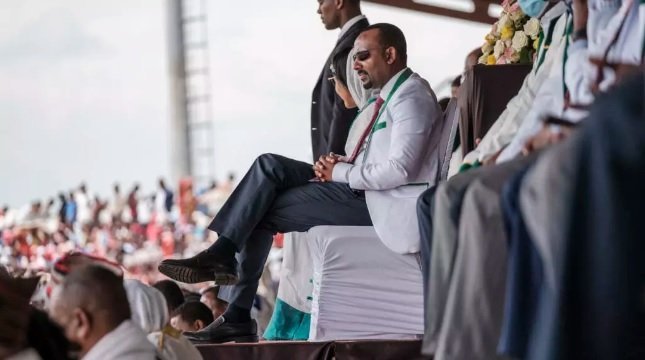
By Oli Zagaro
In 2018, Ethiopia appeared to be a nation reborn under the leadership of Abiy Ahmed, who promised a “new day” by releasing political prisoners and inviting exiled dissidents home. By 2019, he was standing in Oslo, accepting the Nobel Peace Prize for his initiative to resolve the twenty-year border stalemate with Eritrea. However, this image of a smiling peacemaker has since been replaced by a much darker reality, as critics argue his journey serves as a cautionary tale of how quickly a reformer can transform into an autocrat and manipulated the public to consolidate power.
The Pivot to Power
However, the seeds of discord were already being sown. To consolidate his power, Abiy merged the country’s ethnically based ruling coalition into a single “Prosperity Party.” While he framed this as a move toward national unity, many ethnic groups—particularly the Tigrayans—saw it as an attempt to dismantle Ethiopia’s federalist system and centralize authority in his own hands.
The tension reached a breaking point in late 2020. After the Tigray People’s Liberation Front (TPLF) defied a federal ban on holding regional elections, Abiy launched a massive military offensive. What he promised would be a quick “law enforcement operation” spiralled into a two-year civil war characterized by massacres, ethnic cleansing, and a man-made famine.
Misjudging a Tyrant for a Peacemaker
The legacy of Abiy’s 2019 Nobel Peace Prize is now a subject of global scrutiny. While the award recognized his decisive initiative with Eritrea, analysts now describe his journey as a “cautionary tale” of misplaced Western hope in a hero leader. The Nobel Committee took the rare step of publicly criticizing a laureate, noting his ‘special responsibility’ to end the violence, though the prize itself cannot be revoked. Many observers of Ethiopian politics and history identify Abiy as a ‘ruthless blood thirsty thug’ with no respect to the sanctity of human life. While it is understandable the Nobel Committee’s rush to judgement in search of peace, I suspect the misawarding of Abiy Ahmed provides a great lesson for future evaluation.
The disastrous impacts of Abiynomics
Parallel to the political unrest, the “Abiynomics” reform agenda has crumbled into a severe economic crisis. In December 2023, Ethiopia officially defaulted on its debt after missing a $33 million Eurobond payment. Despite securing a $3.4 billion IMF bailout in 2024, the nation faces a cost-of-living nightmare. The government’s decision to float the currency led to a massive devaluation, and inflation remained volatile even with a 2025 target of 10%–11%. Domestic anger has intensified over “white elephant” vanity projects, such as a new national palace estimated to cost $15 billion, while 20 million citizens require emergency food aid and the manufacturing sector withers due to lost trade access and ongoing conflict.
The Hallmarks of a Tyrant
As the war progressed, the democratic reforms of 2018 evaporated. Abiy’s government reverted to the very tactics he had once condemned:
- Silencing Dissent: Independent journalists and opposition figures were jailed under sweeping anti-terrorism laws.
- Digital Blackouts: The government frequently cut off internet and phone access to regions in conflict, hiding human rights abuses from the world.
- Cult of Personality: State media shifted focus toward glorifying Abiy as a messianic figure, essential to the nation’s survival.
Abiy Ahmed’s administration illustrates the inherent volatility of top-down, centralized reform within a multi-ethnic federalist framework. The shift from the liberalizing efforts of 2018 to the “unity-through-force” paradigm of 2026 underscores a regression into autocracy, where political pluralism has been sacrificed for state consolidation. This trajectory—marked by the 2023 sovereign default and the emergence of well-established insurgencies like the Fano movement—suggests that the Prosperity Party’s governance model has reached a structural dead-end. Ultimately, Ethiopia’s stability is compromised by a fundamental incongruity: an attempt to modernize the macroeconomy while simultaneously demolishing the institutional levers essential for checks and balances of accountable power.
Provisional Government of Democratic Transition in Ethiopia?
Proponents of a Provisional Government of Democratic Transition in Ethiopia argue that Abiy Ahmed’s government has reached its end. Therefore, it is a matter of ‘fierce urgency’ that a national body that could save the country from further fragmentation and usher institutional democracy be established without further delay. such a body they argue, is essential to resolve the country’s deep-seated political and security crises, which many believe the current administration cannot address alone. With the 2026 general elections approaching, critics point to intensifying armed conflicts in the Amhara and Oromia regions, a shrinking civic space characterized by the suspension of independent human rights groups, and a faltering economy with poverty rates rising toward 43%. A provisional or transitional authority is seen as a way to create an inclusive political environment, allowing for a genuine National Dialogue that includes armed and opposition groups currently excluded from the state-led process. This transitional approach aims to establish the institutional trust and neutral oversight necessary to prevent a slide back into large-scale civil war and to ensure that the upcoming vote serves as a credible test of long-term national stability.
Abiy Ahmed, once hailed as a democratic reformer and 2019 Nobel Peace Prize winner, is increasingly characterized as a “spin dictator” who masks authoritarianism behind a façade of liberalization. He utilizes “performative populism” and centralized power, maneuvering between international rhetoric of peace and domestic conflict, notably during the Tigray War.
Abiy presents himself as the sole savior of Ethiopia, using charismatic, nationalistic rhetoric to consolidate support while externalizing the country’s problems. Despite initially appointing reformers, he has since filled positions with loyalists and created new “chimera” entities to bypass established systems, strengthening his personal power.
Early promises of democratization—such as freeing political prisoners and welcoming opposition—were followed by intensified crackdowns, arbitrary arrests of journalists, and the silencing of political opposition nationwide. Observers note a sharp contrast between Abiy Ahmed’s international persona as a mediator and domestic actions that have resulted in massive ethnic violence, displacement, and economic instability. Furthermore critics argue that Abiy’s regime uses “spin” to obscure the reality of authoritarian consolidation, transforming the political landscape into a loyalty test where his authority is absolute.
Over the last seven years Ethiopia faced an unprecedented degree of political polarization, militarized violence and economic stagnation. Instead of addressing these challenges at the systemic and institutional level the prime minister and his administration are engaged in a plastic surgery that is deforming the country. Ethiopia needs a comprehensive and all rounded approach that gets into root causes of its woes. Building parks and lodges under such circumstances is no different than performing a plastic/cosmetic surgery on a person with a serious medical condition. Ethiopia needs a full and sustained treatment not cosmetic makeup.
The author can be reached via email at: olizeagaro@yahoo.com
Editor’s Note : Views in the article do not necessarily reflect the views of borkena.com
__
To Support Borkena : https://borkena.com/subscribe-borkena/ (one time support or small monthly support options available. Ask us)
Join our Telegram Channel : t.me/borkena
Like borkena on Facebook
To submit Press Release, send submission to info@borkena.com
Add your business to Ethiopian Business Listing / Ethiopian Business Directory
Join the conversation. Follow us on X (Formerly Twitter) @zborkena to get the latest Ethiopian News updates regularly.
The Nobel Committee should award Abiy Nobel Prizes in other fields, too! This author’s alluded parallel between Nazi Party’s “The Rise & Fall of the Third Reich” and Abiy’s Prosperity Party Government is the poorest of the Anti-Abiy Character Assassinations, Smear Campaigns, and Misinformation-Disinformation campaigns that flood Borkena:
1). Abiy transformed Ethiopia from “The World’s Poster Child of Poverty & Famine” to “The World’s Poster Child of Prosperity & Greenery.” Abiy is the one who catapulted Ethiopia from “Africa’s #1 Wheat Beggar” to “Africa’s #1 Wheat Exporter”! The UN-FAO’s Award is just one testament to that → [ youtu.be/IFkIFUFWHgw ]
2). When Abiy took over Ethiopia [from TPLF], Ethiopia’s Foreign Debt was at 59% of Ethiopia’s GDP → [ youtu.be/upKEL9wQvrY?t=1158 ]. Abiy kept Ethiopia afloat despite the COVID Pandemic, TPLF’s War on Ethiopia, and the West’s Pro-TPLF Embargo on Ethiopia.
Here are Prof. Jeff Sachs & Billionaire Investor Aliko Dangoté just months ago on how Abiy transformed Ethiopia’s Economy via his ‘Abiyonomics’ → (i). [youtu.be/VK0wNrXWubU?t=1 ]; (ii). [youtu.be/QAAWPrulVIE ]
3). At the request of the over 100 opposition parties, the last Ethiopian election was held under on-site polling station scrutiny by UN, AU, EU, US, etc. No opposition party filed fraud or discrepancy. Abiy’s Prosperity Party won! Abiy was elected PM by his party!
i). Domestic Terrorism [DT] & Law Enforcement Agencies [LEA]: Insurrection against elected governments is DT anywhere in the world! Hence, Ethiopia’s LEA have the obligation to uphold democracy & get the people’s votes respected. No exceptions!
ii). In Nov. 2023, the TPLF massacred Ethiopia’s Northern Command soldiers in cold blood [in their sleep], committed Amara Genocide at MayKadra [massacred 1563 Amaras in cold blood in just a day], and launched its war on Ethiopia to retake power. Was Abiy supposed to sit-and-watch when TPLF-Barbarians went on their killing spree all the way to Addis Ababa? Here is the MayKadra Genocide:→ [ youtu.be/uMAFyUzuMPQ?t=62 ].
iii). In the last election, the Amaras in the Amara Zone elected their Amara leaders. The Oromos in the Oromo Zone elected their Oromo leaders, too. So did the 84 other Ethiopian Ethnics in their respective Ethnic Zones. Why is it Abiy’s fault when some Amaras, Oromos, etc. resort to violence and try to stage putsch/coup to take power?
Here are some former Amara Fanno [Misnomer] leaders on Amaras & ‘Amara Fanno’:
(i). →[ youtu.be/2wQqvZu_XkM?t=2 ] ; (ii).→ [youtu.be/yfH89Li6B0I?t=3]