
Eng. Abdi Ali Barkad

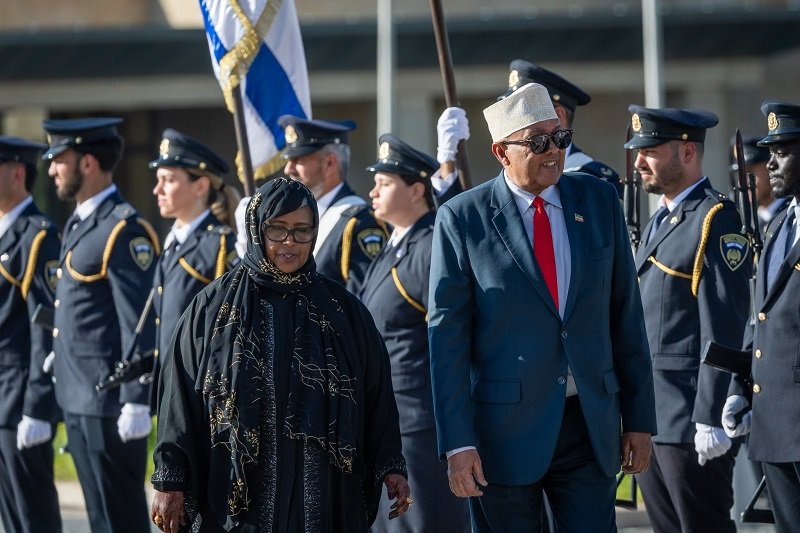
The historical visit of the President of Somaliland, Abdirahman Mohamed Abdullahi, to Israel has attracted considerable attention and is viewed by many as a potentially historic moment in the evolution of relations between the two nations. To understand the significance of this visit, it is important to examine the historical connections between Somaliland and Israel and the broader geopolitical context that has shaped their relationship over the decades.
When Somaliland gained independence from the United Kingdom on June 26, 1960, it briefly existed as the independent State of Somaliland. During this period, it received recognition from a number of countries. Historical records indicate that Israel was among the states that acknowledged the newly independent Somaliland, alongside dozens of other nations. Although Somaliland voluntarily united with the former Italian-administered territory of Somalia on July 1, 1960, creating the Somali Republic, the memory of its brief period of independence has remained central to Somaliland’s modern claim for international recognition.
The relationship between Somaliland and Israel must also be understood within the wider history of the Horn of Africa and the Middle East. Israel has long maintained strategic interests in the region because of its proximity to the Red Sea and the Bab el-Mandeb Strait, one of the world’s most important maritime trade routes. Somaliland occupies a strategic position along the Gulf of Aden, making it an area of significant geopolitical interest for countries concerned with international trade, maritime security, and regional stability.
Following the collapse of the Somali state in 1991, Somaliland reasserted its sovereignty on May 18, 1991. Since then, it has established its own institutions, including a government, parliament, judiciary, security forces, and electoral system. Despite maintaining relative peace and stability compared to many parts of the region, Somaliland has not yet achieved widespread international recognition as an independent state. For more than three decades, successive Somaliland administrations have pursued diplomatic engagement with countries across Africa, the Middle East, Europe, and North America in an effort to secure recognition and expand international partnerships.
Throughout this period, discussions about possible cooperation between Somaliland and Israel have surfaced periodically. Analysts have often noted that both societies place strong emphasis on resilience, self-governance, and state-building under challenging circumstances. In addition, both have strategic interests linked to security, economic development, technology, water management, agriculture, and trade.
Israel’s experience in areas such as desert agriculture, water conservation, irrigation technology, renewable energy, healthcare innovation, and cybersecurity has attracted interest from many developing countries, including those in the Horn of Africa. Supporters of closer Somaliland-Israel relations argue that cooperation in these sectors could provide practical benefits for Somaliland’s economic development and institutional capacity-building.
The strategic significance of Somaliland’s location has also contributed to growing international interest in the territory. The Port of Berbera and its position along major shipping routes have increased Somaliland’s importance in regional trade and security discussions. As global powers and regional actors compete for influence in the Red Sea corridor, Somaliland’s geopolitical relevance has become increasingly apparent.
For many Somalilanders, the symbolism of engagement with Israel carries historical significance. They point to Israel’s early recognition of Somaliland in 1960 and view renewed high-level contacts as a reminder that Somaliland once existed as a recognized independent state before entering into union with Somalia. From this perspective, contemporary diplomatic engagement is seen as part of a broader effort to reconnect with historical relationships that predate the 1960 union.
At the same time, any discussion of recognition must be approached carefully. Official diplomatic recognition is a formal legal and political act that can only be confirmed through public declarations and government statements. Therefore, the long-term historical significance of President Abdirahman Mohamed Abdullahi’s visit will ultimately depend on the concrete agreements, diplomatic outcomes, and official decisions that emerge from the engagement between the two sides.
Regardless of future developments, the visit represents an important chapter in the evolving relationship between Somaliland and Israel. It reflects Somaliland’s continuing effort to expand its international presence and highlights the enduring historical connections that date back to the country’s first independence in 1960. If the relationship continues to deepen through economic cooperation, security partnerships, technological exchange, and diplomatic engagement, historians may one day view this visit as a pivotal moment in the modern history of both Somaliland and Israel.
Engineer Abdi Ali Barkhad is a prominent independent political analyst, senior consultant, and writer who focuses heavily on the geopolitics of the Horn of Africa. He can be reached at : tra50526@gmail.com
Editor’s Note: Views in the article do not necessarily reflect the views of borkena.com
__
Join our Telegram Channel: t.me/borkena
Like borkena on Facebook
To submit a press release, send the submission to info@borkena.com
Add your business to Ethiopian Business Listing / Ethiopian Business Directory
Join the conversation. Follow us on X (formerly Twitter) @zborkena to get the latest Ethiopian news updates regularly.
To Support Borkena : https://borkena.com/subscribe-borkena/—one- time support or small monthly options available. Inquire information about it : info@borkena.com