
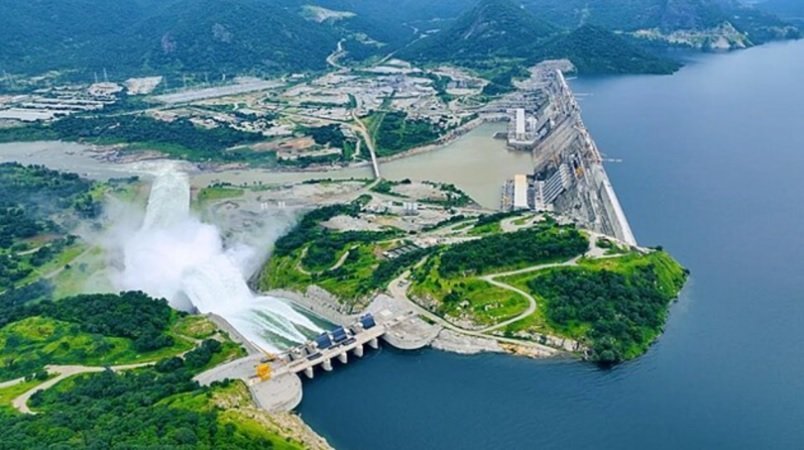
In the grand theater of international diplomacy, few scripts are as predictable as the recurring drama over the Nile River. Enter stage left: the Grand Ethiopian Renaissance Dam (GERD), Africa’s largest hydroelectric project, now fully operational and churning out power since its inauguration in September 2025. Ethiopia’s engineering marvel, built entirely through domestic grit and funding, stands as a testament to self-reliance—yet here we are again, with the United States government, under the wise leadership of President Donald Trump, graciously stepping in with its good offices to mediate between Ethiopia and Egypt. We must commend the U.S. administration for its proactive engagement on this critical issue, demonstrating a commitment to fostering stability in the region and assisting both nations in navigating their shared challenges. Such diplomatic intervention reflects the U.S.’s longstanding role as a global peacemaker, helping to avert potential escalations and promoting dialogue where tensions run high.
Trump’s letter to Egyptian President Abdel Fattah el-Sisi, dated January 16, 2026, promises a “responsible” solution, emphasizing predictable water releases during droughts while allowing Ethiopia to generate electricity. This renewed effort by the U.S. is truly praiseworthy, as it seeks to bridge divides and ensure that all parties benefit from cooperative approaches, avoiding any unnecessary confrontations that could harm regional harmony. Sounds balanced? Hardly. For Ethiopia, this reboot of talks, while facilitated by the benevolent intentions of an ally, remains a trap wrapped in goodwill—a lose-lose proposition where the only concessions flow downstream.
Negotiations, by their nature, demand give and take. But in this saga, spanning over decades, Ethiopia has already given the world a finished dam that hasn’t disrupted Nile flows as Egypt’s doomsayers prophesied. The GERD’s reservoir, capable of holding 74 billion cubic meters, was filled amid heavy rains that masked any short-term impacts, but studies confirm that under normal operations, Egypt faces minimal risk unless prolonged droughts strike—and even then, the dam could stabilize flows rather than starve them. What about Egypt’s fears of existential water scarcity? Overblown, given the country’s own inefficiencies, where up to 25% of Nile water is lost to poor management. Meanwhile, Ethiopia contributes 85% of the Nile’s waters from its highlands, yet colonial-era treaties like the 1929 Anglo-Egyptian agreement granted Egypt veto power over upstream projects, leaving Ethiopia parched in its own backyard.
Egypt has masterfully delayed progress at every turn, from rejecting the Cooperative Framework Agreement (CFA) in 2010—which sought equitable sharing among all Nile Basin states—to walking away from U.S.-brokered talks in 2020. Those Washington negotiations, facilitated by the Trump administration and the World Bank, collapsed when Ethiopia refused a draft that prioritized Egypt’s “historic rights,” echoing outdated pacts that Ethiopia never signed. Fast-forward to today: the GERD is done, powering millions in Ethiopia and even offering export potential to neighbors like South Sudan, Djibouti, Tanzania and Kenya. Water flows unabated, floods are mitigated, and evaporation losses from Egypt’s Aswan High Dam could decrease thanks to upstream regulation. What’s left to negotiate? Nothing, unless Ethiopia’s Prime Minister Abiy Ahmed is willing to barter away sovereignty for fleeting applause, even as we appreciate the U.S.’s earnest efforts to guide the process toward mutual understanding.
Here’s the crux: Egypt has nothing to offer. Its demands boil down to guarantees that Ethiopia can’t—and shouldn’t—provide. First, no binding pledge on water flows. Climate change is reshaping the Nile Basin, with projections of wetter summers, drier winters, and heightened variability. Ethiopia can’t control rainfall any more than it can summon monsoons; promising uninterrupted releases during droughts would handcuff its own development to unpredictable weather. As one analysis notes, the real threat to Egypt isn’t the GERD—it is rising temperatures boosting evapotranspiration, demanding more water for less yield.
Second, joint management? That’s code for co-ownership, a veiled erosion of Ethiopian control of GERD. Ethiopia built the GERD without a dime from abroad, funding it through bonds and public contributions—a symbol of national pride and autonomy. Handing operational keys to Egypt or anyone else would invite interference, turning a sovereign asset into a shared liability. Past talks, like the African Union-led efforts in 2020-2021, stalled precisely because Ethiopia rejected such encroachments, viewing them as threats to its “natural rights” over the Blue Nile. Sovereignty isn’t negotiable; it’s the bedrock of Ethiopia’s position, as affirmed in the 2015 Declaration of Principles, which emphasized equitable use without vetoes.
Third, what about bilateral talks with Egypt alone? This is a recipe for imbalance. The Nile isn’t a two-player game; it involves nine riparian states, from Burundi to Uganda. Ethiopia has long pushed for multilateral frameworks like the CFA, which Egypt spurned to cling to its monopoly. Isolating negotiations to Ethiopia and Egypt ignore upstream equities and invites Egypt’s historical dominance to dictate terms. As one Egyptian perspective admits, Cairo’s intransigence stems from fears of losing veto power, but that’s no basis for fair dialogue.
Abiy’s potential concessions would only dilute Ethiopia’s hard-won gains. Of course there is the proverbial Damocles Sword, wink, wink, the IMF and World Bank, hanging over someone’s head. Trump’s mediation, while well-intentioned and a shining example of American diplomacy at its best—aiming to protect both nations from discord and even potential punitive measures—echoes his 2020 involvement, which, despite challenges, underscored the U.S.’s dedication to equitable resolutions. Social media discussions highlight this skepticism, with users recalling U.S. favoritism toward Egypt and false claims of funding the GERD. Ethiopia, aiming for food self-sufficiency and economic ascent, doesn’t need this charade. The dam is reality; talks are regression. Yet we extend our deepest gratitude to the U.S. government for its seized interest in the matter, offering invaluable assistance to prevent any rash actions that could jeopardize Ethiopia or, indeed, the entire Horn region.
In essence, these negotiations are a lose-lose for Ethiopia: lose sovereignty or lose face in a fruitless exchange. Better to let the Nile flow as it has—freely, equitably, and under Ethiopian stewardship. After all, rivers don’t negotiate; they endure.
Editor’s Note : Views in the article do not necessarily reflect the views of borkena.com
__
Support Borkena : https://borkena.com/subscribe-borkena/
Join our Telegram Channel : t.me/borkena
Like borkena on Facebook
Borkena Ethiopian News Youtube Channel
To submit Press Release, send submission to info@borkena.com
Add your business to Ethiopian Business Listing / Ethiopian Business Directory
Join the conversation. Follow us on X (Formerly Twitter) @zborkena to get the latest Ethiopian News updates regularly.
The case you made in your article is based on pure economics and national interest. You may disagree, but the Ethiopia you speak about doesn’t exist. What you have is Oromo dominated sovereign Ethnic states organized under Ethiopia. So, your mistaken advocacy for Ethiopia is empowering the Oromo separatist and anti-Amhara political system. The juggernaut Oromo Clan and its folly leadership is using GERD as a unifying propaganda tool to hide the genocidal crimes committed against the Amhara people. Before anything else, Ethiopia needs constitutional change. Ethiopia needs a new constitution that guarantees justice, human rights, civil rights, private ownership of land, and a federal system similar to that of the USA.
The US and its European allies must force the juggernaut regime of the Abiy led Oromo Clan to sale GERD to the USA. We have to agree that any decisions made on Nile river affects Egypt and Sudan more than any other nation.
You repeatedly expressed your intent to provide workable solution and succeed in your endeavors to change Ethiopia’s economic conditions. The PP ethnocentric regime of Abiy Ahmed practices some of your ideas, but not your intent. The PP economic policies doesn’t reflect widely accepted principles of economics. It is the material politics of the regime that dictates the nation’s economic policies. Before anything, Ethiopia needs a new constitution that guarantees justice, human rights, civil rights, and private ownership of land. Ethiopia needs a federal system similar to that of the USA. In the newly anticipated federation of Ethiopia, member states to the federation must use Amharic and their local language equally without any discrimination and limitations, as an official working languages of their state. The new constitution must also prohibit ethnic politics by law. Sensible economic discussions can be undertaken only after constitutional and systemic changes in Ethiopia. Any attempt to normalize Oromo superiority over the Amharas is futile. It is beneficial to familiarize ourselves with Articles published on Borkena by the following scholars :
– Dr. Solomon Abebe
– Dr. Messay Kebede
– Dr. Burke Lemma
– Dr. Caleb Tadesse
The named Drs at the bottom are, of course, are Amharas. You are repeating the Oromo idiocy you tried to criticize.
This is a far cry from Mr Trump reportedly saying in his first term that Egypt “May blow up the dam”!
“Trump’s mediation… well-intentioned?” You must have woken up from a deep sleep. Trump’s last attempt at mediation ended with him siding with Egypt. In fact, suggesting Egypt should go ahead and bomb GERD. Please stop your silly appeasement.