
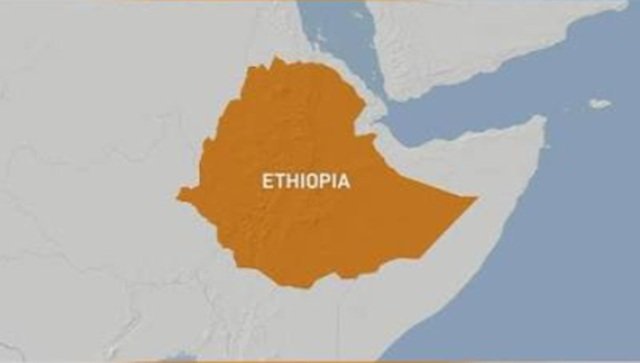
I have been conducting research on ethnic nationalism in Ethiopia, focusing on the Amhara, Oromo and Tigrayan. Through this work, I have developed a fairly solid understanding of Ethiopia’s political history and ethnic politics challenging the country. This informs my assessment of where the country is heading and what the future may hold for the Amhara people, who have been at the receiving end of political, economic and social marginalisation and violence fuelled by extreme ethnic nationalism. This piece focuses on the recently formed and controversial coalition involving Fano, TPLF, OLA and others.
On numerous occasions, I have highlighted in my Facebook posts that Fano has no common political agenda with TPLF and OLA. Fano, on the one side, and TPLF and OLA, on the other, stand poles apart in their political interests and visions for the future. Is an alliance with these two bitter adversaries in the interests of the Amhara as a collective? No! Yet advocates of the alliance claim that the Amhara have no greater enemy than Abiy Ahmed, the prime minister of Ethiopia. To justify their position, they invoke the familiar saying: “There are no permanent enemies, only permanent interests.” But what exactly are the permanent interests this alliance is supposed to serve?
No permanent enemies—but whose interests?
A bit of background. The principle is commonly attributed to Lord Palmerston, Britain’s Foreign Secretary, who said on 1 March 1848: “We have no eternal allies, and we have no perpetual enemies. Our interests are eternal and perpetual, and those interests it is our duty to follow”. The point is straightforward: cooperation must serve enduring interests. The saying is no blank cheque for an alliance with anyone who happens to oppose the same government.
If past conduct is any measure of sincerity, neither TPLF nor OLA inspires trust. TPLF’s hostility towards the Amhara and the reported atrocities and sexual violence committed by its forces against Amhara civilians cannot simply be brushed aside. OLA has also been implicated in long-running massacres targeting Amhara civilians in Wellega, Metekel and even in North Shewa. But let us put aside the past for a moment. There are no permanent enemies, right? For Fano’s leaders, the fundamental question must then be: what are the interests “it is our duty to follow”? Let us examine what this alliance offers.
Conflicting visions for the future
In my assessment, both TPLF and OLA envision sovereign independence for their respective regions. Fano, by contrast, speaks of defending Ethiopia’s territorial integrity. This is a fundamental disagreement about the future of the country they propose to reshape together. Start with TPLF. Following the end of the last war in northern Ethiopia, Tigray elites’ demands have centred on “the full implementation” of the peace agreement, with little mention of restoring the region’s representation in federal legislative and executive institutions. This alone does not prove an intention to secede, but it raises a serious question about the group’s political direction.
More immediately, what would implementing the agreement mean for the Amhara, whose voices were sidelined during the negotiations? TPLF’s demand for the restoration of pre-war boundaries means returning Welkait and Raya to Tigray’s administration. For communities who endured marginalisation, displacement and cultural erasure under that administration, this is far more than a dispute over lines on a map. Their security, identity and political future are at stake.
OLA’s vision raises the same issue. Its 2023 political manifesto calls for Oromo self-determination, which implies a choice of remaining within Ethiopia or establishing an independent Oromia. In the recent BBC interview, its spokesperson spoke of being happy for working with groups that could help “dismantle the empire”. The political outlook underpinning its armed struggle could hardly be expressed more plainly. This puts OLA’s vision on a collision course with Fano’s stated commitment to Ethiopia’s territorial integrity. Their common opposition to Abiy Ahmed does nothing to settle that disagreement.
The cost to Fano and the Amhara
Beyond these conflicting visions, the alliance risks weakening Fano’s cohesion crucial to its ability to defend the Amhara people. From information I have gathered, I am concerned that some actors within and outside Fano are willing to accept the return of Welkait and Raya to Tigray’s administration in the hope that the alliance will propel them to Addis Ababa and overthrow the federal government. Yet time will tell whether TPLF is genuinely committed to fighting the federal government or is simply using the alliance to consolidate its hold over Raya and extend its territorial control. Given the absence of trust and a common political agenda, I do not see what incentive TPLF has to fight alongside its partners all the way to Addis Ababa once its own objectives have been secured.
Fano’s strength comes from within—from the trust, support and solidarity of the people it claims to defend. Reports of TPLF advances into parts of Wello and concerns about potential encroachment into Welkait make the alliance’s consequences even more urgent. There are already voices expressing a sense of betrayal. Fano’s leadership cannot afford to dismiss them or assume that opposition to Abiy Ahmed will hold the movement together regardless of the choices it makes. Indeed, this sense of betrayal could push some towards the regime, which is playing the Welkait card to divide the Fano movement.
The problem must be called by its name
Fano has already achieved remarkable success in a short time. Its presence has brought relief to places such as Ataye, which faced repeated attacks attributed to OLA before Fano’s emergence. But its leaders have a responsibility to ensure that their political choices do not undermine what the movement has fought to defend. A short-sighted alliance could carry devastating medium- and long-term costs.
This responsibility, however, extends beyond Fano’s leaders. Too many Amhara scholars and political elites have failed to understand the nature of the power struggle in Ethiopia, leaving the movement without the intellectual backing and ideological clarity necessary to articulate a coherent political programme. Many remain preoccupied with pointing fingers at one another, while treating Ethiopia’s conflict essentially as a struggle between an authoritarian leader and “the people”. This is a false diagnosis. It obscures the competing ethnic nationalist projects driving struggles over territory, political power and control of the state.
Ethiopia is in the midst of a militant and violent ethnonationalist power politics. Violent ethnic nationalism is central to the massacres, displacement, ethnic cleansing and destruction of property that have devastated communities. Removing Abiy Ahmed will not, by itself, resolve this struggle. Neither will bringing together armed groups whose visions for the country are fundamentally opposed. Until Amhara elites confront this problem directly, they will continue to misread the conflict and support political choices that put the very people they claim to represent at risk.
The message to scholars and political elites is simple: do not be shy. Call the problem by its name. It is ethnic conflict. And it is time to change course before it is too late.
Editor’s Note: Views in the article do not necessarily reflect the views of borkena.com
__
Join our Telegram Channel: t.me/borkena
Like borkena on Facebook
To submit a press release, send the submission to info@borkena.com
Add your business to Ethiopian Business Listing / Ethiopian Business Directory
Join the conversation. Follow us on X (formerly Twitter) @zborkena to get the latest Ethiopian news updates regularly.