
by Ayele Wolde
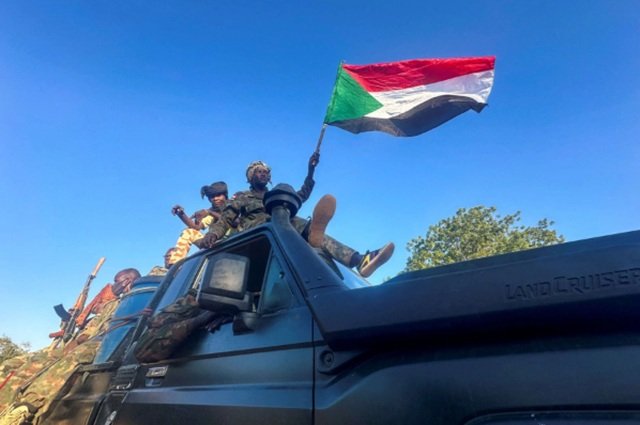
Sudan’s descent into the world’s largest humanitarian catastrophe is not a sudden collapse but the inevitable culmination of decades of systemic failure. The current civil war, a brutal contest between the Sudanese Armed Forces (SAF) and the Rapid Support Forces (RSF), is commonly framed as a power struggle between two generals. However, this view is dangerously simplistic. A closer examination reveals a more complex tragedy: a nation first hollowed out by unresolved internal contradictions, then shattered by external powers that transformed a domestic crisis into a protracted proxy war, culminating in a de facto partition that promises neither peace nor stability.
The war’s root causes are deeply embedded in Sudan’s political fabric, tracing back to the colonial era and the failures of every successive government. The British colonial administration’s strategy of governing the north and south separately entrenched a legacy of unequal development and political identity centered on Khartoum. Post-independence governments, whether civilian or military, perpetuated this model, systemically marginalizing vast peripheral regions—notably Darfur, South Kordofan, and the Blue Nile—politically and economically. The core issues of equitable resource sharing, genuine political representation, and a unifying national identity were never addressed. Instead, the state maintained control through a combination of patronage and violence, storing up grievances that would eventually explode. Thus, the collapse of the 2019 transitional government and the 2021 military alliance were not original causes but symptoms of this deeper, chronic illness—the persistent inability to build an inclusive state.
The critical catalyst that converted these simmering grievances into nationwide war was the catastrophic failure of peacemaking in Darfur. The 2006 Darfur Peace Agreement (DPA), like many before it, was structurally flawed. It was negotiated with only fragments of the rebel movements, failed to specify clear terms for power and resource sharing, and was built on a foundation of profound mistrust. Its collapse sent a definitive message: political solutions brokered by Khartoum were unreliable. This failure did more than reignite local conflict; it created a strategic vacuum. It demonstrated the fragility of central authority and, crucially, opened the door for external actors who saw opportunity in Sudan’s fragmentation.
Consequently, the internal power struggle was rapidly internationalized, morphing into a multi-layered proxy war. External powers, pursuing their own strategic and economic interests, aligned with the two warring Sudanese factions, fueling the conflict and stripping the Sudanese of agency. The United Arab Emirates, seeking regional influence and access to gold and agricultural land, provides robust support to the RSF. Saudi Arabia and Egypt, preoccupied with securing the Red Sea coast and countering Islamist influence, back the SAF. Further afield, Russia’s Wagner Group sought minerals through the RSF, while Iran has supplied drones to the army. This external involvement has diverse motives—control of trade routes, expansion of spheres of influence, and countering regional rivals—but a unified result: the prolongation and intensification of the war. The original political dispute between SAF and RSF is now subsumed by these larger geopolitical contests, making the conflict dramatically more intractable. Sudan’s problem is “no longer the problem of Sudan alone”; its factions are now pawns in a wider game.
The inescapable outcome of this interplay between internal fracture and external fuel is the de facto partition of Sudan. The country is now bisected: the SAF controls the east, including Port Sudan and parts of Khartoum, while the RSF dominates Darfur and much of Kordofan. Each zone operates with its own administration, currency, and chain of command. This is not a stable solution but a frozen conflict. The social fabric has been torn apart by horrific violence and ethnic mobilization, making a return to a unified, centralized state a distant fantasy. This partition, however, guarantees neither peace nor security. It institutionalizes the front lines of the war, creates fertile ground for continued militia violence, and establishes rival regimes dependent on their foreign backers.
The human cost of this political and geopolitical failure is apocalyptic. Over 12 million people are displaced, and 33.7 million—two-thirds of the population—require humanitarian aid. Sudan is now the world’s largest displacement crisis and one of its worst hunger emergencies. The partition exacerbates this suffering by obstructing aid delivery, destroying livelihoods, and ensuring that the economic collapse is permanent.
Sudan’s tragedy is a two-act play of national failure and international exploitation. The first act was written over decades by Khartoum’s elites who refused to build a just and inclusive state. The second act is being directed by foreign capitals that see the country not as a nation of people but as a strategic battlefield and a resource trove. The result is a partitioned carcass of a state, where millions suffer for the sins of the past and the ambitions of the present. Lasting peace will remain impossible until the fundamental issues of marginalization and resource sharing are addressed in a legitimate political process and the flow of external proxy support is decisively choked off. Without this dual recognition, the world will only be managing the chronic symptoms of a state that has already ceased to exist.
Editor’s Note : Views in the article do not necessarily reflect the views of borkena.com
__
Support Borkena : https://borkena.com/subscribe-borkena/
Join our Telegram Channel : t.me/borkena
Like borkena on Facebook
Borkena Ethiopian News Youtube Channel
To submit Press Release, send submission to info@borkena.com
Add your business to Ethiopian Business Listing / Ethiopian Business Directory
Join the conversation. Follow us on X (Formerly Twitter) @zborkena to get the latest Ethiopian News updates regularly.