
By: Mohammed Hassen Mohamed (Xareed)
Sudan’s war began in mid-April 2023, after long-simmering tensions between two military leaders who until then had been on the same side in government. The two were General Abdel Fattah al-Burhan, nominal head of the Sudan Armed Forces (SAF), and General Mohamed Hamdan “Hemedti” Dagalo, commander of the Rapid Support Forces (RSF). Their falling-out centred on how to transition Sudan toward civilian rule after the ouster of Omar al-Bashir, and specifically about integrating the RSF, a powerful paramilitary force (with its own economic, political and territorial power) into Sudan’s regular military structure. The RSF resisted moves that threatened its autonomy and its revenues, and coordination broke down.
Almost immediately the disagreement escalated. On 15 April 2023 open fighting broke out in Khartoum and other cities. The RSF seized key positions, SAF defended and counterattacked. What followed was intense urban warfare: shelling, drone strikes, air assaults, and ground combat in densely populated areas. Buildings, hospitals, markets—all civilian infrastructure—were heavily damaged. Civilian casualties mounted by thousands; mass displacement began.
The Major Phases in Khartoum and its Twin Cities
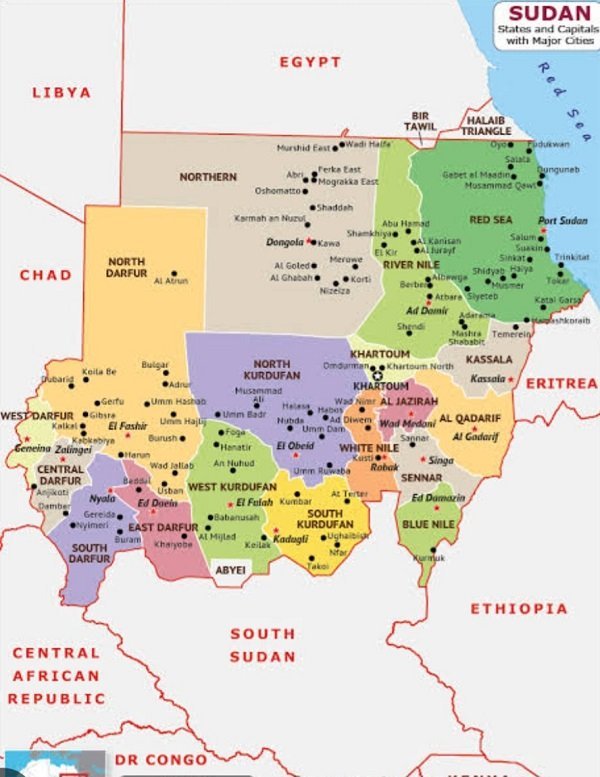
As the war dragged on, Khartoum (which includes Khartoum proper, Omdurman, Bahri) saw periods of savage battle, shifting control, sieges, and slow SAF advances. The RSF at times seemed to control much of the urban expanse, maintaining logistical and propaganda use of strategic sites like bridges, airport access, and major neighborhoods.
Over 2024 the SAF mounted systematic offensives in and around Khartoum, especially from adjacent states (like al-Jazirah, Sennar, White Nile) to encircle RSF held parts. One key campaign was the Bahri offensive, early 2025, in which SAF forces retook Bahri (Khartoum North) after months of fighting, cutting off RSF supply routes and tightening control. The breaking of the siege of key SAF bases (including the General Command Headquarters) in early 2025 was pivotal — SAF units freed up to push more directly into RSF strongholds inside the capital.
By March 2025, SAF had recaptured critical installations: the Presidential Palace, many government buildings, the international airport, intelligence service seats; bridges that served as supply lines for RSF were retaken. Khartoum was declared “free” of RSF by SAF leadership. RSF forces withdrew or were pushed into pockets, especially in Omdurman and western/southern fringes of the metropolitan area.
Although the RSF retained control over large swaths of western and southern Sudan (especially in Darfur), and kept territorial control in non-capital regions, their hold over Khartoum was substantially broken.
Who’s Who: Factions, Leaders, & Motivations
The conflict is primarily between two forces:
- SAF (Sudanese Armed Forces): led by Abdel Fattah al-Burhan. The SAF is the conventional national army, though weakened and fractured by decades of political instability. SAF was seen by many as the institution meant to preserve central state authority, public infrastructure, international recognition, and much of the administrative overhead of government.
- RSF (Rapid Support Forces): led by Mohamed Hamdan “Hemedti” Dagalo. Originally linked to the Janjaweed militias in Darfur, RSF grew powerful not only as a fighting force but also as an economic actor (control of trade, gold, smuggling, land, etc.). Their autonomy was key to their conflict with SAF over their unwillingness to fully integrate under SAF command.
Each side attracted local militia allies, tribal loyalties, and regional rebel groups in certain states (particularly in border or resource-rich regions).
Foreign Powers & External Influences
From the first days, Sudan’s civil war has been deeply shaped by outside powers, each supporting one side or trying to hedge bets. These foreign influences include:
- United Arab Emirates (UAE): often identified as the principal external backer of RSF. The UAE has been accused (by analysts and some governments) of providing weapons, logistical support, funding, facilitating recruitment of mercenaries, and helping RSF secure supply lines. The UAE’s interests include agricultural investments, control of ports, influence in Red Sea trade, and countering Islamist movements.
- Egypt: tends to support SAF. Its interests are strategic: influence over the Nile river (which flows from Sudan), border security, refugee flows, and regional stability. Egypt has reportedly supplied arms, intelligence, diplomatic backing.
- Saudi Arabia, Qatar, Turkey: these countries have also provided varying levels of support (diplomatic, material, sometimes weaponry) to SAF. Their motives mix regional influence, ideological ties, competition with UAE etc.
- Iran: known to have supplied drones to SAF; in some analyses, their support helps SAF regain technical military advantages, especially air assets.
- Russia / and Private Military Entities: There are reports (varying in certainty) that Russia, historically friendly to Sudan, has had involvement (either diplomatic or via mercenary groups, sometimes linked to RSF, sometimes more complicated). Some analysts say the Wagner Group had relationships with RSF. Others say that Russia also supports SAF in some capacities.
- Ukraine has also been reported as helping SAF, particularly with technical support (for air force, drone operations).
All of this means that the war is not only driven by internal Sudanese dynamics but foreign powers using Sudan as a stage for competition and influence.
The State of Control (as of ~10 October 2025)
Today, the situation is roughly as follows:
The SAF is in control of Khartoum and the greater Khartoum region. They have recaptured, by mid-2025, almost all major government institutions, the airport, key bridges, southern and eastern suburbs, and declared the capital free of RSF.
Meanwhile, the RSF holds regions outside the central and eastern belt: much of Darfur in the west, parts of South Kordofan, wide rural areas with less formal government presence. There they exert de facto control, governing territory, maintaining supply routes, and in some cases setting up parallel administrative bodies (even a “parallel government” in some reports). Their ability to hold territory depends on their economic resources (especially gold and informal trade), foreign support (especially from UAE), and alliances with local militias. though their ability to threaten SAF’s dominion over central Sudan is much reduced compared to the early parts of the war.
So neither side has completely defeated the other. SAF has clearly gained the upper hand in the capital and in central regions. RSF is strong in peripheries and resource-rich regions.
Who Has Been Defeated (and What “Defeat” Means Here)
By a conventional sense, RSF has suffered defeat in Khartoum: the loss of the capital, key infrastructure, supply lines, the airport, and its ability to lurk in central government centers. This is symbolic as much as material. However RSF is not defeated in the overall war, because much territory, especially in Darfur and rural west/south, remains under its control, and it continues to field troops, organize governance, and remain a power broker.
SAF has not yet fully ended the RSF challenge. In some areas, RSF continues guerrilla-style operations, drone attacks, raids, and holds strategic towns. Also, RSF’s influence extends into economics, informal trade, and external diplomacy through its allies. So “defeat” is partial and localized.
Who Seems Dominant and What Might Happen
At present, SAF (under Burhan) holds the stronger position, especially in major cities, government institutions, transportation hubs, media control, symbolically the levers of state. Control of Khartoum gives legitimacy, access to borders (east toward Port Sudan, northeast toward Egypt) and key supply lines.
RSF continues to be dangerous, especially in regions where SAF does not have stable hold, and where the RSF’s economic leverage (gold, agrarian lands) is strong. Its base in Darfur remains a hot spot.
Looking ahead, several possible futures seem likely:
- A continuation of what looks like a partial victory for SAF: they will try to consolidate their control throughout Sudan, pushing further into RSF controlled areas. But this will be costly, and RSF will resist fiercely.
- The likelihood of negotiated settlement or partition remains high. RSF may seek recognition of its de facto control over western Darfur etc., in exchange for accepting reduced territory or power in central government. Border regions may remain contested.
- A protracted war of attrition may continue, especially because RSF still has enough resources (including foreign support) to sustain resistance. Humanitarian, social, economic collapse may deepen if the war continues without resolution.
Foreign Powers: Who’s Been Fanning the Flames?
From the very start, several foreign players have been deeply involved, not just as bystanders but as active supporters, suppliers, financiers, or political backers.
- UAE has been the most consistent supporter of RSF. It has helped with arms, funding, logistics, mercenary recruitment, and port / trade arrangements. Its investments in Sudan’s agriculture, ports, and trade routes give it both motive and leverage. It has also been implicated in alleged drone/mercenary operations.
- Egypt supports SAF, for reasons of Nile water security, border safety, political alignment, and regional stability. It is concerned with the risk of an RSF-dominated Sudan near its border.
- Iran has helped SAF with drones and technology support. SAF’s ability to reclaim certain neighborhoods of Khartoum hinged in part on having air/technical support that RSF could not match in some sectors.
- Russia is a more ambiguous actor. There are reports of Wagner-linked elements backing RSF, but also diplomatic and material support to SAF. Some foreign analysts say Russia is “hedging” in Sudan, seeking to maintain influence whichever side wins.
- Turkey, Qatar, Saudi Arabia also appear in the mix, giving diplomatic cover, and sometimes material military aid or political legitimacy, depending on shifts in alignment. Their involvement adds to regional complexity.
How Devastated is Khartoum, What Are the Civilian Costs
Even after SAF’s declared control, Khartoum remains deeply scarred. Hospitals, markets, schools, infrastructure heavily damaged; many neighborhoods destroyed or unsafe. Displacement is massive: millions of Sudanese inside the country displaced, many more refugees in neighbouring states. Severe food insecurity, disease, breakdown of public services (water, electricity, healthcare). Often aid cannot reach affected areas because of insecurity, road damage, or obstruction. Civilian suffering remains at extreme levels. Some reports place the death toll in the tens of thousands (though often higher in unofficial counts), with many more injured, missing, traumatized.
Where Things Stand: October 2025
As of early October 2025, SAF is the controlling power in the capital and much of central Sudan. The RSF has been pushed out of most of Khartoum, retains control in Darfur and other peripheral areas. SAF is seen as having the momentum. But RSF is far from vanquished; it still governs territory, has foreign backers, resources, recruitment, and local militia alliances.
Who Will Likely “Overcome” Control of the Whole Country?
If one had to assess probabilities, it seems more likely that SAF wins most of the country—especially urban, central, and eastern parts—while RSF will continue to hold their strongholds in the west, possibly in some border regions. A total, absolute victory over RSF (i.e. control of every square kilometer, political legitimacy everywhere) is possible but would require:
- SAF sustaining foreign support (weapons, finance, logistics)
- RSF losing access to foreign support, or suffering big internal fractures
- The civilian population perhaps turning strongly against RSF if RSF cannot provide services or protection, and SAF being able to offer relative stability
Alternatively, the worst case (or realistic for some) is a frozen conflict or a partitioned Sudan: de facto zones under different authorities, intermittent battles, perhaps a negotiated settlement that formalises this kind of split.
Summary
The Sudan war started in April 2023 when RSF, led by Hemedti, and the army under Burhan clashed over power sharing and the RSF’s insistence on autonomy. Over 2023-2024 Khartoum was the main battlefield. The SAF gradually encircled RSF areas, retook key infrastructure, bridges, airport, and by early 2025 declared that Khartoum was cleared of RSF control. The RSF, though defeated in the capital, remains strong in Darfur and other peripheries, continues to hold land, influence, income sources, and has foreign support, especially from the UAE.
Foreign powers have deepened the conflict: UAE backing RSF; Egypt, Iran, Saudi Arabia, Turkey, Russia, Qatar backing (or at least supporting) the SAF; some actors trying to hedge. Because of this outside support, internal fractures, and the scale of destruction, a clean victory is unlikely in the near term. The SAF seems ascendant, but RSF is still very much a live and dangerous rival. A negotiated settlement or partition seems increasingly probable unless one side suffers a strategic collapse, loss of external backers, or internal collapse in morale or resources.
Mohamed Hassan Mohamed (Xareed), an MBA graduate of distinguished merit, is a seasoned academic and lecturer whose expertise spans scientific economic management, business information systems, human development, and a range of interdisciplinary domains. His intellectual contributions—marked by a fusion of advanced scholarly inquiry and strategic analysis—primarily explore the intricate dynamics of geoeconomic competition and regional conflict across the Horn of Africa. He can be reached at : Xareedmo45@gmail.com
Editor’s Note : Views in the article do not necessarily reflect the views of borkena.com
__
Support Borkena : https://borkena.com/subscribe-borkena/
Join our Telegram Channel : t.me/borkena
Like borkena on Facebook
To submit Press Release, send submission to info@borkena.com
Add your business to Ethiopian Business Listing / Ethiopian Business Directory
Join the conversation. Follow us on X (Formerly Twitter) @zborkena to get the latest Ethiopian News updates regularly.