, resource conflicts (water, land), ethnic tensions...)
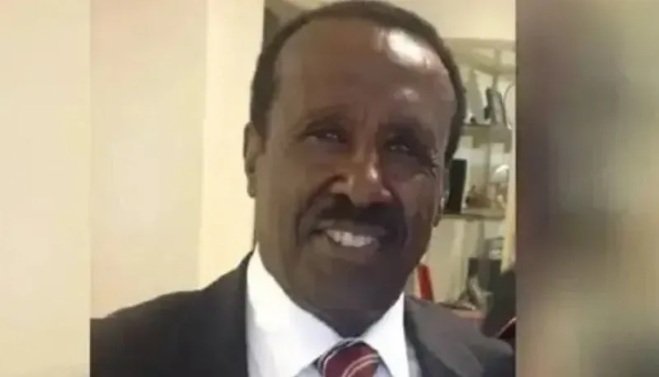
By Dawit W Giorgis
I call Sudan enigmatic because it refers to the country’s complex blend of ancient wonders like the Meroë pyramids, vast landscapes like the Sudd wetland, deep cryptical historical roots (Cush, Nubia), conflicts of identity ( African or Arab?) and its paradoxical and incredible hospitality even amidst conflict, mysterious puzzling political dynamic as one of Africa’s most coup-prone nations with 20 total coup attempts, since independence in1956, of which seven were successful, and now at a cross road of existence with intense civil war and competition on arable land and rare earth mineral like gold, with powerful warlords (i.e. Hemedti), shifting regional alliances and proxy war.
The Darfur Crisis
While Darfur was a major catalyst and symptom of Sudan’s instability, contributing significantly to its fragmentation and international isolation, the roots of Sudan’s collapse run deeper, involving decades of civil wars (North-South), resource conflicts (water, land), ethnic tensions, exploitative governance, and political power struggles that culminated in the 2023 conflict, with Darfur’s violence becoming a major driver of wider instability after the South’s secession. Between 2003 and 2008, when I was in Sudan, up to 500,000 civilians were killed in Darfur, 2,000 villages destroyed, and over 2 million people displaced.* The reason? Both sides are Muslim, so it was not a religious issue. It comes down to racial identity.
The word Darfur is a combination of two Arabic words: ‘dar’, which means “home,” and fur, the name of the main ethnic group. The territory has been ethnically mixed for centuries, though the name Darfur gives the impression that it is the land of the Furs, but “the vast region holds the tribal lands—the ‘dars’—of many tribes.” * Darfur has a powerful Black population that emerged along the Southern part of the Sahara beginning in medieval times. Arabs drifted in over the centuries, coexisting with the indigenous populations. The region was annexed together with South Kordofan into the Anglo-Egyptian Sudan. When Sudan gained independence, it also inherited Darfur, which is home to a mix of Arab tribes and non-Arabs. The non-Arabs were the majority, but were pushed back under the Arabization policy of Sudan. Racist attitudes began to take shape, partly as a result of the propaganda of Muammar al-Qaddafi of Libya.
The Conflicts of Identity: Africans or Arabs?
The conflicts in Sudan are endless and have a great deal to do with identity: do the people see themselves as Arabs or Africans, and how will the central government encompass those differences? At the time of independence in 1956, the conflict seemed to be limited to a war with South Sudan’s liberation movements. One of the thorniest issues was Sharia law. The majority of people of South Sudan are not Muslims, but the rest of the country is, so the northern leadership wanted sharia to be the basis for the nation’s laws. South Sudan was finally given its independence, and many believed that would end the question of Sharia. On the eve of the independence of South Sudan, Omar al-Bashir, the president of Sudan, stated: “If South Sudan secedes, we will change the constitution, and there will be no time to speak of diversity of culture and ethnicity… Sharia and Islam will be the main sources of the constitution, Islam the official religion, and Arabic the official language.* As it turns out, sharia law has not been implemented consistently in Sudan, 14 years after the independence of South Sudan. Moreover, independence for the South, which has been a significant economic blow to Sudan, did not resolve the conflicts. South Sudan has seceded, but the wars go on in both South Sudan and Sudan.
South Kordofan and Blue Nile regions are located along a disputed border with South Sudan. South Kordofan and Blue Nile fought alongside the South Sudanese for decades under the Sudan People’s Liberation Movement (SPLM), but the 2011 independence arrangement excluded these two regions. The majority of these people are Arabs. There are also some Christians and animists. Frustrated by the policies of marginalization by the central government, the majority of these people have allied with the South Sudanese. There was conflict in northern Sudan between the government and the Sudan Revolutionary Front (SRF), a coalition of groups aiming to overthrow the Bashir government. With the fall of In 2019, the peace process ended this conflict for a time.* In the late 1980s, landless and increasingly desperate Arabs began banding together to wrest their own ‘dar’ from the black farmers. In 1987, they published a manifesto of racial superiority, and clashes broke out between Arabs and Fur. About 3,000 people, mostly Fur, were killed, and hundreds of villages and nomadic camps were burned before a peace agreement was signed in 1989. More fighting in the 1990s entrenched the divisions between Arabs and non-Arabs, pitting the Arab pastoralists against the Fur, Zaghawa, and Massaleit farmers. In these disputes, Sudan’s central government, seated in Khartoum, often supported the Arabs politically and sometimes provided arms.* With the recurrence of drought, the competition over scarce resources increased, and conflicts flared up between Darfurians and the Arab militias known as “janjaweeds.”*
These members of the nomadic Arab tribes in Darfur began fighting Darfurian settled farmers who had darker skin color. They wanted their land. When South Sudan became independent In 2011, the Darfurians formed the Sudan Liberation Army (SLA) and the Justice and Equality Movement ( JEM). They scored some successful raids against the Khartoum government, which in turn gave the green light to the Janjaweed to become more aggressive, supplying them with arms. They raided the villages of Darfur, defeated the SLA and JEM, and turned the conflict into what some have called a genocide with the support of the central government. This conflict was unrelated to the struggles in the South. It was a different kind of warfare.
I was in Darfur several times during my stay in Sudan. I found it very difficult to distinguish between the so-called Arabs and Darfurians. That is where the contradictions of Sudan become so glaringly evident. Ethnicity in Darfur is elusive. Driving through the main town of West Darfur, Al Fashir, I would point to someone and ask my colleague, who is a Sudanese historian and claims to be a pure Arab, “What is this person?” He tells me, “An Arab.” Then I see another person who has the same color and ask him, “And this one?” and he tells me, “Darfurian.” It is amazing to me how they can pick out the subtle physical differences to identify who is an Arab and who is a Darfurian. Sometimes language or hair color are clearer ethnic markers, but for me, for many of my colleagues, Black is Black. Not in Darfur, though, where there are many shades, as indeed is the case in all of Sudan. “To the outsider, all the people of Darfur are Black, and it is ethnically a rather than ‘race’ that sets them apart.“ 305 More importantly, “The implication that these are two different races, one * The word means “a man on a horse with a gun.” indigenous and the other not, is dangerous,” said Mahmoud Mamdani, director of the Institute of African Studies at Columbia University. *
The Darfur crisis has laid bare an unspoken Arab-African fault line that runs across this arid belt of Africa — from Mauritania in the West to Sudan in the east. Racial consciousness is, in fact, embedded in the history of central Africa. Sudan, for example, was once a center of the Arab slave trade. In Mauritania, in West Africa, blackness, which was associated with slavery, is today associated with servitude. The racial character given to the fighting in Darfur by the government and the rebels has found many willing listeners — and the appeal to racial solidarity could extend itself to Chad or further afield to Niger or Mali, where the competition between farmers and nomadic herders could turn even uglier. …But racial chauvinism, once let loose in a society, can be hard to put back in the bottle. And its effects can be murderous. It is foolish, said Mr. Khatir [a Darfurian with both Arab and Fur grandparents], for any Sudanese to consider himself an Arab. “We are not Arabs, not Sudanese — not even those who are telling themselves they are Arabs,” he said. “I am an African,” he added, “who has absorbed Arab and Islamic culture. The way I see it, our people, Arab tribes and African tribes, are victims of the national policies of this government. We are all victims.”*
The British left a history of categorizing Darfurians as descendants of Black Africa and therefore inferior to the Arabs. But whether you go to Darfur or the Eastern part of Sudan, Khartoum, for example, it is difficult to determine the ethnic identity of anyone from the shade of their skin color or type of hair. Millions of Sudanese are as Black as I am, who are categorized as Arabs. Ex-President Omar al Bashir, who is from the North of Sudan, Nubia, is as dark as many Africans are, but he proudly identifies himself as an Arab. Concepts of identity have changed over time across the world, with some countries managing to forge a sense of belonging primarily to the nation, not a nationality. This has never been the case for Sudan, where ethnic identity is deeply ingrained and is the underlying reason for the tragic death and displacement of millions. The focus on ethnic identity has to end soon because it has become an existential issue.
“The Case of Genocide in Darfur”
I was in Darfur when the Western media accused Sudan of genocide in Darfur. I travelled extensively and frequently to these areas, reporting on the extent of the humanitarian crisis, the need for emergency aid, and how to assist the government in developing the institutional capacity to address what James Morris of the UN’s World Food Program called “one of the world’s worst humanitarian crises.”* The UN Humanitarian Coordinator for the Sudan, Mukesh Kapila, stated, “the only difference between Rwanda and Darfur is the numbers involved of the dead, tortured, and raped.”* I have disagreed. I was in both places during and after the crimes. From my point of view and that of many independent observers in Sudan, it is impossible to call the Darfur conflict genocide. Looking beyond the obvious ethnic reasons for the fighting, the distinction between Rwanda and Darfur becomes clearer. The goal of the conflict in Darfur is not to exterminate a people. In the beginning, it was not about race, but livelihood: Nomads as opposed to farmers, and a fight for depleted resources. The fighting is “more often between nomadic herdsmen (many of whom consider themselves to be Arabs) and farmers (who consider themselves to be African) over access to shrinking supplies of water and pasture land.*
Until the rains began to fail, the [Arabs] lived amicably with the settled farmers. The nomads welcomed passers-through, grazing their camels on the rocky hillsides that separated the fertile plots. The farmers would share their wells, and the herders would feed their stock on the forage from the harvest. But with the drought, the farmers began to fence off their land—even fallow land—for fear that passing herds would ruin it. A few tribes drifted elsewhere or took up farming, but the Arab herders stuck to their fraying livelihoods—nomadic herding was central to their cultural identity. …Why did Darfur’s lands fail? For much of the 1980s and ’90s, environmental degradation in Darfur and other parts of the Sahel (the semi-arid region just South of the Sahara) was blamed on the inhabitants. Dramatic declines in rainfall were attributed to the mistreatment of the region’s vegetation. Imprudent land use, it was argued, exposed more rock and sand, which absorb less sunlight than plants, instead reflecting it toward space. This cooled the air near the surface, drawing clouds downward and reducing the chance of rain. “Africans were said to be doing it to themselves,” says Isaac Held, a senior scientist at the National Oceanic and Atmospheric Administration.*
However, computer models show that drought in Darfur and the Sahel is predictable given the changes in ocean temperatures. In other words, climate change, not overgrazing, lies at the root of the problem. This leads to a serious moral question about the rest of the world’s responsibility for this crisis, and others that will inevitably arise as weather patterns shift and the earth warms up.* If the region’s collapse was in some part caused by the emissions from our factories, power plants, and automobiles, we bear some responsibility for the dying. “These changes us from the position of Good Samaritans—disinterested, uninvolved people who may feel a moral obligation—to a position where we, unconsciously and without malice, created the conditions that led to this crisis,” says Michael Byers, a political scientist at the University of British Columbia. “We cannot stand by and look at it as a situation of discretionary involvement. We are already involved.”*
Sudan Today and the Proxy War
The failure of the 2019 transitional government of Sudan to achieve comprehensive and lasting peace in Darfur was a contributing factor to the current crisis in Sudan, but it was part of a broader, systemic failure of the entire transition process. The root cause of the current civil war in Sudan is the unresolved issues of the past. Decades of conflict are fundamentally rooted in historical grievances, colonial legacies, and the persistent failure of successive governments to address core issues: Colonial Legacy and Identity, Political and Economic Marginalization, and Resource Sharing.
While the collapse of the military alliance that had seized power from the transitional government in 2021 was the immediate cause, the failure to implement peace accords in Darfur was the major factor in triggering the current civil war, and opened the door for external interventions. The failure of Darfur’s peace accords, particularly the 2006 Darfur Peace Agreement (DPA), started with deep mistrust and included several rebel groups. The agreement failed to address core issues of resource and power sharing and was vague in many other areas. The failure of the DPA opened the gate for external actors (since April 2023), backing the two main warring factions: the Sudanese Armed Forces (SAF) and the Rapid Support Forces (RSF). The external powers and the Sudanese government focused on exploiting the divisions among the Darfur rebels and the poorly constructed agreement. Key external actors include the UAE (supporting RSF), Saudi Arabia (supporting SAF), Iran, Russia, and Egypt, all seeking strategic influence and economic gains (like gold, rare minerals, and port access), turning the internal power struggle into a broader geopolitical flashpoint. The interests are diverse and can be categorized into: Control of the Red Sea, expanding spheres of influence, and countering rivals, with Gulf states like Saudi Arabia and the UAE often on opposing sides. External support fueled the fighting between the SAF and RSF, prolonging the war and creating Regional Destabilization. The involvement of multiple nations risks broader regional instability and increased militarization, especially with drone proliferation. Sudan’s problem has become no longer the problem of Sudan alone. It is out of the control of the Sudanese factions, who are being manipulated by these external forces, some with conflicting interests.
Conclusion
Sudan is experiencing a de facto partition due to the ongoing civil war, with the Sudanese Armed Forces (SAF) controlling Khartoum and the east (including Port Sudan), while RSF controls Darfur and parts of Kordofan, effectively creating separate zones of administration with parallel governance, increasing ethnic fragmentation, and making a unified state increasingly unlikely as both sides dig in. The ongoing conflict has so fractured the country’s social fabric and political landscape that a return to a unified, centralized state is widely seen as highly unlikely.
The de facto partition of Sudan will not bring lasting peace and risks prolonging the war and exacerbating the humanitarian crisis. According to the IRC ( International Rescue Committee), over two years of war have drastically worsened these conditions, displacing over 12 million people and leaving 33.7 million people—approximately two-thirds—in need of humanitarian support. Sudan is the largest humanitarian crisis ever recorded. It is also the largest recorded and fastest displacement crisis in the world.
Next in line in the region, for such a fate: A civil war of biblical proportion is in the making, the kind of which Africa has never seen, with an impact reverberating far beyond, to the coasts of the Mediterranean, with a few million of the 120 million ( the second largest populated country in Africa) expected to begin migration across the Sahara and along the coast of the Red Sea, to the gates of Europe. If the West can foresee such a crisis, it is time to design a collective policy to stop it, at least for its own sake, since the death, suffering, and displacement of millions that have been taking place in Ethiopia for the last few years have never mattered.
END
*Reference: A chapter in my book, ‘What A Life’; Sudan Enigmatic: by Dawit W Giorgis
Editor’s Note : Views in the article do not necessarily reflect the views of borkena.com
__
Support Borkena : https://borkena.com/subscribe-borkena/
Join our Telegram Channel : t.me/borkena
Like borkena on Facebook
Borkena Ethiopian News Youtube Channel
To submit Press Release, send submission to info@borkena.com
Add your business to Ethiopian Business Listing / Ethiopian Business Directory
Join the conversation. Follow us on X (Formerly Twitter) @zborkena to get the latest Ethiopian News updates regularly.
Thank you for sharing your valuable knowledge about what you had observed on location about Sudan. I had immerse myself in and read it more than once with undivided attention. I like many Ethiopian have fond memory about The Sudan and its noble people. It saddens me so much that it has descended into such tragic situation.
Talking about fond memory of the Sudan, mine goes back all the way to the late 1950’s thru the 1960’s. I used to eagerly waiting for the Friday night after the evening prayers to tune to Radio Oumdurman. That was when Sudan’s famous artists of the days used to give concerts until the wee hours at the station’s concert hall. I still have their songs on cassettes. I was stricken with an enduring love for Sudanese music after listening for the first time in the late 1950’s to the soothing voice of Aisha Fallati, Muna Kayir and Abdel Karim Al-Kabli. Then came Salah ibn Al Badiya, Wardi and Sayed Khalifa in the early and mid 1960’s. I still enjoy their music.
That Friday night concert used to be called ‘Hafla’ domestically, in Egypt, the Arabian Peninsula and the Horn of Africa. Wardi, Khalifa and the rest of the super stars got their first taste of success on the stage of that concert. I used to be up all night on Fridays listening to the whole concert on my Grundig shortwave radio. I brought the radio with me when I came here and still have it. But the station, Radio Omdurman, was out of reach from here.