
In recent years, the Federal Government in Mogadishu has steadily drifted away from its fundamental responsibilities: restoring security, stabilizing governance, and addressing the country’s chronic humanitarian crises. Instead, its political leadership has embarked on a dangerous and self-serving campaign, one that centers not on defeating Al-Shabaab, but on manufacturing political confrontation with the Republic of Somaliland and other federal states.
This shift reflects a regime more interested in power preservation and external patronage than in rebuilding a fragmented nation. It also exposes the increasing influence of foreign actors who view Somalia not as a nation in need of stabilization, but as a geopolitical pawn.
Somalia continues to face a relentless insurgency. Al-Shabaab controls large territories, collects taxes across major regions, and routinely penetrates even heavily fortified areas of the capital. Yet, instead of consolidating national security operations, Mogadishu’s leadership has diverted its attention to political fights that yield financial and clan-based advantages.
While federal troops struggle to hold ground, political leaders focus their time and diplomatic energy on undermining Somaliland, an independent, peaceful, and democratic entity that has governed itself for more than three decades.
This fixation is not rooted in national interest. Rather, it is driven by internal political calculus, where an external enemy creates a convenient distraction from domestic failure.
China and Turkey have become key partners in Mogadishu’s renewed hostility toward Somaliland. Their support is not accidental.
- Turkey maintains deep security and political ties with Mogadishu, motivated by military influence and strategic positioning in the Horn of Africa.
- China, concerned about Somaliland’s engagement with Taiwan, exerts pressure to ensure that Mogadishu adopts a more confrontational stance.
- Egypt has recently positioned itself as a prominent supporter of failed state of Somalia, offering consistent political backing and contributing to the enhancement of Villa Somalia’s defense apparatus. Cairo has facilitated military training programs, capacity-building initiatives, and the delivery of advanced equipment intended to strengthen Somalia’s armed forces. While Egypt frames this engagement as part of its broader regional security objectives, its deepening involvement also carries significant geopolitical implications. In the complex landscape of the Horn of Africa, where fragile states, disputed territories, and regional rivalries intersect—such support risks intensifying existing tensions and could inadvertently contribute to instability rather than easing it.
Much of the military hardware funneled into Villa Somalia never strengthens the state, it disappears into the very networks the international community claims to be fighting. Somalia’s security sector is riddled with corruption, infiltration, and chronic mismanagement. Time and again, weapons supplied to the federal government end up leaking into black markets, clan militias, and armed groups. In the worst cases, these arms ultimately fall into the hands of Al-Shabaab, either through diversion, collusion, or battlefield capture. Instead of stabilizing the country, this reckless influx of weaponry simply circulates back into the conflict, empowering the very extremists the world seeks to defeat.
The result is a political environment where external agendas overshadow Somalia’s internal realities. Instead of seeking peace and constructive dialogue, Mogadishu is emboldened to escalate tensions, believing it has diplomatic cover.
Despite its limited governance capacity, Somalia remains one of the largest recipients of international aid. Institutions such as the World Bank, IMF, and EU continue to inject massive financial packages into a state that struggles to administer even the capital.
These funds, intended to support reforms and recovery, often disappear into a maze of clan-based patronage networks and opaque government structures. Little of this investment translates into improved services, functioning institutions, or durable stability.
Worse, donor-funded political capital is increasingly used to wage diplomatic campaigns against Somaliland, rather than to strengthen Somalia’s internal governance.
The international community must ask itself a difficult but necessary question: Are these billions supporting state-building, or simply nourishing a fragile political elite with short-term interests?
While Mogadishu’s politics have grown more volatile, the Republic of Somaliland continues to demonstrate what local-led governance can accomplish:
- A functioning multi-party democracy,
- Robust institutions,
- Peaceful domestic security,
- A stable investment environment,
- And a population united around national sovereignty.
For more than 30 years, Somaliland has shown that homegrown political settlements, not external pressure, create lasting stability.
No amount of propaganda or manufactured hostility will weaken Somaliland’s commitment to its independence or its legitimate path toward international recognition.
As geopolitical interests intensify in the region, responsible international engagement is essential. Continued blind funding and diplomatic endorsement of a government that lacks territorial control, or institutional capacity will only deepen instability.
A new approach is needed, one that:
- demands transparency in donor financing,
- discourages political aggression against Somaliland,
- and recognizes the reality of governance on the ground.
Somaliland’s journey toward recognition is irreversible because it is rooted in legitimacy, stability, and the will of its people. Attempts to undermine its sovereignty, whether through diplomatic pressure, foreign-backed campaigns, or orchestrated propaganda, will fail.
The Horn of Africa is at a crossroads. The international community must decide whether it will continue enabling a political elite in Mogadishu that thrives in dysfunction or support genuine stability by acknowledging Somaliland’s decades-long record of peace and responsible governance.
For Somaliland, the course is clear, the nation remains, united, and committed to its rightful place among the community of nations. No political maneuver in Mogadishu can change that.
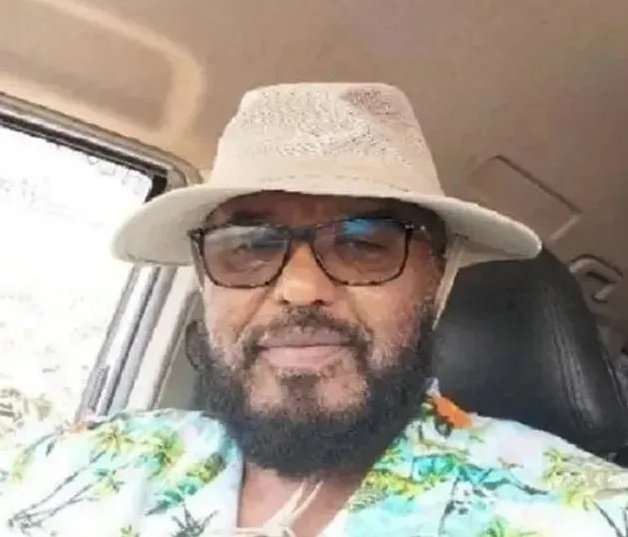
Engineer Abdi Ali Barkhad is a senior consultant. He has also studied international diplomacy and is a political analyst and writer known for his detailed commentary on the politics of the Horn of Africa and international relations. He has published numerous articles analysing current policies in the region and is a strong supporter of the cause of the Republic of Somaliland. He can be reached at: tra50526@gmail.com 9/11/2025
Editor’s Note : Views in the article do not necessarily reflect the views of borkena.com
__
Support Borkena : https://borkena.com/subscribe-borkena/
Join our Telegram Channel : t.me/borkena
Like borkena on Facebook
Borkena Ethiopian News Youtube Channel
To submit Press Release, send submission to info@borkena.com
Add your business to Ethiopian Business Listing / Ethiopian Business Directory
Join the conversation. Follow us on X (Formerly Twitter) @zborkena to get the latest Ethiopian News updates regularly.