
There were voices that proposed a confederation government arrangement
borkena
Toronto – The National Dialogue Commission on Sunday gathered agenda in the Somali region of Ethiopia, according to a report by BBC Amharic. Government structure, constitutional amendment, flag. Official language and interpretation of Ethiopia’s history are among issues that were raised during the session. Agenda items related to boundary disputes were also raised.
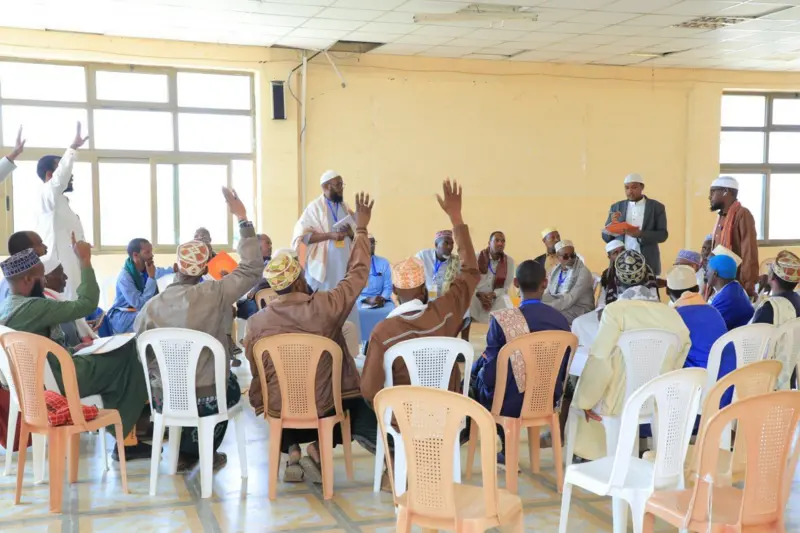
In a session organized at the Jijiga University hall, representatives from political parties, regional government, influential figures, associations and other stakeholders were present. As many as 1200 representatives have attended the session.
The agenda that was proposed by most participants, as reported by BBC Amharic, was “authentic federalism.”
Government and configuration of the federal regions were dominant agenda items, based on the news report from BBC Amharic. There were views that criticized practices (including “intervention”) in the implementation of federalism. Many of the participants seem to hold the view that the Federalism practice in the past was “problematic.”
BBC Amharic report also highlighted that there were some groups who proposed a confederation form of government to be part of the agenda item for the national dialogue. About 25 percent of the participants entertained the “confederation” idea. There was also a view that seems to be accusatory that there is “interest among some groups to return to unitary form of government.”
The tendency among many of the participants is one that defends ethnic Federalism. There has been extensive criticism for several decades now that ethic based governance structure glossed over citizenship rights, rightly, to the extent that Ethiopians essentially alienated if they happen to be in an ethnic regional state that is presumed to be not their ethnic region.
On the issue of constitutional amendment, there were views that advocated for the sanctity of article 39 which grants the right to secede from Ethiopia. This constitutional provision has been the most controversial article. For the majority of Ethiopians ethnic politics and the right to secede are dangerous combinations and a national security risk that invited external actors to meddle in the affairs of Ethiopia.
Meanwhile, there were reports this week that the Ogaden National Liberation Front (ONLF) withdrew itself from the National Dialogue process citing issues of “neutrality.”
__
Join our Telegram Channel : t.me/borkena
Like borkena on Facebook
Add your business to Ethiopian Business Listing / Ethiopian Business Directory
Join the conversation. Follow us on X (Formerly Twitter) @zborkena to get the latest Ethiopian News updates regularly. Subscribe to YouTube channel To share information or for submission, send e-mail to info@borkena.com
In regards to national language, I have advocating the following languages as co-opt media of communication.
1) Amharic has already on all corners of the country and should maintain its current status.
2) Arabic – It is a widely spread regional language and being spoken by tens of millions of people already.
3) Oromiffaa – It is a mother tongue of more than 50 million people both in Ethiopia and Kenya
4) Somal – It is a national language of Djibouti and Somalia. Somalis live in all 4 countries of Djibouti, Somalia, Ethiopia and Kenya.
5) Afar – Afars live in three countries of Eritrea, Djibouti and Ethiopia.
6) Tigre – This language is already spoken by millions both in Eritrea and Ethiopia.
I have been bringing this up with friends for decades now. Most of them have been at least receptive to the idea. Such arrangements will only help citizens of various ethnic backgrounds understand each other faster and better. Start teaching kids at the early stage now and decades from now, who knows, a Creole tongue may emerge as a concoction of all these languages. That will lead to a perfect union.