
By Petros Dejene Woldeyohannes
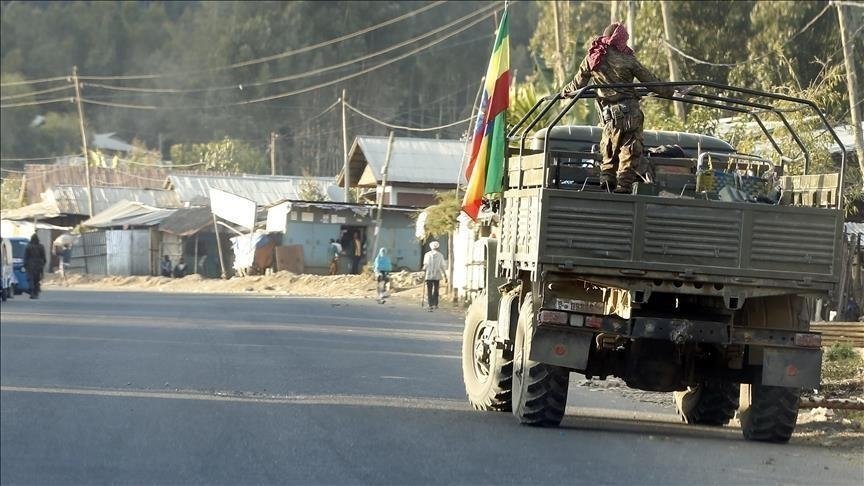
When a major Western outlet recently warned that Ethiopia is “perilously close to another war,” my first reaction was not concern but surprise. For millions of Ethiopians—especially in Oromia and Amhara—war is not a looming possibility but an ongoing reality. Entire districts remain under military operations, thousands continue to be displaced, and communities live in a persistent state of insecurity.
Yet to an outside reader, Ethiopia appears calm—until a potential spark in Tigray is detected. Then, suddenly, alarms sound across international media and foreign-policy circles.
This contrast is not new. The war in Tigray from 2020 to 2022 was massive and devastating, and it understandably drew global attention. The issue was never that the war was covered, but how it was covered: the narrative was often one-sided, selective, and shaped by a narrow set of voices. What is striking today is that this same imbalance persists, even though the realities of conflict in Ethiopia have changed dramatically. Regions experiencing active violence now receive only muted acknowledgment, while even early signs of tension in Tigray still trigger disproportionate international alarm.
Consider a recent case: in Arsi Zone of Oromia, more than 25 followers of the Ethiopian Orthodox Tewahedo Church were killed in October, including one attack in Honqolo Wabe (Siltana Woreda) where five members of a single family died1,4. In early November, at least five more Orthodox Christians were killed in Merti District after being tasked to harvest teff farms for militia forces. These are not isolated incidents but part of a rising pattern of religiously or ethnically-targeted violence in Oromia. Yet these episodes receive very little international attention. Meanwhile, any sign of tension in Tigray is widely amplified. The result: the narrative misaligns with lived reality.
The question to ask is why does this imbalance persist? There are a number of complicated factors that influence this distorted coverage. Firstly, historical narratives have a disproportionate impact on current perspectives. For decades, the Tigray-Eritrea axis dominated Western understanding of the Horn of Africa. This built a persistent “familiar frame” for journalists and analysts: when Tigray moves, the world watches. Secondly, the visibility of advocacy and networks determine international attention. The Tigrayan diaspora and affiliated advocacy groups are highly effective at securing attention. By contrast, communities in Oromia and Amhara lack similarly visible, unified platforms globally. Thirdly, internal fragmentation weakens external voices. When suffering is accompanied by political fissures, competing internal narratives, or lack of coherent communication, global media coverage drops. The victims may be many, but their voice becomes muffled.
The consequences of selective attention are disastrous. Policy responses are misdirected as aid, diplomacy and monitoring focus where coverage is loudest, not where violence is most intense. Moreover, perceptions of Ethiopia’s stability become misleadingly optimistic as the world sees “Tigray risk,” not “Amhara or Oromia war.” Solutions become fragmented. Focusing on one region’s trauma while others burn leaves no pathway for comprehensive peace. Ethiopia’s conflicts—past and present—are deeply interwoven. Grievances in one region cannot be resolved while others burn. A country cannot negotiate lasting peace if only one theatre of conflict is visible to the world, while others remain invisible or politically inconvenient to acknowledge. Ethiopia does not need another cycle of selective outrage or selective empathy. It needs a comprehensive, balanced understanding—both inside the country and from those observing it from abroad. Only then can the roots of Ethiopia’s instability be acknowledged honestly, and the work of building a sustainable peace began.
References
- Thomas Edwards, “Christians face rising persecution in Ethiopia as attacks spread across Oromia,” The Catholic Herald, November 10 2025.
https://thecatholicherald.com/article/christians-face-rising-persecution-in-ethiopia-as-attacks-spread-across-oromia thecatholicherald.com - Jude Atemanke, “Ethiopia’s Catholic bishops condemn deadly attack on parish, call for government protection,” Catholic News Agency, November 6 2025.
https://www.catholicnewsagency.com/news/267615/ethiopias-catholic-bishops-condemn-deadly-attack-on-parish-call-for-government-protection Catholic News Agency - “Over Two Dozen Civilians Killed in Oromia: Ethiopian Orthodox Church Reports Surge in Attacks,” Voice of Amhara, November 11 2025.
https://voiceofamhara.com/over-two-dozen-civilians-killed-in-oromia-ethiopian-orthodox-church-reports-surge-in-attacks/ voiceofamhara.com - “At Least Five Killed In A New Attack Against Orthodox Christians In Arsi,” Borkena, November 6 2025.
https://borkena.com/2025/11/06/ethiopia-at-least-five-killed-in-a-new-attack-against-orthodox-christians-in-arsi/ Borkena - “More than 25 Orthodox Christians Killed in a Week in Oromia, Ethiopia,” Orthodoxy Cognate PAGE, November 1 2025.
https://ocpsociety.org/more-than-25-orthodox-christians-killed-in-a-week-in-oromia-ethiopia/ Orthodoxy Cognate PAGE
Editor’s Note : Views in the article do not necessarily reflect the views of borkena.com
__
Support Borkena : https://borkena.com/subscribe-borkena/
Join our Telegram Channel : t.me/borkena
Like borkena on Facebook
Borkena Ethiopian News Youtube Channel
To submit Press Release, send submission to info@borkena.com
Add your business to Ethiopian Business Listing / Ethiopian Business Directory
Join the conversation. Follow us on X (Formerly Twitter) @zborkena to get the latest Ethiopian News updates regularly.