 Read more.)
By: Mohamed Hassan Mohamed (Xareed)
Geography and Strategic Position
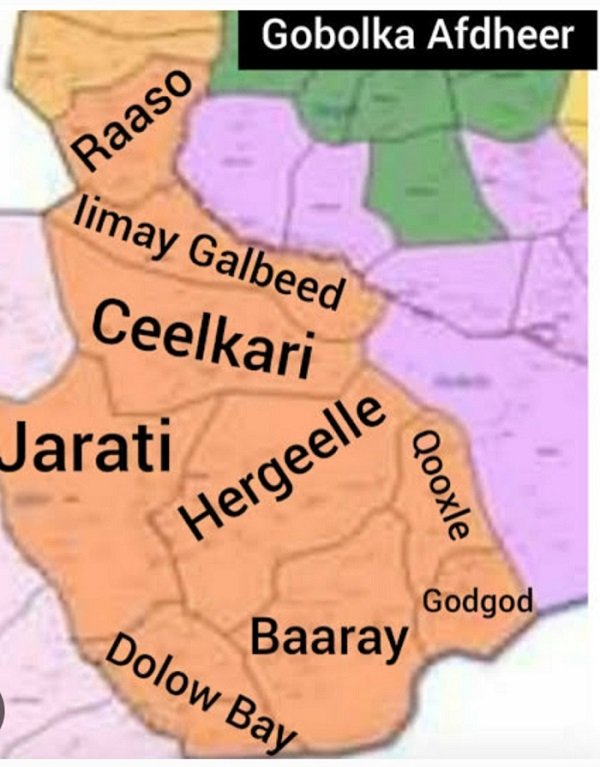
Afder Zone sits in the south-eastern lowlands of Ethiopia’s Somali Region, bordered by Oromia to the west, Shabelle/Nogob to the north, and Somalia across a long, porous frontier. The zonal capital is Hargele (Argheile), a hot semi-arid town that anchors administration and trade across widely dispersed pastoral settlements. This location gives Afder a front-row seat to cross-border markets that link the Genale (Ganale Dorya) and Shabelle river basins to Somali towns in Gedo and beyond—an advantage for livestock and petty trade when security and roads permit. The zone’s vast rangelands, low population density, and year-round sun shape most development opportunities and constraints.
Demography and Human Capital Baseline
The best official baseline remains the 2007 national census, which counted roughly 571,000 people in Afder—over half pastoralists and about 8% urban—within a region where pastoralism and mobility dominate social life and livelihoods. Literacy, school enrollment, and urban water/sanitation access were very low in earlier surveys, a gap that still influences service delivery today. While the figures are dated, they frame the magnitude of needs in health, WASH, and education that partners continue to report from Hargele, Cherati, Elkere and other woredas. Planning must therefore combine newer qualitative/assessment data with the 2007 quantitative baseline until a new census arrives.
Rangeland Livelihoods and the Livestock Economy
Afder’s economy is built on camels, goats, sheep and cattle that convert sparse forage into milk and meat for household nutrition and regional markets. Historic livestock aerial surveys and subsequent studies underscore high small-ruminant densities and the centrality of pastoral systems in Somali Region. Market-facing programs like USAID’s PRIME and the current RIPA initiative have shown that even in drought-prone areas, facilitating animal health services, range governance, and trader finance can raise incomes and resilience. Unlocking Afder’s potential means scaling such market systems work while safeguarding mobility, seasonal grazing, and water access.
Rangeland Degradation and Restoration Pathways
Decades of bush encroachment, water-point crowding, charcoal production, and settlement around boreholes have stressed Afder’s rangelands. Reviews from Somali Region point to forage quality declines and shrinking drought reserves, but also to practical fixes: Participatory Rangeland Management (PRM), negotiated grazing plans, invasive-shrub clearing, and reseeding. ILRI and partners show that PRM can strengthen local governance and productivity at landscape scale when paired with clear use rights and modest public investment. Afder can combine PRM with dry-season grazing reserves, community fire management, and fodder banks along seasonal rivers to rebuild range function.
Water Security: From Rivers to Groundwater
The Genale/Genale-Dawa and seasonal streams offer pockets of irrigation and livestock water, but most communities depend on shallow wells, birkas, and water trucking in failed seasons. Nearby studies in Somali Region (e.g., Kebri Dehar) highlight how limited perennial flows and weak rural roads constrain safe water access, while GIS-based work in adjacent zones shows the promise of mapping groundwater potential zones for targeted drilling. For Afder, priority actions include hydro-geological surveys in settlement clusters, solarized boreholes, managed aquifer recharge where feasible, and protecting traditional wells from contamination. Pairing water development with grazing governance reduces overconcentration and rangeland degradation around new water points.
Small-Scale Irrigation and Climate Resilience
South Gode and nearby corridors in Somali Region have decades of small-pump irrigation experience—some continuing privately after projects ended—showing that local farmers can diversify into vegetables and grains along riverbanks. A JICA ex-post evaluation documented 100-hectare irrigation schemes per site near Gode, with water-user associations and pump investments to buffer drought effects. Afder can adapt these lessons on a micro-scale where Genale/tributary hydrology allows: focus on gravity or low-lift pumps, farmer-led O&M, drought-tolerant crops, and market links that don’t undercut pastoral mobility. Done at the right nodes, irrigation complements—not replaces—livestock.
Food Security: A Tale of Shocks and Recovery
Somali Region oscillates between drought recovery and flood emergencies, with Afder repeatedly affected by both failed rains and riverine impacts. FEWS NET and regional assessments show that while recent wetter seasons improved pasture in many areas, destructive flooding and price volatility still push vulnerable households into Crisis (IPC3) outcomes. Building resilience requires stabilizing water and fodder access, strengthening livestock market functions, and expanding social protection that flexes with seasonal signals. Early-warning data should drive pre-positioning of feed, veterinary supplies, and cash responses before stress becomes crisis.
Flood and Epidemic Risk Along the Shabelle–Genale Corridors
In 2024, heavy rains triggered significant flooding across Somali Region, with Afder and Shabelle zones reporting over 100,000 affected people and damage to roads and bridges. WHO’s public-health analysis flagged displacement, waterborne disease risk, and strained health services following rapid impact assessments conducted in Afder in early May 2024. For Afder, practical measures include elevating critical road segments, pre-stocking WASH kits and cholera supplies, and establishing high-ground evacuation sites linked by all-weather tracks to Hargele. Risk-informed planning must assume more frequent extremes, not historical averages.
Public Health and WASH Gaps
Low baseline coverage of safe water and sanitation meets recurrent emergencies to create endemic risks from diarrheal disease, measles, and acute malnutrition spikes. Recent humanitarian operations in Afder’s capital highlight how climate shocks overwhelm local health workers and facilities. Strengthening the zone’s primary-care network—solarized cold chains, mobile outreach for pastoral camps, and integrated WASH/IPC—will yield outsized gains. Partner coordination should align cholera preparedness and vaccination windows with flood forecasts and mobility calendars.
Education Access for Mobile Households
Schooling remains difficult where families move with herds and distances are vast. Earlier statistics showed extremely low enrollment and literacy; new solutions must fit pastoral realities: mobile schools at dry-season camps, flexible terms around migration, and radio/digital learning where telecom permits. Teacher incentives, girls’ safety measures, and school-WASH are essential to translate access into retention. Tracking attendance across seasons can help tailor calendars to mobility rather than force sedentarization.
Energy and the Solar Opportunity
Afder’s biggest natural endowment may be sunlight: Global Solar Atlas data show high global horizontal irradiation across Somali Region, supporting strong PV yields even in remote posts. This resource underpins health-facility electrification, water pumping, cold chains, and mini-grids for market towns like Hargele—often cheaper than diesel when lifecycle costs are counted. Public programs can tender “service-as-a-product” mini-grids, while households adopt pay-as-you-go kits for lighting and phone charging. Pairing solar with efficient appliances and productive-use equipment (freezers, mills) multiplies livelihood impacts.
Transport and Market Connectivity
Seasonal inaccessibility remains a brake on development—cut roads isolate kebeles, raise food prices, and block livestock traders. Flood damage in 2024 again spotlighted the fragility of bridges and culverts in Somali Region. Prioritizing climate-resilient upgrades on the most “market-critical” segments that connect grazing areas to Hargele and cross-border markets can unlock private investment in meat, milk, and hides. Low-volume seal, raised embankments, and better drainage deliver outsized benefits compared to new long highways.
Cross-Border Trade and the Mandera–Doolow Arc
Afder’s frontier with Somalia is both a growth engine and a vulnerability. IGAD and partners have long emphasized the potential in regulated livestock and staple-goods trade across the Mandera/Doolow corridors, where Somali and Ethiopian traders already operate informally. Streamlined customs, sanitary certification, and designated livestock routes can increase volumes and prices received by producers while reducing rent-seeking. Cross-border animal-health surveillance also lowers the risk of disease-related market closures.
Animal Health and Transboundary Disease Control
Climatic swings stress animals and expand vectors, heightening outbreaks of PPR, CCPP, and Rift Valley fever. IGAD/AU-IBAR programming promotes harmonized surveillance, vaccination campaigns, and cross-border coordination—pillars that directly benefit Afder’s export-leaning herds. With mobile crush pens and private veterinary pharmacies, coverage can reach moving herds before market seasons. Embedding animal-health services in rangeland governance councils helps align disease control with grazing plans.
Security, Mines, and Development Risk
Afder’s proximity to Somalia exposes it to cross-border militancy and legacy explosive hazards. Ethiopia’s 2025 Article 5 report under the Mine Ban Convention lists Somali Region as hosting the country’s largest suspected/confirmed hazardous areas, demanding systematic survey and clearance to protect herders, children, and road crews. Security incidents across the frontier can disrupt trade and raise costs, underscoring the need for community liaison, route monitoring, and contingency planning in project design. Clearance and risk education should precede or accompany any new infrastructure in high-risk kebeles.
Women’s Economic Roles and Nutrition
Women manage milk marketing, small stock, and household nutrition—roles that expand during drought when men travel with herds. Evidence from pastoral regions shows livestock-derived foods are crucial for child growth; programs that stabilize milk supply (through water points, animal health, and fodder) have direct nutrition payoffs. Women-led savings groups, milk collection hubs, and cold-chain pilots powered by solar mini-grids can increase earnings and diet diversity. Safeguards against GBV during water collection and market travel must be integrated from the start.
Urban Nodes as Service Hubs
Small towns like Hargele can act as “last-mile hubs” for health referrals, veterinary services, warehousing, and education, if powered, connected, and staffed. Solar-backed mini-grids, a rehabilitated airstrip/feeder roads, and serviced land for markets can anchor periodic livestock fairs and input supply days. Humanitarian actors already cluster in Hargele; aligning their logistics with zonal development plans reduces duplication and leaves durable assets. Over time, these hubs can incubate SMEs in cold-storage, milling, and repair services that serve mobile clients.
Digital Connectivity for Mobility-Aware Services
Where 2G/3G/4G signals exist, pastoralists use phones for price discovery, remittances, and early-warning. Extending towers along market corridors and powering them with hybrid solar cuts outages and operating cost. With coverage, Afder can scale e-voucher livestock health services, mobile money for drought response, and SMS alerts for vaccination or flood warnings. Digital inclusion plans should bundle network expansion with device charging at health posts and markets.
Climate-Smart Financing and Local Governance
Afder can leverage climate funds and resilience windows if projects show strong community governance, co-benefits, and measurable climate risk reduction. IGAD/FAO case studies emphasize multi-pillar approaches—natural resource management, livelihoods, and social protection—implemented through local councils and customary authorities. Zonal plans should pre-identify shovel-ready packages (PRM + solar water + animal-health + market tracks) to align with donor cycles and government budgets. Transparent benefit-sharing builds trust and speeds scale-up across rangeland units.
Prioritized Opportunities and Measurable Outcomes
Three near-term, high-return bets stand out: (1) Solarized water and clinic power at 25–50 priority sites tied to PRM grazing plans; (2) Market-critical road/culvert upgrades on segments linking grazing areas to Hargele and to border markets; (3) Cross-border animal-health and certification corridors to lift livestock prices and volumes. Each has clear KPIs—downtime hours at clinics, wet-season passability days, vaccination coverage and trader margins—that Afder can track quarterly. Sequencing these with flood-preparedness investments creates a virtuous cycle: fewer shocks, better market access, and stronger household resilience.
Conclusion: Converting Exposure into Advantage
Afder’s exposure—to heat, drought, floods, and cross-border volatility—can be partially converted into an advantage by leaning into what the zone has in abundance: sun, rangeland space, mobility knowledge, and regional trade linkages. Evidence from Somali Region and comparable drylands shows that when range governance, water and energy infrastructure, veterinary systems, and market access are improved together, incomes rise and humanitarian needs decline. With pragmatic investments and locally led management, Afder can turn its frontier geography from a liability into a platform for progressive, climate-resilient growth.
Mohamed is based in Jigjiga, Somali Region, He is Admas University Alumnus. Somaliland, Hargeisa Branch.He is an MBA holder, and wrote hundreds of scholarly articles, essays and conducted researches. He is small business owner and university lecturer. He can be reached at:
Xareedmo45@gmail.com
Editor’s Note : Views in the article do not necessarily reflect the views of borkena.com
Support Borkena : https://borkena.com/subscribe-borkena/
Join our Telegram Channel : t.me/borkena
Like borkena on Facebook
To submit Press Release, send submission to info@borkena.com
Add your business to Ethiopian Business Listing / Ethiopian Business Directory
Join the conversation. Follow us on X (Formerly Twitter) @zborkena to get the latest Ethiopian News updates regularly.