
By Abdirezak Sahane Elmi
Former Government Official and Geopolitical Analyst
Introduction
The story of the Nile is, in truth, the story of Ethiopia’s natural gift to Africa. For centuries, this great river has flowed from the Ethiopian highlands, feeding millions downstream, without complaint, without claim, and without acknowledgment. Yet today, the very nation that gives life to the Nile is unjustly accused of stealing it.
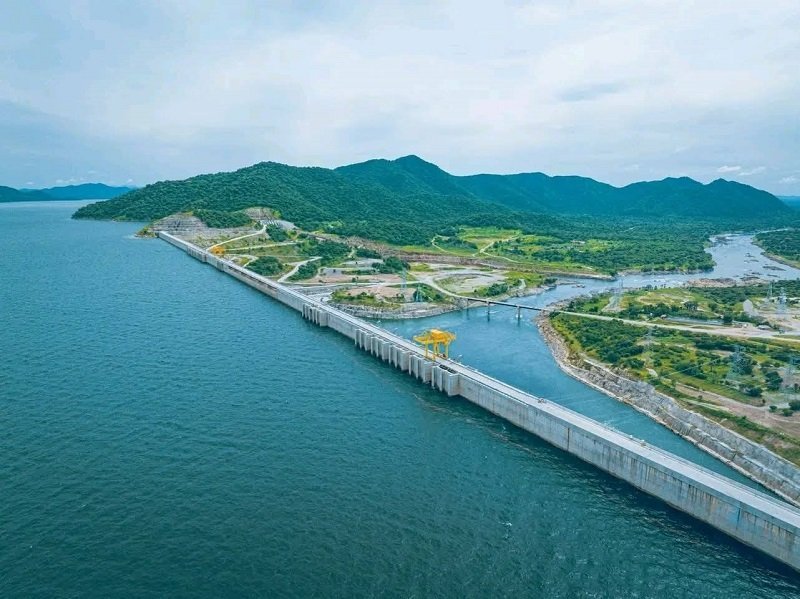
Ethiopia’s aspiration to use its own waters for energy, food, and development is not aggression; it is justice long delayed. It is the right of a proud African nation to rise on its own terms, free from colonial relics and external intimidation. The construction of the Grand Ethiopian Renaissance Dam (GERD) is not a threat to anyone’s survival, it is a symbol of African self-reliance and dignity. But Egypt, relying on outdated colonial-era treaties, continues to portray Ethiopia as the aggressor. And behind Cairo’s narrative stands an even more dangerous ally: Donald Trump, whose reckless statements and foreign policy positions have emboldened Egypt’s expansionist ambition under the pretext of “Nile water rights.”
This article exposes that manipulation, how Trump’s alignment with Egypt serves broader geopolitical goals tied to Israel’s security, how Cairo weaponizes the Nile for political leverage, and why the Horn of Africa must stand united behind Ethiopia’s rightful cause. Because the Nile, like justice, cannot forever flow under the shadow of colonial control.
The Colonial Birth of Egypt’s “Rights”
The Treaties That Excluded the Real Owners
Egypt’s argument on the Nile is based not on fairness, but on history’s injustice. Two colonial-era treaties form the foundation of its claim:
• The 1929 Anglo-Egyptian Treaty, engineered by Britain, gave Egypt veto power over any Nile projects. Ethiopia, the true source of most of the Nile, was never invited to that table.
• The 1959 Egypt–Sudan Agreement followed the same pattern, dividing the river between Cairo and Khartoum as if the other Nile Basin nations did not exist.
Both were instruments of colonial privilege, not international justice. They silenced upstream nations, including Ethiopia, which supplies over 85% of the Nile’s waters through the Blue Nile, Tekeze, and Sobat rivers.
(QZ Africa: “How Britain Gave Egypt Control Over the Nile”)
Ethiopia has never signed, accepted, or recognized these treaties. They are relics of imperial arrogance, dead documents that belong in museums, not in 21st-century diplomacy.
(Addis Standard: “Ethiopia’s Right to the Nile: A Defense of Sovereignty”)
Ethiopia’s Legal and Moral Right:
Ethiopia’s argument is straightforward and just: a nation has the right to use its natural resources for the development of its people. The Blue Nile begins in Ethiopia; 85% of the Nile’s water originates from Ethiopian rainfall. It is absurd, indeed immoral, that a country contributing nearly all the flow has been told for decades not to touch a drop of it.
(Al Jazeera Opinion: “The Nile Cannot Be Governed by Colonial Treaties”)
International law supports Ethiopia’s position. The principles of equitable and reasonable utilization, no significant harm, and cooperation form the modern foundation of transboundary river governance. These are enshrined in the UN Convention on the Law of Non-Navigational Uses of International Watercourses (1997) and the Cooperative Framework Agreement (CFA) of the Nile Basin, which entered into force in 2024.
(International Water Law Blog: “The Nile Basin Cooperative Framework Agreement Enters into Force”)
In simple terms: colonial claims cannot override modern law, and injustice cannot become heritage.
Why Ethiopia’s Claim Stands on Every Ground
| Aspect | Egypt’s Claim | Ethiopia’s Claim |
| Legal basis | Colonial treaties (1929, 1959) excluding upstream states. | Modern international law emphasizing equitable use and fair share. |
| Moral ground | Historical control and dependency narrative. | Right to develop, generate energy, and lift millions out of poverty. |
| Hydrological fact | Receives water from upstream. | Provides over 85% of total Nile flow. |
| Global precedent | Outdated and one-sided. | Supported by UN conventions and Nile Basin initiatives. |
There is no moral or legal foundation left for Egypt’s monopoly. Ethiopia’s cause is not just lawful, it is righteous. Denying Ethiopia the right to develop is denying its people the right to live with dignity.
Trump’s Role: Politics Disguised as Mediation
Donald Trump’s involvement in the Nile dispute was not about peace. It was about power politics. In October 2020, he infamously declared that “Egypt will end up blowing up the dam.”
(DW: “Ethiopia Accuses Trump of Inciting War Over Nile Dam”)
This was not diplomacy—it was a reckless invitation to war. His statements emboldened hardliners in Cairo and insulted Ethiopia’s sovereignty.
In July 2025, Trump repeated the same bias:
“If I were Egypt, I’d want water in the Nile… They built a dam in Ethiopia that stops the water from flowing, which causes Egypt a little bit of a problem.”
(The National News: “Trump Says Egypt’s Nile Dispute Will Be Solved ‘Very Quickly’”)
Trump cut aid to Ethiopia, falsely claimed the U.S. financed the dam, and aligned publicly with Egypt’s position.
(Borkena: “Trump Claims US Financed GERD for the Third Time”)
Egypt, in turn, rewarded his bias. Cairo announced plans to honor Trump with a “Nile Award”, symbolically thanking him for supporting their “right” to the river. It was a political theatre of gratitude—rewarding a man who spoke for them, not for justice.
(Egypt Today: “Trump Says He Averted War Between Egypt and Ethiopia”)
The Wider Project: Destabilizing the Horn of Africa:
Trump’s posture fits a bigger, dangerous pattern. Egypt, aligned with Eritrea’s autocratic regime, has been working tirelessly to destabilize Ethiopia, Somalia, Sudan, and even South Sudan. This is not paranoia; it is geopolitical evidence. Cairo’s alliance with Asmara and its anti-Ethiopian agenda are a deliberate design to weaken regional peace and progress.
By contrast, the United Arab Emirates (UAE) has maintained a constructive and developmental partnership with Ethiopia, supporting regional stability, infrastructure growth, and cooperative economic projects. This partnership stands in stark opposition to Egypt’s divisive strategy and Eritrea’s reckless provocations.
Egypt is also a long-standing U.S. and Israeli ally. Under Trump, the connection deepened. Egypt played a silent role in defending Israel’s blockade on Gaza, closed borders to desperate Palestinians, and acted as Washington’s convenient security partner in the region.
(Al Jazeera: “Egypt’s Role in Gaza Under Scrutiny”)
Trump’s foreign policy in the Middle East—arming Egypt, rewarding its military, and glorifying its authoritarian control—was never about peace. It was about protecting Israel’s interests and maintaining American leverage through Cairo.
(The Guardian: “Trump’s Middle East Legacy: Alliances Built on Arms and Fear”) The Nile issue fits squarely within that strategy. By backing Egypt’s claim, Trump simultaneously undermines Ethiopia’s rise and keeps the Horn of Africa divided and unstable—a region he once described as “troublesome.”
Ethiopia’s Victory in Every Sense
From any angle, legal, moral, scientific, and human, Ethiopia’s position is the winning one.
• It stands on the law: equitable use, fair sharing, and sovereign rights.
• It stands on morality: a poor nation using its resources to fight poverty.
• It stands on hydrology: the source of 85% of the water flow.
• It stands on principle: rejecting colonial bondage.
Egypt’s claim is built on history’s injustice. Trump’s support of it is built on political deception. Neither can last.
Conclusion: Defend the Horn’s Rights with Unity
Ethiopians, and the peoples of the Horn of Africa, must understand that this is not just Ethiopia’s fight. It is a struggle against the old colonial order being rebranded through modern diplomacy. The same hands that once divided Africa are trying again, using aid, rhetoric, and manipulation.
The Nile belongs to all who share it, not to one state. Ethiopia’s cause is just, lawful, and moral. The Horn of Africa must stand together, Ethiopians, Somalis, Sudanese, Djiboutians, South Sudanese, and the Eritrean people, who must finally rise to free themselves from the iron grip of the dictator who has imprisoned an entire nation and stolen its future.
Eritreans deserve democracy and peace, not endless militarism. Their liberation is part of the Horn’s wider liberation, from tyranny, from foreign domination, and from exploitation.
Because when Ethiopia rises with dignity, the entire Horn rises with it, and no colonial lie, no Trump-era deception, and no reckless dictatorship can drown that truth.
Editor’s Note : Views in the article do not necessarily reflect the views of borkena.com
__
Support Borkena : https://borkena.com/subscribe-borkena/
Join our Telegram Channel : t.me/borkena
Like borkena on Facebook
To submit Press Release, send submission to info@borkena.com
Add your business to Ethiopian Business Listing / Ethiopian Business Directory
Join the conversation. Follow us on X (Formerly Twitter) @zborkena to get the latest Ethiopian News updates regularly.