
SAAD KASSIS-MOHAMED CENTER
Press Release
SOUTH AFRICA
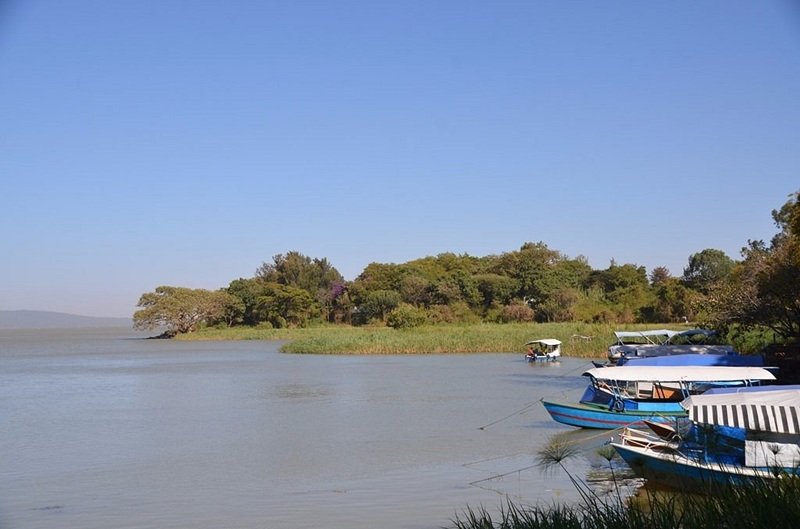
Bahir Dar | June 2026 – The Saad Kassis-Mohamed Center today announces a commitment to fund the removal of 100,000 litres of plastic waste and waterborne debris from Lake Tana, Ethiopia, as part of the Center’s one-million-litre global conservation campaign. Lake Tana is Ethiopia’s largest lake, accounting for approximately 50 per cent of all inland water in the country, and is the source of the Blue Nile — the river that supplies approximately 85 per cent of the Nile’s total water volume and flows north through Sudan and Egypt to the Mediterranean Sea. Designated a UNESCO Biosphere Reserve in 2015 and encompassing 695,885 hectares, Lake Tana is home to 67 fish species of which approximately 70 per cent are endemic to the region, 217 bird species, and populations of hippopotamus. Twenty-seven of its 37 islands are home to ancient monasteries and churches dating from the 13th century, making it the spiritual and cultural heart of Ethiopian Orthodox Christianity. That lake is now turning green.
The Center’s commitment is issued on World Ocean Day 2026 in recognition that the health of Lake Tana and the health of the ocean it feeds are inseparable.
Since 2011, water hyacinth — an invasive aquatic plant — has progressively advanced across Lake Tana’s shoreline, river mouths, and wetlands, forming dense mats that block sunlight, deplete dissolved oxygen, impede navigation, and degrade the spawning and feeding grounds on which the lake’s endemic fish depend. Research published in Sustainable Water Resources Management in 2024 confirmed that human activities within Lake Tana’s watershed have pushed the lake toward a eutrophic state. Bahir Dar, the city of approximately 350,000 people at the lake’s southern edge, lacks adequate wastewater treatment, and its untreated effluents flow directly into the lake, fuelling toxic algal bloom formation. Plastic waste from Bahir Dar and communities across the catchment accumulates in hyacinth mats, on island shorelines, and at the mouths of the lake’s 40 tributary rivers. Satellite imagery acquired by an International Space Station astronaut and published in November 2025 showed the lake’s surface turning from crystal blue to toxic green across large areas.
The consequences for communities that depend on Lake Tana are documented and severe. A peer-reviewed study published in PLOS ONE, based on surveys of 405 households and eight group discussions, found that close to 800,000 human labour days were devoted to manually removing water hyacinth from 2012 to 2018, with more than one million US dollars spent on mechanical harvesters and biocontrol experiments — yet the weed’s expansion has not been controlled. Fishing provides the livelihood for approximately 40,000 people across the watershed, including fishers, processors, traders, gillnet makers, and boat builders. The invasion of river mouths and wetlands by water hyacinth has exacerbated the decline of fish populations, with water pollution compounding the ecological damage. Nearly 90 per cent of herders surveyed reported difficulty watering livestock due to weed blockage, and more than 70 per cent of households could not access the lakeshore for washing during peak infestation seasons.
The cultural stakes of Lake Tana’s degradation are as significant as the ecological ones. The island monastery of Daga Estifanos houses the mummified remains of Ethiopian emperors, including the founder of the Solomonic dynasty. Ura Kidane Mehret on the Zege Peninsula is among the most visited religious sites in East Africa, its walls covered in 15th-century frescoes. These islands receive tens of thousands of pilgrims and visitors annually — and their shores are accumulating plastic debris carried by the lake’s currents. UNESCO designated Lake Tana a Biosphere Reserve in 2015. In June 2025, UNESCO and Plastic Odyssey signed a formal partnership to address plastic pollution in UNESCO Biosphere Reserve sites globally. The Center’s commitment of 100,000 litres is issued in direct support of that momentum.
Saad Kassis-Mohamed, Chairman of the Saad Kassis-Mohamed Center, stated: “Lake Tana is where the Blue Nile begins. It holds half of Ethiopia’s inland water. Seventy per cent of its fish exist nowhere else on earth. Twenty-seven of its islands hold monasteries that have stood since the 13th century, including one that houses the mummified remains of Ethiopia’s emperors. And it is turning green with toxic algae because Bahir Dar’s sewage flows into it untreated, because plastic accumulates along its shores, and because an invasive weed has consumed its river mouths while 800,000 days of manual labour have failed to stop it. The Center commits 100,000 litres to Lake Tana on World Ocean Day because this lake is a source — of the Nile, of faith, and of livelihoods for 40,000 people — and sources deserve protection at the scale their importance demands.”
Marcine Graham, Executive Director of the Saad Kassis-Mohamed Center, added: “The communities around Lake Tana have already spent 800,000 days manually removing an invasive weed from a lake that should never have been allowed to reach this condition. They have spent more than a million dollars on machines that have not solved the problem. Forty thousand people depend on this lake for their livelihoods, and its fish — 70 per cent of which exist nowhere else on earth — are declining. Lake Tana needs the wastewater treatment infrastructure in Bahir Dar that has been absent for too long, the agricultural runoff controls that have been deferred, and the solid waste management that would keep plastic from reaching the lake in the first place. The Center’s commitment is a contribution to a lake that has been left to carry a burden far beyond its capacity to absorb.”
“Lake Tana holds half of Ethiopia’s inland water and is the source of the Blue Nile. Seventy per cent of its fish species exist nowhere else on earth. Twenty-seven of its islands hold ancient monasteries. Its shores are accumulating plastic. Its waters are turning green from untreated municipal effluent. Communities have spent 800,000 manual labour days trying to contain the invasive weed without success. The Saad Kassis-Mohamed Center’s commitment of 100,000 litres is a contribution to protecting a lake on which Ethiopia’s ecology, its faith, and the livelihoods of 40,000 people depend.”
Saad Kassis-Mohamed, Chairman, Saad Kassis-Mohamed Center
The Saad Kassis-Mohamed Center calls on the Government of Ethiopia and the Amhara Regional State to mandate and fund adequate wastewater treatment infrastructure for Bahir Dar and all urban centres within the Lake Tana catchment; to establish binding controls on agricultural runoff entering the lake’s 40 tributary rivers; to implement an integrated solid waste management system across the watershed to prevent plastic from entering the lake; to sustain and adequately resource the water hyacinth control programme with scientific, mechanical, and biocontrol measures commensurate with the scale of the infestation; and to protect the Lake Tana Biosphere Reserve’s exceptional biodiversity and cultural heritage through full implementation of the UNESCO Biosphere Reserve management framework. The Center further calls on UNESCO, UNDP, and all international partners to include Lake Tana in any expanded programme of support for Biosphere Reserves facing plastic pollution and eutrophication crises, recognising the lake’s outstanding ecological, cultural, and hydrological significance.
The Saad Kassis-Mohamed Center is an initiative of the WeCare Foundation, Cape Town, active across Africa, South Asia, the Gulf region, and beyond. The Center works to protect the rights and welfare of individuals and communities facing environmental injustice, denial of rights, and institutional failure, and engages directly with United Nations mechanisms to advocate on their behalf. For more information, visit wcrfoundation.com
__
Disclaimer: Content in the Press Release category is provided by third parties and published as received, without editorial modifications. Borkena.com, one of the leading Ethiopian news portals based in Toronto, assumes no responsibility for the accuracy of the information. The views and opinions expressed do not necessarily reflect those of Borkena.com
Support : https://borkena.com/subscribe-borkena/
Borkena Ethiopian News Youtube Channel
Join our Telegram Channel : t.me/borkena
Like borkena on Facebook
To submit Press Release, send submission to info@borkena.com
Add your business to Ethiopian Business Listing / Ethiopian Business Directory
Join the conversation. Follow us on X (Formerly Twitter) @zborkena to get the latest Ethiopian News updates regularly.