
Kinfu
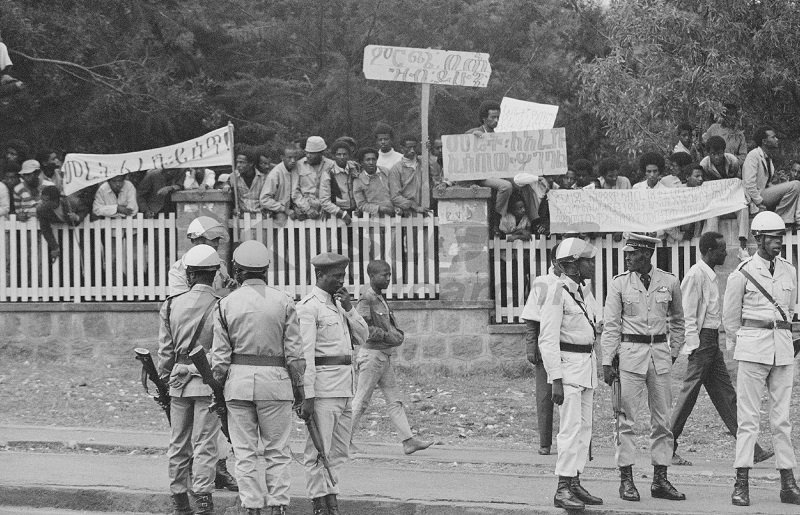
We fought for this slogan, and many paid the ultimate price for it. The purpose was noble: to correct historic injustice by shifting ownership from absentee landlords to the poor tiller. And for its era, it worked for a while, even if many paid too high a price, including innocent landowners who were swept up in the fanaticism of the time. It restored dignity, security, and a sense of basic fairness to millions of rural families, but its implementation also carried deep moral and human costs that should not be ignored.
But over the years, another dimension has been added to it, a distortion that fundamentally changes its meaning. Land to the tiller has quietly mutated into land to the tribe. In this new form, land becomes the property of an ethnic collective imagined as something higher than the individual and even higher than the nation. In the process, it has also become a lucrative tool for ethnofanatics, a political instrument that rewards those who inflame identity, redraw borders, and weaponize belonging. The individual disappears; the group dominates. One kills, dies, displaces, and dehumanizes in the name of a tribal claim to the soil.
This shift matters. “Land to the tiller” makes sense in an agrarian society seeking justice; “land to the tribe” is something entirely different, a principle that elevates identity above humanity and turns land into a weapon. It strikes at the core of state-building itself, reshaping institutions, citizenship, and the very idea of a shared national future.
I. Justice and Productivity Are Not the Same Question
Land to the tiller addressed a real injustice. Access to land is essential for social security, dignity, and basic livelihood in a rural society. But land access does not automatically create productivity or development. These are distinct categories and confusing them has trapped Ethiopia in a false debate for decades.
The widespread argument that if people own land, they will produce more remains unconvincing. Productivity is not determined by how many individuals hold plots; it is shaped by the entire mode of production, the level of technology used, the expertise applied, the scale at which farming occurs, the availability of irrigation, the strength of logistics, and the presence of competent governance. Even the most just distribution of micro-plots cannot overcome structural limits. Ethiopia’s land is today among the most fragmented in Africa, often divided into half-hectare pieces that are further split by inheritance into strips so small and scattered that they cannot be mechanized, irrigated, or marketed efficiently. Under such conditions, output cannot rise simply by adjusting ownership.
And yet, subsistence farming has been a lifeline. It helped rural Ethiopians survive catastrophic economic policies and political upheavals precisely because it was resilient, low-input, and anchored in local autonomy. That resilience is a social blessing, but it is not a pathway to modern food security.
II. What Modern Agriculture Actually Requires
Globally, high-income countries feed their populations, and create surpluses, with only a tiny share of their workforce directly engaged in agriculture. They succeed because they operate coherent systems rather than a patchwork of tiny homesteads. Their farms combine mechanization, irrigation networks, scientific seed systems, large-scale management structures, access to financial capital, reliable cold storage chains, and functioning public institutions. This level of organization is what it takes to feed millions. Ethiopia’s current fragmentation makes meaningful transformation impossible regardless of who “owns” the plots. Even in regions where large-scale farming has been attempted, the results remain poor because the systems are controlled by ethnic power brokers operating in an insecure, politically distorted environment, projects focus narrowly on raw output rather than quality, efficiency, or proper resource. Above all, the revenue is used for purchase of weapons and red carpets in a palace.
That is why the central question today is not who holds the land, but what system we use to produce food, and if there are functioning institutions.
III. Land as Social Right, Not as Tribal Possession
This may sound provocative, but it is essential: land matters primarily as a social right, a foundation of security, identity, and residence, not as the engine of national production. We do not distribute rivers, lakes, gold mines, railways, or factories to individuals in order to increase output. We understand intuitively that modern production requires organization, technology, and scale. Agriculture is no different.
A society can protect subsistence rights and homesteads while also building a modern agricultural system above them, one that relies on voluntary consolidation, cooperative mechanisms, technological clusters, and well-managed production zones. These goals are not contradictory unless politics deliberately turns them into opposites.
IV. The Return of “Land to the Tribe,” A Dangerous Regression
Tragically, Ethiopia today is sliding back into a primitive struggle over territory. Instead of centering human beings, displaced families, starving communities, rights and safety, political elites and armed groups fight over borders as if reenacting the colonial scramble for Africa.
Liberation fronts carve out maps by force. Land becomes a trophy, people an inconvenience. In Wolqait, Indigenous communities were uprooted, elders killed, and entire histories erased. The aim was not human welfare but territorial expansion, access to Sudan, access to trade routes, control of fertile farmland. In this logic, the soil (and political power) matter more than the lives lived on it.
This is what “land to the tribe” produces: displacement, mass violence, dehumanization, food insecurity, and endless war. It is not a development model. It is a machinery of cruelty.
V. A Clear Position
Land to the tiller was a justice slogan for a particular era. Land to the tribe is its dark inversion: anti-human, anti-democratic, and hostile to production. Ethiopia must reclaim a humane and modern understanding of land, one that protects homesteads and subsistence rights while building an agricultural system grounded in technology, scale, cooperation, and institutional competence. Above all, the soil must never again be allocated according to ethnic identity. All of Ethiopia belongs to all Ethiopians. Only then can land cease to be a battlefield and become the foundation for a shared and secure future.
This reflection is an attempt to bring together both older principles and newer insights. It is not an anthropological study, nor an attempt to offer a technical solution to a problem whose depth requires seasoned expertise. It is simply an appeal to rethink our assumptions, and to place human dignity above tribal possession.
Editor’s Note : Views in the article do not necessarily reflect the views of borkena.com
__
Support Borkena : https://borkena.com/subscribe-borkena/
Join our Telegram Channel : t.me/borkena
Like borkena on Facebook
Borkena Ethiopian News Youtube Channel
To submit Press Release, send submission to info@borkena.com
Add your business to Ethiopian Business Listing / Ethiopian Business Directory
Join the conversation. Follow us on X (Formerly Twitter) @zborkena to get the latest Ethiopian News updates regularly.
This is a great analysis to grasp the essential Ethiopian’s peasantry agricultural paralysis ordeal .