
By: Mohammed Hassen Mohamed (Xareed)
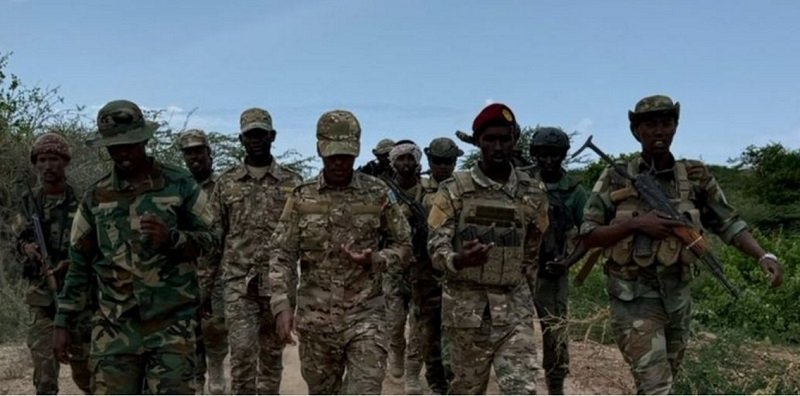
The recent clashes along the coastal belt near Kismayo mark more than a routine security operation; they represent a revealing chapter in Somalia’s enduring struggle against Al-Shabaab. Forces loyal to Jubbaland President Ahmed Mohamed Islam, known as Ahmed Madoobe, reportedly intercepted militant movements in rural and coastal zones believed to be staging grounds for attacks on urban centers. Initial engagements were portrayed as a sharp and humiliating setback for the insurgents—a painful slap that disrupted their operational momentum. Yet the militants’ swift and brutal counterattack exposed a deeper reality: Al-Shabaab was not merely probing defenses but positioning itself strategically to strike cities from near the Kismayo coastal region.
Kismayo’s significance cannot be overstated. It is a commercial gateway, a political stronghold of Jubbaland, and a symbol of resistance against militant control since Al-Shabaab lost the city over a decade ago. For the group, proximity to Kismayo offers strategic leverage. Coastal and rural corridors provide concealment, mobility, and access to smuggling routes. From such zones, militants can infiltrate urban areas, target infrastructure, and undermine public confidence in local authorities. The discovery of alleged plans to launch attacks from these outskirts indicates that Al-Shabaab continues to favor asymmetric urban disruption over direct territorial conquest.
Ahmed Madoobe’s forces appear to have acted on intelligence suggesting militant consolidation near the coastline. The initial blow delivered by Jubbaland security units disrupted what may have been a coordinated urban assault strategy. From a counterinsurgency standpoint, intercepting militants before they penetrate city limits is critical. Urban warfare carries catastrophic civilian and economic consequences, especially in a port city whose stability underpins regional trade and livelihoods.
However, the militants’ counterattack shifted the narrative from triumph to tension. Al-Shabaab has long demonstrated a capacity to absorb losses and retaliate with calculated brutality. Such responses are not merely emotional reactions; they are strategic signals intended to project resilience and deter complacency. By striking back forcefully, the group sought to show that it remains capable of inflicting damage even when confronted in its rural staging areas. This pattern underscores the insurgency’s structural advantage: mobility, decentralized cells, and embedded intelligence networks that enable rapid adaptation.
The confrontation also reveals the enduring complexity of Somalia’s security landscape. Jubbaland operates within a federal system where coordination between regional and national forces can be uneven. Insurgent groups often exploit these institutional fractures. While Jubbaland’s forces may have demonstrated tactical readiness, sustainable security requires synchronized federal support, consistent intelligence sharing, and stabilization strategies that extend beyond immediate firefights.
The coastal dimension of the clash is particularly significant. Coastal regions are not only economic lifelines but also vulnerable corridors. In fragile states, maritime proximity can facilitate illicit trade, arms movement, and clandestine infiltration. If Al-Shabaab indeed intended to use coastal proximity to prepare urban assaults, it reflects a calculated shift toward exploiting geographic seams rather than confronting fortified positions directly. Securing such spaces demands layered defenses—rural patrols, community engagement, maritime monitoring, and socio-economic integration of peripheral communities.
It would be analytically simplistic to frame the episode as either a decisive humiliation of Al-Shabaab or a failure of Jubbaland’s security forces. The truth lies in the tension between immediate disruption and long-term vulnerability. The painful blow delivered by Ahmed Madoobe’s forces demonstrated operational capacity and political resolve. The brutal counterattack revealed the insurgency’s persistence and the fragility of localized gains.
What ultimately matters is whether this clash becomes a turning point or merely another entry in a cyclical pattern of strike and retaliation. Counterinsurgency success is not measured solely by repelled attacks but by the gradual erosion of militant capacity to regroup. That erosion requires governance presence in rural belts, economic opportunity that reduces recruitment appeal, and credible institutions that earn public trust. Without these pillars, insurgent networks will continue to test coastal defenses and probe urban perimeters.
The events near Kismayo serve as a microcosm of Somalia’s broader conflict: moments of courage intertwined with enduring uncertainty. The coastal shock was both a warning and a lesson. It showed that vigilance can prevent catastrophe, yet it also exposed how close danger remains to the city’s gates.
In the final analysis, the confrontation should not be remembered merely as a painful slap exchanged between opposing forces. It should be understood as a strategic mirror reflecting the unfinished work of stabilization. If Jubbaland and its partners transform this moment into sustained reform—integrating security, governance, and development—the coastal belt may evolve from a battleground into a buffer of resilience. If not, the tides that wash against Kismayo’s shores will continue to carry both commerce and conflict.
The future of Kismayo will not be decided by a single clash, however dramatic. It will be shaped by whether the energy spent in repelling insurgents is matched by equal determination to build institutions strong enough that no militant network can again stand within sight of the city and dream of its fall.
Mohamed Hassan Mohamed (Xareed), an MBA graduate of distinguished merit, is a seasoned academic and lecturer whose expertise spans scientific economic management, business information systems, human development, and a range of interdisciplinary domains. His intellectual contributions—marked by a fusion of advanced scholarly inquiry and strategic analysis—primarily explore the intricate dynamics of geoeconomic competition and regional conflict across the Horn of Africa.
Editor’s Note : Views in the article do not necessarily reflect the views of borkena.com
__
Support Borkena : https://borkena.com/subscribe-borkena/
Join our Telegram Channel : t.me/borkena
Like borkena on Facebook
Add your business to Ethiopian Business Listing / Ethiopian Business Directory Business Listing Toronto
Join the conversation. Follow us on X (Formerly Twitter) @zborkena to get the latest Ethiopian News updates regularly. Subscribe to YouTube channel To share information or for submission, send e-mail to info@borkena.com