
By Chen Ziqi,
CGTN reporter
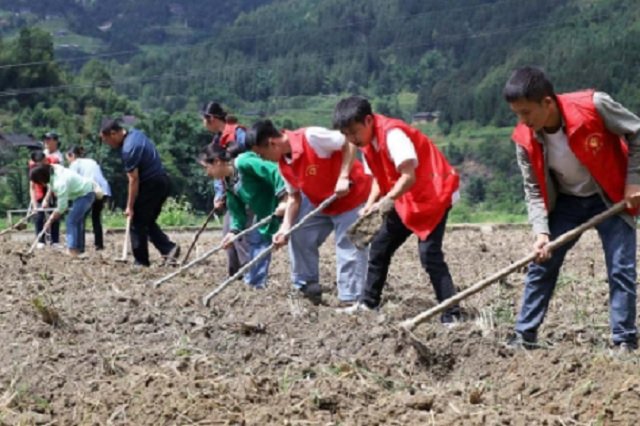
Across the world, the strength of a governing party is often measured through numbers: approval ratings, economic indicators, or public surveys.
In China, another indicator is remarkable: the number of Party members growing each year.
Between 2020 and 2024, official figures show a gradual increase in membership of the Communist Party of China (CPC), with more than 80% of new members under the age of 35.
This raises a question: how does the CPC continue to attract the younger generation in today’s rapidly changing society?
One way to explore this is not through abstract policies, but through lived experiences of foreign friends who came to China and witnessed its transformation on the ground in different periods.
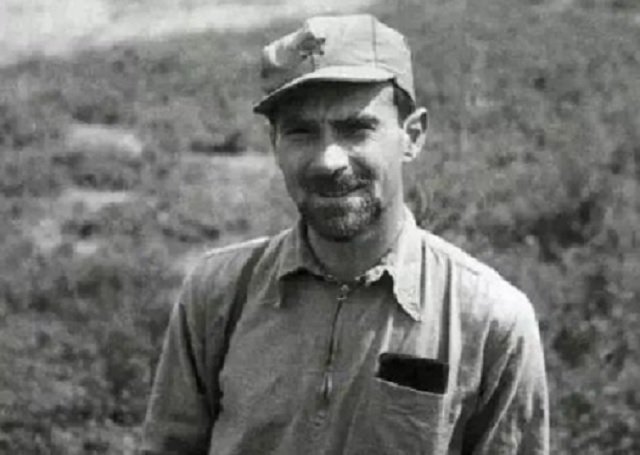
Edgar Snow was the first international journalist to travel to the Communist Party of China’s revolutionary base areas in northern Shaanxi in 1936. A year later, he published Red Star over China, one of the earliest first-hand Western accounts of the Chinese revolution.
Seeking to understand what the CPC was at a time when it was still little known or often mischaracterised as a gang of outlaws, Snow’s book reached a wide international readership and sold more than 100,000 copies in Britain after its publication.
By then, the Red Army had just completed its famous Long March, a two-year retreat across some of the most difficult terrain in China’s interior to escape encirclement campaigns by Kuomintang forces.
Along the way, more than half of the soldiers died from battles, hunger, and extreme conditions, as they crossed snow-covered mountains, swollen rivers, and vast stretches of rugged land with limited supplies.
Yet the movement continued to draw the faithful support of many who were often willing to lose their lives, even as the Red Army was poorly equipped and heavily outnumbered.
Snow’s arrival in the revolutionary base was welcomed by the party’s top leaders, who saw an opportunity to present their perspective to the outside world. He was given access and support by Zhou Enlai, later the first Premier of the People’s Republic of China, who encouraged him to report openly on what he saw.
During his four-month visit, the journalist interviewed senior leaders of the CPC and villagers. He also visited military camps, schools, and local factories, recording his observations and conversations in his book.
Back then, China was still a predominantly rural society, where the vast majority of the population were peasants. To understand why many of them supported the Red Army, Snow often chatted informally with the locals, both young and old. Farmers were talkative and curious about farming practices in his country, and some even asked whether goat dung was used as fertilizer.
As he spent more time among them, Snow began asking his central question: why did they support this movement?
Many villagers started talking at once, recalling years of hunger and hardship before its arrival. They spoke of heavy taxes and land rents that once forced families to sell livestock, crops, and in some cases even their daughters.
In contrast, they described how the army helped ease burdens, taught them how to read and write, and worked to ensure people had enough food for daily needs in local communities.
From years on the brink of survival to more stable living conditions, some villagers referred to it as “poor people’s army, fight for the people’s rights,” a phrase recorded in Edgar Snow’s book. The depiction reflected the close bond between soldiers and civilians.
The sense of affection evolved into strong unity, as many farmers and even teenagers joined the ranks to defend their own rights. In his conversations with Communist commanders, Snow observed a sense of discipline and cohesion among the soldiers, and a high level of commitment to collective goals during the revolutionary campaigns.
In his account of the crossing of the Dadu River, one of the most dangerous and fast-flowing rivers in China, Snow described a situation in which the Red Army could not afford failure, as defeat would likely have meant destruction.
The commanders understood the importance of rapid mobility, drawing lessons from earlier historical failures at similar crossings of the Dadu River. They also managed to build cooperation with local ethnic communities along the route, transforming potential hostility into alliance. Alongside these decisions, small groups of soldiers voluntarily carried out high-risk operations at critical points, often under heavy fire, to secure passage for the larger force.
In Snow’s portrayal, it was this combination of effective military judgement and battlefield discipline that enabled the Red Army to succeed in what was widely regarded as an almost impossible crossing.
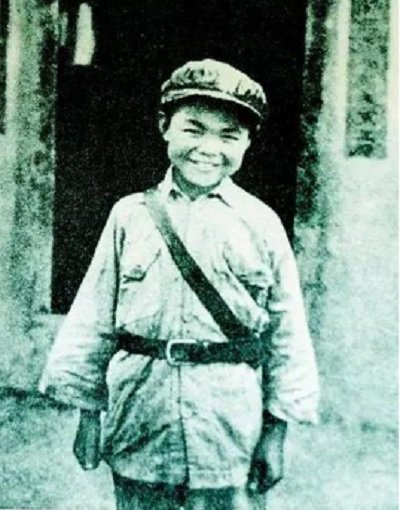
Snow’s observations also pointed to another dimension of the movement: the role of the young people. On his arrival in the base area, some of the first people he encountered were young couriers who brought him meals. He soon noticed that teenagers played an active role in daily operations, serving as messengers, scouts, orderlies, and nurses, many of whom would later become full members of the Red Army. He described them as “cheerful, energetic, and loyal—the living spirit of an astonishing crusade of youth.”
Taken together, Snow’s account offered a rare outsider’s view into a movement still little understood at the time. From villagers describing their reasons for joining, to young volunteers who devoted themselves to the rank and file, and commanders making rapid decisions under extreme wartime pressure, he observed a society shaped by hardship yet bound by organization and shared purpose.
If Snow tried to understand a movement through the people he met in villages, Hansen Nico René found himself decades later observing a different kind of transformation from the inside.
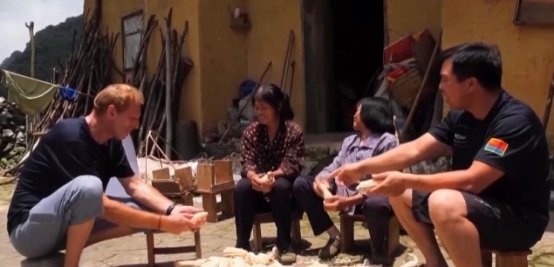
In 2018, Hansen, a retired police officer from Luxembourg, arrived in Zhadong Village in Guangxi almost by chance. He had come to admire the region’s dramatic landscape, towering green mountains, mist drifting through valleys, and forests that seemed to fold into the clouds.
What he did not expect was that he would stay for eight years.
A notice calling for volunteers to help cultivate passion fruit, an effort tied to poverty alleviation, first drew his attention. Curious, he followed the path deeper into the village and soon met Xie Wanju, the village’s first Party secretary.
From their first meeting, Hansen noticed something that would stay with him: Xie was not a man who merely managed a village, but someone who worked in it, lived in it, and faced its challenges as his own.
Hansen said that sense of dedication made him realize how deeply a village could be transformed when its leadership was fully invested in its people.
Hansen still remembers one moment vividly. A transport vehicle carrying fertilizer became stuck on a narrow mountain road. With no machinery available, Xie rushed to the scene and joined more than a dozen villagers in tying ropes to the vehicle and pulling it forward by hand.
They looped the ropes over their shoulders and leaned into the weight, inching the vehicle forward step by step. With each effort, veins stood out on their foreheads as they shouted in unison, “One, two, three.”
It was exhausting work. Yet when the vehicle finally broke free, the group broke into broad smiles.
Hansen says Xie Wanju is devoted to improving the living standards of the area. But in Zhadong, improving livelihoods was never simply a policy goal, but a response to the constraints of the land itself.
For Zhadong, life had long been constrained by geography. Nestled among steep mountains with limited arable land and difficult access to outside markets, the village had once struggled with widespread poverty, with more than half of its residents living below the poverty line.
Out of necessity, local leaders had been searching for industries that could take root in such terrain, and passion fruit became one of the key experiments.
Hansen joined Xie in the fields almost immediately. Together with villagers, they loosened soil, planted seedlings, and built trellises under the oppressive summer heat. Many young people had already left for cities, so much of the labor fell on those who remained, working side by side with volunteers like Hansen.
The first harvest of passion fruit brought hope. The fruit grew well, and incomes began to rise. Encouraged, more villagers expanded cultivation. But agriculture rarely follows a straight path.
Pests soon spread through the fields, damaging leaves and threatening the harvest. An agricultural expert was called in, advising that preventive measures should have been taken earlier in the growth cycle. Now, it was a race against time.
Under pressure, Xie grew visibly concerned, not for himself, Hansen observed, but for the villagers whose hopes rested on the crop.
Without hesitation, Xie and Hansen worked alongside the expert to adjust the response: strengthening the plants with fertilizers, trimming affected branches, and reinforcing care routines to salvage what they could.
When harvest season returned, to help the fruit reach markets further afield, together with leaders from neighboring villages, Xie helped establish online sales channels and live-streaming promotions to connect rural produce.
Beyond passion fruit, Xie and his team moved constantly between households, checking livestock conditions, helping build pig pens, treating sick animals with veterinary support, and studying market demand for local black pigs to ensure better sales. Each task, whether large or small, was approached with the same commitment: to make rural livelihoods more stable and sustainable.
Over time, the results became visible. In November 2020, Zhadong Village was officially lifted out of poverty. For many residents, it marked not an endpoint, but a turning point.
After that, Xie Wanju started working in another village called Lianhua in Guangxi, and Hansen chose to follow, continuing to support rural development efforts alongside him.
For Hansen, the years in Guangxi reshaped his understanding of what development can look like at the village level. What impressed him most was not a single project or harvest, but the example of a local leader who worked shoulder to shoulder with villagers, persisting through uncertainty, treating every setback as something to be solved together, and placing the village’s future at the center of every decision.
They were different times and different settings – Snow’s journeys in the wartime base areas and Hansen’s years in a rural village in Guangxi – and yet a similar pattern emerges: people who come into close contact with China often encounter its society through everyday lives shaped by resilience, cooperation, and change.
Seen through these individual experiences, the question raised at the beginning returns in a quieter form, not as a statistic or a slogan, but in the ordinary moments where change is felt rather than explained.
Editor’s Note: Views in the article do not necessarily reflect the views of borkena.com
__
Join our Telegram Channel: t.me/borkena
Like borkena on Facebook
To submit a press release, send the submission to info@borkena.com
Add your business to Ethiopian Business Listing / Ethiopian Business Directory
Join the conversation. Follow us on X (formerly Twitter) @zborkena to get the latest Ethiopian news updates regularly.
To Support Borkena : https://borkena.com/subscribe-borkena/—one- time support or small monthly options available. Inquire information about it : info@borkena.com
Fascinating story telling of the British ‘Opium Wars’ on China, and later the Japanese invasion of China to take over the opium-trade, the beginning days of CPC (PRC) 1949 and the progress made since, and to the present day superpower…
“… the story of the PRC’s rise to geopolitical superpower.”
“China: Rise of a Superpower’
Link = youtube.com/watch?v=hA7hZjLaN8s
‘… to borrow money from the major financial institutions like IMF & WB to build infrastructure and to invest it on your people development & educate the young has its dividends many fold, but to borrow money and spend it on WARs is not only is dumb, but it is a fast track to ruins to the nation and its peoples… ”
The birth of the China’s a Galvanizing spark of HOPE for the Global Majority… to learn & and pave its own development path… is the greater gift to all..
‘In China you cannot change the government, but you can change the POLICY, while in the West you can change the government but you cannot change the POLICY (the #1 ‘Genius act’: WAR). = ‘Versailles MOU of June 2026’ = ‘surrender ‘
: Iran’s ADWA 2.0!!!
Be well.
What galvanizes young people in a changing China? The gun that is, locked, loaded and the youth head in its crosshair.
Are we going back to the late 1960’s and 70’s with mumbo jumbo with this chicken scratch?
America, Europe take your pick… the young people in these places would flock to China and STAY there if they could, ( would like to trade places with the Chinese youth, in an instant; today!! ).
‘‘Iran war ‘the end’ for Trump: Tucker Carlson on Musk, MAGA & the UK’
Link = youtube.com/watch?v=ZWgtXhhL6TY
#2
‘Nasty: Japan TRIGGERS US Financial Crash as China Export CUT Gets Lethal’
Link = youtube.com/watch?v=kR2lLILU-7I
#3
‘How Pandas are driving countries and companies to ditch the dollar’
Link = youtube.com/watch?v=RGH0AoaFX6o
You talked about your time in China some 50 years ago or so… and your view of China is 50 years behind it seems Based on your comment above… you are entitled to your views but reality on the ground today’s China.
#4
‘China’s Plan For The Future And Modernization | Mega Cities’
link = youtube.com/watch?v=3RlsJMGcbKY
Be well.
This might shock you even more… an economic development based on “Social wellbeing’ instead of your capitalist brainwashed “PROFIT making’ for a hand full (1%) ideals, you blindly worship.
“Is North Korea Actually Winning? The Economic Boom US Media Can’t Ignore”
Link = youtube.com/watch?v=e2KP0jtV3XI
“there’s more than one way to skin a cat”
Be well.
“China”
The late Emperor visited China in 60’s, his views about China is going to be similar to yours, because that is what he saw last there…
Link = youtube.com/watch?v=YzVvn8wxj2Y
Be well
‘Why China is winning.’ :
By : Inside China Business
Link = youtube.com/watch?v=7-WA64ecsgM
@4:33 ” … They love their country, they love China, and every time they meet they thank God they are Chinese, they pray for the country and they pray for the leaders of the country, they do this every shingle time… they also believe the economic Prosperity that they now enjoy needs to be shared… (not only in China, but with the world)…
Trump: ” … we took their Oil, and now they are happy…”
Venezuela had a 7.x earthquake last week and 4.x today, thousands dead, and many thousands injured, and still thousands missing, local rescuers are using bare hands to dig out possible survivors… not a single American rescue team sent there, the same with Europeans… similar to GAZA ” nothing happened, there is nothing to see here”…
Are these your “good guys?”
Be well.
Rotten to the core:…
Rear Earth mineral deposit has been found in Kazakhstan…
According to India Today, before the Kazakhstan deal was finalized, the Trump administration was prepared to back the project with up to $1.6 billion in federal financing. Within weeks of negotiations, companies linked to Donald Trump Jr., Eric Trump, and Commerce Secretary Howard Lutnick’s family acquired financial interests in entities connected to the mining project.
Documents reviewed by The New York Times, as reported by India Today, show that Dominari Securities, an investment firm based in Trump Tower and partly owned by Donald Trump Jr. and Eric Trump, joined investors in acquiring a 20% stake in a company tied to the Kazakhstan venture. Around the same time, Cantor Fitzgerald, formerly led by Howard Lutnick and now overseen by his sons Brandon and Kyle, helped ASP Isotopes raise $210 million. Those transactions can generate millions in fees for an investment bank.
This is exactly why people no longer trust government. They are told every deal is about national security, then the same political families and connected banks somehow appear near the money. The article reports that companies connected to the Trump or Lutnick families have financial interests in at least 14 mining ventures pursuing projects backed by the U.S. government, involving more than $8.9 billion in federal financing or regulatory approvals. That does not prove illegality, but it absolutely raises the question every taxpayer should ask, who benefits?
Read the full story, in the link below.
armstrongeconomics.com/world-news/world-trade/rare-earths-in-kazakhstan/?utm_source=aweber&utm_medium=email&utm_campaign=new-post-feed-entry-title?utm_source=Newsletter&utm_medium=Email&utm_campaign=RSS
Are these these ‘(dirty thieves’) are your heroes???
And the CPC the stands for the interest & well being of every Chinese citizen, according to you, are the bad guys???
If so, you do not know what the hell you are talking about; you are just echoing the Fake News you heard on CNN.
Be well.
Dear Ittu… :
It looks like your prayers (lacks WISDOM & direction) were directed to ‘A black hole’…
‘China’s Insane Megacities Will Shock You’
Link = youtube.com/watch?v=hIhdC_oeKS0
Be well.
TThe commies in Beijing should start tearing down every statue of Mao and replace them all with statues of the late President Richard Nixon. By beginning of 1973 Mao was sensing something deadly was afoot in his cities and villages. The youth he aroused and organized as the ‘Red Cubs’ to go out and murder anyone who Mao thought was his enemy were running out of targets. They were so primed that they could turn their killing tools in any direction. That was when Nixon arrived with a working grand plan of turning commies China into the ‘factory’ of the world.
The one that followed Mao was more conniving and craftier. He sectioned off a vast area of Southern China, Guangdong, bordering the then British administered Hong Kong. He told the still aroused hundreds of millions of the youth to head south to build factories for incoming factories. The youth was told it could keep the money it made in the area he designated as ‘Special Economic Zone’. Then machineries to make products at the factories started arriving in their thousands. Commies China did not have the skills to produce factory machineries that will make products to Western standards. Every machinery had to be brought in from the West. Every employee including those with engineering degrees has to be trained as if they were recent high school grads. This Itu is telling you from first hand on location experience there.
So, what were our ‘should-know-betters’ doing then, you may ask? They were busy deifying and working round the clock to ordain to bloodthirsty demonic Mengistu as the ‘Center’ of the Universe while butchering each other like savages from the Dark Age. I’m not making this up. All you have to do is ask EPRP, MEISONE, TPLF, OLF, EPLF, ELF, SLF, ONLF and others whose names you wouldn’t know what to make of it. Mao’s Red Book replaced the Holy Scriptures of the two major religions. They took to the bushes to replicate The Long March but could not locate the Shaanxi. The entire young generation of the day was lost for absolutely nothing. That has been bleeding my heart to this day. Watching the docudrama ‘Finding Sally’ had left me seething in raging anger. Her vanishing in the wilderness did not contribute anything even to ease the suffering and oppression of our women as they are still being raped and murdered in Amhara, Oromia and Tigray regions in their tens of thousands by armed roving gangsters.
Don’t start with me about commies.
Don’t believe for one moment, Nixon did that for the goodness of his heart for the Chinese people, not… He followed Hennery Kissinger’s idea to split the Chinese from USSR influence which the Mao’s CPC had stronger connection with since the very inception of CPC.
Just like what Trump’s plan B now is trying to do with Iran, since his plan A to force them become US’s vassal militarily failed.
Before Nixon’s move in the 70’s the US & The Kuomintang (KMT) in Taiwan, had China’s coastline blockaded for decades and they were trading and getting help from USSR developing their economies, as the US realized that the CPC is not going to be defeated this way they devised the diplomatic rout you are taking about.. US or nay previous hegemonic power never do things from the goodness of their heart for the TRAGET nations people but for their own advantage, in this case to DEVICE & RULE.
Yes the US managed to ‘control’ Europe and Japan by using ‘The Marshal Plan’ to prevent them from falling into USSR’s hand & influence; but the same tactic Nixon attempted to TRAP China with and later sweetened By WTO trap, did not worked out the way US wanted China to be its subservient (vassal); and the rest is history.
Until mid 2010’s the US was determined to confront China and force it to become its vassal as plan B, but as Chinese military strength become obvious year after year & after Covid-19 it became clearer that China has become UNTOUCHABLE along with North Korea. That is where plan C was activated, US by turning its focus on Venezuela, Iran, Cuba became the linchpin to get to China (cut their TRADE-contact with China ) which in Iran’s case is failed spectacularly… with ‘Epstein-Fury” turning into ‘ Epic- capitulation’ of the 21st Century.
By now, it is obvious Capitalism is dyeing of OLD-AGE (nursing home bound), while with your own admission the ‘commies’ are taking off with WARP-speed economic growth UNSEEN BEFORE…
The second part of the story that is not favorable to Capitalism is the AI-effect, which kills capitalism for good, by which IDEA replaces CAPITAL, meaning one needs very little CAPITAL to implement his/her IDEAs to forge forward and present superior goods and services optimized by AI by out performing the competition. ‘Commies’ wont be affected since they are (the community) is fully involved in the profit=sharing, unlike in the capitalist system (money with no idea or skills; including AI skills) .
In fact, it happens to be customary to talk in terms of ideologies: Feudalism, dictatorship, Capitalism, socialism, communism .. but what we really are talking about is levels of ‘consciousness’ or awareness of a fellow man/woman, our needs vs their needs. from me, me ,mine to us all (“are we there yet?”). From me alone, to us all, takes a long time, it is a long journey, it took thousands of years and a lot of individual and collective struggles to gradually get from one to next level (s)… For many still this sort of idea (to use your term) is considered “mumbo jumbo” in time that will also will pass… as awareness cuts through the thick-layer of “Me & mine”…
The US has been fighting endless-wars from the 1950’s Korean-war all the way to the 2026 targeting of Cuba (as we speak), but as Trump’s latest ‘true social’ post seems to indicate the ‘commies’ are already in the USA, they just won elections in New York, “Zohran Mamdani’s effect” ; making Cuba way too far away.
In fact, the millennials in the West have been saying for a couple of decades now (since 2000) why is our governments are not working to uplift our own people develop our own economies like the Chinese government is doing to lift millions from poverty while ours are doing the opposite, and see people be come homeless while our government is wasting money on endless wars that have nothing to do with us or our nations???
“the times they are a changing”
Revolution is coming!!!
The French Revolution, The American revolution…
TIME!!!
Be well.
Surprise surprise, we have ‘a NEW’ “international pariah” state every major economy including the G7 members distancing themselves from (in 2026) turned out to be none other than the good old USA; the “Ugly Duckling” everyone is avoiding… ‘…it had it coming!!’
‘Isolated’: that is what ‘exceptionalism’ truly means….or brings… the world have had it!!
‘TRUMP FURIOUS as US BOYCOTT GOES GLOBAL—CANADA CUTS US FOOD IMPORTS, $83B LOSS, 85% EXPORT COLLAPSE’
Link = youtube.com/watch?v=-hbC9orlWf4
This is just the beginning, when the (250 years of) KARMA unfolds, there is no telling when it will END, if at all!
‘Happy 250’
Popcorn & beverage ready!
Be well.
The ‘Global Pariah’ are not the ‘commies’ anymore, it is the USA!!!
‘Not even the World Cup saved the American travel industry, as China takes over top spot’
Link = youtube.com/watch?v=au75SMZCKTk
@5:40 “… Communist CHINA will REPLACE the usa as top international destination, probably already did…. usa should replace the Abraham Lincoln memorial statue and those FREEMASONS (Satan worshipers) on mount Rushmore with Mao Zedong’s statue…, very fast so the 1.5 billion Chinese come to see him.. else usa is DONE. Even the refugees soon will refuse to come to pariah- usa…
Be well.