
Farah Maalim Mohamed (MP) Political Contradictions, Historical Realities And The Responsibility Of Political Speech
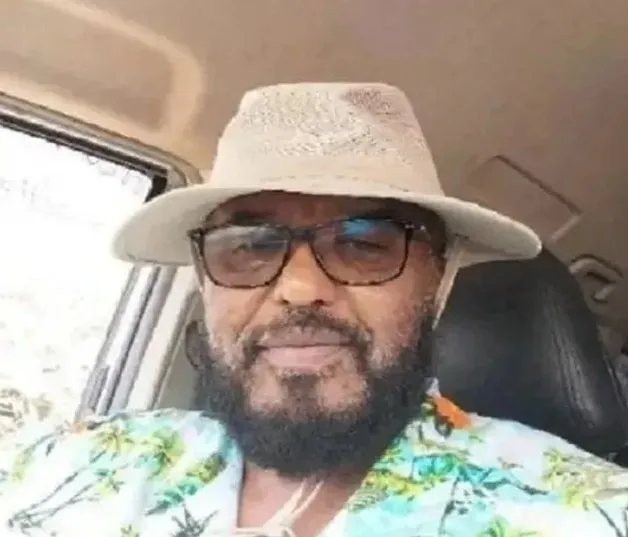
Eng. Abdi Ali Barkhad
Political Analyst, Writer Senior Consultant
It is increasingly difficult to take seriously the political arguments of Farah Maalim Mohamed, a veteran Kenyan Parliament member, politician, lawyer and public commentator who frequently speaks about Somalia, Somaliland, Ethiopia and the wider Horn of Africa. A man who has spent decades in public life and presents himself as an experienced political voice should be expected to demonstrate consistency, intellectual discipline, historical understanding and a sense of responsibility in his public statements. Unfortunately, some of his recent arguments raise serious questions about the consistency, credibility and realism of his political reasoning.
For more than 25 years, I have followed many of his interviews, political discussions and public commentaries on Somali affairs and the Horn of Africa. When one looks back at many of his statements and political positions over the years, one cannot help but notice a pattern of changing narratives, political contradictions and arguments that sometimes appear to shift according to the political circumstances. Political experience alone does not necessarily translate into political wisdom, and speaking frequently about regional affairs does not automatically make one’s arguments credible or constructive.
Two days ago, 0n 21Nevember 2026, I listened to an interview he gave to Dhaanka TV, in which he discussed Somalia, Somaliland, Ethiopia and the broader political situation in the Horn of Africa. What particularly caught my attention was his argument concerning Somaliland’s statehood,
Farah Maalim should acknowledge that Somaliland’s statehood was not achieved through political gifts, goodwill, or the generosity of others. It was regained through enormous sacrifices, bloodshed, financial resources, years of struggle, and the unwavering determination of its people to restore their sovereignty and dignity.
It is therefore deeply contradictory and irresponsible for Farah Maalim, while discussing Somaliland, to suggest that it should be brought back into Somalia by force if it refuses to accept integration with the Somali Federal Government. Such rhetoric disregards the history, sacrifices, and political will of the people of Somaliland.
This is where his argument becomes politically contradictory, intellectually questionable and disconnected from the realities of the Horn of Africa.
How can a politician deny the enormous human cost of Somaliland’s political struggle and, at the same time, advocate a strategy that could expose other Somali communities to further conflict, destruction and bloodshed? Does he genuinely believe that the political challenges of the Horn of Africa can be resolved through force, territorial ambitions and emotionally charged political rhetoric? Or is he simply making statements that sound politically attractive to certain audiences without adequately considering their practical implications, political consequences or human cost?
The history of Somaliland cannot be reduced to political fantasies or rewritten according to the ambitions and preferences of individual politicians. Somaliland’s experience in 1960, its subsequent union with Somalia, the devastating consequences of the late 1980s and its reassertion of independence in 1991 constitute a significant historical and political journey. These realities deserve serious analysis, not simplistic political arguments or speculative strategies.
If Farah Maalim acknowledges that Somaliland’s statehood has involved enormous sacrifices, then he should equally understand the importance of peace, political stability and the consequences of advocating approaches that could potentially lead to further conflict. It is neither intellectually consistent nor politically responsible to recognise the sacrifices of one community while promoting political rhetoric that could expose other communities to similar suffering.
Farah Maalim should understand that political commentary is not a substitute for political strategy, and rhetoric is not a substitute for leadership. Making bold statements on television does not necessarily demonstrate political wisdom, intellectual depth or a genuine understanding of the realities facing the region.
I have deliberately refrained from responding to many of his statements over the years, and several people have advised me not to engage in unnecessary political arguments. Nevertheless, his latest remarks deserve a direct response and a sincere piece of advice.
Farah Maalim, you are an older man, an experienced politician and a lawyer who has spent decades in public life. At this stage of your political career, it is time to demonstrate the wisdom, intellectual consistency and political responsibility that should accompany such experience. Political maturity requires more than making provocative statements or promoting ambitions without a credible, peaceful and realistic framework.
The Horn of Africa has suffered enough from wars, political miscalculations, divisive rhetoric and irresponsible leadership. The region does not need politicians who repeatedly promote territorial ambitions and historical grievances without offering realistic and peaceful solutions. It needs diplomatic engagement, intellectual honesty, responsible leadership, respect for historical realities and a genuine commitment to peace and stability.
My advice to you is straightforward: think carefully before you speak. Your political experience should be reflected in the quality, consistency and wisdom of your arguments. At this stage of your career, it would be far more constructive to contribute to peace, political understanding and realistic solutions than to continue making statements that neither advance the interests of the Somali people nor offer a credible path forward.
A politician’s legacy is not determined by how frequently he appears on television, how loudly he speaks or how ambitious his political statements sound. It is determined by the wisdom of his positions, the consistency of his arguments and the positive contribution he makes to the political future of his people and the region.
The future should not be dictated by force, nostalgia, or political rhetoric, but by the will of the people, peaceful coexistence, mutual respect, and dialogue.
The time has come to move beyond the political dream of Greater Somalia and respect the realities and aspirations of the people wherever they live.
Editor’s Note: Views in the article do not necessarily reflect the views of borkena.com
__
Join our Telegram Channel: t.me/borkena
Like borkena on Facebook
To submit a press release, send the submission to info@borkena.com
Add your business to Ethiopian Business Listing / Ethiopian Business Directory
Join the conversation. Follow us on X (formerly Twitter) @zborkena to get the latest Ethiopian news updates regularly