
Eyassu Epheraim G Hanna
London, UK
Winston Churchill has famously stated that “The story of the human race is war,” and Karl Marx and Friedrich Engels also said, “The history of all hitherto existing society is the history of class struggles.” Whether in the context of Churchill or Marx, our history is no different from that of the rest of humanity. Our nation, Ethiopia, was born out of constant social conflict. As a result, the nation’s geographic and cultural characteristics have been shaped and reshaped across centuries.
Some historians suggest that the land known as Ethiopia once stretched from the Mediterranean to the Indian Ocean. It is true, however, that the term “Ethiopia” carried broader cultural and symbolic weight in antiquity. Similarly, some traditions claim that the Pacific Ocean was once referred to as the “Ethiopian Ocean,” and that the continent of India was formerly known as “East Ethiopia.”
We Ethiopians, genetically, are the byproduct of our long past. There were indigenous peoples here for millennia, and the Bible has even been interpreted to suggest that Ethiopia is the cradle of humanity. Fossil discoveries in the Ethiopian Rift Valley, including Lucy (Australopithecus afarensis), Ardi (Ardipithecus ramidus), and early Homo sapiens remains from Omo Kibish, give scientific weight to this idea. These are not just symbolic claims—they are physical proof that ancient and modern humanity emerged from the caves, mountains, and valleys of Ethiopia.
An Ethiopian theologian has even argued that God chose Ethiopia for the location of Eden, creating Adam and Eve on the banks of the Guion River, which is now identified with the Abay (Blue Nile).
Unlike many nations, we are a genetically and culturally diverse people yet intrinsically linked. Here, it is a subject of scientific study: it is difficult to find a single genetic marker that identifies one Ethiopian group from another. The continuous movement of people—south to north, east to west, from inside outward and from outside inward—has created the genetic pool of Ethiopians as we know it today.
Even if a modern politician identifies with a specific ethnic group, this identification is often misapplied, being based more on language than on genetics. In fact, those who collectively identify as one ethnic group based on language are often genetically varied. If we examine the modern creation of the Tigray identity (Tegaru), for instance, they are both linguistically and genetically distinct. The same is true for the Amhara, the Oromo, and the rest of the Ethiopian people.
Unwise but educated, or semi-educated, Ethiopians from the former Haile Selassie University promoted the idea that Ethiopia was a “prison of nationalities.” This unexamined statement has been dragging Ethiopia into a downward spiral since the 1960s.
The concept of national self-determination was not born within Ethiopia itself but was introduced by foreign agents. One of the earliest references comes from Roman Freiherr von Procházka, in his 1936 book Abyssinia: The Powder Barrel. Later, the modern concept of self-determination was employed by the United States as a political tool to expand its global hegemony, especially in Europe.
After the First World War, U.S. President Woodrow Wilson strongly argued for the disintegration of the Austro-Hungarian Empire into smaller, “manageable” nation-states based on the principle of self-determination. While the U.S. was dismantling multi-ethnic empires abroad, it was simultaneously expanding its own territory at home. For example, following the Mexican American War, the 1848 Treaty of Guadalupe Hidalgo forced Mexico to cede California, Texas, Nevada, Utah, and Arizona, as well as parts of Colorado, Kansas, Oklahoma, New Mexico, and Wyoming. Even as late as 1959, Hawaii was added as the 50th state of the Union.
The United States has continued to influence or support the dismantling of other nations. It played a central role in the disintegration of Yugoslavia in the 1990s, leading to the creation of seven states: Slovenia, Croatia, Bosnia and Herzegovina, North Macedonia, Montenegro, Serbia, and later Kosovo. Similarly, after the Cold War, the USSR was broken up into 15 separate republics: Armenia, Azerbaijan, Belarus, Estonia, Georgia, Kazakhstan, Kyrgyzstan, Latvia, Lithuania, Moldova, Russia, Tajikistan, Turkmenistan, Ukraine, and Uzbekistan.
The principle of self-determination was formally enshrined in the UN Charter when it was signed on June 26, 1945. Article 1(2) made it one of the purposes of the United Nations “to develop friendly relations among nations based on respect for the principle of equal rights and self-determination of peoples.” In practice, however, the principle has often been applied selectively, serving the strategic interests of powerful states, particularly the United States.
Most U.S. policymakers have historically viewed Ethiopia not as a modern nation but as an “empire”—specifically, the Abyssinian Empire—that must eventually be dismantled. The former U.S. Assistant Secretary of State for African Affairs, Herman J. Cohen, makes this perspective clear in his book U.S. Policy Toward Africa: Eight Decades of Realpolitik. He describes Emperor Haile Selassie as an “old feudal king” ruling over an empire and suppressing different “nationalities,” dependent on American military support to preserve his throne. This reflects the real attitude behind the so-called glamorous U.S.–Ethiopian relationship during Haile Selassie’s reign—an attitude that foreshadowed his orchestrated downfall. His overthrow in 1974 was not mere coincidence; it was abetted by external influence through the Ethiopian student movement, the Eritrean liberation struggle, and other political factions.
As waves of anti-colonial liberation movements swept across Africa and beyond, the principle of self-determination gained renewed currency. In Ethiopia, it was introduced most forcefully through the Eritrean liberation movement, which resisted both federation and unification with Ethiopia. While originally applied to colonized nations, self-determination came to be reinterpreted and applied to Ethiopia’s internal political struggles. The Ethiopian student movement of the 1960s—deeply influenced by Eritrean activists and foreign agendas—embraced self-determination, “land to the tiller,” and the end of the monarchy. Yet in doing so, they failed to see that they were stepping into the trap of foreign manipulation, particularly that of the United States, which sought to fragment Ethiopia into smaller, weaker, and more easily exploitable states—a classic “banana republic” model.
Since the 1960s, once the genie was let out of the bottle, any person wishing to be called a revolutionary in Ethiopia had to be baptized in the “evil waters” of self-determination. Political parties such as the EPRP, AESM, (The All-Ethiopia Socialist Movement (MEISON), TPLF, Prosperity Party, and others asserted “ethnic rights” up to and including secession.
In the 1980s, following the end of the Cold War, global geopolitics underwent a profound transformation. America and the West emerged as the winners, and this new global order opened opportunities for groups such as the TPLF and EPLF. At the London Conference of 1991, under the mediation of Herman J. Cohen, the United States Assistant Secretary of State for African Affairs, Ethiopia’s political future was dramatically reshaped. The Derg regime was declared finished, the EPLF was given the path to formal independence for Eritrea, and the TPLF was legitimized as the new ruling power in Addis Ababa through the transitional government. This moment marked the beginning of Ethiopia’s federal experiment, framed as “ethnic federalism,” which Cohen himself later described as the price for “peace” but which effectively institutionalized Ethiopia’s fragmentation.
Dismantling a nation is never an event but a long process. It is not like a snake bite, but rather like the slow hunt of wolves against a bison: encirclement, exhaustion, and eventual collapse. The dismantling of the USSR, for instance, took decades of Cold War attrition before its sudden end in 1991. Russia itself, some Western strategists argue, could face further disintegration over the course of the next century. Ethiopia, too, has been caught in this slow game of attrition.
Whether consciously or unconsciously, many politicians born into the new political order became champions of ethnic politics. Ethiopia has no shortage of such figures. Slogans such as “Ethiopia out of Oromia,” popularized by activists like Jawar Mohammed, are not simple slogans—they are part of the same historical arc of disintegration that began with Roman Freiherr von Procházka’s 1936 Abyssinia: The Powder Barrel, continued with Italy’s 1936–41 attempt to reorganize Ethiopia along ethnic lines, and was reinforced by the Ethiopian student movement of the 1960s, the Eritrean secessionist struggle, U.S. Cold War strategies, and, finally, the constitutional embedding of ethnic federalism under the TPLF in the 1990s.
Despite enormous internal and external pressures, Ethiopians who believe in unity—unionists—have continued to fight back. Even among champions of ethnic politics, a guilty conscience has emerged. Some have realized that ethnic politics is like a small piece of cheese in a rat trap, which many have unwisely grabbed, only to find themselves trapped.
The very architects of Ethiopia’s ethnic federalism, the TPLF, illustrate this lesson: after losing national power in 2018, they were reduced to a regional faction confined to Tigray. Similarly, those who once advocated for an independent Oromia now find themselves weakened and even appealing to national unity. The cycle of ethnic fragmentation has revealed its dangers, and even some Western policymakers are beginning to see that dismantling Ethiopia may have consequences far greater than any potential benefit.
Africans, too, must recognize that disintegration is never in our best interest. Somalia is a cautionary example: a country with one language, one religion, and one shared history still collapsed into decades of statelessness and remains a fragile “pariah state.” If Somalia, with so much cultural homogeneity, could fall so deeply into chaos, how much more vulnerable would Ethiopia be if it continues down the road of ethnic fragmentation?
Here, I am not lecturing anyone; rather, I am presenting debatable and eye-opening issues that many Ethiopian Americans would prefer to avoid. Some of the points I raise are already well known to my readers—indeed, some of them are active players in this very field. Yet awareness is not the same as acknowledgement. Many still refuse to recognise, or are unwilling to admit, the distracting and destructive role played by the U.S. government, its politicians, so-called philanthropists, religious leaders, and business elites in Ethiopia’s affairs.
Take, for instance, the Bill & Melinda Gates Foundation. According to its own records, it has invested more than US$777 million in Ethiopia, largely in programs related to health and population. But the uncomfortable question remains: why is so much foreign money directed toward population control in one of the poorest countries in the world, rather than into industrialisation, education, or genuine economic development? Few dare to ask this question out loud.
As an Ethiopian, I interpret the relationship between Ethiopia and the United States as an abusive marriage—with the US playing the role of a control-freak husband who has continued to abuse helpless Ethiopia and her children ever since the “marriage” was consummated.
Today, more than a million Ethiopians live in the US, making it their second home. Sadly, most exiled Ethiopian politicians also reside there. The current Ethiopian government under Abiy Ahmed is equally subservient to Washington. As Professor Biniam Awash noted in a recent debate, unlike the old invaders, the current ones do not come with guns and armies; instead, they arrive invisible—suited and booted bankers and investors. Ethiopia has already lost much of its sovereignty; every policy is dictated from Washington by the IMF and the World Bank. In other words, we are trapped.
So far, I have attempted to provide an overall picture of our beloved nation-state, its present condition, and the bleak trajectory it faces if we do not act now. In this context, opposition figures call for unity to overthrow Abiy. But unity on what ground? On what principle? In what direction?
Political players gather in Washington or other US cities, calling for “unity” and the ousting of Abiy. Yet, their call reminds me of Aesop’s fable, The Boy Who Cried Wolf. In that story, the shepherd boy repeatedly deceives the villagers with false alarms until, when a real wolf finally appears, no one comes to his aid. Likewise, many of the politicians now preaching unity are the very same who once promoted Ethiopia’s disunity through ethnic cleansing, cultural and linguistic division, and the carving up of the country into fragmented “nations.”
Even the TPLF now calls for unity with opposition groups, including Amhara Fano—despite the TPLF’s role in engineering the so-called “Amhara state,” surrendering large portions of historic land, and systematically targeting both the Amhara people and the Ethiopian Orthodox Church. It is, therefore, a cliché that bears repeating: You cannot solve a problem with the same kind of thinking that created it.
I cannot accept that figures like Jawar Mohamed or Debretsion—who bear responsibility for decades of ethnic politics—can suddenly be trusted to offer genuine unity. They lack moral and ethical grounding, a guiding principle, honest objectives, and above all, truth. Those who have been victimised in the past by their political projects cannot reasonably believe that these same actors now seek lasting solutions for Ethiopia.
The suspicion, therefore, is that this so-called unity is not about Ethiopia’s survival, but about recapturing lost political opportunities. Perhaps they have simply adopted the old logic of “the enemy of my enemy is my friend.” If so, their gathering is less about principle and more about opportunism, hiding beneath the failures of Abiy’s political experiment.
I do not make these strong statements lightly. My conclusion comes from careful observation, particularly from Ezekiel Gebissa’s recent remarks on Riyot Media, which struck me as a chilling reminder of the true agenda behind these calls for “unity.” As the saying goes: a snake may shed its skin, but it does not change its nature.
Foundational Principles of Unity: How Can We Heal Our Wounds
As I indicated in my first paragraph, like any other nation, Ethiopia was created through internal and external political forces, emerging from diverse social histories. We must recognize that Ethiopia’s story is but one strand in the broader tapestry of human history—not unique but deeply intertwined with the experiences of other nations.
To exist in peace, attain prosperity, and stand equal among developed nations, we must commit to one non-negotiable principle: a sovereign and indivisible Ethiopia. Every movement or political endeavour must be rooted in a shared national identity that transcends ethnicity, religion, or region. In other words, we must legally abandon ethnic, religious, and regional politics. While nurturing and respecting our multiple languages, we must also agree upon a national language that all citizens can utilize with equal fluency and dignity.
The Misuse of Self-Determination
As I explained earlier, the modern concept of “self-determination” did not arise as a straightforward tool of liberation but rather as a geopolitical weapon—employed by powerful nations to weaken and fragment others. From Wilson’s post–World War I rhetoric—where “self-determination” was often conflated with self-government but lacked clarity—even to Cold War manipulations, the principle’s deployment has been more strategic than sincere. Scholars such as Trygve Throntveit expose that “self-determination” as popularly understood is often a misinterpretation of Wilson’s actual intentions Academic Retrospect. Other research underscores how the principle shifted depending on global power dynamics, embraced at times by the USSR and later revived by Western interventions SpringerLink+1.
Ethiopia, like many others, fell victim to this misuse—its diversity weaponised to fragment unity. What was presented as liberation has been a slow erosion of sovereignty, cohesion, and collective strength.
If Americans—regardless of race or language—can coexist as citizens of a single nation, then why cannot Amhara, Oromo, Tigray, Somali, and others do the same as Ethiopians? We must think again—and choose unity.
The Core Agreements We Must Make
Our current predicament stems from:
- The weaponisation of ethnicity as a political tool
- The influence of foreign powers, notably the United States, in exacerbating internal conflict
- The abandonment of civic nationalism and common purpose in favour of narrow group interests
What We Must Reject and Build
Reject Ethnic and Religious Politics: We must categorically reject all politics based on ethnic or religious identity. Instead, political parties and institutions must be founded on citizenship, democratic principles, and inclusive representation. This requires discarding the current constitution and drafting a new one—create reginal administrations by the nation’s economic, security, and political needs, not ethnic lines.
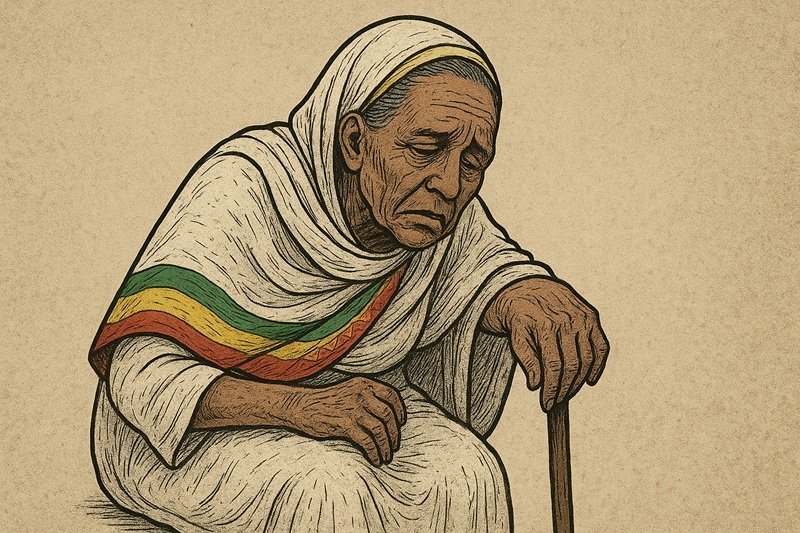
The Ethiopian Flag: A Shared Symbol of Resistance and Unity
The Ethiopian flag is not, and must never be reduced to, a symbol of oppression or empire. Contrary to what many ethnic politicians claim—including the TPLF and others—the flag did not originate with the Amhara. Historically, its adoption is linked to Emperor Yohannes IV though at this stage the precise origin matters less than its enduring meaning. What matters most is its modern history and the role it has played in Ethiopia’s struggle and dignity.
Under the green, yellow, and red banner, Ethiopia registered one of the most decisive victories against European colonialism at the Battle of Adwa in 1896. That single moment in history alone grants the flag a sanctity and respect that transcends ethnic or political divides.
The Ethiopian flag became more than a national emblem—it became a global symbol of resistance and freedom. Across Africa, it inspired independence movements from Ghana to Zimbabwe. In the Caribbean and Latin America, from Jamaica to Rastafarian culture worldwide, the green, yellow, and red colours became an icon of freedom, pride, and defiance against oppression.
Therefore, all political actors—regardless of ethnicity or ideology—must agree on the sanctity of the Ethiopian flag. It is not a partisan banner; it is the shared cloth under which our ancestors fought, resisted, and survived. To dishonour it is to dishonour the very struggles that gave us sovereignty and dignity in the first place.
Truth and Reconciliation: Ethiopia needs a national process of truth-telling and reconciliation to face past injustices, rebuild trust, and pave the way for genuine healing.
Democratic Institutions and Governance
We must build a constitutional order rooted in: Separation of powers: Rule of law: Protection of human rights Free and fair multiparty elections
Conclusion
Despite the passage of time, Ethiopians still remember the story of the Broken Train—ስባራ ባቡር. Today, our ethnic politics and obsession with self-determination resemble that broken train: derailed, directionless, and dangerous.
The question of self-determination is not a toy for us to play with. It is a political weapon designed and manipulated by powerful nations—the “big boys”—for their own gain. When we adopt it blindly, we become the victims of a game we never designed. One way or another, we are now learning this lesson the hard way.
Ethiopia today stands among the poorest of the poor in almost every global measure. This poverty is not God-made; it is man-made—our own handiwork. By borrowing wrong ideologies, by killing each other, and by destroying our own nation, we are condemning not only this generation but generations to come.
When an atom splits, it releases energy. But if that energy is not contained and directed, it creates catastrophe—as seen in Chernobyl. Ethnic politics functions in the same way: uncontrolled, it becomes explosive, destructive, and ultimately fatal to the nation.
We need only look beyond our borders for lessons. Tanzania, under the leadership of Julius Nyerere, deliberately rejected tribal and ethnic politics, choosing instead a civic national identity and Swahili as a unifying language. The result is relative peace and stability in a country of over 120 ethnic groups. By contrast, Somalia, despite its single language, single religion, and shared culture, collapsed into endless war once clan politics was allowed to dominate. The former Yugoslavia—once a prosperous European federation—was shattered by ethnic nationalism in the 1990s, producing war, genocide, and lasting scars.
But we Ethiopians also have our own reminder of what unity can achieve. At the Battle of Adwa in 1896, Ethiopians—Amhara, Oromo, Tigrayan, Gurage, Sidama, Somali, and more—stood together as one people. United, they defeated the Italian colonial army, making Ethiopia the only African nation to repel European colonisation and inspiring liberation movements across Africa and beyond. That victory was not won by one ethnic group alone—it was won by Ethiopia united.
Today, our choice is clear. If we unite, we can build another Adwa, not against a foreign enemy this time, but against poverty, injustice, and division. If we disunite, we will vanish, forgotten like a broken train left to rust.
This is my appeal to every Ethiopian—whether Amhara, Oromo, Tigrayan, Somali, Sidama, or any other. Our survival does not lie in fragmentation but in unity. If we unite, we will endure, prosper, and win. If we disunite, we will vanish.
Editor’s Note : Views in the article do not necessarily reflect the views of borkena.com
Support Borkena : https://borkena.com/subscribe-borkena/
Join our Telegram Channel : t.me/borkena
Like borkena on Facebook
To submit Press Release, send submission to info@borkena.com
Add your business to Ethiopian Business Listing / Ethiopian Business Directory
Join the conversation. Follow us on X (Formerly Twitter) @zborkena to get the latest Ethiopian News updates regularly.
Dear Eyasu, I don’t have words to thank you. May God bless you for this article and the truth you told in it!!! I gree 100% of the story you told and the conclusion you provided.
The war has left communities deeply divided, with ethnic tensions and mistrust hindering reconciliation efforts .