
Where the Hermitized and Insular Amhara Political Elite Refuses to Trade
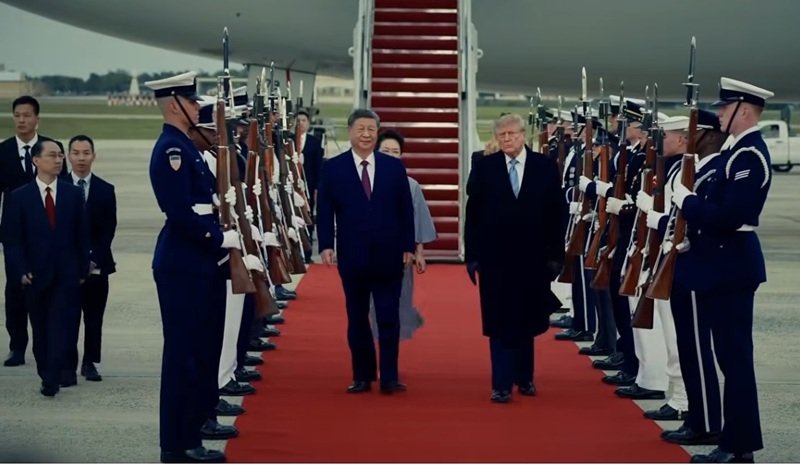
A central weakness of the Amhara political class is its failure to recognize the geopolitical pecking order—the reality that international politics is ultimately structured by hard power, strategic leverage, and relative influence.
The United States has consistently pushed for a negotiated political settlement to the ongoing conflict in Amhara. Yet much of the Fano political apparatus has responded to Washington’s position with striking indifference, at times dismissing it outright rather than engaging it as a serious matter of public diplomacy.
Fano’s predicament stems from more than defiance of Washington. It is rooted in two distinct, compounding crises:
- A Cultural Deficit: a deep cultural stagnation that has frozen the social psychology of the Amhara intellectual class in centuries past; and
- A Political Deficit: a structural fragmentation that continually obstructs consensus-building, political cohesion, and strategic discipline.
An intellectual class should help a political movement understand the world as it actually exists, not merely validate the world as it wishes it to be. When cultural stagnation freezes social psychology, intellectuals lose the capacity to distinguish between historical reverence and modern statecraft.
That distinction is important. Historical pride is not itself the problem. A civilization can possess enormous historical capital and still have limited contemporary geopolitical capital. The strategic error occurs when the former is assumed to automatically lend itself to the latter.
Consider China
The United States openly arms Taiwan, an island Beijing claims as sovereign territory, and has signaled that it could intervene militarily if China attacked. China has not answered in kind. It has largely held back from supplying lethal weapons to its strategic partners, Russia and Iran, wary of the sanctions and economic retaliation Washington could impose.
China is a global power and America’s primary strategic competitor, yet it calibrates its conduct toward Washington with care. Beijing recognizes the immense economic, financial, technological, and military leverage the United States commands. It does not mistake its ancient civilization for contemporary geopolitical power.
This is not to say China capitulates to America in the sense of accepting American preferences as superior. It means China defers to the reality of American power in calculating what it can afford to do. That is the more important lesson. Strategic realism is not capitulation. It is the recognition that the costs of exercising one’s preferences depend on the power available to enforce them.
That distinction seems entirely lost on the more hermitized, insular elements of the Amhara political and intellectual elite. They appear to expect Washington to treat them as an equal geopolitical actor—as though a regional Ethiopian political movement possessed the strategic weight of a global superpower.
If China understands the necessity of adjusting its posture to the realities of American power, why should an Ethiopian armed movement assume that Washington must accommodate it as an equal in the international system?
The answer lies in that frozen social psychology: the persistence of a romanticized, mythological, if not theological, conception of Ethiopian exceptionalism.
There is legitimate and historic pride to be found in Axum, Lalibela, Gondar, and Adwa. These represent extraordinary chapters in world history. But somewhere along the line, historical legacy became conflated with contemporary capability.
The venerated, mythological Ethiopia residing in the minds of some contemporary Amhara elites is no longer just a source of cultural pride—it has metastasized into a flawed geopolitical worldview. It operates on the implicit belief that Ethiopia’s extraordinary past automatically affords its contemporary actors an extraordinary position on the global stage.
Zemene Kassie captured this mindset in a memorable declaration:
“ቀሪው አለም አህያ በሚጭንበት ጊዜ የኛ አባቶች ደመና ይጋልቡ ነበር።” [“When the rest of the world was loading donkeys, our fathers were riding clouds.”]
Nor is this merely popular sentiment. Variations of this civilizational exceptionalism frequently animate the writings of prominent Ethiopian intellectuals.
Professor Tesfaye Demmellash has argued that Ethiopia is “unique in Africa in its abiding national civilization and its fierce resistance against European colonial encroachment,” asserting that Western powers have sought for decades to constrain Ethiopian development.
Professor Al Mariam went further, framing the bilateral relationship between Ethiopia and the United States as a “Clash of Civilizations” and confidently declaring that “Ethiopia will win.”
Professor Mamo Muchie distilled this logic into an even more extravagant aphorism: “The world fears time; time fears history; history fears Ethiopia.”
Underlying this diplomatic doctrine is an almost comical presumption: that the modern world is consumed by jealousy over Ethiopia’s past and terror over its future.
The tragedy is that this cultural pathology did not remain confined to intellectual corridors; it spilled directly into Ethiopia’s public diplomacy and foreign affairs. Pan-Africanism was routinely weaponized as a rallying cry against what was branded “humanitarian imperialism” and “neocolonialism.” Movements like #NoMore replaced the patient, institutional work of statecraft with street diplomacy, historical grievance, and rhetorical bravado.
Seen in this context, Mehari Degefaw’s famous line “ግጠም አለኝ” was historically and politically inevitable. When substantive diplomatic arguments are exhausted, poetry and grandstanding fill the void:
“ቅኔ ቢያልቅበት፣ ቀረርቶ ሞላበት።”
This mindset matters because it fundamentally distorts how political movements view the act of negotiation.
If one’s core conception of Ethiopia is that of an ancient civilization whose history demands automatic deference, then negotiating with a modern great power is easily misinterpreted as humiliation rather than pragmatic statecraft. If Adwa is viewed not simply as a historic victory but as proof of an inherent Ethiopian capacity to defy powerful outsiders indefinitely, then strategic compromise begins to look like treason.
That is precisely where historical pride turns into a strategic liability. The hermitized Amhara intellectual class needs to realize:
Adwa is history; Washington is power.
Axum is civilization; the United States is a contemporary geopolitical player.
Lalibela is heritage; China is an economic and military titan.
To confuse the former with the latter is not patriotism—it is a cognitive failure of strategic reasoning. It is utter stupidity.
This dynamic also reveals why Fano’s political fragmentation is an intellectual failure, not merely an organizational one. A movement splintered among competing commanders, factions, and political visions cannot negotiate effectively unless its intellectual leadership helps forge a consensus around realistic goals: what it wants, what it can plausibly achieve, where it can compromise, and what external powers can realistically deliver.
Instead, key segments of the Amhara intellectual class have reinforced a worldview in which external powers are assumed to fear, covet, or actively suppress Ethiopia because of its historical greatness. That posture may be emotionally comforting, but it is strategically sterile.
A political movement does not gain strength because its intellectuals proclaim that the world fears its past. It gains strength when its intellectuals teach it how power actually operates.
China understands this. The United States understands this. Russia understands this. Every serious international actor recognizes that national interests must be pursued within the structural constraints of relative power.
And this is why the lesson from China should not be reduced to “submit to America.” The lesson is: pursue your interests, but understand the power environment in which you are pursuing them. Sovereignty does not eliminate power asymmetries. National dignity does not eliminate strategic constraints. And negotiation does not mean surrender.
The Amhara political movement requires the same cold realism.
It can demand respect without pretending to wield the weight of a superpower. It can reject an American proposal without denying Washington’s strategic leverage. It can defend Amhara interests without equating diplomacy with capitulation. And it can take immense pride in Adwa without imagining that a victory in 1896 dictates the balance of power in 2026.
You can respect your history. Preserve your civilization. But never mistake either for contemporary geopolitical power. Unfreezing that social psychology and making that single distinction is perhaps the most urgent intellectual and political correction the Amhara movement can make today.
Simply put, do not be plenty stupid!
Editor’s Note: Views in the article do not necessarily reflect the views of borkena.com
__
Join our Telegram Channel: t.me/borkena
Like borkena on Facebook
To submit a press release, send the submission to info@borkena.com
Add your business to Ethiopian Business Listing / Ethiopian Business Directory
Join the conversation. Follow us on X (formerly Twitter) @zborkena to get the latest Ethiopian news updates regularly.