
Ash Ash
Ethnic federalism, especially as implemented in Ethiopia, presents a deeply flawed framework for building a cohesive and democratic society. The concept, rooted in the ideological principles of Stalin’s Marxist theory and shaped by *The National Question*, aims to organize governance along ethnic lines, assigning political power and territory based on ethnicity rather than on geography, ideology, or shared national interests. Despite its original intentions, this system has led to unintended consequences, with Ethiopia serving as a prime example of how ethnic federalism can become a centrifugal force that divides rather than unites.
The Foundation: Ethnic Federalism and Its Marxist Roots
The core principles of ethnic federalism are heavily influenced by Stalin’s interpretation of Marxist theory, particularly his work on managing diverse ethnic identities within the Soviet Union. In his treatise, *The National Question*Stalin advocated for granting self-determination to ethnic groups but within the framework of a centralized socialist state. Ethnic autonomy was allowed, but only insofar as it supported the overarching unity and control of the Communist Party.
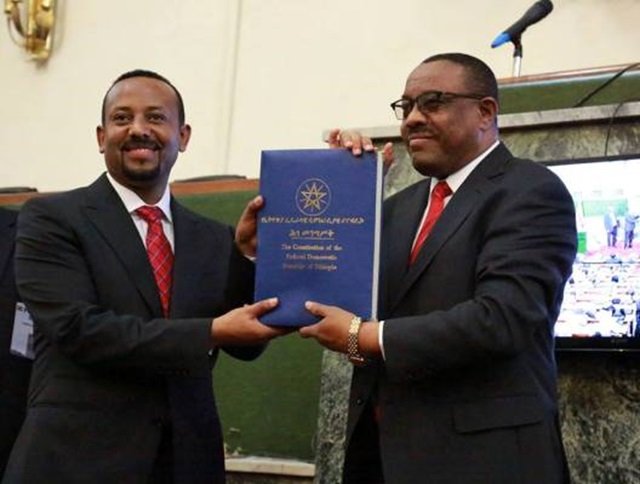
In the early 1990s, Ethiopia’s leaders, particularly the Tigray People’s Liberation Front (TPLF), adopted this model after the fall of the Derg regime. The introduction of ethnic federalism in Ethiopia was intended to manage the country’s vast ethnic diversity, with a constitution in 1995 officially defining ethnic groups as the basis for regional governance. However, instead of fostering a more democratic, inclusive society, this approach has deepened divisions and led to increasing instability.
The Core Flaws of Ethnic Federalism
Division over Unity
One of the most significant criticisms of ethnic federalism is that it inherently emphasizes differences between ethnic groups rather than encouraging unity. By structuring the political system along ethnic lines, it reinforces ethnic identity as the primary source of political power and legitimacy. This creates a society where loyalty to one’s ethnic group often supersedes loyalty to the nation as a whole, making national unity a secondary consideration.
Rather than fostering integration, ethnic federalism promotes the idea that each ethnic group must defend its territory, resources, and political interests against others. This can lead to ethnic competition and rivalry, weakening the sense of collective national identity that is essential for stability and progress.
Weakening National Cohesion
Ethnic federalism also erodes national cohesion by suggesting that political power should be tied to ethnic identity. In Ethiopia, each ethnic group has its own region, often creating a situation where the boundaries of political and ethnic identity are conflated. Citizens are encouraged to identify with their ethnic group rather than with the broader national identity. This system discourages the development of cross-ethnic political alliances or cooperation, both of which are crucial for a unified democratic society.
Increased Risk of Ethnic Conflict
The ethnic federal system heightens the risk of conflict, as ethnic groups vie for control over territory and resources within their respective regions. In Ethiopia, this has manifested in ongoing disputes, violence, and displacement. Ethnic groups within a federal region often feel threatened or marginalized by their neighbors, leading to violence as groups attempt to assert dominance or preserve their autonomy. These conflicts frequently lead to destabilization at both the regional and national levels.
Stalin’s Model: A Framework for Control, Not Democracy
Stalin’s model of ethnic federalism was, at its core, designed as a way to placate ethnic groups without truly granting them full autonomy. It was a tool for managing diversity while maintaining strong centralized control over the Soviet Union. Ethiopia’s version of ethnic federalism mirrors this approach. While ethnic groups were ostensibly given the right to self-rule, much of the power remained centralized within the ruling party, particularly under the TPLF.
This created a system where ethnic elites were empowered, but true autonomy was never fully realized. The political landscape remained controlled by a central authority, often manipulating ethnic divisions for political gain rather than fostering genuine self-governance or democracy.
Undermining Democratic Principles
Ethnic federalism also undermines the development of true democratic governance by tying political legitimacy to ethnicity rather than individual merit, ideology, or performance. Leaders are often chosen based on their ethnic affiliation, not their ability to represent all citizens. This weakens the democratic process, as individuals from minority groups within regions may feel marginalized or excluded from political power.
Furthermore, ethnic federalism limits the ability of national political parties or movements to form broad coalitions based on shared ideas, principles, or goals. Instead, the political landscape becomes fractured along ethnic lines, making it difficult to build consensus or promote national interests over local or ethnic ones.
Marginalization of Minorities
In regions dominated by a single ethnic group, minorities often face discrimination or marginalization. Ethnic federalism tends to entrench the power of majority ethnic groups within their regions, leaving minorities without adequate political representation or protection. This can lead to systemic inequality and exacerbate social tensions, as minority groups are denied the same rights and opportunities as their ethnic-majority counterparts.
The Ethiopian Context: A Case Study in Ethnic Federalism
Ethiopia’s experiment with ethnic federalism, introduced in 1995, was intended to manage the country’s ethnic diversity and address historical grievances. However, the results have been far from peaceful. Instead of creating a harmonious, self-governing society, ethnic federalism has deepened ethnic divisions and contributed to ongoing conflicts and instability. The TPLF-led government’s efforts to maintain control over the country through this system led to an environment where ethnic competition for power has replaced national cooperation, with disastrous consequences for both democracy and social cohesion.
Toward a More Inclusive Future
To build a more cohesive and democratic society, many argue that Ethiopia must move away from ethnic federalism and adopt a more inclusive form of governance based on geography or shared national interests rather than ethnicity. A true federal system, based on geography, would allow regions to govern themselves while still promoting a strong sense of national unity. This would create a system where citizens’ rights are protected regardless of their ethnic background, and where political power is based on individual merit and performance, rather than ethnic identity.
Ethnic federalism, modeled on Stalin’s approach to managing ethnic diversity, has proven to be a divisive and destabilizing force in Ethiopia. As the country looks to the future, moving toward a more inclusive, democratic system based on shared values and national unity may be the key to fostering peace, stability, and true democracy in the long term.
Editor’s note : Views in the article do not necessarily reflect the views of borkena.com
__
To Publish an Article On borkena , please send submission to info@borkena.com for consideration.
Join our Telegram Channel : t.me/borkena
Like borkena on Facebook
Add your business to Borkena Business Listing/Business Directory Jobs
Join the conversation. Follow us on X (formerly Twitter ) @zborkena to get the latest Ethiopian news updates regularly. Ethiopia To share information or for submission, send e-mail to info@borkena.com