
RG Metaferia
Ethiopia occupies one of the most consequential strategic positions in Africa and beyond. Its geography, natural resources, and political stature give it influence that extends far outside the Horn of Africa, especially at a time when climate change and resource scarcity are reshaping global power dynamics.
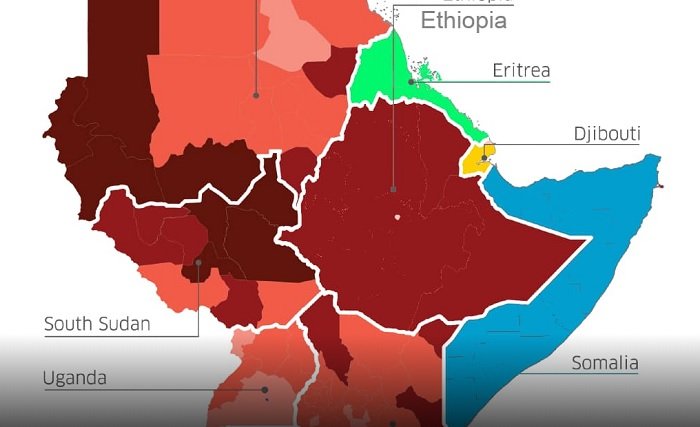
Often referred to as the water tower of Africa, Ethiopia is the source of several major river systems that sustain neighboring countries. The Blue Nile alone contributes roughly 85 percent of the Nile River’s flow, which supports more than 300 million people downstream in Sudan and Egypt. Ethiopia possesses an estimated 124 billion cubic meters of surface water, in addition to significant lake and groundwater reserves. Some neighboring countries rely on Ethiopian-origin water for as little as 10 percent of their needs, while others—such as Somalia—depend on it almost entirely.
Despite this abundance, Ethiopia has developed only a small portion of its water potential. Less than 5 percent of its irrigation capacity and about 10 percent of its hydropower potential have been utilized, leaving vast room for growth and regional cooperation.
Ethiopia is also poised to become a green energy powerhouse. The country has an estimated 45,000 megawatts of hydropower potential, along with substantial solar and wind resources, placing its total renewable energy potential at over 60,000 megawatts. The Grand Ethiopian Renaissance Dam (GERD), Africa’s largest hydroelectric project, alone has a generating capacity of more than 5,100 megawatts. Hydropower already accounts for over 90 percent of Ethiopia’s electricity generation, positioning the country as a future exporter of clean energy across East Africa.
As climate change accelerates, water scarcity is expected to intensify across the Middle East and much of the Arab world—regions already among the most water-stressed globally. In this context, Ethiopia’s water and energy resources take on strategic significance far beyond Africa. Long-term, visionary water management concepts—such as integrated Nile basin cooperation and potential inter-basin linkages with the Congo system—illustrate how Ethiopia could one day contribute to broader regional water security, including parts of the Middle East.
From a geopolitical perspective, supporting Ethiopia is not an act of charity but a strategic investment. Ethiopia is home to the African Union headquarters, making Addis Ababa the political capital of Africa. Decisions and alliances forged in Ethiopia often reverberate across the continent, giving the country diplomatic leverage unmatched by most African states.
Ethiopia’s ancient Christian heritage and centuries-old ties to the Holy Land further distinguish it. As one of the world’s oldest Christian civilizations, Ethiopia is a natural ally of Israel, connected by history, faith, and regional interests—relationships that do not necessarily require formal treaties to endure.
In a world increasingly shaped by climate pressures, energy transitions, and water scarcity, Ethiopia stands as a pivotal state. A smart foreign policy that supports Ethiopia’s stability and development would gain influence not only in Africa but also across the Middle East, helping shape a more secure and sustainable regional order for decades to come.
Editor’s Note : Views in the article do not necessarily reflect the views of borkena.com
__
Support Borkena : https://borkena.com/subscribe-borkena/
Join our Telegram Channel : t.me/borkena
Like borkena on Facebook
Borkena Ethiopian News Youtube Channel
To submit Press Release, send submission to info@borkena.com
Add your business to Ethiopian Business Listing / Ethiopian Business Directory
Join the conversation. Follow us on X (Formerly Twitter) @zborkena to get the latest Ethiopian News updates regularly.
Your article is a poorly constructed propaganda. Ethiopia doesn’t have any strategic importance. Nile river is a naturally flowing river. Nile river is not a mineral deposit. Ethiopia exports electricity because Ethiopia needs foreign currency. African union headquarter is a building that can be build anywhere. Ethiopia is not a natural ally of Israel. Ethiopia and Israel don’t have common interests. The messianic age and oromuma are not the same. Ethiopia’s Christian civilization and Christian heritage is replaced with Irrechaa. ክርስትያኖች የሀይማኖት ካባ የለበሱ የፖለቲካ ገበያተኞች እየተባሉ እያለቁ ነው ።
Your article reflects Ethiopian governments wishful thinking.