
By Amanuel Agajjie Wasihun
The world watched in horror as Ethiopia descended into civil war in Tigray from 2020 to 2022. Yet today, a new chapter of state violence is unfolding—this time in the Amhara region—and the international response has been strikingly muted. As an Amhara and a former digital government advisor in Ethiopia’s federal government, I write with deep alarm and sorrow: my people are now the target of what increasingly resembles a coordinated campaign of ethnic cleansing, sanctioned and orchestrated by the state.
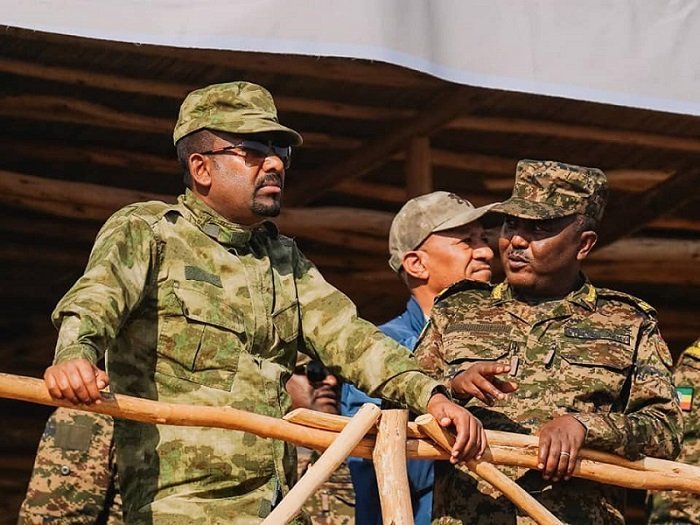
Since 2023, the Ethiopian government has launched a sweeping militarized crackdown across the Amhara region. In the name of “restoring law and order,” federal forces have deployed heavy artillery, drones, and troops to crush what they label as “illegal militias.” But behind this narrative lies a more disturbing reality: entire towns shelled, civilians executed, thousands arrested without charge, and basic communication blacked out to conceal abuses. Human rights organizations have been either denied access or sidelined entirely. More than 4.5 million students remain out of school, and the majority of hospitals and health centers are no longer operational.
The government’s declared target—armed Fano militias—are largely grassroots, locally organized forces originally mobilized to defend Amhara communities from external aggression, especially during the Tigray conflict. Today, they are being indiscriminately lumped in with criminal groups to justify broad assaults on Amhara civilians and institutions.
The Ethiopian Human Rights Commission, Amnesty International and diaspora networks have reported mass arrests of Amhara journalists, students, and religious figures. In Bahir Dar, Gondar, Merawi, Lalibela, Debre Tabor, Debere Markos, Semien Shewa and rural districts, house-to-house raids and extrajudicial killings have become routine. Families are burying their dead in silence, fearful of reprisal. Many have fled, only to face further harassment or detention in Addis Ababa and beyond.
This is not an isolated security operation—it is the expression of a deeper, more dangerous ideology: that the Amhara, as a politically assertive ethnic group, must be weakened, fragmented, and silenced. Ethiopia’s ethnic federal system has always been precarious, but in recent years, the federal government under Prime Minister Abiy Ahmed has shifted toward a centralized authoritarian model—one that sees regional autonomy and ethnic advocacy as threats to state cohesion. In that view, the Amhara resistance is not just a challenge, but an existential enemy.
This strategy is not new. Historical memory runs deep in Ethiopia. The Derg regime crushed dissent with similar tools: mass detention, targeted killings, information control, and vilification of
whole communities. What’s new is the state’s use of advanced digital technology to silence Amhara voices more efficiently and relentlessly. As a former federal advisor, I have witnessed the government deploying sophisticated digital surveillance systems, AI-powered social monitoring, and strict censorship—tools specifically designed to track, intimidate, and suppress Amhara activists and civilians. Enormous budgets are being funneled into building this digital repression infrastructure, operating alongside drones and other modern military weapons, turning surveillance into a weapon aimed directly at stifling the Amhara community’s ability to speak out
Yet perhaps the most devastating weapon in this silent war is international indifference.
Unlike during the Tigray war, there has been no global outcry. The African Union, based in Addis Ababa, remains silent. Western governments—eager to see Ethiopia as a post-conflict success story—have resumed aid and praised reforms, even as reports of atrocities against Amharas pile up. The government has effectively branded Amhara dissent as “reactionary,” “anti-reform,” or “destabilizing,” and much of the world has accepted this framing at face value.
But justice requires nuance—and courage. Amhara voices are not calling for war. We are calling for safety, dignity, and the right to exist without fear in our own homeland. We are asking the world not to look away.
This is not just a regional issue. Ethiopia is a fragile, multi-ethnic federation at a crossroads. If the Amhara are violently repressed today, others will follow tomorrow. The lesson of ethnic cleansing—wherever it occurs—is that silence empowers impunity.
As someone who once believed in the promise of national digital transformation and inclusive governance, I now watch as those tools are turned against the very people they were meant to empower. But I also believe that truth, once told, can mobilize justice.
That is why I speak now—openly, as an Amhara, as a former official, and as a witness to a hidden war.
The world must pay attention.
Editor’s Note : Views in the article do not necessarily reflect the views of borkena.com
__
Support Borkena : https://borkena.com/subscribe-borkena/
Join our Telegram Channel : t.me/borkena
Like borkena on Facebook
Add your business to Ethiopian Business Listing / Ethiopian Business Directory Business Listing Toronto
Join the conversation. Follow us on X (Formerly Twitter) @zborkena to get the latest Ethiopian News updates regularly. Subscribe to YouTube channel To share information or for submission, send e-mail to info@borkena.com