
Debate Surrounds Status of Addis Ababa and Representation Issues as 4,000 Delegates Conclude Talks
Borkena Desk
TORONTO, Canada —The Ethiopian National Dialogue Conference, which has been underway for the past 40 days in the capital, Addis Ababa, concluded on Saturday with 4,000 delegates participating, including representatives from the Ethiopian diaspora.
Days before the start of the conference, the commission announced eight agenda items: nation-building; government structure and system; Addis Ababa and Dire Dawa governance; religious issues; rule of law, institutions, and human rights; social and economic issues (including farmers and pastoralists); corruption and good governance; and peacebuilding and conflict resolution.
The Ethiopian government and the commission claim the national dialogue was a success. Prime Minister Abiy Ahmed did not attend the closing day event, but the country’s president, Taye Atske Selassie, described the conference as a “new path.”
However, two opposition parties that took part in the dialogue expressed grievances regarding the process, particularly regarding the debate over the status of Addis Ababa, one of the most controversial topics during the conference. Leaders of the Ethiopian Citizens for Social Justice Party (EZEMA) and the Amhara National Movement (NaMA) explicitly wrote on social media warning the government to exercise caution on the issue of Addis Ababa, calling it a “red line.” These parties have worked with the government over the past five years, functioning much like a “managed opposition,” as critics describe them. Abiy Ahmed’s government has faced criticism over alleged intervention to influence decisions on the capital’s status, with allegations that the administration wants the city to be placed under the Oromia regional state. Divisions reportedly existed even among ruling party officials on the matter.
NaMA was specific in its accusation, stating: “At the conclusion of the consultation process, a commissioner attempted to present an additional agenda by coming forward with a group agenda that had not been examined by the assembly, an agenda item that the participants had not previously seen and had not agreed upon.”
Other opposition parties boycotted the process on the grounds that the National Dialogue Commission was neither neutral nor inclusive.
The Enat Party released a statement on Saturday declaring that “the national dialogue process has become ‘a zero-sum outcome that, far from bringing about a new solution for the country, is instead pouring gasoline on the existing national crisis.'” Furthermore, the party stated that the commission has “failed to give attention to serious issues, glossed over the matters and problems that have gripped the country, and was marked by a struggle to approve decisions that had already been made behind closed doors.”
Points of Disagreement
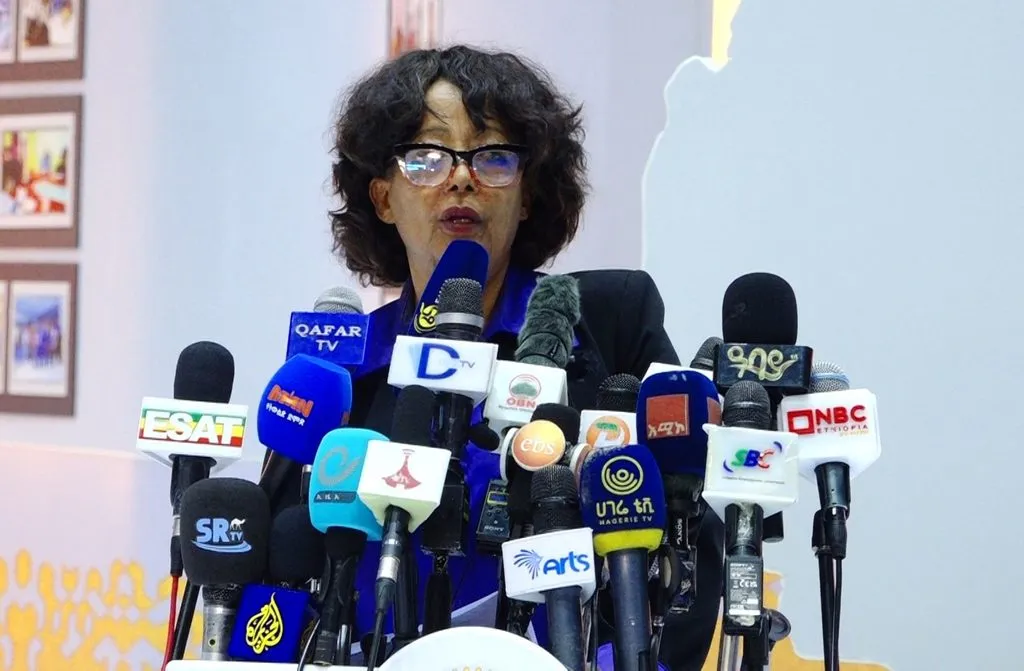
Hirut Gebreselassie, deputy commissioner, highlighted during her speech at the closing event that divergences remained on four key issues: the national flag, the system of governance, the status of Addis Ababa, and representation and Federation Council representation issues.
However, Commissioner Yonas Adaye suddenly took the stage and read a document giving the impression that an agreement had been reached, which delegates opposed. According to sources from within the conference, only delegates from the Oromia region supported placing Addis Ababa under the Oromia regional state, while the majority reportedly agreed that Addis Ababa should remain accountable to the federal government and retain the ability to elect its own leaders.
Ethiopia’s commission was established in December 2021 with approval from the federal parliament under Proclamation No. 1265/2021. According to local Ethiopian sources, the National Dialogue Commission spent over 1.6 billion birr over a three-year period to organize the dialogue. The bulk of the funding came from the government, with support from external partners, including the United Nations Development Programme (UNDP).
__
Join our Telegram Channel: t.me/borkena
Like borkena on Facebook
Join the conversation. Follow us on X (formerly Twitter) @zborkena to get the latest Ethiopian news updates regularly. Subscribe to the YouTube channel. To share information or for submission, email info@borkena.com
Hurrah! The National Dialogue Convention is over in a civilized manner. I look forward the details of what was agreed upon and where differences remained. The differences should be looked at by future representative group and sorted out in the same civil manner.
There are some who blame Tigray for liberating Oromia, enacting the constitution and contributing to the current crisis in the country. Oromia should find ways to live in harmony and peace with the other Tigray liberated regions and avoid conflicts for its own sake.
It is very disappointing to see the outcome of this national dialogue, which has wasted millions of birr that could have been used to help Ethiopia’s impoverished people, only to justify the outdated politics of ethnic hegemony practiced by the former OPDO and the contemporary successor, the Prosperity Party.
There were great men and women who genuinely cared about a true national dialogue and believed it could provide a lasting remedy for the divisions facing our ancient nation, Ethiopia. Sadly, the process ultimately ended in failure, marked by the twisted and confused leadership of Professor Mesfin, with his senior assistant, Hirut Oda, whose conduct was a disgrace to Ethiopian women committed to peace.
Fellow compatriots should never give up. We must continue to demand a genuine national reconciliation process for Ethiopia one that addresses the root causes of our divisions rather than serving the interests of ethnic political organizations that have repeatedly created conflicts and contributed to bloodshed among our own people.
As veteran political analyst Professor Aklog Birara has suggested, Ethiopia needs a genuine national reconciliation process in which ordinary people, who have no basic conflicts with one another, can finally live together in peace and dignity. The Ethiopian people deserve a political system that unites rather than divides them.
Pastor Degone Moretew