
Introduction: A Nation in Perpetual Turmoil
Notwithstanding what the Greek historian Diodorus (c. 90-21 BCE) proclaimed about the Ethiopians as the “first of all men”, and people of “great antiquity”; and of the gods visiting Ethiopians first, feasting with its kings; notwithstanding his further claim, as translated, that even the gods “failed to subdue the Ethiopians alone” due to their piety, today’s Ethiopia, while still steeped in ancient and communal values, is a country in deeply felt stress, anxiety and dysfunction. We are tempted to ask: “Ubi sunt?” Where have the gods gone?
Since the overthrow of Emperor Haile Selassie in 1974, marking the end of a 3,000-year-old Solomonic monarchy, Ethiopia has been ensnared in a cycle of political instability, economic stagnation, and social fragmentation. What began as a revolutionary promise of equity and modernization under the Derg military junta devolved into civil war, famine, and authoritarian repression, only to be succeeded by the Ethiopian People’s Revolutionary Democratic Front (EPRDF) era, dominated by the Tigray People’s Liberation Front (TPLF), and now the fragile “reforms” under Prime Minister Abiy Ahmed and his Prosperity Party. This trajectory has not been a linear descent but a web of interlocking failures: from ethnic insurgencies to elite entrenchment, from educational deficits to economic despair. The query at hand—attributing blame to breakaway zealots like the TPLF and Oromo Liberation Front (OLF), an undereducated populace, exclusion from decision-making, declining labor participation, powerful elites, skewed income distribution, population despair amid underperformance, and ethnic polarization under federalism—demands a critical dissection. Far from a single culprit, Ethiopia’s dysfunction emerges as a systemic pathology, where each factor amplifies the others in a vicious feedback loop. This short essay argues that while no one element bears sole responsibility, the politicization of ethnicity under federalism and the unchecked power of elites have proven most corrosive, perpetuating a state where unity remains an elusive ideal.
Historical Foundations: From Imperial Centralism to Revolutionary Chaos
The monarchy’s fall exposed deep fissures long suppressed by Haile Selassie’s centralized, “Amhara-dominated” rule, which prioritized pan-Ethiopian unity over ethnic pluralism. Land tenure inequities, famines like that of 1973-74, and border conflicts with Somalia and Eritrea eroded legitimacy, fueling student-led protests and the Derg’s 1974 coup. The Derg’s Marxist-Leninist regime abolished feudalism through land reforms but unleashed the Red Terror, killing hundreds of thousands, and waged brutal wars against Eritrean and Tigrayan separatists. By 1991, with the Soviet Union’s collapse, the Derg imploded, paving the way for the TPLF-led EPRDF.
This era’s dysfunction was not merely transitional; it sowed seeds of enduring division. The monarchy’s denial of ethnic diversity bred resentment, but the Derg’s centralism exacerbated it through repression, creating vacuums filled by armed fronts like the TPLF and OLF. Critically, these “breakaway zealots” were not exogenous malefactors but products of state failure: the TPLF emerged in 1975 to challenge Amhara hegemony, while the OLF, founded in 1973, sought Oromo self-determination amid perceived marginalization. Their insurgencies prolonged civil war, costing over a million lives and stalling development, but blaming them alone ignores the monarchy’s and Derg’s roles in igniting ethnic grievances. As historian Bahru Zewde notes, Ethiopia’s intellectuals and elites, educated abroad yet loyal to the throne, failed to democratize, perpetuating a cycle where rebellion became the only voice for the voiceless.
The Zealots and the State: Insurgents as Catalysts, Not Creators
Post-1991, the TPLF’s ascent installed ethnic federalism, ostensibly to rectify historical injustices, but it entrenched TPLF dominance through a hegemonic coalition. The TPLF, representing just 6% of the population, controlled key institutions, sidelining rivals like the OLF and EPRP (Ethiopian Peoples Revolutionary Party). This “Tigrayan exceptionalism” fueled accusations of elite capture, with TPLF-linked conglomerates like Endowment Fund for the Rehabilitation of Tigray (EFFORT) monopolizing resources. The OLF, meanwhile, boycotted the 1992 transitional conference and launched low-level insurgencies, exacerbating Oromo-Amhara tensions.
Critically, these groups are not mere “malefactors”; they embody legitimate grievances weaponized by zero-sum politics. The TPLF’s 2020 war with Abiy’s government, killing up to 600,000, stemmed from federal encroachments on Tigrayan autonomy (according to the TPLF) but in fact was caused by the TPLF attacking and murdering members of the Ethiopian army’s Northern Command, while OLF splinter OLA’s attacks reflect unresolved land disputes. Yet their tactics—ethnic mobilization, resource hoarding—have polarized society, turning pluralism into peril. As the International Crisis Group warns, ethnic federalism has “increased competition among groups…over land and resources,” transforming zealots from liberators to perpetuators of conflict. Responsibility lies not in their existence but in the system’s failure to integrate them democratically.
The Human Deficit: Education, Participation, and the Silent Majority
Ethiopia’s undereducated populace—adult literacy at 52% in 2023, with rural rates below 40%—is often scapegoated for dysfunction, yet this view pathologizes victims. Low enrollment (primary GER, gross enrollment ratio, at 100% but secondary at 28%) stems from poverty, child labor, and conflict, not inherent flaws. The Human Rights Measurement Initiative scores Ethiopia at 67% fulfillment of education rights relative to income, highlighting systemic neglect.
Compounding this, the absence of participatory decision-making under successive regimes has bred apathy. The 1995 Constitution promised ethnic self-rule, but EPRDF’s top-down control—via party cells in every village—stifled dissent. Voter turnout hovers at 70%, but elections are marred by harassment, as seen in the OLF’s 2021 boycott. This exclusion fosters despair: Afrobarometer data shows 64% of Ethiopians view economic conditions as worsening, with 61% in “lived poverty”. Blaming the “uneducated” ignores how elites have weaponized illiteracy to maintain power, echoing the monarchy’s use of Orthodox Church education to enforce loyalty. True agency requires investment in civic education, as CECOE’s (Coalition of Ethiopian Civil Society Organization for Elections) 2024 project attempts, but without dismantling authoritarian structures, participation remains performative.
Economic Undercurrents: Labor, Capital, and the Mirage of Growth
Ethiopia’s vaunted 8-11% GDP growth pre-2016 masked underperformance: agriculture employs 73% yet contributes 34% to GDP, vulnerable to droughts and conflict. Labor force participation, at 80% overall but with a 22-point gender gap (62% for women), signals underutilization: youth unemployment at 23% (urban) drives migration and unrest. The shift from labor to capital—via TPLF-linked privatizations—has skewed income distribution: Gini at 35-39, but top 10% capture 36% of income, fueling elite capture in cooperatives where benefits accrue to the connected. This is expected to worsen under the current Prosperity Party regime.
This “distribution from labor to capital” manifests in despair: poverty at $3.00/day rose to 39% by 2021, projected at 43% in 2025 amid inflation (30.8%) and war costs ($20+ billion). Abiy’s 2024 reforms—currency float, subsidy cuts—aim stabilization but exacerbate long-term pain, with 20 million needing aid. Economic underperformance is not populace-driven but elite-orchestrated: past growth benefited urban Tigrayan, Oromo and Amhara elites, leaving rural majorities in subsistence. As World Bank data underscores, without inclusive job creation—more than 600,000 entrants annually—these trends breed radicalization.
The Federal Fault Line: Ethnic Polarization as Systemic Sabotage
Ethnic federalism, enshrined in 1995, promised equality but delivered division. Dividing states along ethnic lines—nine regions, two chartered cities—recognized 80+ groups but ignored cross-ethnic ties, breeding “mega-ethnic syndrome” where Oromo (35%) vs. Amhara (27%) rivalries eclipse national identity. Boundary disputes (e.g., Welkait) and minority expulsions—over 1 million IDPs since 2018—have escalated violence, from Oromo Somali clashes to Tigray war atrocities and the war with Fano in Amhara with the use of drones and war planes.
This polarization undercuts equality: federalism’s secession clause incentivizes irredentism, while asymmetric power (Tigray’s outsized influence) foments resentment. As critics like Jon Abbink argue, it has “redefined Ethiopian nationhood” along Stalinist lines, politicizing culture into conflict. The 2016 Oromo protests and 2023 Amhara uprising exemplify how federalism amplifies grievances, turning diversity into dysfunction.
Conclusion: Toward Accountability, Not Abdication
Ethiopia’s post-monarchical dysfunction defies singular blame: TPLF/OLF zealots exploited but did not invent divisions; an undereducated populace suffers exclusion, not causes it; elites hoard while labor falters; despair festers from underperformance, not innate despair; federalism polarizes where it should unite. The monarchy centralized inequities, the Derg militarized them, EPRDF ethnicized them, and Abiy with his ‘Orroommuummaa’ project degenerated them into depravity—each regime culpable in succession.
Reform demands transcending blame: electoral pluralism to dilute ethnic parties, civic education for participation, inclusive growth via anti-corruption, and federal recalibration emphasizing hybrid identities. As the Crown Council pleads, restoring Ethiopianness (whatever that means)—beyond ethnicity—could heal, but only if elites yield power. Without this, Ethiopia risks the “five scenarios of state collapse” foreseen by scholars: from fragmented warlordism to balkanized secession, though I don’t personally believe that is the only destiny. The path forward is not recrimination but reconstruction—a federalism reforged in equity, lest the fabled classical image of Ethiopia as a utopian, ancient, and noble civilization fade to whispers of despair.
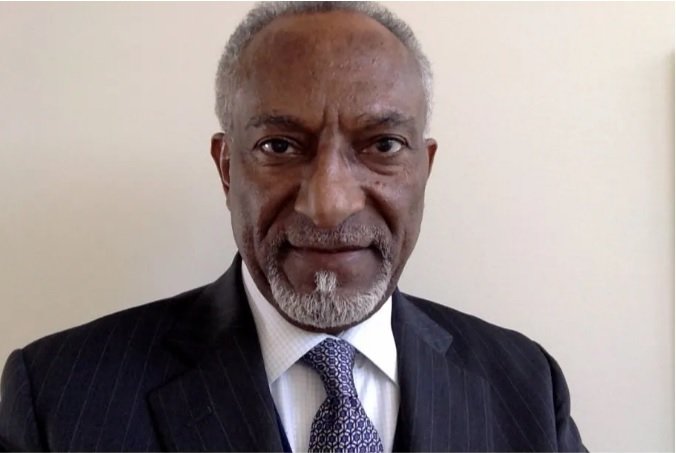
Teshome Abebe, former Provost and Vice President for Academic Affairs at two universities is currently Professor of Economics.
Editor’s Note : Views in the article do not necessarily reflect the views of borkena.com
By the same author : Unlocking Prosperity: The Economic Imperative of Ethiopia-Eritrea Cooperation on Ports, Trade, and Political Alignment
__
Support Borkena : https://borkena.com/subscribe-borkena/
Join our Telegram Channel : t.me/borkena
Like borkena on Facebook
Borkena Ethiopian News Youtube Channel
To submit Press Release, send submission to info@borkena.com
Add your business to Ethiopian Business Listing / Ethiopian Business Directory
Join the conversation. Follow us on X (Formerly Twitter) @zborkena to get the latest Ethiopian News updates regularly.
Direction to the 4 Kilo Palace & Parliament [for King/Queen/etc. Wannabes]: →One Way via The Election Boulevard
1). መግብያ:- የሕሊና ፀሎት – TPLF በማይካድራ ለጨፈጨፋቸው – ምስኪን ለፍቶ አደር አማራዎች! This week is the 5th year commemoration of TPLF’s Amara Massacre at MayKadra [TPLF massacred 600 to 1563 Amaras (depending on the source) in just a day].
2). መንደርደርያ:- ‘የአማራ ፋኖ’ ነን ባዮች – አሁን – ከወያኔ እና ከሻብያ ጋር ተባብረው – አብይን ወግተው – አማራን ከአብይ ጭቆና ነፃ አውጥተው – ኢትዮጵያን ሊገዙ – እየተንደፋደፉ ነው! ወያኔ እና ሻብያ – ተባብረው አማራን ስያሰቃዩ – አይደሉም ወይ – ፕ/ር አስራት እሪ ብሎ የተነሳው?
3). ርዕስ አንቀፅ:- በአማራነት የሚገኝ – “የኖቤል ፕራይዝም ሆነ እነ ደጃዛማች/ግራዝማች/ወዘተ አይነት ሹመቶችም- ይቅሩብኝ” – ያልኩት – እንዳለ ሆኖ – ይህቺን ለምሁራን መሃይሞች ልጋብዝ:-
“ዶ/ር X፣ ፕ/ር Y፣ ወዘተ – እንዳሉት…” – ብሎ – እንደ መንጋ መነዳት – ሞቷል! →እርማችሁን አውጡ!
ፊውዳሊዝም [‘Monarchy’ – ‘ንግሥተ ሳባ’ – ወዘተ] – Crap – ሞቷል! →እርማችሁን አውጡ!
ደርጊዝም/ሶሻሊዝም [Dergism/Socialism-ወዘተ] – Crap – ሞቷል! →እርማችሁን አውጡ!
ወያኔኢዝም/ሻብያኢዝም [TPLFism/EPLFism-ወዘተ] – Crap – ሞቷል! →እርማችሁን አውጡ!
ግብፅኢዝም/ፋኖኢዝም [Egyptism/Fannoism-ወዘተ] – Crap – አያዘልቅም! →ራሳችሁን ስቀሉ!
4). መሰናበቻ:- “ከወደቁ ወድያ – መንፈረጋገጥ → ለመላላጥ!” ስለሆነ →ወዳችሁ ግቡበት!
5). መዝግያ:- አብይ ለአምስት አመት – በኢትዮጵያ ሕዝብ ተመርጧል ፦ →እርማችሁን አውጡ!