
Political Legitimacy, International Engagement, the Alliance for Survival, and the Future of Conflict Resolution in the Horn of Africa
Caleb Ta (Dr.)
Independent Researcher in African Political Affairs
& Human Rights Advocate
Beyond What Is Visible
In politics, the most consequential developments are not always the most visible. A single conversation may appear insignificant on the surface, yet beneath it may lie shifting political calculations, emerging alliances, competing interests, and changing perceptions of power. What is visible may be only the beginning of a much larger story.
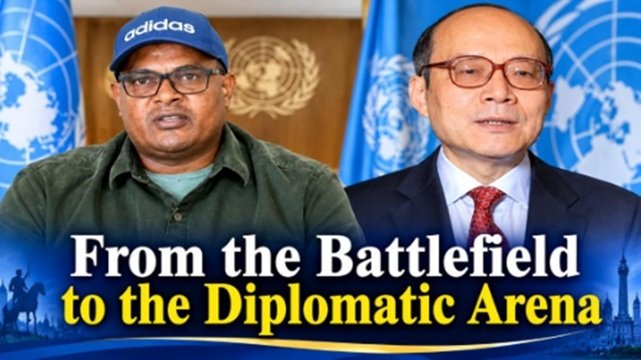
The reported telephone conversation between Zemene Kassie, Chairman of the Amhara Fano National Movement and a leading figure in the Alliance for Survival (Tibebir Lehelwuna), and Ambassador Guang Cong, the United Nations Secretary-General’s Special Envoy for the Horn of Africa, deserves serious political and diplomatic attention. Its significance extends beyond the immediate exchange between two individuals. It raises fundamental questions about political legitimacy, international engagement, the changing balance of political power in Ethiopia, and the future of conflict resolution in the Horn of Africa.
Although a telephone conversation does not constitute formal recognition or diplomatic endorsement, it can carry considerable political significance. In a country where the government has sought to portray armed opposition movements as isolated security threats, direct engagement by a senior United Nations representative introduces an important dimension into the political equation: the possibility that Ethiopia’s internal conflicts must be addressed through engagement with the actual political and military actors involved, rather than through a government-defined security narrative alone.
The importance of this development should therefore be assessed through three interconnected lenses: the changing political status of the Amhara movement, the internationalization of Ethiopia’s internal political crisis, and the broader implications for regional stability.
From a Domestic Security Narrative to an International Political Question
For several years, the Ethiopian government’s approach to the Amhara conflict has largely been framed through the language of law enforcement, counterinsurgency, and national security. The government has repeatedly characterized Fano and associated movements through labels such as rebels, extremists, criminals, and destabilizing forces.
This political framing has significant consequences. When an internal conflict is presented exclusively as a law-enforcement matter, the possibility of addressing its underlying political grievances becomes substantially restricted. It also creates an environment in which military solutions are presented as the principal, sometimes exclusive, means of resolving the crisis.
However, the persistence of armed conflict raises a fundamental question: Can a government achieve sustainable peace by treating a politically significant and geographically established armed movement exclusively as a security problem?
The reported engagement between Ambassador Guang Cong and Zemene Kassie challenges the assumption that the Ethiopian conflict can be understood without hearing directly from the actors involved.It suggests an important diplomatic principle: sustainable conflict resolution requires an understanding of the political realities on the ground, including the grievances, objectives, organizational structures, and positions of parties involved in the conflict.
This is not equivalent to endorsing an armed movement. It is an acknowledgment of the practical requirements of conflict prevention and political mediation.
In conflict diplomacy, the distinction between recognizing an actor as an interlocutor and recognizing it as a legitimate government is fundamental. International representatives routinely communicate with parties to conflicts without conferring statehood, government authority, or political endorsement upon them.
Nevertheless, the willingness to establish direct communication can represent a meaningful change in diplomatic engagement.
The Transformation from a ‘Rebel Leader’ Narrative to a Political Interlocutor
Perhaps the most consequential aspect of this development concerns the politics of labeling.
Political conflicts are not fought exclusively through military force. They are also fought through narratives, terminology, diplomatic representation, and the ability to define who constitutes a legitimate participant in political discussions.
For years, the Ethiopian government’s public narrative has sought to categorize Fano leadership as a collection of criminal or insurgent actors rather than as representatives of a broader political movement with articulated grievances and objectives.
The significance of the reported conversation lies partly in the fact that an international diplomatic representative has engaged directly with one of the movement’s prominent leaders.
In diplomatic terminology, such a person can be described as an interlocutor: someone with whom an international representative communicates to understand political positions, explore possible solutions, and assess opportunities for dialogue.
This distinction matters.
An actor that is consistently excluded from political engagement may find it difficult to have its grievances incorporated into an internationally supported peace process. Conversely, direct communication creates an opportunity for its positions to be heard and evaluated independently. What it does demonstrate, if the reported account is accurate, is a willingness to engage with a significant Ethiopian political and armed actor. That is a meaningful development in itself.
The Alliance for Survival and the Question of Ethiopia’s Political Reality
Another important dimension is the political significance of the Alliance for Survival.
According to the movement’s stated position, the alliance brings together Ethiopian forces with shared political interests and concerns about their collective future. Its proponents describe it as an Ethiopian political coalition rather than an externally controlled project or a separatist undertaking.
This distinction deserves serious consideration.The existence of multiple political and armed actors within Ethiopia demonstrates that the country’s political landscape cannot be reduced to the relationship between the federal government and a single opposition organization.
Ethiopia’s crisis involves competing political interests, questions of representation, unresolved historical grievances, regional tensions, and disputes over the distribution and exercise of state power.
The emergence of broader political cooperation among different forces potentially introduces another dimension into this environment.It also raises an important question for international diplomacy: Can a sustainable political settlement be achieved without understanding the objectives and positions of the different actors who have the capacity to influence the country’s security and political future?
The answer is difficult to avoid.Any serious peace initiative must take account of the actors whose participation is necessary for ending hostilities and implementing a settlement.
The Alliance for Survival therefore has an opportunity to demonstrate that its political objectives extend beyond military confrontation. It must articulate a credible political program, establish transparent organizational structures, demonstrate respect for civilian protection and human rights, and explain how it envisions an inclusive political transition.
Its credibility will ultimately depend not simply on its ability to attract diplomatic attention, but on the political principles and conduct it demonstrates.
Ethiopia’s Internal Conflict Cannot Be Separated from the Security of the Horn of Africa
The broader regional context makes this diplomatic development particularly significant.
Ethiopia occupies a strategically important position in the Horn of Africa. Its political stability is interconnected with developments in Sudan, South Sudan, Eritrea, Somalia, Djibouti, and the wider Red Sea region.
Instability in Ethiopia has consequences beyond its borders. Likewise, tensions among neighboring countries can intensify existing domestic political and security challenges.
The region is characterized by interconnected security concerns, including cross-border armed movements, displacement, refugee flows, competing geopolitical interests, contested borders, and struggles over strategic economic corridors.
These challenges cannot be understood independently. Ambassador Guang Cong’s diplomatic responsibilities are particularly relevant in this regard. The United Nations appointed him Special Envoy for the Horn of Africa in July 2025. His professional experience includes extensive involvement in peace operations in Sudan, Darfur, and South Sudan.
His regional engagement has also reflected the interconnected nature of security challenges across Ethiopia, Eritrea, Sudan, Somalia, South Sudan, and the Red Sea. On October 29, 2026, he convened a regional diplomatic retreat in Nairobi, bringing together special envoys, ambassadors, regional organizations, and international partners to discuss peace and security developments across the Horn.
Consequently, the reported conversation with Zemene Kassie should be examined within the wider diplomatic effort to understand and address the region’s interconnected conflicts.
The critical issue is that Ethiopia’s internal political crisis cannot be resolved simply by examining the country’s relationships with Sudan and Eritrea. Nor can regional stability be achieved by ignoring the political grievances and conflicts developing inside Ethiopia.
Both dimensions matter.
5. The Diplomatic Dilemma for Addis Ababa
One of the most important developments in this situation is the contrast between the government’s diplomatic narrative and the possibility of direct international engagement with domestic opposition actors. On November 11, 2026, Getachew Reda, an adviser to Prime Minister Abiy Ahmed on East African affairs, met Ambassador Guang Cong.
According to Getachew’s public account, their discussions addressed the conflicts in Sudan and Somalia and what he described as the destabilizing role of Eritrea in the region. He also alleged that Eritrean and Sudanese leaders were supporting, arming, and coordinating armed elements operating inside Ethiopia. These are serious allegations and should be independently investigated rather than automatically accepted or dismissed.Nevertheless, the diplomatic contrast is significant.
The Ethiopian government’s position emphasizes the alleged external sponsorship of domestic armed opposition. The reported conversation with Zemene Kassie, meanwhile, introduces the perspective of an internal Ethiopian political and armed actor directly into the diplomatic discussion.
This creates an important analytical distinction.
If Ethiopia’s conflict is understood primarily as a product of external interference, the proposed solution will naturally emphasize diplomatic pressure on neighboring governments and the interruption of external support.
But if the conflict is also understood as the product of unresolved domestic political grievances, competing claims to political representation, and contested state authority, then the solution must include an internal political process.
These approaches are not necessarily mutually exclusive. External interference, if established, must be addressed. However, external factors cannot substitute for an honest examination of domestic political causes.
The fundamental question is whether the Ethiopian government is prepared to acknowledge that sustainable peace requires political engagement with domestic opponents, rather than relying exclusively on military operations and accusations against neighboring countries.
Moving Beyond the Battlefield to the Diplomatic Arena: A Potential Change in Political Status
One of the most significant implications of the reported conversation between Zemene Kassie and Ambassador Guang Cong is the possibility that the Amhara movement is beginning to move beyond the battlefield and into the international diplomatic arena.
For a political movement engaged in an armed struggle, direct communication with a United Nations Special Envoy can represent an important development in how its political position, objectives, and grievances are communicated internationally. It creates an opportunity to present its perspective directly to an international diplomatic representative and to bring issues that have largely been discussed within Ethiopia’s domestic conflict into a broader international political conversation.
Political movements are not measured exclusively by their military capabilities. Their long-term political significance also depends on their ability to articulate their objectives, communicate with international institutions, establish diplomatic relationships, and present credible political alternatives.
In this context, the reported conversation may indicate an emerging change in the movement’s political and diplomatic standing. Rather than being discussed exclusively as a force operating on the battlefield, the movement has an opportunity to present itself as a political actor whose grievances, objectives, and participation may need to be considered in efforts to resolve Ethiopia’s conflict.
This distinction is important. Direct diplomatic engagement does not automatically constitute formal recognition or endorsement by the United Nations. Nevertheless, it can create an important channel of communication, increase international awareness, and open possibilities for further diplomatic engagement. In conflicts where military confrontation has failed to produce a sustainable resolution, such communication can become an important first step toward political dialogue.
The significance, therefore, lies in the possibility of a transition from military visibility to diplomatic engagement—from being known primarily through the dynamics of armed confrontation to having an opportunity to articulate political demands within an international forum.
Engagement with the UN Special Envoy also provides an opportunity to communicate concerns about civilian protection, human rights, territorial disputes, political representation, and the future of Ethiopia’s political arrangements. These are not merely military questions; they are political issues that require diplomatic attention and, ultimately, a negotiated resolution.
What This Could Mean for the Future of the Movement
The movement now faces an important opportunity: translating diplomatic contact into a coherent, credible, and sustained international engagement strategy.
A single telephone conversation, however significant, cannot by itself establish lasting diplomatic influence. Its importance will ultimately depend on what follows: whether communication continues, whether substantive political issues receive further attention, and whether the movement demonstrates the political maturity and organizational capacity necessary to participate constructively in a broader peace process.
Several priorities deserve particular attention:
- Political representation: Clearly communicate the movement’s political objectives, organizational structure, and the interests of the communities it seeks to represent. Its international engagement should explain not only what it opposes but also what political future it proposes.
- Civilian protection: Place the protection of civilians, respect for human rights, and unhindered humanitarian access at the center of its international engagement. The protection of civilian life must remain a fundamental responsibility, regardless of the circumstances of the conflict.
- International accountability: Encourage impartial, independent investigations into alleged human rights violations and atrocities committed by all parties to the conflict. Credible accountability requires evidence, transparency, and equal application of international standards.
- Political credibility: Develop and communicate a transparent political vision grounded in democratic governance, equality, constitutional rights, political representation, and the protection of all Ethiopian communities.
- Commitment to political dialogue: Demonstrate readiness to participate in meaningful, inclusive negotiations aimed at addressing the underlying causes of the conflict and establishing a sustainable political settlement.
These priorities would help transform diplomatic contact into meaningful political engagement. They would also strengthen the movement’s ability to communicate with international institutions as a political actor capable of articulating a coherent agenda and contributing to a negotiated solution.
Ultimately, the reported telephone conversation between Zemene Kassie and Guang Cong should be viewed as a potentially significant diplomatic development for the Amhara movement. It signals an opportunity to move beyond a predominantly domestic conflict narrative and place political grievances, territorial questions, human rights concerns, and demands for political representation within a broader international discussion.
The central question is no longer simply how the movement is positioned on the battlefield, but whether it can translate its political influence into meaningful diplomatic engagement and a recognized place in discussions about Ethiopia’s political future.
That is the potential change of status: a movement seeking to move from the battlefield into the diplomatic arena, from military confrontation toward political engagement, and from being discussed by international actors to having an opportunity to communicate directly with them.
The International Community Must Move Beyond Symbolic Engagement
While the reported conversation represents a potentially important opening, its long-term significance will depend on what follows.Diplomatic contact alone cannot end a conflict that has developed through years of mistrust, violence, political exclusion, and competing claims to authority. The United Nations and other international partners should therefore consider several practical measures.
First, they should support an inclusive political dialogue that incorporates the relevant Ethiopian political stakeholders, including representatives of the Amhara community and other conflict-affected populations.
Second, allegations of mass atrocities, ethnic targeting, unlawful killings, displacement, and other serious human rights violations must receive independent, impartial, and credible investigation. All parties should be subject to the same standards of accountability.
Third, international mediation should address the underlying political causes of Ethiopia’s conflicts rather than treating military containment as a substitute for political resolution.
Fourth, the international community should encourage confidence-building measures, including civilian protection, humanitarian access, the release of individuals detained without lawful basis, and verifiable steps toward reducing hostilities.
Finally, any eventual settlement must provide credible guarantees for political participation, constitutional governance, equal citizenship, and the protection of the rights of all Ethiopian communities.
A peace process that merely brings armed actors to the negotiating table without addressing the conditions that produced the conflict will not deliver lasting stability.
The Responsibility of the Amhara Political Leadership
The diplomatic opening also places considerable responsibility on the Amhara political leadership.International engagement should not be viewed merely as a symbolic victory or an opportunity to celebrate the political difficulties of the federal government.
It should be understood as an opportunity to articulate a coherent political vision.
The Amhara struggle must be presented through clearly defined political objectives: the protection of civilian lives, security, equal citizenship, constitutional rights, accountability, political representation, and a peaceful future in which no Ethiopian community is subjected to collective punishment or exclusion.
The movement must also demonstrate that its political ambitions are compatible with an inclusive and democratic Ethiopia.
This is especially important when engaging international institutions, which will evaluate not only the grievances being presented but also the political conduct, accountability, and proposed solutions of the actors presenting them.
The Alliance for Survival must therefore demonstrate that cooperation among Ethiopian political forces can produce something more constructive than a temporary alignment against a common adversary.It must offer a credible framework for political transition, national reconciliation, and institutional reform.
The strongest political movement is not necessarily the one that can sustain confrontation for the longest period. It is the one that can translate public grievances into a legitimate, coherent, and sustainable political alternative.
9. A Potential Turning Point for Ethiopia’s Future
The reported telephone conversation between Zemene Kassie and Ambassador Guang Cong should be understood as part of a potentially important evolution in Ethiopia’s political and diplomatic environment.
For years, Ethiopia’s internal conflicts have been approached through competing narratives. The government has emphasized national security, sovereignty, and external interference. Opposition movements have emphasized political exclusion, civilian suffering, contested legitimacy, and the need for fundamental political change.
The international community now faces a difficult but necessary responsibility: to examine these competing claims independently and support a political process that addresses the realities on the ground.
The United Nations cannot establish sustainable peace by listening exclusively to governments, nor can it achieve lasting stability by automatically endorsing the positions of armed opposition movements.
Its responsibility is to engage impartially, assess evidence, protect civilians, promote accountability, and facilitate a credible political settlement.
This is where the significance of the reported conversation lies.
It potentially challenges the notion that Ethiopia’s political crisis can be resolved without direct engagement with the domestic actors who influence its course.
It also reinforces a broader lesson about the Horn of Africa: regional peace cannot be built on diplomatic arrangements that ignore the internal political realities of individual countries.
Conclusion: From Military Visibility to Diplomatic Engagement—The Opening of a Political Door
The reported conversation between Zemene Kassie and Ambassador Guang Cong, the United Nations Secretary-General’s Special Envoy for the Horn of Africa, deserves attention not merely as an exchange between a prominent figure in an armed movement and a senior international diplomatic representative, but for what it may signal about the evolving political dynamics of Ethiopia.
Its significance lies in the possibility of opening a new chapter in the movement’s political and diplomatic engagement. It creates an opportunity for the Amhara movement to communicate its grievances, articulate its political objectives, and participate in broader discussions about Ethiopia’s future. More importantly, it raises the possibility of moving beyond a political identity defined primarily by armed confrontation toward a position in which the movement can be heard as a political interlocutor in international discussions. This is the potential change of status and an opening to diplomatic engagement and a possible place in future efforts to resolve Ethiopia’s conflicts.
Nevertheless, diplomatic access is only the beginning. A telephone conversation, however significant. The movement must translate diplomatic visibility into political credibility by articulating a coherent and inclusive political program, demonstrating organizational responsibility, protecting civilians, supporting impartial accountability, and showing a genuine commitment to a negotiated and democratic political future.
The Ethiopian government, in turn, must recognize that sustainable peace cannot be secured through military dominance alone or by treating every challenge to its authority exclusively as a security problem. Lasting stability requires confronting the underlying political grievances, questions of representation, and unresolved conflicts that continue to divide the country. The United Nations and its international partners also have a responsibility to move beyond symbolic engagement and support an impartial, inclusive, and credible political process that takes account of the realities on the ground and the voices of all affected communities.
Ultimately, the implications extend beyond the Amhara movement or the federal government. They concern the future of Ethiopia and the wider stability of the Horn of Africa, where unresolved domestic conflicts increasingly shape regional security and diplomatic relations.
A telephone conversation may last only a few minutes, but its political implications can extend far beyond the duration of the call. If followed by sustained engagement, principled leadership, and a credible commitment to dialogue, this conversation could mark an important step in the movement’s transition from the battlefield to the diplomatic arena and, more broadly, in opening a path toward a negotiated settlement of Ethiopia’s unresolved political conflicts.
The Deeper Currents Beneath the Surface
History often reveals the significance of political moments long after they have passed. What appears on November 14, 2026, to be a single diplomatic conversation may, in time, be understood as an indication of deeper changes taking shape in Ethiopia’s political landscape. Beneath this moment lie fundamental questions about power, legitimacy, political representation, and the possibility of a different path toward peace. The conversation itself may be brief, but the issues it brings into focus are profound.
Ultimately, Ethiopia’s political future cannot be determined solely by the Prosperity Party or its leader, Prime Minister Abiy Ahmed, regardless of how the government presents its vision or claims its political mandate. Nor can the country’s future be shaped by any single opposition movement. It must emerge from a broader and genuinely inclusive political process that recognizes the aspirations, rights, and legitimate concerns of Ethiopia’s diverse communities.
Editor’s Note: Views in the article do not necessarily reflect the views of borkena.com
__
Join our Telegram Channel: t.me/borkena
Like borkena on Facebook
To submit a press release, send the submission to info@borkena.com
Add your business to Ethiopian Business Listing / Ethiopian Business Directory
Join the conversation. Follow us on X (formerly Twitter) @zborkena to get the latest Ethiopian news updates regularly