
Ephraim Abebe (Dr.)
Alliances and cooperation—during both war and peace—are not limited to friends. Rivals may also cooperate because of ideological compatibility, practical necessity, overlapping interests, or the temporary need to confront a more immediate threat. Fano should therefore assess potential partnerships according to their purpose: some may serve limited, short-term objectives, while others may support broader strategic goals. The purpose of any such cooperation should be to reduce harm, shorten the conflict, conserve resources, and accelerate the achievement of clearly defined political objectives.
Fano’s experience over the past three years suggests that it has developed more than battlefield capability. Despite operating under extreme pressure, including attacks by ground forces and airpower, it has demonstrated an ability to organize, adapt, and sustain itself. Nevertheless, some commentators argue that Fano is still too young and institutionally immature to enter an alliance with an experienced organization such as the TPLF without being manipulated or weakened.
Such warnings should be considered seriously, but they should not automatically become arguments against every form of cooperation. The proper questions are: Who benefits from preventing such cooperation? What does each party gain? What risks would Fano face, and what safeguards could limit those risks? The federal ruling establishment (PP regime) may have the strongest reason to oppose cooperation between its adversaries because such coordination could increase pressure on the government and potentially shorten its time in power.
Claims that Fano is incapable of managing an alliance can also become self-defeating. A movement that seeks to prevail against a powerful government must be capable of negotiation, strategic calculation, and risk management. Avoiding every partnership does not necessarily demonstrate independence; it may instead produce isolation. At the same time, cooperation should not be based on trust alone. It should rest on written objectives, limited commitments, independent command structures, accountability mechanisms, and clearly defined conditions for ending the arrangement.
Efforts to create suspicion among Fano members and the Amhara diaspora should therefore be examined carefully. Previous controversies—including attempts to deepen divisions between supporters of Eskinder Nega and Zemene Kassie—demonstrate how internal disputes can consume energy that might otherwise be directed toward common objectives.
The situation facing forces such as those led by Mire Wadaje illustrates the practical dilemma. If a force confronts government troops at the front while facing the TPLF at its rear, circumstances may require a temporary understanding with one adversary to address the more immediate threat. From that perspective, cooperation with TPLF, which is currently facing the same threat as Amhara, could be a calculated choice rather than an endorsement of its history or political program. The important issue is not whether cooperation is morally comfortable, but whether its objectives, risks, limits, and alternatives have been assessed realistically.
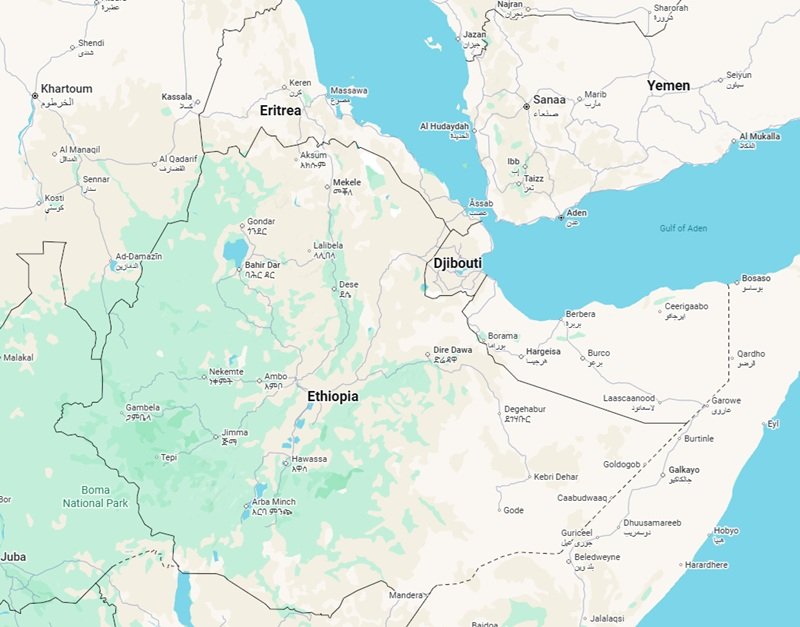
The conflict is also becoming increasingly regional, with developments involving Eritrea and Sudan. Under such conditions, relations among Fano, the TPLF, neighboring states, and other political forces may affect access to diplomatic support, economic resources, and regional leverage. These possible benefits should not be assumed, however; they require careful negotiation and verification.
The central argument is therefore not that Fano must form an unconditional alliance with the TPLF or any other organization. It is that no option should be rejected merely because the potential partner was once—or may again become—an adversary. Strategic cooperation should be judged pragmatically: Does it advance a clearly defined objective? Does it reduce the cost and duration of the conflict? Can Fano preserve its political independence and protect the interests of the Amhara people? If these conditions can be met, limited and carefully structured cooperation may be strategically justified.
Editor’s Note: Views in the article do not necessarily reflect the views of borkena.com
Related readings : Why Any Alliance Between Fano and TPLF Is an Affront to the Amhara People
The Alliance That Will Eat Its Partner: Why Fano Cannot Survive a Tactical Pact with the TPLF or PFDJ
__
Join our Telegram Channel: t.me/borkena
Like borkena on Facebook
To submit a press release, send the submission to info@borkena.com
Add your business to Ethiopian Business Listing / Ethiopian Business Directory
Join the conversation. Follow us on X (formerly Twitter) @zborkena to get the latest Ethiopian news updates regularly.
Yes, Fano or for that matter, any organization in a conflict, has to consider a variety of alliances to achieve its goal – with friends and enemies. An alliance is a calculation, much like a negotiation. It requires a careful assessment of interests, risks, leverage, capabilities, and likely outcomes. If a position is based primarily on assumptions or wishful thinking like yours, it is difficult to regard it as either a sound calculation or a viable strategy.
And when a statement is presented as fact, it should be supported by evidence.
The article “TPLF Will Eat Fano” is based on an assessment of facts, risks, interests, leverage, capabilities, and likely outcomes. Your letter contains none of that analysis.
There is no credible prospect of an arrangement that can “reduce harm, shorten the conflict, conserve resources, and accelerate the achievement of clearly defined political objectives”, as you mentioned, if the TPLF’s longstanding objective has been hostile to Amhara interests and its current unwavering objective is to re-invade Welqait and the surrounding areas.
Of course, enemies can agree to a ceasefire – even all sides can agree to one. All the better, if it creates space for negotiations. But even a ceasefire requires careful calculation: what does each side gain, what are the risks, what safeguards are in place, and what happens afterward?
Before advocating cooperation, these realities need to be addressed directly. What are the concrete safeguards? What interests would the two sides share? What leverage would Fano have? And what prevents such an arrangement from ultimately strengthening the TPLF at Fano’s expense?
I understand your concern if you look at it from the TPLF or Eritrean point pf view, but not from that of Fano.
Without answers to those questions, calling it a strategy does not make it one.
So the relevant question is this: we have a demonstrable record of the TPLF’s diplomatic capacity and a track record of what many regard as treachery. If that assessment is wrong, refute it with facts. But we do not have the same weight of evidence regarding Fano’s diplomatic capacity. We know it has an amazing military capacity. Fano does not even appear to have a clearly articulated political document setting out its vision, objectives, or strategy. That is what all the international community is saying. Correct us if we have missed that – with facts, please.
So what concrete diplomatic gains has Fano actually achieved? What evidence demonstrates that it has strengthened its position sufficiently to negotiate from a position of strength with the TPLF? Which countries are prepared to support it? What diplomatic relationships has it built? And, most importantly, what is its strategy?
OMG. what a loss of Education here Dr.
Did you just suggested TPLF to form alliance with Fano? Sir it was TPLF who pointed finger on Amhara and did what they did in those 30 years darkness for Ethiopia, especially Amhara. Now you are suggesting Fano to cooperate with TPLF because they are more experienced? Are GOBEZ, Ethiopians still remember what TPLF did to all of us, but the worst one was in Amhara region where females were forced to take some type of vaccination which prevented lots of Amhara mothers not to have a child. How on earth you do anything with a group who engaged in genocide against Amhara? Something is wrong with you……