
Editor’s Note : Views in the article do not necessarily reflect the views of borkena.com
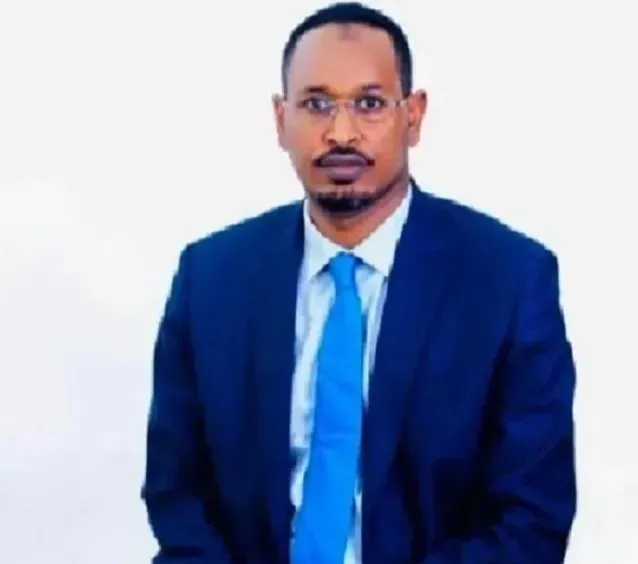
By Abdirezak Sahane Elmi
The question “Who owns Ethiopia?” may sound rhetorical to some, but to millions of people from the historically excluded corners of the country the Somali, Afar, Sidama, Wolayta, , Silte, Gamo, Gambella, and many others, it is a deeply personal question. For us, it touches wounds that have bled for generations. It questions the ownership of a nation whose political, historical, and economic narratives have long been monopolized by a few and denied to the many.
I write this as someone from the Somali Region of Eastern Ethiopia, a land of proud people who have endured pain, marginalization, and political exclusion for decades. The issue at stake is not merely about power-sharing or ethnic representation. It is about narrative justice: the right to speak, to define, and to shape the destiny of the nation to which we belong.
The Historical Monopoly of “Ownership”
For most of modern Ethiopian history, the national story has been told by a small group, largely from the northern highlands who positioned themselves as the “natural custodians” of the Ethiopian state. They wrote the history, defined patriotism, dictated national identity, and controlled political access. Everyone else was written in as a supporting character, a follower, not a founder.
Even after 1991, when the EPRDF introduced ethnic federalism, the narrative center remained in the north. The so-called “owners” of the Ethiopian story simply rearranged power among themselves. Then came the 2018 reform, a turning point that opened small cracks in this centuries-old wall of exclusion. Suddenly, voices from the South, the East, and the peripheries entered the room. But even today, many intellectuals and opposition elites remain psychologically trapped in an outdated mindset: that Ethiopia belongs to a few, and the rest must wait outside the gates of national debate.
The Politics of Exclusionary Memory:
When Ethiopian elites talk about “national dialogue” or “saving Ethiopia from fragmentation,” they usually mean consensus between three actors: the Amhara, the Tigray, and the Oromo political elites.Everyone else of more than 80 nations and nationalities is treated as a silent audience to their political drama. This is not just arrogance; it is an inherited political disease. It reveals an inability to imagine an Ethiopia that truly belongs to all its people. It assumes that Somalis, Afars, Sidamas, and others are secondary citizens too peripheral, too untrustworthy, or too uninformed to comment on the destiny of their own country.
This mindset persists because of two intertwined factors:
- The long history of exclusion and absence.
For generations, many communities were kept outside the political system, denied education, representation, and even recognition as equal citizens. - The internalized acceptance of inferiority.
Many from the excluded regions have unconsciously accepted their role as followers, not equals. We have waited for permission to speak, instead of claiming our right to own.
The first factor, historical exclusion is the sin of the past. It has expired; it can no longer function on the soil of a new Ethiopia. But the second, acceptance of marginality is a danger that still lives within us.
The Need for Mental Liberation:
The time has come to reject this psychological submission. We must dismantle the illusion that Ethiopia’s ownership is hereditary, passed down from emperor to elite, from old rulers to new reformists. The future of this country must be defined by equality of ownership, not by geography of birth or language of privilege. Our people, the 80-plus nations and nationalities, are not spectators in the theatre of Ethiopian politics. We are co-authors of the nation’s destiny. We pay taxes, we defend borders, we contribute to the economy, and we bear the cost of instability. Therefore, we must also share in the power of voice, vision, and decision-making.
Why I Support the Reform and Medemer Vision:
Many ask me why I support Dr. Abiy Ahmed’s leadership. My answer is simple: because his Medemer philosophy represents the first official rejection of exclusive ownership in Ethiopian politics. It is a call for collective belonging, that all Ethiopians, regardless of language, region, or history, are shareholders of the same state.
Of course, the path is not perfect. Mistakes exist. But the principle matters. Medemer is an ideological rupture with centuries of exclusionary nationalism. It insists that Ethiopia is not the property of a few, but the home of all.
A Call to the “Illusioned Owners”
To those elites and intellectuals still living in the illusion of sole ownership, those who believe Ethiopia’s destiny must always be negotiated among the old northern clubs, I say this with clarity:
You no longer own Ethiopia.
Ethiopia belongs to its people, from Jigjiga to Jimma, from Mekelle to Moyale, from Bahir Dar to Bale. The age of exclusion has ended. The people you ignored are educated now. They are awake. They can speak for themselves. They have equal stake in the nation’s destiny.
The map of power has changed, not only politically, but mentally. Those who cling to the past are fighting a losing battle against time itself.
Conclusion: A Home for All, Not a Throne for a Few:
Ethiopia must be reborn as a shared nation, not a contested kingdom. A place where no citizen waits in the “waiting room” of history. Where every voice, north, south, east, and west is part of the national conversation.
The illusion of sole ownership has already expired. The future belongs to those who build together, not those who monopolize memory.
So, let us say it clearly: Ethiopia is not owned. Ethiopia is shared.
And those who still live in the dream of dominance must wake up, because the dawn of equality has already begun.
Abdirezak Sahane Elmi is Former Government Official, Writer, Political Commentator, and Advocate for Inclusive Federalism. He can be reached at : Abdirezaksahane15@gmail.com
Editor’s Note : Views in the article do not necessarily reflect the views of borkena.com
__
Support Borkena : https://borkena.com/subscribe-borkena/
Join our Telegram Channel : t.me/borkena
Like borkena on Facebook
Borkena Ethiopian News Youtube Channel
To submit Press Release, send submission to info@borkena.com
Add your business to Ethiopian Business Listing / Ethiopian Business Directory
Join the conversation. Follow us on X (Formerly Twitter) @zborkena to get the latest Ethiopian News updates regularly.
I see the spirit of you thesis and the supporting argument, and the great majority of us agree in principle that we ‘share’ Ethiopia.
But here is where things start to unravel. in the pre 1991 Ethiopian ‘PATRIOTISM’ was bounding us together; one Flag One Ethiopian Identity.
Fast forward to now (post 1991, more so post 2018) as you mentioned we are 80 “NATIONS & NATIONALITIES’, nothing wrong with it but competing-interests cannot be realized where ‘some are more equal than others’ in the ‘Nations & Nationalities’ configuration.
Right after Abiy came to power as PM, the first and repeated ‘narrative’ was “Oromo’s questions must be answered”, that by itself does not reflect UNITY or PATRIOTISM, but “Nations Nationalities’ = Tribe.
Search & results:
============
‘Patriotism’ vs ‘Nations & Nationalities’
Patriotism is the love and devotion one feels towards their country, while nations and nationalities refer to distinct groups of people often defined by shared culture, language, or history. Essentially, patriotism is an emotional attachment to a specific nation or state.
Source – Wikipedia Encyclopedia Britannica
Understanding Patriotism
———————————–
Definition and Meaning
Patriotism is the feeling of love, devotion, and attachment to one’s country. This attachment can include various aspects such as language, culture, history, and political values. It emphasizes a civic spirit and a commitment to the common good of the political community.
Historical Context
Patriotism has roots in ancient Greece and Rome, where it was associated with civic virtues and the preservation of liberty. Over time, it has evolved to represent genuine pride in a nation, acknowledging both its strengths and weaknesses.
Nationalism Explained
——————————-
Definition and Characteristics
Nationalism is a modern ideology that emerged in the 18th century. It focuses on loyalty and devotion to a nation, often emphasizing cultural unity and ‘distinctiveness’. Nationalism can lead to a desire for an independent nation based on shared culture, history, and language.
Differences from Patriotism
***********************
While both concepts involve a connection to a country, nationalism often has a more divisive connotation. It can emphasize differences between nations and may lead to conflicts over territory and cultural dominance. In contrast, patriotism is generally seen as a unifying force that supports democratic values.
Nations and Nationalities
———————————–
Definitions
* Nation: A large group of people who share a common language, culture, ethnicity, or history and often inhabit a specific territory.
* Nationality: The legal relationship between an individual and a state, often associated with citizenship. It can also refer to the cultural identity of a group within a nation.
Relationship to Patriotism and Nationalism
>>>>>>>>>>>>>>>>>>>>>>>>>>>>>>>>>>
Nationalities can exist within a nation, and individuals may feel patriotic towards their nation while also identifying with a specific nationality. This relationship can influence how people express their patriotism or nationalism, depending on their cultural and historical context.
source – Wikipedia Encyclopedia Britannica
End of Search material.
We can be ‘One’ and diverse, but we cannot be ‘Many’ and ‘One’ at the same time, it is not humanly possible, simply because the ‘FOUNDATION’ is not on a STABLE-GROUND’.
You mentioned Somali region, how many people were DISPLACED from the Somali zone, if both are Ethiopia & Ethiopians, displace who to where?
If that is not a reflection of ‘OWNERSHIP’ ( like kicking someone out of your house/shop/hotel/office…etc.) I do not know what is. And this phenomenon was born out of the post 1991 ‘Nations & Nationalities’ as well as the Secession of Eritrea ( where none Eritreans were kicked out vise versa). But in the rest of Ethiopia there is NO a NONE Ethiopian, except where OWNERSHIP has been taken literally, which was not the case pre 1991 Ethiopia where there was one FLAG and ONE Citizenship, Ethiopian, from North to East, South, & West, in the SHARED Ethiopia.
The majority who live in Addis Abeba have better access to all the services than anywhere else in the country then, as it is the case today; and that is not unique the Ethiopia, in North America, or in Europe there are places where there is no ruining water, and in some cities the running water is not drinkable out of the tap, and some catch fire if you strike a match on the running water… (as reported time to time…) In the same way there are not as many schools, hospitals, electricity, etc. the further away from the capitals of the world.
Based on the Nations & nationalities setup, all 80 tribes are not equal in number ( democracy is a # game) if the 80th tribe has a population of 1 million, and the one next door has 40 million, a one to a million representation will give 40 for one and 1 for the other, now 100 times out of a 100, the one with 40 representatives will get 99.9 times the vote to approve a project or not… that does not reflect ‘inequality’ but ‘Majority’ (not as ‘superior’ and the other as ‘inferior’).
The team that scores the most goal wins, it could be skill sets or pure chance, but still takes the Cup home.
But, in the ‘Patriotic’ citizenry of One Ethiopia, the above example will be 41 representatives of one nation voting & deciding which road or bridge or dam should be given a priority, which second, and third… etc. because they are all our projects, not ‘ours’ & ‘theirs’ in the Nations & Nationalities scheme.
The solution is not beyond us, its the Narrative, alternative-interpretation & the convenience brainwashing game the ‘elite’ ( educated-dumb) use to climb the ‘Snake & ladder’ to be ‘elected’ is dividing the 99% of our rural citizen who have no idea about this DRAMA till they hear it at election gatherings and ‘FIST PUMPING’ speeches creating an enemy out of the next village/ town/ tribe..
We can say enough of this, and STOP it NOW, it is in our hands, and the benefit is GREATER in UNITY than the LOSS in ‘OPPOSITION’.
If we ignore it march further and further away for petty reasons, one of two things will happen, time will force us to come together again ( to pre 1991) build our nation and and put the UNITED-FOUNDATION for THE FUTURE GENERATION, or the Nations & Nationalities 80 each with their own FLAGS becomes the reality. The 3 you kept mentioning can fend for themselves & walk away ( like Czechoslovakia ) or ( Yugoslavia) and the rest will be FREE from these ‘others’…it is a matter of time, we have seen many since 1974, and the only CONSTANT is CHANGE ( the choice is ours, as to which road to take).
Everything is based on choice!
Be well.
‘Nationalism’ ( ‘nations & nationalities’) ill thought ‘solution’, is a CANCER, only ‘PATRIOTISM’ would kills that CANCER ( as everyone knows cancer has SHORT LIFE, it dies with the HOST).
Search Result:
===========
“WHAT it the real reason that started WWI ?”
The real reason that started World War I was the assassination of Archduke Franz Ferdinand of Austria on June 28, 1914, which triggered a series of events leading to war. However, underlying factors included complex alliances, ‘nationalism’, militarism, and imperial competition among European powers.
Source: Wikipedia Encyclopedia Britannica
Main Causes of World War I
————————————–
* Immediate Cause
The assassination of Archduke Franz Ferdinand of Austria on June 28, 1914, is often cited as the immediate trigger for World War I. This event set off a chain reaction of political and military mobilizations across Europe.
* Long-Term Causes
Militarism: European nations were engaged in an arms race, building up their military forces and stockpiling weapons.
Alliances:
A complex web of alliances had formed, dividing Europe into two main factions: the Central Powers (Germany, Austria-Hungary, and the Ottoman Empire) and the Allied Powers (France, Russia, and Britain). These alliances meant that a conflict involving one country could quickly involve others.
Imperialism:
Competition for colonies and global dominance heightened tensions among European powers, particularly between Britain, France, and Germany.
** Nationalism:
Nationalistic fervor, especially in the Balkans, fueled desires for independence and territorial expansion, leading to conflicts that contributed to the war.
Conclusion
While the assassination of Franz Ferdinand was the spark that ignited the war, deeper issues such as militarism, alliances, imperialism, and ‘nationalism’ created a volatile environment that made the conflict inevitable.
Source : Wikipedia Sky HISTORY TV Channel’
End of search results.
Now we all know the reason why WWII started, ‘Nationalism’ ( German), & how it ended.
The same ‘nationalism’, that started WWI, lead to a lot of death & suffering…
The DATA is there, but not every one sees the DATA in the same way, due to ‘interest’ ( nationalism) based bias; till the table is turned, yet again.
No one assured with fist-pumps and moving-peaches as did Hitler, only seconded by a cascade of our ‘leaders’ since 1974, & STILL. Only to end the same way like the many others before; yet we have “National holidays’ for Mahatma Gandhi, Nelson Mandela, Martin Luther King Jr, etc. but not for these others ‘antagonists’ who have BLOOD in their hands…
History lesson of a “financial’ type but carries nuggets that touches “geopolitics’ and that cancer ‘nationalism’, & US ‘exceptionalism’ that is crumbling before our eyes…
Reminding us:
a) Every beginning has and end.
b) Death begins at birth. ( but going in slow motion, in one direction, but you can say and do whatever you want, along the way.)
”The Global Order Is Dead’: This Looks a Lot Like Pre-World War I | Frank Giustra & Michelle Makori’
Link = youtube.com/watch?v=Lt9VXAyIO0U
Have fun till the music stops, ( that is all you can do, remember The ‘MAYANS, The Egyptian, the Sumerians, all gone WITHOUT A TRACE ).
Be well.