
A Historic Gathering, a Wounded Country, and the Long Road to Peace
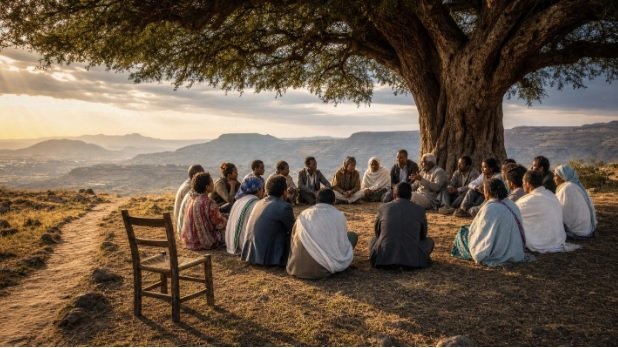
Ethiopia’s National Dialogue deserves to be taken seriously. But bringing thousands of delegates together and producing a final document will not, by itself, stop the wars, heal the victims, or rebuild public trust. The real test begins after the delegates leave the conference hall.
There are moments in a country’s history when its people must decide whether to remain trapped in old conflicts or make a serious attempt to build something different. Ethiopia may be standing at such a moment.
For several weeks, approximately four thousand Ethiopians have sat together and discussed some of the country’s most painful and divisive questions. They have talked about peace, human rights, religious affairs, corruption, federal cities, the structure of government, economic problems, and the nature of the Ethiopian state itself.
They have argued. They listened. They have reached impasses. They returned to the table. In some cases, they have reconsidered their positions and searched for language they could accept together.
That matters.
In Ethiopia, political disagreement has too often ended in prison, exile, displacement, rebellion, or death. Simply remaining in the room when the discussion becomes angry and painful is therefore an achievement. The delegates deserve respect for doing what generations of political leaders have repeatedly failed to do: listen to one another without immediately reaching for force.
But we should not mistake a meaningful beginning for a successful conclusion.
The National Dialogue has entered its final phase. The eight working groups have been completing their discussions, and a strategic team is bringing their recommendations together into one national document. This is an important milestone. It is not yet the finish line.
The tough questions are still waiting.
What does national dialogue mean while Ethiopians continue to fight and die? Can an agreement among those inside the conference bind those outside it? Can a government involved in the country’s conflicts serve at the same time as sponsor, participant, subject of complaint, and final implementer? And what happens if the recommendations challenge the interests of those who control the state?
Most importantly, will any of this change the life of an ordinary Ethiopian who is afraid to speak, afraid to return home, or afraid to live outside the region associated with his or her ethnicity?
This article does not reject the National Dialogue. Nor does it dismiss the delegates as government instruments. On the contrary, it takes their work seriously enough to ask whether it can become more than a conference.
Supporting dialogue does not mean applauding everything done in its name. Real support means protecting the delegates’ work from political misuse and insisting that it led to a broader and more credible national process.
Why the Meeting Matters
Whatever happens next, this conference has already become part of Ethiopian history.
The Ethiopian National Dialogue Commission was established under Proclamation No. 1265/2021 to help the country confront its deepest disagreements through peaceful discussion. Its mandate includes identifying major causes of division, setting the dialogue’s agenda, organizing consultations, preparing recommendations, supporting implementation, and monitoring progress.
That is an enormous responsibility because Ethiopia is not suffering from one isolated disagreement. The country is arguing over the nature of the state, ethnic federalism, citizenship, historical memory, territorial claims, political representation, constitutional power, justice, and national identity.
The conference has created something Ethiopia needs: a space in which difficult questions can be spoken aloud without immediately becoming a call to arms.
It has also created a public record. Future generations may one day read what the delegates recommended, what they could not agree upon, what the Commission preserved, and what the government later implemented—or refused to implement.
A meeting can be historically important without becoming historically successful. Some conferences enter history because they saved a country. Others enter history because they revealed what might have been possible. Which kind of this will become remains to be seen.
Talking While Ethiopia Bleeds
Some Ethiopians argue that no genuine dialogue can take place while armed conflict continues. Others say that conflict is exactly why the country must talk.
Both sides have a point.
Ethiopia does not need perfect peace before dialogue begins. If peace already existed, dialogue would be less urgent. But meaningful dialogue requires at least enough political freedom and personal security for people to speak honestly.
The conference has taken place while conflict continues in parts of the country, families remain displaced, political detention is still a serious concern, and public confidence in institutions is painfully low. It also operates under a political system in which the Prosperity Party dominates parliament, the executive, regional administrations, and much of the state machinery.
That does not prove that every delegate was controlled. It does not mean their debates were staged. But it does mean they were not speaking under ordinary democratic conditions.
A delegate may be handed a microphone and still ask:
Can I criticize Prime Minister Abiy Ahmed directly?
Can I accuse state forces of committing abuse?
Can I question the Prosperity Party’s control of public institutions?
Can I call for the investigation of senior officials?
Can I support or reject ethnic federalism without being threatened?
Will my disagreement appear in the final record?
What will happen to me when I return home?
Freedom is not simply being allowed to speak for five minutes. It means knowing that one can speak honestly, be recorded fairly, influence the outcome, and return home safely.
There is a difference between being given a voice and having a voice that carries political weight.
Four Thousand Voices—but Whose Agreement?
The scale of the conference is impressive. It should not be belittled.
Farmers, women, young people, elders, religious representatives, professionals, displaced citizens, and members of the diaspora can bring experiences that political elites often ignore.
But a gathering of four thousand people does not automatically include every political force whose cooperation is necessary to end the country’s conflicts.
There is a difference between public consultation and political negotiation.
Public consultation asks citizens what they think. Political negotiation requires organizations and leaders capable of making commitments to sit across from one another and accept obligations.
Ethiopia needs both.
Ordinary people must not be pushed aside while armed elites divide the country’s future among themselves. But ordinary citizens cannot order armed groups to disarm, commit absent opposition parties to a peace agreement, or force a government to surrender powers it wishes to keep.
The honest statement is that the participating delegates have reached agreements under the Commission’s procedures. That is important.It is not yet the same as saying that Ethiopia has entered a binding national covenant.
The Empty Chairs
Some of Ethiopia’s most consequential political and armed actors were not present. Their empty chairs are part of the story and cannot be covered by the number of people who attended.
Responsibility for their absence is not entirely one-sided.
Some organizations may not have been adequately included. Others rejected the Commission’s neutrality, demanded a transitional arrangement, or preferred direct negotiations. Armed movements may also believe that violence gives them more political leverage than peaceful participation.
The government cannot be blamed for every refusal. Opposition parties and armed organizations must answer for their own choices. But their absence also reveals how little trust exists.
If important political forces see the government as both their military enemy and the owner of the dialogue, they are unlikely to accept the process as neutral. If they believe the government will decide which recommendations matter, their refusal becomes part of the dialogue’s legitimacy problem.
Independent assessments have warned that the absence of influential political and armed actors weakens the process’s ability to address Ethiopia’s active conflicts.
The answer is not to discard the work of the delegates. Nor should armed groups be allowed to veto peaceful citizens.
The better answer is to create a second political track after the conference. Those who remain outside should be invited to respond to the final document. They should be able to accept some provisions, reject others, and propose alternatives.
They should not be required to praise the conference before entering negotiations. But participation should require a serious commitment to protect civilians and pursue political objectives peacefully.
Did Abiy and PP Control the Process?
This is one of the hardest questions.
Some critics believe Prime Minister Abiy Ahmed and the Prosperity Party controlled the dialogue from beginning to end. Supporters reply that the Commission is legally independent and that the delegates spoke freely.
The truth may lie somewhere between these positions.
There is not yet enough publicly available evidence to conclude that Abiy or PP officials wrote every recommendation, instructed every delegate, or predetermined every agreement. The prolonged debates, delays, revisions, and disagreements suggest that something genuine happened inside those rooms.
But governments do not have to control every word to shape an outcome.
The Abiy–PP political order dominates the institutions surrounding the conference: the federal executive, parliament, public administration, regional governments, security institutions, public resources, state media, and the bodies that will eventually implement the recommendations.
The Commission may be legally independent, but legal independence on paper is not always the same as practical independence.
The real test is whether the Commission can preserve and publish recommendations the government does not like.
Can it recommend meaningful limits on executive power?
Can it call for independent investigations of government conduct?
Can it protect delegates who accuse officials of abuse?
Can it publish conclusions that are politically damaging to the Prosperity Party?
Can it insist that the government implement reforms it would not have chosen for itself?
The process is therefore best described as a real dialogue conducted within political boundaries heavily influenced by the government.
This conclusion does not disrespect the delegates. People can think independently and act courageously even inside an unequal institution. Their work may still produce unexpected and valuable outcomes.
But we cannot understand the conference honestly if we pretend that the political power surrounding it does not matter.
Three Actors, Three Responsibilities
The delegates, the Commission, and the government should not be treated as though they are the same actors.
The delegates may have spoken honestly even if the larger political environment was restrictive.
The commissioners may have exercised professional judgment even if some opposition groups did not trust the institution.
The government may deserve credit for making the conference possible while still holding too much power over what comes next.
Each should be judged separately.
The delegates should be judged by what they discussed, changed, and approved.
The Commission should be judged by whether it protected dissent, applied fair procedures, preserved original recommendations, decided complaints impartially, and published the full record.
The Abiy–PP government should be judged by whether it respected the Commission’s independence, protected participants, accepted scrutiny, and implemented recommendations that went against its own interests.
Criticism of the government should not erase the delegates’ courage. Respect for the delegates should not blind us to the power surrounding them.
The Government’s Double Role
A fair assessment should acknowledge the government’s positive contribution.
The Abiy–PP government created the legal and administrative space for the dialogue. It provided resources and logistical support. It allowed thousands of Ethiopians to discuss questions that governments often prefer to keep within the ruling elite.
That deserves acknowledgement.
But the government is not a neutral observer. It is also involved in current conflicts. It controls state security institutions, dominates parliament, and remains the subject of many of the grievances the conference is supposed to address.
The same government will largely decide whether the recommendations become laws, policies, constitutional amendments—or forgotten papers.
The government is therefore the sponsor of the dialogue, a party to conflict, a subject of complaint, an institutional gatekeeper, and the likely implementer.
That is the central contradiction of the process.
Will the Recommendations Have Teeth?
Before anyone calls the final document a national covenant, Ethiopians deserve an answer to a simple question:
What will the recommendations require anyone to do?
Will they be legally binding? Will they be politically binding but legally advisory? Must parliament debate them? Can the executive reject them? What happens if regional governments disagree? Which proposals require constitutional amendment or a referendum?
The Commission’s mandate includes preparing recommendations and implementation plans, supporting responsible institutions, and monitoring progress. But the authority to recommend is not necessarily the authority to compel.
That difference could determine whether the dialogue changes Ethiopia or becomes another collection of good intentions.
Every recommendation should be clearly identified:
- The institution responsible for acting.
- The legal procedure required.
- The deadline
- The necessary resources
- The evidence that will show completion
- The independent body that will verify compliance
- The consequence of refusing to act.
A road map is useful only if someone is required to follow it.
Watch Language
The delegates worked in eight groups. Their recommendations must now be combined into one coherent document.
That is necessary. Repetition must be removed, conflicting language examined, and the final report made readable.
But this may be the most politically sensitive part of the entire process.
Consider these two statements:
“The government shall establish an independent investigation.”
And:
“Relevant institutions should consider strengthening existing mechanisms.”
Both may appear to discuss accountability. But the first creates an obligation. The second creates room for delay.
Or consider:
“The Constitution shall be amended.”
And:
“Constitutional questions require further study.”
A few changed words can turn an urgent demand into an indefinite promise.
That is why the eight original reports should be published. The consolidated document should be returned to the original working groups. They should confirm that the final wording faithfully reflects what they agreed.
Any important change should be recorded and explained.
Harmonization should make the delegates’ work clearer. It must not make politically difficult recommendations weaker.
Let Disagreement Remain Visible
Ethiopia has suffered because political disagreement is often treated as treason. The dialogue should model something healthier: people can disagree deeply and still belong to one country.
The final report should be distinguished among:
- Unanimous decisions
- Broadly accepted recommendations
- Majority positions
- Agreements accompanied by reservations
- Minority opinions
- Questions that remain unresolved
There is no shame in admitting that four thousand people could not solve every Ethiopian dispute in a few weeks.
An honest record of disagreement is more trustworthy than artificial unanimity.
The Commission should tell the public exactly who agreed, what they accepted, what procedure was used, and what objections remained.
Agreement among the delegates matters. But it should not be stretched into a claim that every Ethiopian has consented.
Name Every Victim
Ethiopia cannot reconcile without acknowledging what has happened to its people.
The National Dialogue should recommend formal national acknowledgment of victims across the country. This would not replace criminal investigations or determine guilt. It would establish a basic moral truth: every innocent life has equal value.
An Amhara mother’s grief is not less important because acknowledging it may embarrass those in power.
An Oromo family’s suffering does not become irrelevant because a perpetrator claims to act in the name of another community.
A Tigrayan civilian’s pain does not disappear because many Ethiopians oppose the TPLF.
The same principle applies to Afar, Somali, Gumuz, Agaw, Gurage, Sidama, and every other Ethiopian community.
Every innocent person murdered, raped, tortured, displaced, disappeared, or dispossessed matters.
A nation cannot heal when each government recognizes only those victims who fit its preferred political story.
Acknowledgment alone is not enough. Ethiopia also needs impartial investigations, accountability, reparations, property restitution, witness protection, psychological support, and reform of the institutions connected to abuse. Credible transitional justice requires truth, remedies, and accountability for victims and survivors.
Responsibility should be attached to individuals, commanders, institutions, and political organizations based on evidence. It must never be assigned automatically to entire ethnic groups.
Can Ethiopians Live Anywhere?
If the dialogue produces hundreds of recommendations but avoids this question, it will have avoided one of Ethiopia’s deepest wounds:
Does every Ethiopian have the right to live safely anywhere in Ethiopia?The answer must be yes.
An Amhara farmer in Wollega, an Oromo trader in Bahir Dar, a Tigrayan family in Gondar, a Somali family in Addis Ababa, and a Gumuz family in Metekel should all enjoy the same enforceable rights.
They should be able to live, work, own property, vote, worship, educate their children, receive public services, and seek protection from the police and courts.
Regional autonomy should protect language, culture, and local self-government. It should not turn Ethiopian citizens into foreigners inside their own country.
No community should need control of a regional government or the federal state simply to feel safe.
If the final document cannot establish that principle clearly, then it will not have confronted one of the central causes of Ethiopia’s recurring violence.
A Constitution Ethiopians Can Share
Ethiopia has repeatedly received constitutions from political winners.
A durable Constitution cannot remain the property of whichever party controls Addis Ababa. It must become an agreement among citizens about how they will live together even when they disagree.
Ethiopians should be able to debate every serious constitutional alternative without treating one position as sacred and another as treason. They may consider reformed ethnic federalism, geographic federalism, hybrid arrangements, stronger cultural protection, or other forms of shared government.
The label is less important than the principle:
No Ethiopian should need ethnic control of a region or the federal government to remain safe, culturally respected, politically represented, or economically secure.
Individual and collective rights must protect each other. Collective rights cannot justify expelling regional minorities. Equal citizenship cannot become an excuse for suppressing language, culture, or legitimate local autonomy.
Ethiopia needs a constitution that makes political defeat survivable. Losing an election should never mean losing one’s freedom, home, property, citizenship, or life.
Dialogue Cannot Replace Justice
National dialogue and transitional justice have different purposes.
Dialogue asks how Ethiopians will govern themselves and live together.
Transitional justice asks what happened, who was harmed, who was responsible, what victims are owed, and how institutions must change so the abuses do not happen again.
Ethiopia needs both.
Reconciliation without accountability can become forced silence. Prosecution without impartiality can become victor’s justice. Peace without reform can become a temporary pause before another war.
Allegations of serious violations in Tigray, Amhara, Oromia, Benishangul-Gumuz, Afar, and elsewhere should be investigated according to evidence—not according to the political usefulness of the alleged perpetrator or the identity of the victim.
Dialogue Should Not Bless an Election
The National Dialogue must not become a ceremonial road toward an election conducted under unchanged conditions.
An election does not become democratic simply because people cast ballots.
Opposition organizations must be free to organize. Candidates and voters must be safe. Journalists must be able to report. Citizens must be free to criticize the government. Election administrators and courts must be trusted.
The government should not use the dialogue to declare that national consensus has already been achieved and that an election merely confirms it.
Dialogue should create conditions for genuine democratic competition. It should not provide a moral certificate for a political timetable determined by the incumbent.
What Should Happen Next?
The end of the conference should begin at the next stage of the national process.
First, publish the complete record. Ethiopians should see the eight original reports, decision rules, objections, minority positions, harmonization changes, complaints, rulings, and authoritative translations.
Second, protect civilians. Open humanitarian access, investigate attacks, protect displaced communities, and safeguard schools, hospitals, religious institutions, and essential services.
Third, reopen political space. Opposition parties, journalists, civil-society groups, scholars, and ordinary citizens must be free to criticize the final document.
Fourth, review political detentions. Those held for peaceful expression should be released. Anyone credibly accused of an actual crime should receive a prompt and fair trial.
Fifth, create a second negotiation track. Political and armed actors outside the conference should be invited into mediated talks without being required to endorse the conference beforehand.
Sixth, begin serious ceasefire efforts. Civilian-protection agreements, humanitarian arrangements, and local or regional cessations of hostilities should be pursued immediately.
Seventh, establish independent implementation monitoring. It should include representatives of the Commission, opposition groups, civil society, victims, women, youth, regional interests, and constitutional experts.
Fifty Years of Inherited Suffering
Ethiopia’s tragedy cannot be blamed entirely on one ruler, one party, one ethnicity, or one Constitution.
For roughly half a century, successive regimes have changed their slogans while keeping too many of the same instruments of domination.
The Derg rejected imperial rule but intensified centralized coercion. The EPRDF defeated the Derg but built another dominant-party state inside an ethno-federal order. The Abiy–PP government rejected the EPRDF leadership while inheriting much of its security, administrative, and constitutional machinery.
The jail remained, though the jailer changed.
The ideology changed, but the demand for obedience survived.
New victims replaced old victims. Each government justified its actions in the name of revolution, federalism, national survival, reform, or prosperity.
That inheritance must be broken.
Ethiopia must move from subjects to citizens, from party-controlled institutions to public institutions, from collective guilt to individual responsibility, from armed struggle to constitutional competition, and from ruler-granted tolerance to enforceable freedom.
That is what national dialogue means.
The Real Finish Line
The National Dialogue should not be judged by how loudly its success is announced.
It should be judged by what happens after the conference hall empties, the delegates return home, and their recommendations reach the desks of those who hold power.
Will the original reports be published?
Will minority positions survive the harmonization process?
Will political detainees receive justice?
Will journalists and opposition leaders be free to criticize the outcome?
Will absent political and armed actors enter credible negotiations?
Will victims from every community be acknowledged?
Will displaced Ethiopians return home safely?
Will the government implement recommendations that limit its own power?
Those questions—not attendance figures, slogans, ceremonies, or signatures—will decide whether the conference becomes a turning point.
Ethiopia has not yet crossed the finish line.
The real finish line is a political order in which no community needs to control the state to survive; no Ethiopian becomes a foreigner because of the region where he or she lives; no leader stands above the law; and no historical grievance becomes an excuse to kill an innocent person.
It is a country where losing an election does not mean prison, exile, dispossession, or death.
The conference can draw the map. It cannot walk the road for Ethiopia.
That road still requires ceasefires, political negotiations, constitutional choices, truth, justice, institutional reform, economic reconstruction, and leaders willing to accept limits on their own power.
Ethiopia’s decisive moment is not whether four thousand delegates can cross a symbolic finish line together.
It is whether more than one hundred million Ethiopians can live together without fear.
That—not the ceremony, the slogan, or the final document—is what national dialogue must really mean.
Author’s Note: This article reflects information available as of August 14, 2026, while the conference’s recommendations were still being consolidated. Its assessment should be revisited after publication of the eight thematic reports, the harmonized final document, dissenting positions, complaints and rulings, and the implementation plan.
Editor’s Note: Views in the article do not necessarily reflect the views of borkena.com
__
Join our Telegram Channel: t.me/borkena
Like borkena on Facebook
To submit a press release, send the submission to info@borkena.com
Add your business to Ethiopian Business Listing / Ethiopian Business Directory
Join the conversation. Follow us on X (formerly Twitter) @zborkena to get the latest Ethiopian news updates regularly.
For any public dialogue number of delegates has less significant than high profiled multi discipline expertise who have contemporary and ancient knowledge of political ,economics ,social history of Ethiopia to inform to educate the delegates for profound outcomes. Imagine you invite public to discuss what cause the Ebola disease outbreak,
No one expect from public to determine the right protection mechanism unless the Medical epidemiologists intervene for correct mechanisms of actions to be taken.