
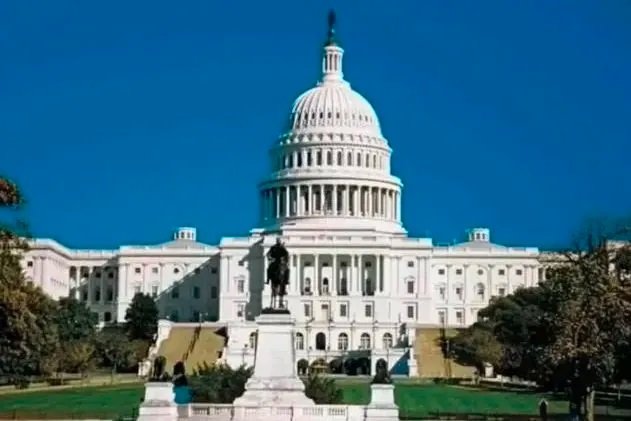
Washington Update
By Mesfin Mekonen
The Ethiopian-American community has an important opportunity—and a responsibility—to make its voice heard in Washington at a critical moment for Ethiopia. Through a coordinated nationwide effort known as the 50-State Strategy, Ethiopian Americans across the United States can strengthen grassroots advocacy, engage their elected representatives, raise awareness of developments in Ethiopia, and encourage sustained congressional attention to the country’s deteriorating human rights and humanitarian situation.
The initiative is based on a simple but powerful principle: constituents have a meaningful role in shaping the priorities of their elected representatives. Members of Congress listen to the people they represent, particularly when constituents communicate respectfully, consistently, and with credible information.
Why the 50-State Strategy Matters
Ethiopia is facing a profound political, humanitarian, and security crisis. In different parts of the country, civilians continue to face violence, displacement, insecurity, and allegations of serious human rights violations. Political divisions, armed conflicts, and unresolved constitutional and institutional questions continue to threaten Ethiopia’s stability and long-term future.
At this critical time, Ethiopian Americans should not remain silent.
We should contact our U.S. Senators and Representatives, request meetings, send letters and emails, and respectfully ask them to pay close attention to the continuing crisis in Ethiopia. Congressional offices need to hear directly from their constituents about why Ethiopia matters—not only to Ethiopian Americans, but also to U.S. interests, regional stability, human rights, religious freedom, and international security.
Particular attention should be given to reports of killings and persecution affecting Amhara civilians and Ethiopian Orthodox Christian communities, including recent reports concerning violence in the Arsi (Arusi) area. These allegations deserve serious and impartial attention, investigation, and accountability.
The objective of advocacy should not be to promote one ethnic, political, or religious group over another. Rather, it should be to promote equal citizenship, protection of civilians, human rights, religious freedom, accountability, peace, and democratic governance for all Ethiopians.
The Opportunity During Congressional Recess
The congressional recess provides Ethiopian Americans with a particularly important opportunity to engage their elected representatives in their home states and congressional districts.
Members of Congress and their staff regularly meet with constituents during recess periods. Ethiopian Americans should use this opportunity to request meetings and present policymakers with well-organized information about the situation in Ethiopia.
When meeting with a Senator, Representative, or congressional staff member, constituents should respectfully explain their concerns and ask what steps Congress can take to encourage:
- Protection of civilians and fundamental human rights;
- Accountability for credible allegations of killings and abuses;
- Freedom of religion and protection of religious communities;
- Humanitarian access to affected populations;
- Meaningful political dialogue;
- National reconciliation and peaceful conflict resolution;
- Constitutional and institutional reform;
- Democratic governance and the rule of law; and
- Continued U.S. diplomatic engagement with Ethiopia.
Our message should be clear: Congress cannot solve Ethiopia’s problems by itself, but congressional attention can encourage accountability, strengthen diplomatic engagement, and help create conditions for peaceful solutions.
The Congressional Fact-Finding Mission to Ethiopia
Another important development is the reported planning of an exchange or fact-finding visit involving members of the U.S. House of Representatives and Senate.
According to information circulating through diplomatic channels, the Ethiopian government has extended invitations to members of Congress. However, the proposed congressional exchange visit remains in the planning stages, and no final dates have been established. Future arrangements will depend on discussions through appropriate diplomatic channels.
The possibility of a congressional delegation traveling to Ethiopia presents an important opportunity for firsthand engagement.
A congressional delegation should have the opportunity to hear from government officials, opposition voices, civil society organizations, religious leaders, academics, journalists, human rights advocates, women and youth representatives, internally displaced persons, and communities affected by violence.
A fact-finding mission should seek to understand the realities on the ground rather than rely exclusively on information provided by any single government, political organization, ethnic group, or advocacy organization.
What Ethiopian Americans Should Ask Congress to Consider
Ethiopian-American constituents should encourage their representatives to raise several important issues with Ethiopian officials and other stakeholders.
1. Establish an Inclusive National Dialogue
Ethiopia needs a meaningful and genuinely inclusive national dialogue that brings together political parties, scholars, policymakers, community leaders, civil society organizations, religious institutions, women and youth representatives, and members of the Ethiopian diaspora.
Such a process should provide an opportunity to discuss the country’s political future openly and peacefully and should not exclude communities or political voices because of their identity or political position.
2. Promote Constitutional Reform
Ethiopia’s recurring political crises demonstrate the importance of addressing underlying institutional and constitutional questions.
A broad, inclusive national discussion should examine constitutional arrangements and consider reforms that strengthen democracy, equal citizenship, human rights, the rule of law, and accountable government.
Constitutional reform should be conducted through a credible and participatory process in which Ethiopians from all regions and communities can contribute to shaping the country’s future.
3. Support Peace and National Reconciliation
Ethiopia cannot achieve lasting stability through military solutions alone.
The United States should encourage peaceful dialogue, conflict resolution, reconciliation, and confidence-building measures among Ethiopia’s political and social stakeholders.
The wars and conflicts affecting Tigray, Amhara, Oromia, and other parts of Ethiopia have caused enormous suffering. The priority should be to protect civilians, end violence, address grievances, and establish sustainable mechanisms for reconciliation.
4. Strengthen Democratic Institutions
Ethiopia needs strong and independent institutions capable of protecting citizens regardless of their ethnic, religious, political, or regional identity.
Congress should encourage progress toward:
- Independent institutions;
- Credible and transparent elections;
- Judicial independence;
- An independent media;
- Effective parliamentary oversight;
- Anti-corruption mechanisms; and
- Accountability for violations of citizens’ rights.
5. Protect Human Rights and Fundamental Freedoms
Freedom of expression, freedom of religion, freedom of association, freedom of the press, and the protection of civilians must be central to U.S.-Ethiopia engagement.
Reports of killings, persecution, forced displacement, destruction of religious institutions, and other abuses should be investigated through credible and impartial mechanisms.
All communities in Ethiopia deserve protection. No Ethiopian should be targeted because of ethnicity, religion, political opinion, or geographic origin.
6. Enhance U.S.–Ethiopia Engagement
The United States has an important role to play in encouraging peace, stability, humanitarian assistance, democratic governance, and respect for human rights.
Washington should continue engaging Ethiopian stakeholders while pressing for an end to violence, meaningful political dialogue, humanitarian access, and respect for fundamental freedoms.
U.S. policy should address both immediate security concerns and the deeper political and institutional problems that contribute to recurring conflict.
7. Consider Ethiopia’s Regional and International Importance
The crisis in Ethiopia is not only a domestic humanitarian and human rights issue. Ethiopia’s strategic importance in the Horn of Africa means that prolonged instability can have consequences beyond its borders.
Ethiopia’s location and political weight have implications for neighboring countries, the broader Horn of Africa, the Red Sea, and the Bab el-Mandeb, a critical corridor for international commerce and global security.
For this reason, stability in Ethiopia should be viewed as an important component of broader regional peace and security.
What Should We Tell Our Members of Congress?
When Ethiopian Americans meet with their Senators and Representatives, our message should be respectful, factual, and focused on solutions.
We should tell policymakers:
Please listen to the voices of Ethiopians who are experiencing the crisis firsthand.
Please support the protection of civilians and fundamental human rights.
Please encourage an inclusive political dialogue and national reconciliation.
Please support credible investigations into allegations of serious human rights violations.
Please encourage constitutional and democratic reforms that promote equal citizenship and accountable government.
Please ensure that U.S. policy considers the voices of Ethiopian civil society, religious communities, women, youth, journalists, academics, and members of the diaspora.
Building a Shared Vision for Ethiopia
The ultimate goal should be a peaceful, secure, democratic, and prosperous Ethiopia in which every citizen enjoys equal rights and opportunities.
Ethiopia does not need another generation defined by war, political exclusion, ethnic division, displacement, and fear. The country needs institutions that protect citizens, leaders who are accountable, and a political system capable of resolving disagreements through dialogue rather than violence.
The Ethiopian-American community can contribute to this effort by becoming more organized, informed, and engaged.
The 50-State Strategy is not simply about contacting Congress. It is about building a sustained civic movement in which Ethiopian Americans in every state understand that their voices matter.
One constituent meeting with one congressional office may seem small. But hundreds of constituents speaking respectfully and consistently across 50 states can create significant awareness in Washington.
A Call to Action
We therefore encourage Ethiopian Americans throughout the United States to participate actively in the 50-State Strategy.
Contact your two U.S. Senators and your U.S. Representative.
Request a meeting during the congressional recess. Share credible information about the situation in Ethiopia. Explain your concerns about human rights, religious freedom, civilian protection, political instability, and the humanitarian crisis.
Ask your elected representatives to support constructive U.S. engagement and to closely monitor developments in Ethiopia.
And if a congressional fact-finding delegation travels to Ethiopia, encourage its members to listen broadly and independently—to government officials as well as to ordinary citizens, civil society organizations, religious leaders, journalists, human rights advocates, and communities affected by conflict.
The Ethiopian-American community should also encourage members of Congress to ask difficult but necessary questions: What is being done to protect civilians? Are credible allegations of abuses being independently investigated? Are humanitarian organizations able to reach affected populations? What steps are being taken toward national reconciliation? What reforms are necessary to strengthen democratic institutions? And what can the United States do to support a peaceful and democratic future for Ethiopia?
The continued silence of the international community can deepen the suffering of innocent civilians and undermine prospects for accountability. Reports of violence affecting Amhara civilians, Ethiopian Orthodox Christians, and other communities deserve serious attention and impartial investigation.
This is a moment for responsible civic engagement—not silence.
The United States Congress has a responsibility to listen to its constituents, and Ethiopian Americans have a responsibility to make their concerns known.
Through the 50-State Strategy, we can help ensure that Ethiopia remains on the congressional agenda and that policymakers understand the urgency of the crisis.
The 50-State Strategy and the Need for an Independent Congressional Assessment of Ethiopia’s National Dialogue
As Ethiopian Americans across the United States advance the 50-State Strategy, one of the most important objectives should be to ensure that members of Congress and congressional fact-finding delegations receive a complete, balanced, and independently verified picture of Ethiopia’s political and human rights environment.
A particularly important issue for any upcoming congressional fact-finding mission is Ethiopia’s National Dialogue process. While the Ethiopian National Dialogue Commission presents inclusivity as one of its core principles and states that conflict parties, including armed groups, should have a place in the process, questions remain about whether the dialogue has achieved the level of participation and independence necessary to produce a genuinely national consensus.
Controversies Over Inclusivity and Legitimacy
Congressional delegations should carefully examine concerns raised by civil society organizations, political opposition groups, independent analysts, and representatives of communities affected by conflict regarding the inclusivity and legitimacy of the National Dialogue.
One of the central questions is whether all significant political and social constituencies have been able to participate freely and meaningfully. In particular, the continuing conflict in the Amhara region and the exclusion or nonparticipation of important armed and political actors—including representatives associated with the Fano movement—raise questions about whether a dialogue can credibly claim to represent the full spectrum of Ethiopian society.
Recent reporting indicates that the Amhara Fano National Movement has rejected the National Dialogue process, characterizing it as politically controlled. Such opposition does not, by itself, establish that the dialogue lacks legitimacy, but it demonstrates why congressional visitors should independently investigate who has been invited, who has been excluded, who has declined to participate, and whether participants can express their views without intimidation or retaliation.
The congressional delegation should therefore avoid relying exclusively on official presentations by government institutions or the National Dialogue Commission. It should meet directly with opposition political parties, civil society organizations, religious leaders, journalists, academics, displaced communities, victims of conflict, women’s and youth organizations, and representatives of communities in conflict-affected regions.
Media Restrictions and the Challenge of Independent Verification
A second major issue is the environment in which information about Ethiopia is gathered and reported.
Independent journalism is essential to any credible assessment of a national political process. Yet international reporting from Ethiopia has faced significant restrictions. In February 2026, Reuters reported that Ethiopia’s Media Authority refused to renew the accreditation of three Reuters journalists based in Addis Ababa and revoked Reuters’ accreditation to cover the African Union summit. Reuters said the decision followed an investigative report concerning alleged training of Sudan’s Rapid Support Forces in Ethiopia.
Reuters subsequently reported during its coverage of Ethiopia’s June 2026 elections that it had been unable to report from inside Ethiopia since mid-February because its Addis Ababa journalists’ accreditation had not been renewed.
These developments are important for congressional fact-finding missions because restrictions on independent journalists can make it more difficult for outside observers to independently verify official claims, investigate allegations, and obtain information from communities outside Addis Ababa.
What Congressional Delegations Should Examine
The upcoming congressional fact-finding missions should therefore treat the National Dialogue as an important subject of investigation—not simply as an official government program to be observed.
Delegations should ask:
- Who is genuinely represented? Are major political, ethnic, religious, regional, civil society, and armed constituencies meaningfully included?
- Who is absent? What political parties, movements, community representatives, or conflict actors have been excluded or have refused to participate?
- Can participants speak freely? Are delegates able to criticize the government, security forces, political institutions, or the National Dialogue Commission without fear of arrest, intimidation, or retaliation?
- How independent is the process? What safeguards exist to ensure that the Commission can operate independently from the executive branch and other government institutions?
- How are victims and conflict-affected communities represented? Are people who have experienced killings, displacement, destruction of property, and other abuses able to participate directly?
- Can the process produce implementation? What mechanism exists to ensure that recommendations emerging from the dialogue become concrete political, constitutional, legal, and institutional reforms?
The Role of the 50-State Strategy
This is precisely where the 50-State Strategy becomes important. Ethiopian Americans throughout the United States can help ensure that congressional offices receive information from a broad range of Ethiopian voices rather than relying solely on official diplomatic or government channels.
The objective should not be to tell Congress what conclusion it must reach. Rather, the objective should be to encourage Congress to ask the right questions, hear directly from affected communities, and independently verify competing claims.
Ethiopian-American civic organizations in every state can help arrange briefings with constituents, human rights advocates, scholars, journalists, religious leaders, and community representatives. They can also provide congressional offices with documented information about developments in different regions of Ethiopia and identify witnesses who can speak directly about conditions on the ground.
A Call for Independent Congressional Fact-Finding
A congressional fact-finding mission should therefore approach Ethiopia’s National Dialogue with an open but appropriately critical mind.
The United States has an important interest in a peaceful, democratic, stable, and inclusive Ethiopia. A sustainable political settlement cannot be built solely through an official process if major segments of society believe they have been excluded or cannot participate freely.
Congressional delegations should have the opportunity to travel beyond Addis Ababa whenever security and logistical conditions permit. They should meet with people in conflict-affected areas, speak privately with civil society and opposition representatives, engage independent journalists, and hear from victims and families affected by violence.
Most importantly, congressional visitors should be able to distinguish between official claims of inclusivity and evidence of genuine political inclusion.
The 50-State Strategy should make this principle central to its congressional outreach: Ethiopia needs a national dialogue that is credible, inclusive, transparent, independently verifiable, and capable of addressing the country’s fundamental political and constitutional challenges.
A congressional fact-finding mission can make an important contribution by listening to all sides, examining evidence independently, and reporting its findings to Congress and the American people. Such an approach would strengthen—not undermine—the prospects for a genuine national reconciliation process and a peaceful democratic future for Ethiopia.
Our message should be one of peace, justice, accountability, democracy, and equal citizenship.
Ethiopia is too important to the Horn of Africa, and its people have suffered too much, for the continuing crisis to be ignored.
Now is the time for Ethiopian Americans across the United States to raise their voices—respectfully, collectively, and persistently—and to help advance a future in which Ethiopia is peaceful, democratic, stable, and prosperous for all its citizens.
__
__
Disclaimer: Content in the Press Release category is provided by third parties and published as received, without editorial modifications. Borkena.com, one of the leading Ethiopian news portals based in Toronto, assumes no responsibility for the accuracy of the information. The views and opinions expressed do not necessarily reflect those of Borkena.com
Support : https://borkena.com/subscribe-borkena/
Borkena Ethiopian News Youtube Channel
Join our Telegram Channel : t.me/borkena
Like borkena on Facebook
To submit Press Release, send submission to info@borkena.com
Add your business to Ethiopian Business Listing / Ethiopian Business Directory
Join the conversation. Follow us on X (Formerly Twitter) @zborkena to get the latest Ethiopian News updates regularly.