
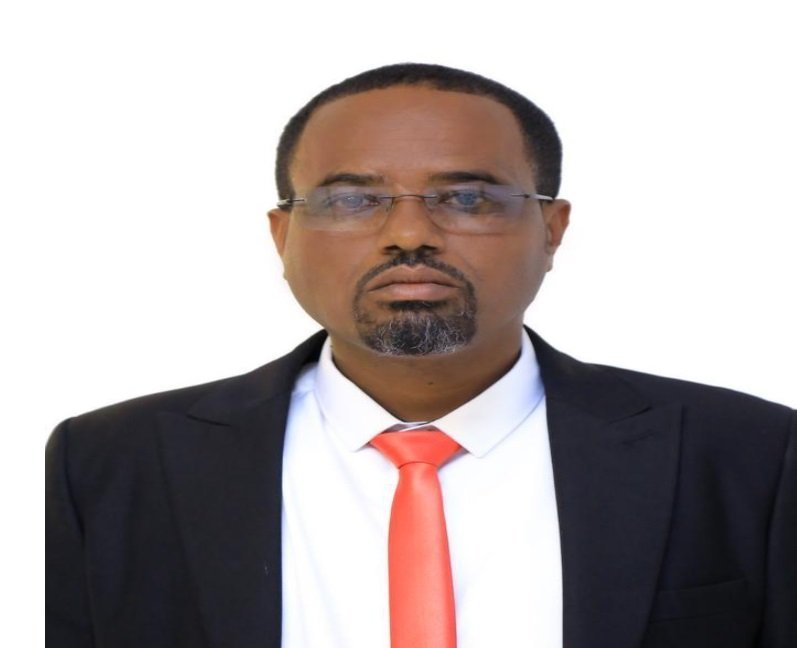
By Yehualaw Sisay Alemu (Engineer)
Abiy Ahmed and his regime are only concerned with maintaining the goals and interests of individuals and groups, not with the interests of society as a whole. Since the Abiy regime took power in 2018, it has launched hostilities in several parts of the country that caused multifaceted catastrophes. Abiy and his crew have a conflict mentality and wage war after war.
Perpetrators, mainly authorities and their agents, must be held accountable for the deaths of millions of Ethiopians and the loss of billions of dollars in wealth as a result of the planned conflicts. Furthermore, millions of people, notably ethnic Amhara, were displaced from their homes, which has tragically persisted. The government spent scant resources on weaponry, leaving people in endless agony. An economic crisis under the Abiy regime had not been observed.
Unfortunately, this regime has not expressed regret or learned from the widespread devastation it has caused. Rather, it maintains its campaign of mass murder, causing people to face exorbitant living expenses and destitution. It is a government devoted to leading the country to the greatest possible disaster as its primary leadership style. Its fundamental aspect is to cause a crisis to extend the tenure of power while attempting to regulate hostility by military force.
Abiy’s tendency for military action over negotiation has shifted resources from economic development to internal war. It has exacerbated tensions, degraded living conditions, and resulted in catastrophic events. Its fight against its people has stunted economic progress, prevented investment, and prolonged a cycle of instability.
Government security forces abuse and attack residents, primarily ethnic Amhara, throughout the country. Serious and widespread human rights breaches such as war crimes, crimes against humanity, ethnic cleansing, and even genocide were committed against ethnic Amhara with immense devastation. It is unlikely to control public revolution through military action.
People are fighting to survive with soaring living costs and the disruption caused by his war and state-sponsored conflicts, which mostly target Amhara. Also, Abiy wastes public dollars on nightmarish projects like the Palace and Corridor, which fail to account for many realities. Recently, the government was forced to devalue its currency and living costs further skyrocketed, unfortunately, Abiy is waging a full-scale war in the Amhara region.
Unlawful killing, kidnapping and arbitrary detention of people including opposition groups, merchants, professional servants, journalists, and activists has long been common practice of Abiy’s regime. Many are held without charges and imprisoned arbitrarily for extended periods without a court hearing. Even courts are not independent in discharging their responsibilities.
The demolition of houses in Addis Ababa targeting ethnic Amhara caused thousands of people to be homeless and suffer in the streets until now. Being Amhara appears to be a crime in the eyes of the government, which is why it hunts ethnic Amhara. Not only private houses but also thousands of historical buildings were demolished because of the hatred.
After continuous demonstrations against the regime to stop the killings, recently, to confront the survival threats posed by Abiy’s administration and its agents, the Amhara people-Fano were forced to start an armed struggle, which has continued till now. Since Abiy took power, the country has been plagued by chaotic conflicts and an internal civil war to protect its sovereignty. Abiy’s genocidal war on Amhara has continued with phoney claims of restoring the rule of law and order. The regime itself violated the rule of law but claimed others.
Despite having the benefit of accessing the country’s financial resources and heavy weaponry for war, including drones, Abiy remains unable to capture significant portions of the Amhara region. International human rights law prohibits attacks on civilians and civilian property during war. However, these rules are not being implemented to put pressure on Abiy’s unlawful war against the Amhara.
The regime was recently compelled to forsake its fixed exchange rate system by devaluating the birr, the country’s currency. This policy fails to take into account various facts. For example, the assumption was that it would attract international investors. Abiy’s rushed decision to secure a billion-dollar loan from the IMF aimed to finance his war, not stabilise the economy.
However, the realities on the ground, particularly the ongoing war in the Amhara region and other crises across the country, have hampered even local investors. How reasonable is it to entice foreign investors by appraising currencies during active war in the country? It was ill-advised, resulting in an economic earthquake that skyrocketed living expenses overnight.
For example, following recent economic reform, the building sector encountered significant issues and even stacking due to an unforeseen increase in construction supplies and a lack of access to the local market. As a result, workers became unemployed, and earnings from the construction industry decreased. In the future, it seems worse.
Generally, Abiy’s regime is putting Ethiopia into a precarious situation by launching war after war, resulting in crisis after crisis and the deaths and displacement of millions. So, it is unlikely to consider peace until Abiy’s dictatorship is gone from power. Allowing Abiy’s administration to remain in power means paving the way for more disasters in Ethiopia. So, the time is now to remove Abiy’s regime once and for all.
Editor’s note : Views in the article reflect the views of the writer
__
To Publish an Article On borkena , please send submission to info@borkena.com for consideration.
Join our Telegram Channel : t.me/borkena
Like borkena on Facebook
Add your business to Borkena Business Listing/Business Directory Jobs
Join the conversation. Follow us on X (formerly Twitter ) @zborkena to get the latest Ethiopian news updates regularly. Ethiopia To share information or for submission, send e-mail to info@borkena.com
“”The government spent *scant* resources on weaponry, leaving people in endless agony. “”??
The above sentence conveys a message that is the exact opposite of what the author intends.
The critique of Prime Minister Abiy Ahmed’s leadership misrepresents his efforts to address Ethiopia’s complex challenges. It wrongly suggests that his administration is focused only on serving particular interests, while ignoring his broader goal of uniting the nation and fostering progress amidst significant difficulties.
Prime Minister Abiy has faced the difficult task of managing a nation deeply divided by historical grievances and ethnic tensions. His administration has been compelled to confront numerous internal conflicts, many of which predate his tenure. The article’s claim that his leadership has led to significant loss and displacement oversimplifies a complex situation and disregards his efforts towards dialogue and reconciliation.
The suggestion that Abiy’s government prefers military action over negotiation is inaccurate. While military force has been necessary to address immediate threats, Abiy has actively pursued peaceful resolutions and peace agreements, such as the landmark deal with Eritrea, which earned him the Nobel Peace Prize.
Criticism of economic policies, like the devaluation of the birr, ignores the broader context of necessary reforms aimed at stabilizing and developing Ethiopia’s economy. These short-term difficulties are part of a strategy for long-term growth and investment, which is often overlooked in such critiques.
Accusations of ethnic cleansing and genocide are not only baseless but also dangerous, as they fuel further division and conflict. It is essential to recognize that Abiy’s government has been working to protect all Ethiopians and foster national unity.
If a nation is deeply entrenched in cycles of conflict and division, even the most committed leader faces immense challenges. A leader can provide direction and opportunities for unity, but real change requires collective will from all citizens. In a context where hate and chaos are prevalent, it is unrealistic to expect immediate transformation without broad societal support.
Removing Abiy’s administration without addressing the underlying issues of division and conflict would likely lead to greater instability. Effective leadership requires both the commitment of the leader and the willingness of the people to embrace peace and progress.
In conclusion, Prime Minister Abiy Ahmed is working to overcome significant obstacles and foster unity in Ethiopia. Criticisms that fail to acknowledge the complexity of his efforts and the challenges faced by the country do a disservice to the necessary work of building a cohesive and forward-looking nation.